

When roof water drops at the base of your house, it has nowhere to go but into the soil next to your foundation. A downspout extension fixes that for a small cost. This guide shows twelve ways to move the water away, how far it needs to go, how to hide the pipe, and how to install the most popular options. Where sources disagree, we say so.
Quick Answers
- How far? University of Minnesota Extension says at least 4 feet beyond the wall (UMN Extension). University of Maryland Extension says at least 5 feet for a house on a crawlspace and 10 feet for a house with a basement (UMD Extension).
- Where should it end? On a soft surface like lawn or garden, with no more than a 5 percent slope (a 6-inch rise over 10 feet), and at least 6 feet from any hard surface such as a driveway or sidewalk (UMD).
- Cheapest fix: a flexible or rigid extension with a splash block.
- Best hidden fix: a buried pipe to a pop-up emitter or open ground.
- Before you dig: call 811, and check local rules.
Why Downspout Extensions Matter
A roof collects a lot of water. A 1,500 square foot roof sheds about 935 gallons for every inch of rain (1,500 square feet times 0.623 gallons per square foot per inch). All of it flows to a few downspouts. If those end beside the house, the water soaks the soil along the foundation. Over time that can cause damp basements, cracks, and settling.
An extension moves that water to a spot where it can soak in safely. It is often the single cheapest drainage fix. Our guide to fixing drainage around your house covers the other steps, such as grading and gutter care.
How Far Should a Downspout Extend?
| Source | Distance from the house |
|---|---|
| University of Minnesota Extension | At least 4 feet beyond the wall |
| University of Maryland Extension | At least 5 feet (crawlspace) or 10 feet (basement) |
| Common contractor advice | 4 to 6 feet minimum, 8 to 10 feet better |
There is no single building code number. Our advice: aim for at least 6 feet, and go to 10 feet if you have a basement or the ground slopes toward the house. More is safer. Make sure the water does not just form a new puddle where the extension ends. The soil there should slope away and soak water in.
12 Downspout Extension Ideas at a Glance
| Idea | Best for | Hidden? | Effort |
|---|---|---|---|
| 1. Flexible extension | Quick, cheap fix | No | Very low |
| 2. Rigid extension | A neat, permanent look | Somewhat | Low |
| 3. Hinged flip-up extension | Lawns you mow | Mostly | Low |
| 4. Splash block | Slowing the water and preventing erosion | Mostly | Very low |
| 5. Roll-out or retractable extender | Short lengths, out of the way | Yes when retracted | Low |
| 6. Buried pipe to open ground | A fully hidden, long-term fix | Yes | Medium |
| 7. Buried pipe with a pop-up emitter | A clean lawn with no visible pipe | Yes | Medium |
| 8. Dry well | No place for the water to run out | Yes | High |
| 9. Rain barrel | Collecting water for the garden | No | Low to medium |
| 10. Rain garden | Soaking water in with plants | Yes | Medium |
| 11. Dry creek bed or swale | A garden look that carries water | Yes | Medium |
| 12. Rain chain | A decorative look on light flows | No, it is a feature | Low |
1. Flexible Downspout Extension
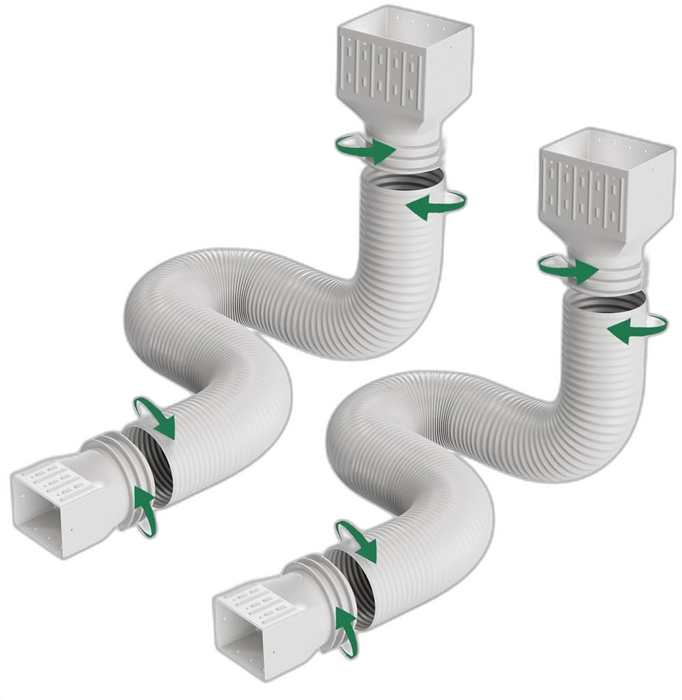
A flexible extension is a bendable tube that snaps onto the end of the downspout. You can route it around a corner or a flower bed and extend it to the length you need. It is the fastest, cheapest option. The drawbacks: it can crush underfoot, sag and hold water, and it is not pretty. Check the length you need before you buy. Some stretch to about 5 feet, and others to about 16.
2. Rigid Downspout Extension
A rigid extension is a straight section of plastic or metal pipe that matches your downspout size. It holds its slope better than a flexible tube and looks neater. Measure your downspout first. Most homes use 2 by 3 inch or 3 by 4 inch rectangular downspouts, and you buy the extension to match. You can paint it to match your siding.
3. Hinged Flip-Up Extension
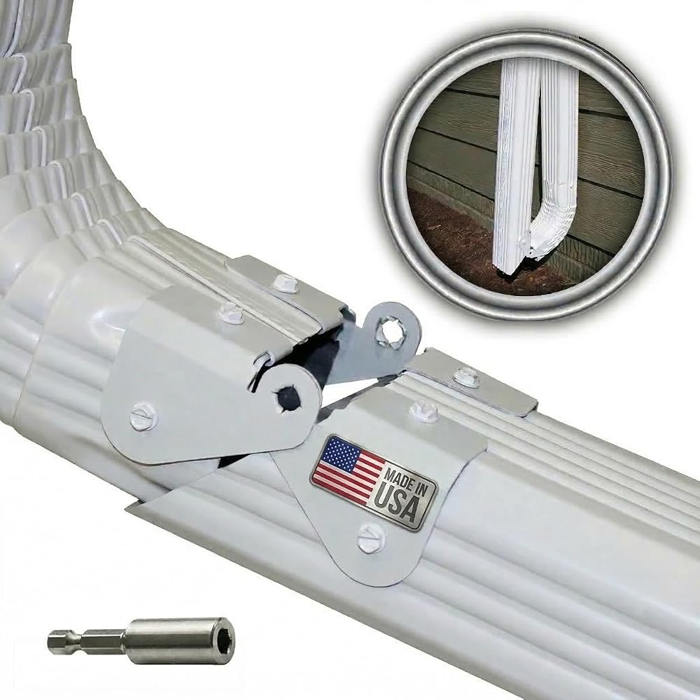
A hinge lets you flip the extension up out of the way when you mow or walk by, then flip it down when it rains. It is a good compromise if you hate tripping over a long tube. Just remember to put it back down. A flip-up extension left up does nothing in a storm.
4. Splash Block
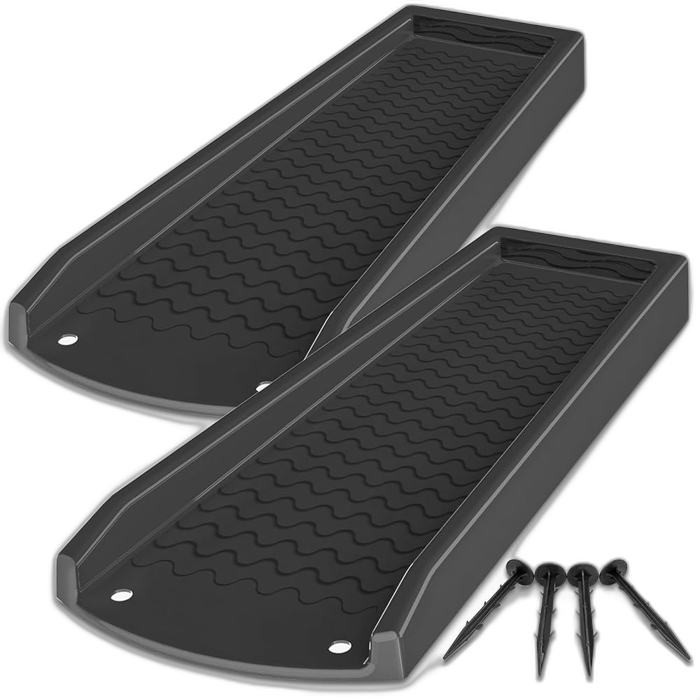
A splash block is a small trough under the downspout end. University of Maryland Extension notes that roof water moves fast and should be slowed to avoid erosion, and splash guards, stones, or loose rocks help (UMD). A splash block also directs the water a bit further from the wall. It works best paired with a short extension.
5. Roll-Out or Retractable Extender
These extenders unroll when water pushes through and roll back up afterward. They are neat, because you cannot see them when it is dry. The catch is reliability. Reviews for some models are mixed, and an extender that does not fully unroll, or that freezes shut in winter, will not protect your foundation. Read recent reviews before you buy, and check that it works in your climate.
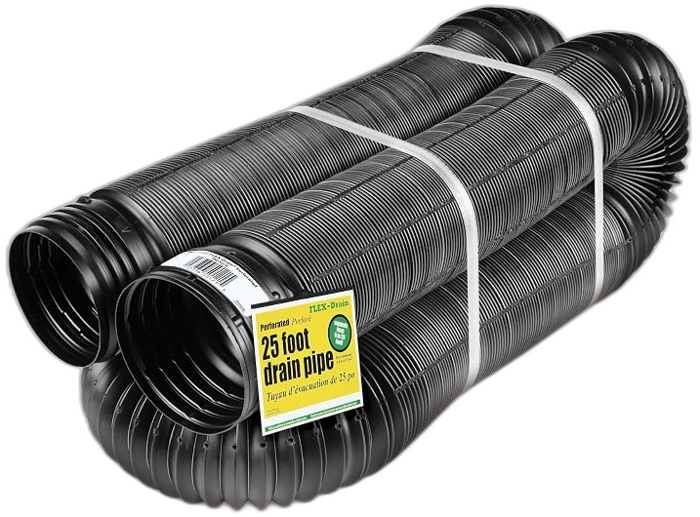
6. Buried Pipe to Open Ground
This is the classic hidden fix. A pipe runs underground from the downspout to an open spot lower down, such as the edge of the yard. This Old House uses 4-inch PVC pipe for a buried system (This Old House). The pipe needs a steady slope. NDS says drain pipe needs at least a 1 percent slope, about 1 inch of drop per 8 to 10 feet (NDS). The outlet should come out above ground, on a slope, so water can leave freely. See our French drain guide for more on pipe, fabric, and slope.
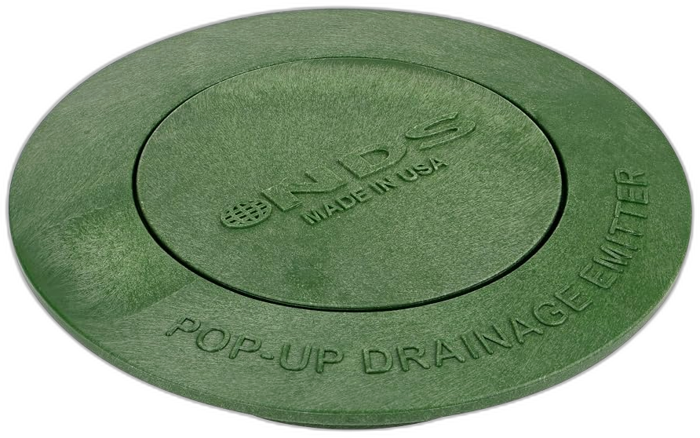
7. Buried Pipe With a Pop-Up Emitter
A pop-up emitter is a cap on the end of the pipe that stays closed when dry and opens under water pressure. It keeps the lawn clean, with no visible pipe. This Old House runs 4-inch PVC about a foot deep in a trench about a foot wide, and puts a stone bed about 18 by 18 inches under the emitter so the water spreads out instead of making a soggy spot (This Old House). Without gravel under it, the area around an emitter can get soggy and clog over time.
8. Dry Well
A dry well is a gravel-filled pit that holds water and lets it soak slowly into the ground. It is a good choice when you have no lower spot to run the water to. This Old House describes a dry well setup with a pit about 3 feet deep, lined with stone and fabric, and uses solid pipe for the first 20 feet from the house so water does not leak back toward the foundation, then perforated pipe to spread it out (This Old House). Dry wells fail in dense clay or where the water table is high. LawnStarter puts professional dry well costs at about $500 to $3,000 (LawnStarter).
9. Rain Barrel
A rain barrel collects roof water so you can use it on the garden. University of Maryland Extension lists rain barrels as one way to use a disconnected downspout (UMD). A barrel fills fast, so it needs an overflow hose that sends extra water well away from the house. Do not rely on a barrel alone to protect the foundation.
10. Rain Garden
A rain garden is a shallow, planted dip that soaks in roof water. University of Maryland Extension describes it as a planted depression designed to collect and absorb water from a disconnected downspout (UMD). Keep it at least 10 feet from the house, and plant it with species that handle both wet and dry spells. It turns a drainage fix into a garden feature.
11. Dry Creek Bed or Swale
A dry creek bed is a shallow, winding channel lined with stone that carries water from the downspout to a lower spot. It looks like a garden path and handles surface flow well. A swale is a shallow grassy channel that does the same job. See our guide to building a dry creek bed. Both need a steady slope and a clear end point.
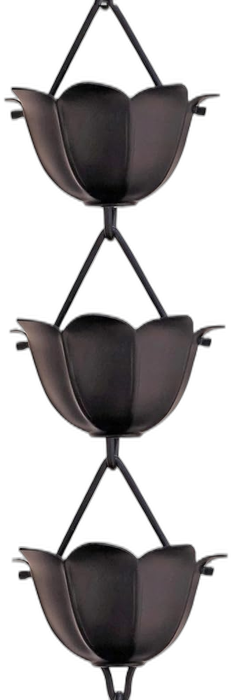
12. Rain Chain
A rain chain replaces the downspout with a hanging chain or a line of cups that guides water down. It is pretty and quiet. But on its own, it does not carry water away from the house. Set a basin, a gravel bed, or a drain under it. In heavy rain, a rain chain can splash, so it works best for smaller roofs and gentle flows.
How to Hide a Downspout or Extension
Most people want the pipe out of sight. These ideas work without blocking the water:
Do not block the end of the pipe, and do not bury an extension with no slope. Keep the pipe accessible so you can clean it.
How to Install a Simple Extension, Step by Step
You will need a hacksaw, a drill, pliers, a screwdriver, and a tape measure, plus screws or adhesive, a cap, an elbow and extension, and a splash pad or stones (UMD).
How to Bury a Downspout Pipe
Match the Extension to Your Downspout
| Downspout size | What to buy |
|---|---|
| 2 by 3 inch | A 2 by 3 inch extension or a 2 by 3 to 4 inch adapter |
| 3 by 4 inch | A 3 by 4 inch extension or a 3 by 4 to 4 inch round adapter |
| Round | A round extension of the same diameter |
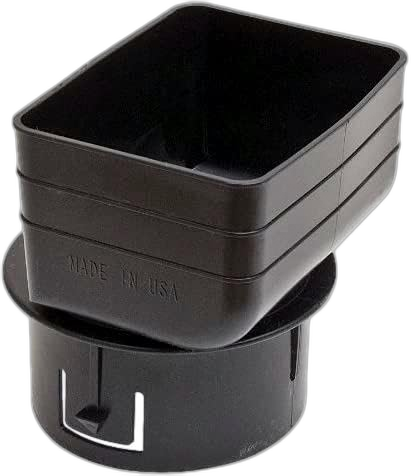
Measure the opening of your downspout before you shop. If you are connecting to buried drain pipe, an adapter links the rectangular downspout to a round 4-inch pipe.
What Does It Cost?
We do not list Amazon prices because they change. As a rule, flexible and rigid extensions and splash blocks are the lowest-cost options. A buried pipe with an emitter costs more in materials and time. Dry wells and professional work cost the most. LawnStarter lists storm drain work at about $500 to $3,500 and dry wells at about $500 to $3,000 (LawnStarter). Labor is the biggest cost for a pro.
Common Mistakes to Avoid
Keep It Working
University of Maryland Extension says to keep up normal gutter and downspout cleaning and watch the area around the splash pad for erosion (UMD). Check the outlet after heavy rain. Clear leaves from emitters and flexible tubes. In winter, make sure the water can drain out and does not sit in the pipe.
When to Call a Professional
- Water is entering your basement or crawl space.
- You need to connect to a storm sewer, which usually needs a permit and a licensed plumber.
- Your lot is flat and has no safe outlet.
- The pipe has to cross a driveway, sidewalk, or property line.
- You need a dry well and are unsure about your soil.
For bigger problems, see our French drain guide and retaining wall guide.
Frequently Asked Questions
How far should a downspout extend from the house?
University of Minnesota Extension says at least 4 feet beyond the wall. University of Maryland Extension says at least 5 feet for a crawlspace home and 10 feet for a home with a basement. A safe goal is 6 feet or more, and 10 feet with a basement.
What is the cheapest way to extend a downspout?
A flexible or rigid extension with a splash block. It takes minutes to install and costs little. Buried pipe costs more but hides the water path.
How do I hide a downspout extension?
Paint the downspout to match the siding, bury the extension with a pop-up emitter, plant shrubs around the lower part, or use a rain chain. Keep the outlet clear and the pipe easy to reach.
Can I bury a downspout extension?
Yes. Use solid 4-inch pipe near the house, a steady slope (at least about 1 inch of drop per 8 to 10 feet), and an outlet that can drain freely. Call 811 before you dig.
What is a pop-up emitter?
A cap on the end of a buried pipe that stays closed when dry and opens under water pressure. Put a bed of crushed stone under it so the water spreads out.
Where should the downspout water go?
Onto a soft surface like lawn or garden with no more than a 5 percent slope, at least 6 feet from any hard surface, and away from your house, your neighbor, and any septic field.
Do hinged downspout extensions work?
Yes, when they are flipped down. The hinge lets you flip the extension up for mowing. If you forget to lower it before rain, it will not protect your foundation.
Are roll-out downspout extenders any good?
They are tidy, but reviews for some models are mixed. Check recent reviews, and make sure the extender fully unrolls and does not freeze shut in winter.
Do I need a permit to bury a downspout pipe?
It depends on where you live. A simple buried pipe on your own lot often does not, but tying into a storm sewer usually does. Check with your building department or homeowners association.
Will a downspout extension fix a wet basement?
It can help a lot if roof water is the cause. But if the basement still leaks, there may be other causes, such as grading or groundwater. See our drainage guide for the other fixes.
Should I use a rain barrel?
A rain barrel is a good way to use roof water on the garden. It fills fast, so it needs an overflow hose that sends extra water well away from the house.
How often should I check my downspouts?
Clean the gutters in spring and fall, and check the outlet after heavy storms. Look for erosion, clogs, and pooling.
Sources and Further Reading
- University of Maryland Extension: Disconnecting and redirecting your downspouts (EBR-336)
- University of Minnesota Extension: Moisture in basements
- This Old House: How to control gutter runoff
- NDS: How to install catch basins (pipe slope)
- LawnStarter: French drain cost (dry well and storm drain costs)
Rules vary by location. Check local codes and your homeowners association before you change drainage. Last checked October 2026.

Daniel Carter covers the practical side of home improvement at The Dailey House — drainage fixes, DIY yard projects, patio makeovers, and the kind of weekend builds that actually get finished. If there's a smarter or cheaper way to do it, he's tested it.