

A good patio furniture cover can add years to your outdoor furniture. A bad one blows off in the wind, leaks, or traps moisture that grows mold. The difference comes down to size, material, and a few small features. This guide shows you how to measure, what to look for, how to put a cover on correctly, and how to care for it through the seasons.
Quick Answers
- Measure three numbers: length, width, and height at the widest points. Buy a cover a little bigger than your furniture, not tight and not baggy.
- Look for four features: vents, tie-downs or straps, double-stitched seams, and a soft inner lining.
- Material: guides disagree on vinyl versus polyester. Both can work if the cover is vented and fits well. See the comparison below.
- Never cover wet furniture. Trapped moisture grows mold and mildew.
- Store cushions separately. Bring them inside or use a ventilated storage bag or box.
Do You Need Patio Furniture Covers?
Covers protect furniture from rain, snow, sun, pollen, dust, leaves, and bird droppings. They are most useful for metal frames that can rust, wood that can warp or fade, wicker that can weather, and cushions that can mildew. They help less in a covered porch, where rain does not reach the furniture, though dust still collects.
| Option | Best for | Limits |
|---|---|---|
| Fitted cover | Everyday protection for a set that stays outside | Needs correct sizing and good ventilation |
| Bring furniture inside | Winter storage and bad storms | Needs garage, shed, or basement space |
| Deck box or cushion storage | Cushions and small items | Does not protect the frame |
| Tarp | Short-term protection | Traps moisture and blows off easily. Not a good long-term choice. |
| Nothing | Furniture made for the weather, such as some aluminum or resin sets | Cushions still need protection |
One guide notes that a cover is not always the right winter answer. Heavy snow on a flat table can load a cover and furniture, and a cover can trap moisture in cold, damp spells. If you can, store furniture and cushions indoors for the worst months (Mint Outdoor). For help picking pieces that suit a small space, see our guide to patio furniture for small spaces.
Types of Patio Furniture Covers
| Cover type | Fits | Measure |
|---|---|---|
| Dining set cover | A table with chairs tucked in | The overall length, width, and height with the chairs in place |
| Table-only cover | A table with chairs stored | The tabletop length and width, plus the height |
| Chair cover | A single chair or a stack of chairs | The width, depth, and height of one chair, or the stack |
| Loveseat or sofa cover | A two or three-seat outdoor sofa | The width, depth, and height at the widest points |
| Sectional cover | L-shaped or V-shaped seating | The length of each side and the depth |
| Chaise or lounger cover | A sun lounger | The length, width, and highest point |
| Umbrella cover | Market or cantilever umbrellas | The length when closed and the width at the widest point |
| Cushion bag | Seat and back cushions | The largest cushion’s length, width, and thickness |
| Fire pit and grill covers | Fire pits and grills | The diameter and height |
How to Measure for a Patio Furniture Cover
Fit is the most important part. A tight cover can damage finishes and strain the seams. A loose cover lets wind get underneath and collects dust. Patio Productions puts it this way: tight covers can damage finishes, and loose ones allow wind displacement and dust (Patio Productions). Ferguson adds that oversized covers can trap water and dirt at the base of the furniture (Ferguson).
Worked Examples
| Furniture | Measurements | What to look for |
|---|---|---|
| Rectangular dining set | Table 72 x 38 inches, chairs tucked in, 36 inches high | A cover at least 74 x 40 and about 37 to 40 inches high |
| Round table and 4 chairs | Widest overall diameter 62 inches, 36 inches high | A round cover about 64 to 66 inches across |
| Loveseat | 58 wide, 32 deep, 31 high | A loveseat cover about 60 x 34 x 33 |
| V-shaped sectional | Each side 88 inches, 32 deep | A V-shaped sectional cover with sides near 90 inches |
| Stack of 4 chairs | Stack 47 inches tall, base 25 x 25 | A chair cover set that lists a similar height and base |
For a round table, Patio Productions advises putting the chairs under the table, then measuring the distance around and the height. Measure the widest overall width too, so you can check the diameter of a round cover.
Materials Compared
Sources disagree here. Patio Productions says polyester is breathable and scratch-resistant and outperforms vinyl in most climates, and that vinyl is budget-friendly but does not breathe, so it can trap moisture and promote mold. Ferguson says vinyl is the better waterproofing material because water beads up and slides off, and that durable polyester blends are also fine as long as you avoid cheap covers that turn brittle and crack.
| Material | Strengths | Watch for |
|---|---|---|
| Polyester (coated) | Breathable, soft, resists scratching, light | Cheap versions can leak at seams or fade. Check the coating. |
| Vinyl | Sheds water well and is often budget-friendly | Does not breathe. Needs vents. Cold can make it stiff. |
| Heavy-duty polyester (for example, 420D to 600D) | Tough and tear resistant | Heavier. Can be harder to put on. |
| Solution-dyed acrylic and similar fabrics | Fade resistant and good for sun | Often costs more. |
Our take: the best material is the one that fits your climate and has good vents. In a rainy, humid place, choose a coated cover with vents and good seams, and check under it often. In a hot, sunny place, look for a UV-protected fabric. Whatever the fabric, a cover with no vents is the risky choice.
Waterproof vs Water-Resistant
Almost every cover is labeled waterproof, but Ferguson cautions that most only stand up to a light drizzle. Look for features that suggest real rain protection: a waterproof coating, taped or sealed seams, and a snug fit that sheds water. Read the reviews for leaks in heavy rain. If you live where it pours, choose a cover with reviews that mention heavy storms.
Features to Look For
One more tip from Ferguson: when you can, buy covers made by your furniture’s own maker, since they are cut for that set.
Our Picks by Furniture Type
We have not lab-tested these covers. The picks come from their listed sizes and features, and you should always check the size and the current reviews before buying.
For a Table and Chairs
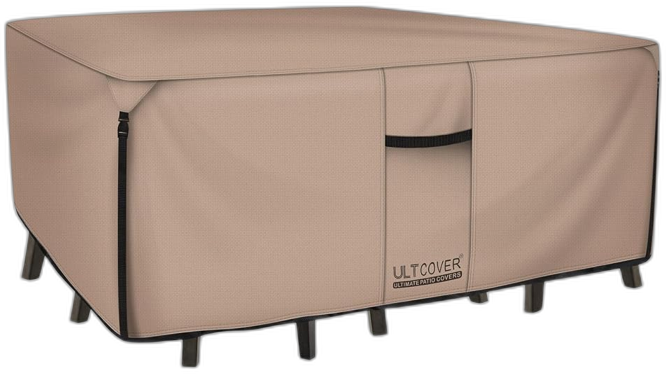
This rectangular cover is listed at 111 by 74 inches, which suits a larger table with chairs tucked in. Use your measurements to compare it to the listing, and check the height too.
For a Sectional
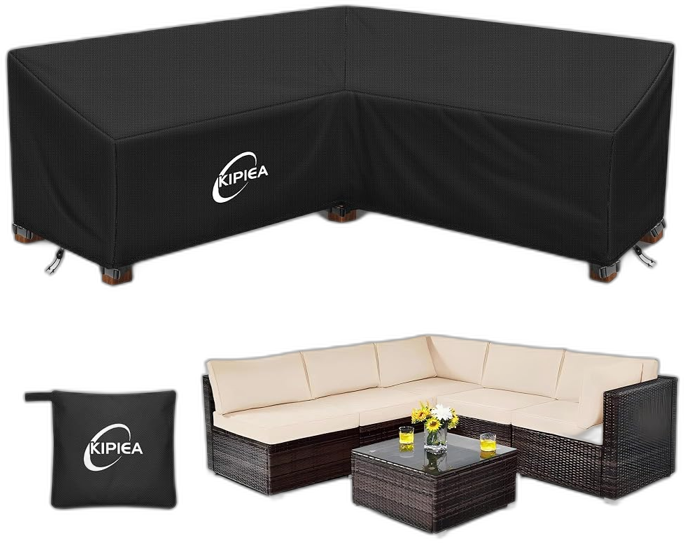
This V-shaped sectional cover lists heavy-duty 420D fabric and six windproof buckles, which helps in breezy spots. Sectionals come in L and V shapes, so match the shape to yours.
For Chairs
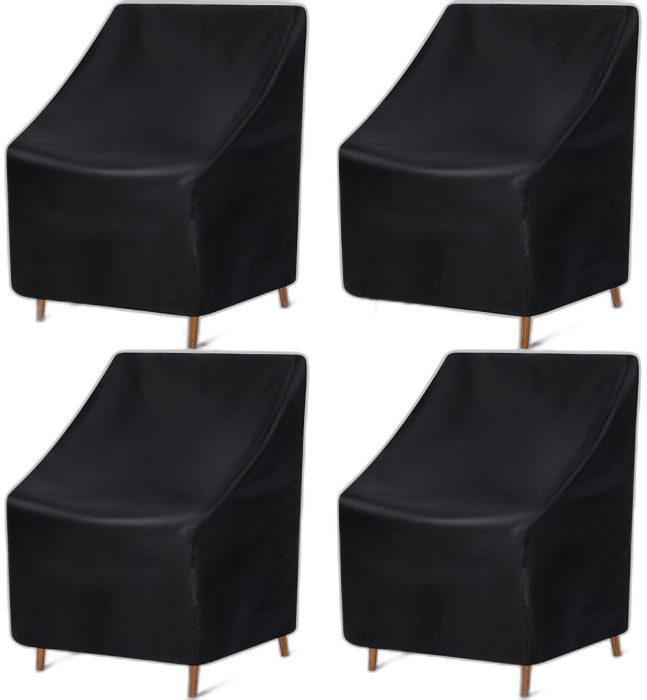
This four-pack of stackable high-back chair covers lists a size of 47 by 25 by 25 by 27.5 inches. Cover stacked chairs together to save money and storage space.
For a Loveseat
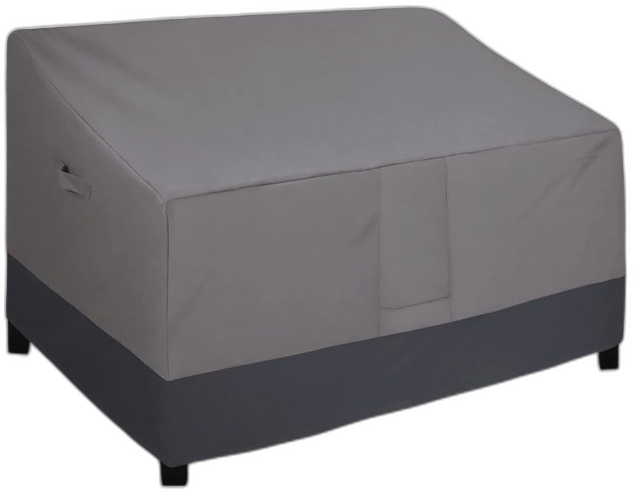
This heavy-duty loveseat cover lists 58 by 32.5 by 31 inches, which fits a standard two-seat outdoor sofa. Measure yours first, since sofas vary.
For an Umbrella
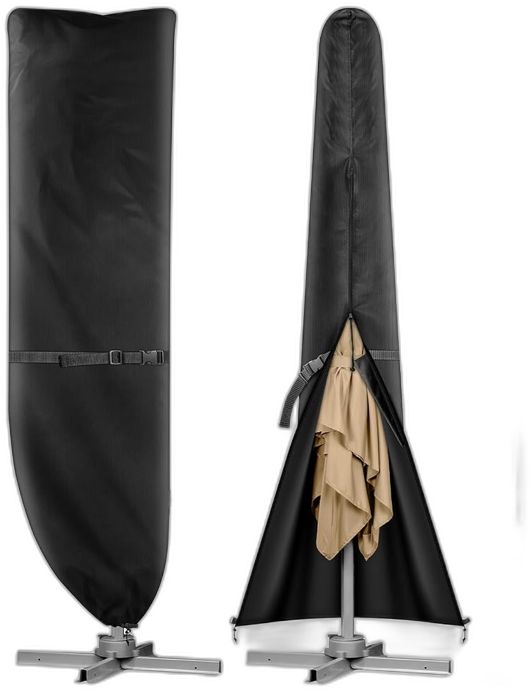
A cantilever umbrella is easy to forget, and the canopy fades fast in the sun. This cover is listed for 9 to 13 foot offset umbrellas.
For Cushions
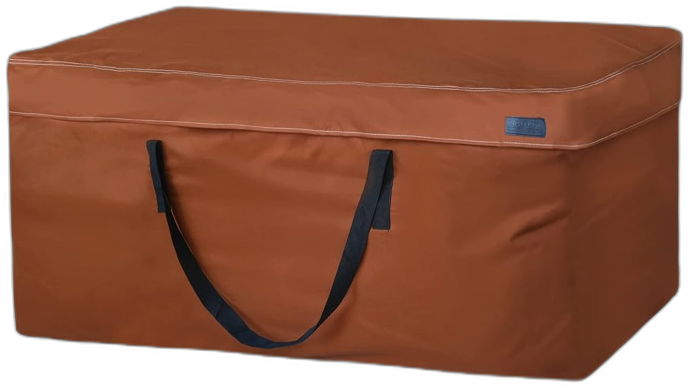
Bring cushions inside, or store them in a zippered bag with handles. This one lists water-resistant fabric and zippers, and it is a good way to keep them clean and dry through the off season. Make sure cushions are fully dry before they go in.
Choose a Cover by Climate
| Where you live | Prioritize | Watch for |
|---|---|---|
| Rainy and humid | A waterproof coating, taped or double-stitched seams, and good vents | Mildew under the cover. Lift it often. |
| Hot and sunny | A UV-protected, fade-resistant fabric and a breathable cover | Cheap fabric that cracks or fades in a season. |
| Windy | Buckles, a drawcord, elastic hems, and a snug fit | Covers that flap and wear at the seams. |
| Snowy and cold | Sturdy fabric and a strap system. Store what you can indoors. | Snow load on flat tables and stiff vinyl in cold snaps. |
| Coastal | A strong, UV-protected cover with a secure fit | Salt air and strong wind. Rinse covers and furniture. |
| Under a roof or porch | A light, breathable cover for dust and pollen | You may not need a heavy waterproof one. |
What Else to Cover on the Patio
A Quick Buying Checklist
- I measured the length, width, and height with the furniture set up as it will be covered.
- The listed cover size is a little bigger than my numbers.
- The cover has vents that keep rain out.
- It has straps, buckles, or a drawcord.
- The seams are double stitched or taped.
- It has a soft inner lining if my furniture scratches easily.
- The fabric suits my climate.
- I read reviews that mention heavy rain and wind.
- I have a place to store cushions.
A Few Related Guides
Planning a patio refresh? See our guide to small patio ideas, our list of patio design mistakes, and the outdoor living trends for 2026.
How to Put On a Cover the Right Way
Keep Mold and Mildew Away
Moisture is the main risk under a cover. Guides agree on a few habits:
- Never cover wet furniture or wet cushions.
- Choose a cover with vents so air can circulate.
- Take the cover off from time to time to air out the furniture, especially after long wet spells.
- Store cushions indoors, or in a ventilated bag or box.
- Clean the furniture before you cover it.
If you find mildew, clean it with mild soap and water or the cleaner your furniture’s maker recommends, and let it dry fully in the sun. Do not scrub hard on finishes.
Wind and Storms
A cover that blows off does nothing. Look for tie-downs, buckles, and a fit that is snug but not tight. In a storm warning, check the straps. If the forecast is for severe wind, bring light furniture and cushions inside, or lay chairs on their sides under a heavy cover. Weights or sandbags on the hem can help, but do not rely on them in strong wind.
A Year-Round Cover Care Calendar
| Season | What to do |
|---|---|
| Spring | Take off the cover. Wipe the furniture, check for rust or mildew, wash the cover, and let everything dry in the sun. |
| Summer | Cover furniture you are not using, especially in strong sun and storms. Take the cover off when the furniture is in use. Keep umbrellas covered when closed. |
| Fall | Clear leaves from the cover and the vents. Clean furniture, dry it, and move cushions inside. |
| Winter | If you leave furniture out, clear heavy snow off the cover, check the straps, and look under it on dry days. Store what you can indoors. |
How to Clean and Store the Cover
- Brush off dirt and leaves with a soft brush or a hose.
- Wash with mild soap and water. Follow the care label.
- Rinse well and air dry completely before folding or storing.
- Check seams, vents, and straps for wear.
- Fold it loosely and store it dry, ideally in its pouch.
Replace the cover when the fabric turns brittle or cracked, the seams leak, or the lining flakes off. Ferguson warns that cheap covers can become brittle and crack over time.
Common Mistakes to Avoid
Frequently Asked Questions
How do I measure for a patio furniture cover?
Measure the length, width, and height of your furniture at the widest points, set up the way you will cover it (chairs tucked in, cushions removed). Choose a cover a little bigger than your numbers, not tight and not loose.
Should a patio furniture cover be bigger than the furniture?
Slightly. Tight covers can damage finishes and strain seams, while loose ones let wind get underneath and collect dust. Guides suggest a snug but not tight fit.
What is the best material for patio furniture covers?
Sources disagree. Some say coated polyester is best because it breathes. Others say vinyl sheds water best. Either can work if the cover has vents, good seams, and a proper fit.
Are waterproof covers really waterproof?
Many covers labeled waterproof only handle light rain. Look for a waterproof coating, taped or double-stitched seams, a snug fit, and reviews that mention heavy storms.
Do patio furniture covers need vents?
Yes. Vents let air circulate so condensation does not stay under the cover and cause mold and mildew. Make sure they are designed to keep rain out.
Can I cover wet patio furniture?
No. Trapped moisture can grow mold and mildew. Clean and fully dry furniture and cushions before you cover them.
Should I leave cushions under the cover?
It is better not to. Cushions hold moisture. Bring them inside or store them in a ventilated bag or box.
How do I keep a cover from blowing off?
Use a cover with straps, buckles, a drawcord, or elastic hems, choose a snug fit, and fasten everything. In severe wind, bring light furniture inside.
How do I stop water from pooling on a cover?
A flat table top can hold water. A popular trick is to place an upside-down bucket or ball in the middle so the cover slopes and sheds water.
Is a tarp a good patio furniture cover?
Not for long-term use. A tarp does not fit well, blows off easily, and can trap moisture. A fitted, vented cover is better.
How long do patio furniture covers last?
It depends on the fabric, the sun, and how you care for the cover. Cheap covers can turn brittle and crack. Replace one when it cracks, leaks, or the lining flakes.
How do I clean a patio furniture cover?
Brush off dirt, wash with mild soap and water, rinse well, and air dry completely before folding. Follow the care label.
Do I need a cover in winter?
It depends. If you leave furniture out, clear heavy snow off the cover and check under it. If you can, store furniture and cushions indoors for the worst months.
Can I buy a cover that is made for my furniture brand?
Yes, when it is available. Covers made by your furniture maker are cut for that set. Otherwise, match the listed size carefully.
Sources and Further Reading
- Patio Productions: 7 tips on how to choose the right outdoor patio furniture cover
- Ferguson Home: Patio furniture covers buying guide
- Mint Outdoor: The winter storage watchlist
Covers are sold by many brands with different sizes and features. Check the listing and current reviews. Last checked October 2026.

Daniel Carter covers the practical side of home improvement at The Dailey House — drainage fixes, DIY yard projects, patio makeovers, and the kind of weekend builds that actually get finished. If there's a smarter or cheaper way to do it, he's tested it.