

Your patio has good bones — decent furniture, a nice slab, maybe even string lights — but it still doesn’t look like the ones you save on Pinterest. Nine times out of ten, that gap isn’t about budget. It’s a handful of design mistakes that are easy to make and even easier to miss once you’re standing in the middle of the space.
Here are the mistakes that quietly wreck the most patios, and the specific fix for each one — most of which cost nothing but an afternoon of rearranging.
Why These Mistakes Are So Easy to Make
Most patio mistakes aren’t about taste — they’re about habits carried over from indoor rooms that don’t hold up outside. Indoors, hugging furniture to the walls opens up a room; outdoors, with no ceiling or hallway to define the space, it just leaves a hole in the middle. Indoors, one overhead fixture is enough light; outdoors, that same fixture leaves half the seating area in the dark. The fixes below aren’t about spending more — they’re about un-learning a few habits that work fine inside and quietly work against you outside.
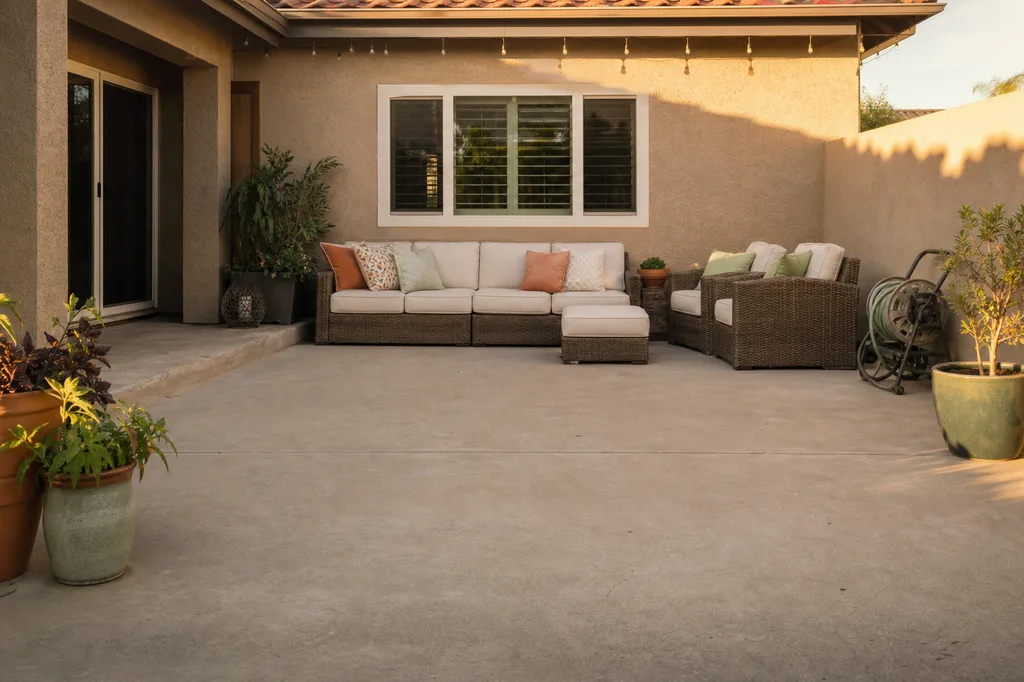
1. Pushing Every Piece of Furniture Against the Walls
This is the single most common patio mistake, and it comes from indoor habits. Hugging the perimeter feels like it “opens up” the space, but outdoors it does the opposite — it leaves a dead, useless void in the middle and makes conversation nearly impossible since everyone ends up shouting across the gap. Pull seating in toward the center instead, even if that means leaving a strip of bare patio around the edges. A tighter cluster with 3-4 feet between pieces reads as intentional; furniture scattered along the walls reads as “we didn’t know what to do with this.”
2. Skipping a Base Layer Under the Furniture
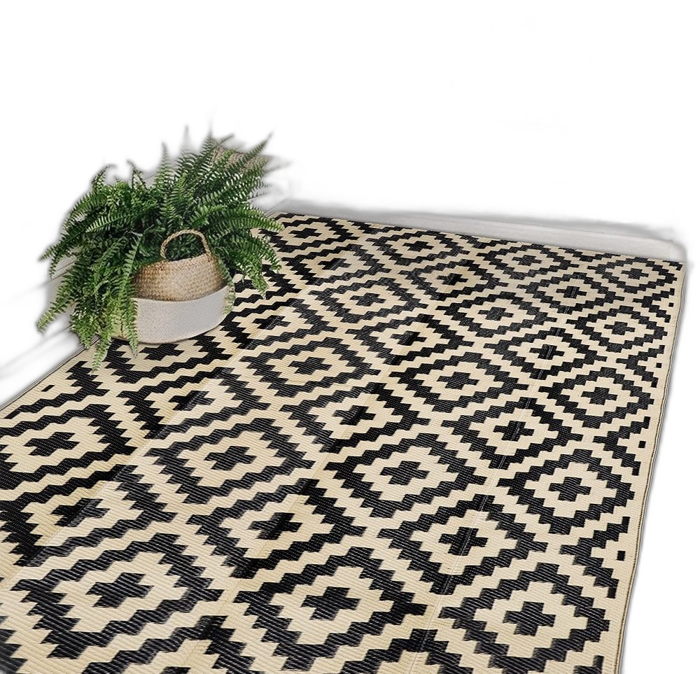
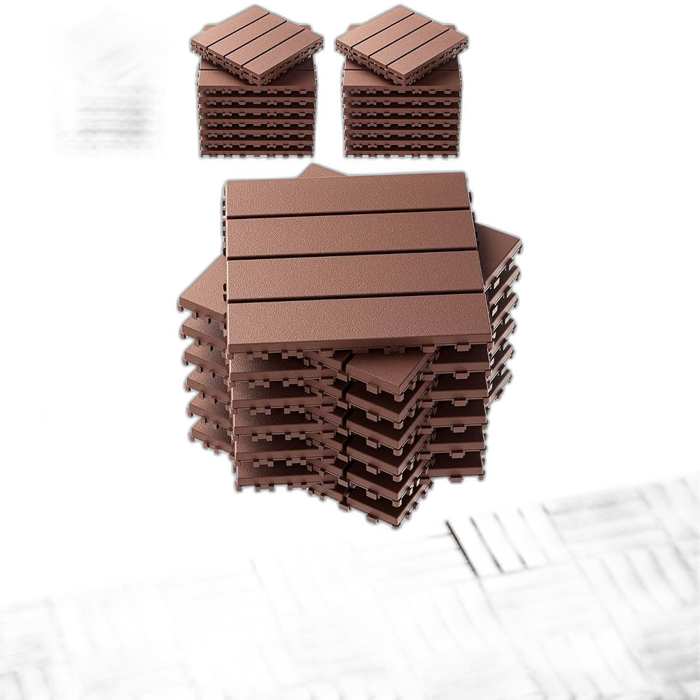
Furniture set directly on bare concrete or cracked pavers never looks finished, no matter how nice the pieces themselves are — it’s the outdoor equivalent of a living room with no rug. An outdoor rug, a run of deck tiles, or even a defined gravel or paver zone gives the seating area a visual boundary and instantly makes it read as a “room” instead of stuff parked on a slab. If your existing surface is the actual problem — cracked, stained, or just dated concrete — it’s worth comparing concrete pavers against patio tiles before you invest in furniture that will sit on top of it.
3. Mixing Every Style You Like Into One Space
Boho cushions next to a modern black metal frame next to a cottage-style lantern doesn’t read as “eclectic” outdoors the way it sometimes can inside — it reads as clutter, because there’s no indoor architecture to tie the mix together. Pick one style direction before you buy anything else, and let every new piece answer to it. If you’re not sure which direction fits your space and climate, this year’s outdoor living trends is a fast way to narrow it down without buying and returning three sets of cushions.
4. Undersized or Oversized Furniture for the Space
A deep sectional swallows a small patio and blocks every walkway; a single bistro set gets lost on a large one and makes the space feel empty. Before buying, measure your patio and leave at least 3 feet of clear walking path around any seating group — that number alone tells you whether you’re shopping for a loveseat or a full sectional. Small or oddly shaped patios have their own playbook worth checking first: see small patio ideas that make a tiny space feel bigger and patio furniture sized for small spaces before you commit to anything.
5. Relying on a Single Light Source
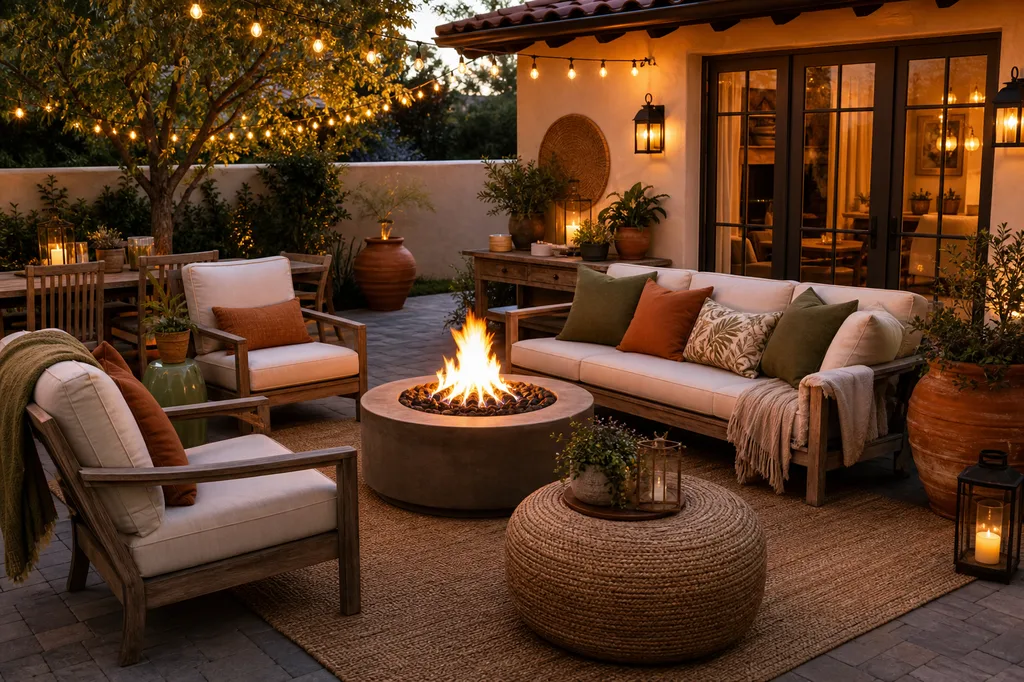
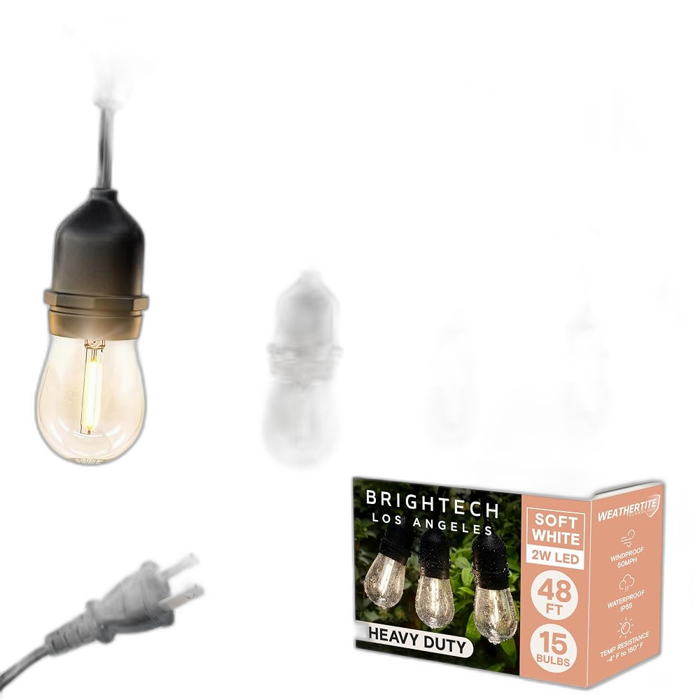
One overhead porch light or a single string of bulbs leaves half the patio in shadow and the other half glaring. Real outdoor lighting is layered: ambient (string lights or lanterns for overall glow), task (something bright enough to actually see food or a book by), and accent (a small light on a plant or feature) working together. Even two of these three layers looks dramatically more finished than one light doing all the work.
6. No Clear Focal Point
Without something for the eye to land on, a patio feels flat even when every individual piece on it looks good. A fire pit, a large potted tree, a water feature, or even one oversized piece of outdoor art can anchor the whole layout. Pick one focal point and arrange the seating to face it — not the yard, not the door.
7. Ignoring Your Actual Climate
Materials and layouts that look great in a mild-climate photo can fail fast somewhere with hard freezes, intense sun, or heavy rain. Untreated wood warps, some composites fade in full sun, and certain surfaces crack when water gets underneath and freezes. Choose materials rated for your actual conditions, not the climate the inspiration photo was shot in — it’s the difference between a patio that still looks good in three years and one you’re redoing next spring.
8. Buying Everything in One Trip
It’s tempting to order the full set — furniture, rug, lighting, decor — in a single cart. But living with just the base layer and core seating for a week or two shows you what’s actually missing, which is almost never what you’d have guessed while shopping online. Spacing purchases out also means you catch a bad fit (wrong size, wrong tone) before you’ve spent the whole budget on things you can’t return as easily as furniture.
9. No Privacy or Screening
A patio that backs onto a neighbor’s window or a busy street rarely gets used, even if it looks great — exposure makes people cut their time outside short without quite knowing why. A simple trellis, a row of tall planters, an outdoor curtain, or a slatted screen solves this without the cost of fencing, and it usually becomes a style feature in its own right rather than just a barrier.
10. No Shade Plan for the Hottest Part of the Day
A patio that’s unusable from noon to 4pm in summer doesn’t get used at all, no matter how good it looks in photos. Umbrellas, a retractable awning, a shade sail, or even a couple of well-placed tall planters can pull a south- or west-facing patio back into daily use. Figure out where the sun actually sits at peak afternoon before you commit to a furniture layout — a seating group that gets full sun for four straight hours will sit empty regardless of how it’s styled.
11. Cheap Textiles That Fade or Mildew Within a Season
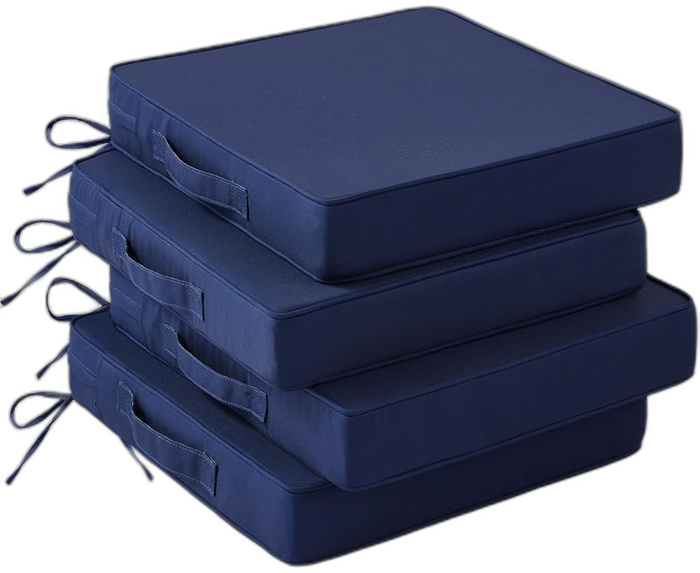
Indoor-grade cushions and rugs look fine in the store but fade, mildew, or stiffen after a few weeks outside — and a patio with sun-bleached cushions and a moldy rug looks worse than one with no textiles at all. Look specifically for outdoor-rated fabrics (usually solution-dyed acrylic) and rugs made for outdoor use, and store cushions somewhere dry during long stretches of rain. It costs more upfront than a big-box indoor set, but it’s the difference between textiles that still look good next summer and ones you’re replacing every spring.
12. Skipping Drainage and Pre-Wiring Before You Build
This one only applies if you’re building or replacing a patio surface rather than just decorating an existing one, but it’s the most expensive mistake to fix after the fact. A patio with no slope or drainage plan sends rainwater straight toward the house foundation or pools in the middle of the slab, and fixing that after the concrete or pavers are down means tearing them back up. The same goes for wiring and plumbing — if there’s any chance you’ll want string lights on a switch, a built-in fire feature, or an outdoor kitchen down the line, run the conduit or gas line before the surface goes in. It’s a much smaller job during construction than it is once the patio is finished.
Quick Self-Audit: Which Mistakes Are You Making?
Walk outside and check off anything that applies to your current setup. Anything checked is a fix you can likely make this weekend without buying new furniture.
🔍 Patio Mistake Self-Audit
Check anything that describes your patio right now.
Patio Picks That Fit This Guide
Frequently Asked Questions
What is the most common patio design mistake?
Pushing all the furniture against the walls and leaving the center empty. It’s an indoor habit that backfires outside, since it kills conversation flow and makes the space feel unused even when it’s technically furnished.
How do I make my patio look more expensive without a full renovation?
Add a base layer (rug or tiles) under the seating, commit to one style instead of mixing several, and layer in at least two light sources. Those three fixes cost far less than new furniture and make the biggest visible difference.
Why does my patio still look bad even with nice furniture?
Good furniture on a bad layout still looks bad. Check placement (pulled toward a focal point, not the walls), scale (sized to the actual space), and whether there’s a base layer underneath — these usually matter more than the furniture itself.
How much space should be left between patio furniture?
Leave 3-4 feet of walking path around any seating cluster, and roughly 18 inches between individual seats so people can get in and out without shuffling everything else.
Do I need a focal point on a small patio?
Yes, even a small one. A single large planter, a compact fire bowl, or one piece of wall art gives the eye somewhere to land — without it, even a well-furnished small patio can feel unfinished.
What outdoor rug material lasts longest?
Polypropylene and solution-dyed acrylic rugs handle moisture and sun best without fading or mildewing. Natural fiber look-alikes made from synthetic materials give you the same visual warmth without the maintenance a real jute or sisal rug needs outdoors.
How do I add shade to a patio without a full pergola build?
A large cantilever or market umbrella, a retractable shade sail anchored to the house and a post, or tall potted trees positioned to block afternoon sun all work without any construction. These are also easy to reposition if you get the angle wrong on the first try.
Final Thoughts
None of these fixes require a rebuild. Pull the furniture inward, add a base layer, commit to one style, layer your lighting, and give the space one thing to focus on — in most cases that’s the entire gap between a patio that looks “fine” and one that looks finished.
If you only have time for one fix this weekend, start with furniture placement — pulling seating away from the walls and toward a focal point changes how the whole space reads before you’ve spent a single dollar. Everything else on this list (lighting, textiles, shade, screening) is easier to judge once the layout itself is right, since a good layout with the wrong lamp is a five-minute fix, while good lighting on a bad layout still won’t save the space.
If you’re rebuilding from the surface up rather than just rearranging, this concrete slab makeover guide and our beginner patio makeover walkthrough pick up where this list leaves off.

Daniel Carter covers the practical side of home improvement at The Dailey House — drainage fixes, DIY yard projects, patio makeovers, and the kind of weekend builds that actually get finished. If there's a smarter or cheaper way to do it, he's tested it.