

A French drain is one of the most effective ways to stop water from pooling in a yard or soaking toward a foundation. It is also one of the easiest to get wrong. This guide explains what a French drain is, whether you need one, how deep and how steep to dig it, what it costs, and how to install it step by step. We checked the numbers against drainage makers, home improvement editors, and cost guides, and we flag the places where they disagree.
French Drain Quick Facts
- What it is: a perforated pipe buried in a sloped trench full of gravel, wrapped in filter fabric, that carries water away.
- Typical size: a 4-inch pipe in a trench about 6 to 18 inches wide and 18 to 24 inches deep. Foundation drains can go deeper.
- Slope: at least 1 percent (about 1 inch of drop per 8 to 10 feet). Some pros prefer 1/4 inch per foot.
- Gravel: clean, angular stone, about 3/4 inch to 1.5 inches.
- DIY cost: roughly $10 to $25 per linear foot in materials. Pro cost: roughly $10 to $80 per foot, depending on the source and the job.
- Skill level: moderate. It is hard work, and the slope must be right.
- Before you dig: call 811 so buried lines get marked.
What Is a French Drain?
A French drain is an underground channel that collects water and carries it to a safe place. It has four parts:
NDS, a drainage products maker, describes it as a perforated pipe buried in a gravel-filled trench that uses gravity to move water away from yards, foundations, and basements (NDS). The name does not come from France. Hunker reports it was named for Henry French, a Massachusetts farmer who wrote about the idea in the 1800s (Hunker).
How a French Drain Works
Water in wet soil seeks the easiest path. Gravel has lots of open space, so water flows into the trench much faster than it moves through the surrounding soil. It reaches the pipe through the holes, then flows downhill to the outlet. The fabric lets water in but stops fine soil that would clog the gravel over time. For basements, a French drain also relieves hydrostatic pressure, which is water pushing against the foundation (NDS).
That last point matters. A French drain moves water that is already in the ground. It does not stop roof water or surface runoff by itself. Fix the gutters and downspouts first.
Do You Need a French Drain?
NDS lists these signs:
- Standing water that lasts 24 to 48 hours after rain.
- Soggy, waterlogged lawn areas or dead, yellowing grass.
- Water seeping into the basement during rain.
- Pooling against foundation walls.
- Erosion along a retaining wall.
Before you dig, rule out the cheap fixes. Clean the gutters, extend the downspouts at least 6 feet from the house, and check that the ground slopes away from the foundation. Our guide to fixing drainage around your house walks through those steps. A French drain is the right tool when the water comes from the ground itself, or when regrading is not possible.
When a French Drain Is Not the Right Fix
NDS warns against French drains in these cases:
Types of French Drains
| Type | Where it goes | Best for | DIY? |
|---|---|---|---|
| Curtain drain | Shallow, across a lawn or uphill of a problem area | Soggy yards and surface water over a wide area | Yes |
| Exterior foundation drain | Along the outside of the house, near the foundation | Water pooling at the foundation | Often a pro job |
| Footing drain | At the base of the foundation, usually put in when the house is built | Protecting a basement or crawl space | No |
| Interior drain | Around the inside of a basement, often with a sump pump | Basement water | No |
NDS also lists trench drains. Those are a different product, a channel with a grate set into a driveway or patio. They catch surface water, not groundwater.
French Drain vs Other Drainage Fixes
| Fix | Best when | Limits |
|---|---|---|
| Regrade the soil | The ground slopes toward the house | Needs space to build a slope |
| Downspout extension | Roof water pools at the foundation | Does not move groundwater |
| French drain | Water sits in or under the soil | Needs slope and a good outlet |
| Dry creek bed | Surface water needs a path, and you want a garden look. See our dry creek bed guide | Handles surface flow, not deep groundwater |
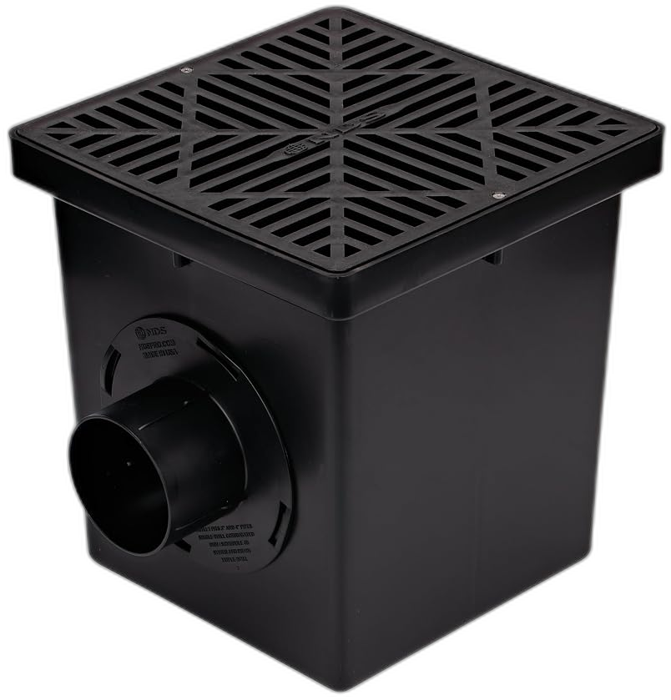
| Catch basin or channel drain | Fast surface runoff from roofs, patios, and driveways | Needs a pipe to carry the water off |
| Dry well | No outlet to daylight, and the soil drains below | Fails in dense clay or a high water table |
| Sump pump | Basement water that cannot flow out by gravity | Needs power and upkeep |
Plan the Route Before You Dig
1. Find where the water comes from and where it can go. Watch the yard during a heavy rain. Mark the wet spots with flags. Your drain should run from or around the wet area to an outlet at a lower point.
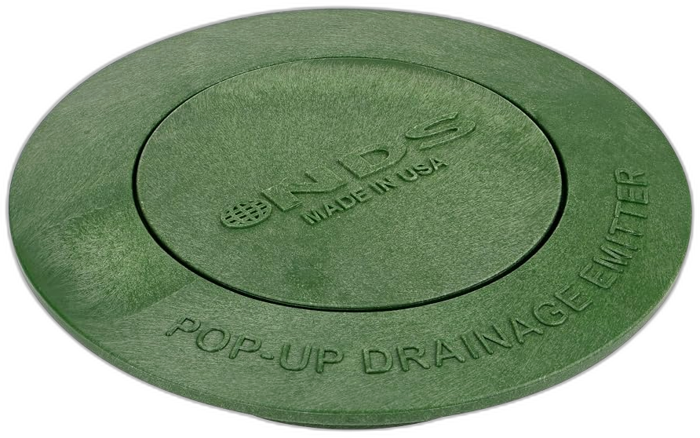
2. Pick the outlet. The water has to end up somewhere safe. NDS lists a spot where the pipe can run out to open ground (called daylight), a dry well, a lower area of the yard, a stormwater system, or a pop-up emitter. Never point it at a neighbor’s yard or onto a sidewalk. Tying into a storm sewer usually needs a permit and a licensed plumber.
3. Call 811. It is the free national number that gets buried gas, electric, water, and phone lines marked. Do it a few days ahead (call811.com).
4. Check local rules. NDS says permit rules vary by town. Small backyard drains may not need a permit, but larger projects or ones near the foundation often do. Call your building department.
5. Do the slope math. The pipe must drop steadily toward the outlet. NDS says at least a 1 percent slope, about 1 inch of drop for every 8 to 10 feet (NDS install guide). This Old House uses 1/4 inch per foot, which is about 2 percent (This Old House). More slope is fine, as long as the water does not rush.
| Length of run | Drop at 1 percent | Drop at 1/4 inch per foot |
|---|---|---|
| 25 feet | 3 inches | 6 1/4 inches |
| 50 feet | 6 inches | 12 1/2 inches |
| 100 feet | 12 inches | 25 inches |
So a 50-foot drain needs the outlet end to sit at least 6 inches lower than the start. If your yard does not drop that much, the trench itself has to get deeper toward the outlet.
Where to Put a French Drain: Common Yard Layouts
Most searches for French drains are about a specific spot. Here is how the idea applies to the most common ones.
| Situation | Where the drain goes | Watch out for |
|---|---|---|
| Wet front or back lawn | A curtain drain across the slope, uphill of the soggy area, running to a lower outlet | Make sure the outlet is lower than the start |
| Water near the foundation | Run it parallel to the house, with the outlet well away from the wall | Foundation-depth drains are usually a pro job |
| Narrow side yard between houses | Along the low edge of the strip, with solid pipe out to the street side or the back yard | Do not send water onto a neighbor’s property |
| Behind a retaining wall | At the base of the wall, in gravel, so water does not build up behind it. See our retaining wall guide | Heavy walls need an engineer |
| Beside a patio or driveway | Between the paved area and the lawn, or use a channel drain at the edge of the pavement | Surface runoff is often better handled by a channel drain |
| Near a pool or large trees | Keep the drain away from the pool structure and away from big roots | Ask a pro. Roots can clog the pipe, and digging near a pool can cause damage |
If water comes from a roof, extend the downspouts first. You can often send downspout water into the same drain through solid pipe, as long as the drain and outlet can handle the extra flow (NDS says to check that the outlet has enough capacity).
How Deep and How Wide?
Sources disagree, and the right answer depends on the job. Here is what we found:
| Source | Width | Depth |
|---|---|---|
| NDS | 6 to 12 inches | 18 to 24 inches |
| This Old House | 18 inches | 24 inches (and about three times the pipe diameter at minimum) |
Our take for a yard drain: a trench about 12 to 18 inches wide and 18 to 24 inches deep is a safe plan. Shallow curtain drains that only handle surface water can be a bit shallower. For a drain next to a foundation, the depth depends on where the footing sits, and a pro should set it. Wider and deeper trenches also help in clay soil (NDS).
Choose Your Materials
Pipe
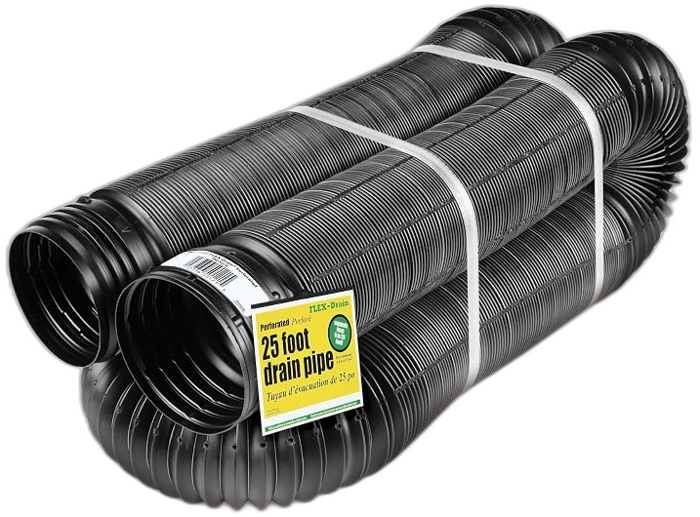
Use 4-inch perforated pipe. That is the size NDS and This Old House both use. You can buy it in rigid lengths or as flexible, corrugated rolls. Rigid pipe holds its slope better. Flexible pipe is easier to handle and bend around obstacles. A sock or sleeve over the pipe adds a filter layer. Follow the pipe maker’s instructions for which way the holes face. This Old House sets them facing down.

Filter fabric
Use a non-woven geotextile fabric. NDS calls out high-quality non-woven fabric for clay soil. Plan enough to line the bottom and both sides and fold over the top. A simple rule: the width you need is about twice the trench depth plus the trench width, plus about a foot of overlap. For a 24-inch deep, 12-inch wide trench, that is about 6 feet of fabric width. That is our math, not a manufacturer spec.

Gravel
Use clean, angular gravel. NDS recommends stone from about 3/4 inch to 1.5 inches. This Old House uses 3/4-inch crushed stone and notes that the sharp edges leave gaps for water. Washed stone has less dust. Skip sand and fine gravel, which clog.
| Trench size (width x depth) | Per 50 feet | Per 100 feet |
|---|---|---|
| 12 x 18 inches | 2.8 cubic yards | 5.6 cubic yards |
| 12 x 24 inches | 3.7 cubic yards | 7.4 cubic yards |
| 18 x 24 inches | 5.6 cubic yards | 11.1 cubic yards |
These are upper limits because they assume the trench is full. In practice, you leave a few inches of soil on top, and the pipe takes up some space. Ask your supplier how many tons are in a cubic yard of your stone, since that varies.
Tools
You will need a shovel (a trenching or drain spade makes narrow digging easier), a wheelbarrow, a tape measure, stakes and string, a level, a rake, a tamper, and gloves. For long runs, a trencher is a rental that saves a lot of labor.


How to Install a French Drain, Step by Step
Time: a 50-foot drain is a long weekend job for two people with hand tools. A trencher cuts that down.
How Much Does a French Drain Cost?
Prices vary a lot by region, soil, and access. Here is what the sources say:
| Source | DIY (materials) | Professional |
|---|---|---|
| NDS | $10 to $25 per linear foot | $25 to $80 per linear foot |
| This Old House | Under $1,000 for a typical project | $10 to $100 per linear foot |
| LawnStarter (2026) | About $700 for a typical project | $10 to $65 per foot outside, $40 to $100 inside. Average about $5,000, range about $1,650 to $12,250 |
| HomeGuide | Not listed | $10 to $35 per foot |
The sources do not match, so use a range. As a rough guide for a 50-foot exterior drain: DIY materials about $500 to $1,250 (using NDS’s per-foot range), and a pro about $500 to $4,000 or more. Labor is the biggest cost for a pro, and clay soil, tight access, and hand digging push it up.
Other costs to plan for. LawnStarter lists permits at about $58 to $225, a trencher rental at about $85 a day, landscape fabric at about $0.45 to $0.80 per square foot, and gravel at about $25 to $53 per ton. Interior basement drains cost much more because of the demolition and the sump pump.
Common Mistakes to Avoid
Keep It Working: Maintenance
In heavy clay, any fabric can clog over many years. That is a limit of the method, not a defect. A drain that used to work and now fills slowly is often clogged. A camera inspection can find the problem.
When to Call a Professional
- Water is actively entering your basement or crawl space.
- The drain must sit at the footing depth next to the foundation.
- Your lot is flat, or you cannot get a clear outlet.
- You need to tie into a storm sewer or cross a property line.
- You hit a utility line, rock, or a high water table.
For foundation work, NDS recommends a professional design. Get at least three quotes, and ask whether permits and liability insurance are included.
Frequently Asked Questions
How deep should a French drain be?
For most yard drains, about 18 to 24 inches deep and 6 to 18 inches wide. NDS says 18 to 24 inches deep and 6 to 12 wide. This Old House uses 24 inches deep and 18 wide. A foundation drain depends on the footing depth, so ask a pro.
How much slope does a French drain need?
At least 1 percent, which is about 1 inch of drop for every 8 to 10 feet. Some guides prefer 1/4 inch per foot. A 50-foot drain needs the outlet at least 6 inches lower than the start at 1 percent.
How far from the house should a French drain be?
It depends on the goal. To protect a foundation, a drain usually runs along the foundation at about footing depth, which is a pro job. For a yard, put it uphill of the wet area, or across the path water takes, and keep the outlet well away from the house.
Which way do the holes in the pipe go?
Follow the pipe maker’s instructions. This Old House sets perforated pipe with the holes facing down. Some pros face them up. What matters most is that the pipe is surrounded by clean gravel and has enough slope.
Do I need filter fabric and a pipe sock?
Fabric around the gravel is important because it keeps soil out. A sock on the pipe adds a second filter. In heavy clay, use a good non-woven fabric. Any fabric can clog over many years in clay.
What kind of gravel should I use?
Clean, angular stone from about 3/4 inch to 1.5 inches. Washed stone has less dust. Avoid sand and fine gravel because they clog.
How much does a French drain cost?
DIY materials run about $10 to $25 per linear foot (NDS). Pros charge about $10 to $80 per foot, depending on the source. LawnStarter puts the national average near $5,000, with a typical range of about $1,650 to $12,250.
Can I install a French drain myself?
A simple yard drain is a realistic DIY project if you can dig, check slope, and plan the outlet. Foundation and basement drains are usually best left to a pro.
Where should the water go?
To a safe outlet, such as open ground downhill, a pop-up emitter, a dry well, or a storm drain with a permit. Do not send it to a neighbor’s yard.
How long does a French drain last?
It depends on soil, roots, and maintenance. Keep the outlet clear and flush it from time to time. In heavy clay, fabric can clog after many years, and a clogged drain often needs a camera inspection or a rebuild.
French drain or sump pump: which is better?
They do different jobs and often work together. A French drain collects groundwater and moves it by gravity. A sump pump lifts water out of a basement pit when gravity cannot do the job.
Do French drains need maintenance?
Yes, a little. Keep the outlet clear, flush the pipe now and then, watch for roots, and check for new pooling after heavy rain (NDS).
Sources and Further Reading
- NDS: What is a French drain
- NDS: How to install catch basins (slope guidance)
- This Old House: French drain installation
- LawnStarter: French drain cost (2026)
- HomeGuide: French drain cost
- Hunker: What is a French drain
- Call 811: Know what is below
Last checked October 2026. Costs and rules vary by location. This guide is general information, not engineering advice.

Daniel Carter covers the practical side of home improvement at The Dailey House — drainage fixes, DIY yard projects, patio makeovers, and the kind of weekend builds that actually get finished. If there's a smarter or cheaper way to do it, he's tested it.