
Should you sit or stand while you work? The honest answer is more interesting than “one is better.” Research shows risks on both sides, and the best results come from changing position. Here is what the studies say, how the two compare, and how to choose.
The Short Answer
- Neither wins alone. Sitting for too long and standing for too long both carry risks.
- Movement matters most. Changing position and walking beats any single posture.
- A sit-stand setup is the best of both. It lets you switch as your body asks.
- Standing is not a heart cure. A large 2024 study found no heart benefit from standing more.
- Start small. Try 30 to 60 minutes of standing a day, then adjust.
Standing Desk vs Sitting Desk at a Glance
| Factor | Sitting desk | Standing desk |
|---|---|---|
| Time spent sitting | Highest | Lower. Users sat 30 minutes to 2 hours less per workday (Cochrane). |
| Calories per hour | About 80 | About 88 (Harvard Health) |
| Low back comfort | Fine with a good chair and breaks | Small gains in people who began without back pain (CDC library) |
| Circulation | Risk rises above 10 hours of sitting a day | Risk rises above 2 hours of standing a day |
| Detail and focus work | Easier for fine, steady tasks | Good for calls and reading. Fine detail can be harder. |
| Foot and leg comfort | Rarely an issue | Can tire the feet, knees, and hips |
| Setup effort | Low | Medium. Height, mat, and screen position matter. |
| Cost | Lower | Higher, especially for an electric desk |
| Space | Standard | Needs room for the rise and for cords |
What Too Much Sitting Does
The American Heart Association calls too much sitting one of the most common threats to heart health in the U.S. It links long sitting to higher risks of heart disease, stroke, and poorer mental health, and says the risk shows up even in people who exercise (AHA).
A University of Sydney study of 83,013 UK adults found that sitting more than 10 hours a day was tied to a higher risk of both heart disease and circulation problems like varicose veins (study, summary). The takeaway is not that sitting is poison. It is that long, unbroken sitting is the problem, and regular movement is the fix.
What Too Much Standing Does
Standing sounds healthy, but it is not a free pass. In the same Sydney study, standing more did not lower heart disease risk. People who stood more than 2 hours a day had a higher risk of circulation problems, with risk rising about 0.11 for every extra 30 minutes. The group was older (average age 61), and the study cannot prove cause. Still, it fits the safety advice: CCOHS warns that standing too long may lead to foot, knee, hip, and back issues (CCOHS).
Going from all-day sitting to all-day standing swaps one problem for another. That is why researchers suggest everyday movement, like walking breaks and using the stairs, instead of just standing.
What Studies Say About Sit-Stand Desks
They cut sitting time. A Cochrane review of 20 studies with 2,174 people found sit-stand desk users sat 30 minutes to 2 hours less per workday. The evidence was low quality and there was no long-term data. Standing more did not cause muscle pain, varicose veins, or lower productivity in those studies (Cochrane).
Back comfort may improve a little. A review of 8 studies found less low back discomfort in sit-stand users who began without back pain. The gains were about 0.3 to 0.5 points on a 10-point scale. Nobody knows yet how much standing is best, or whether it helps people who already have back pain (CDC library).
Calorie burn is tiny. Harvard Health reports about 80 calories an hour sitting and 88 standing, so about 24 extra over three hours. Walking burned about 210 an hour (Harvard Health).
Focus and Productivity
Some people feel more awake on their feet. Cleveland Clinic cites a 2022 study with moderate improvements in fatigue (Cleveland Clinic). But the picture is mixed. Harvard Health notes that frequent position changes can disrupt concentration, and that tasks needing steady hands are often easier to do seated.
A simple split works for many people: stand for calls, reading, and email, and sit for writing, design, and detailed work.
Posture and Setup: Sitting vs Standing
Either position can hurt if it is set up badly. Here is what safety agencies recommend for each:
| Setting | Sitting | Standing |
|---|---|---|
| Body position | Whole foot on the floor, back of the knee slightly above the seat, back supported (OSHA) | Legs, torso, neck, and head in line, feet slightly apart (OSHA) |
| Desk or keyboard height | Elbows near keyboard height, forearms level. Seated keyboards adjust from 22 to 30 inches (OSHA) | Desk at about standing elbow height, wrists straight (CCOHS) |
| Screen | 20 to 40 inches away, top at or just below eye level (OSHA) | Between level with your eyes and 35 degrees below (CCOHS) |
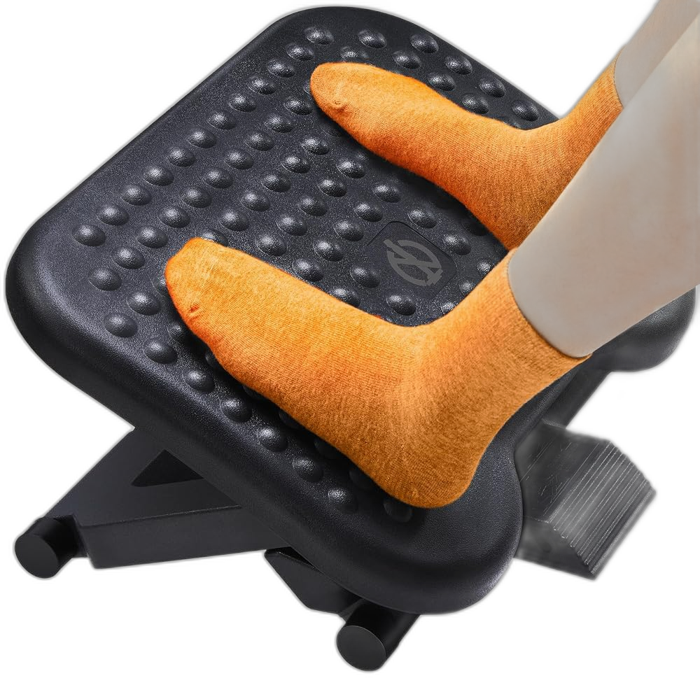
| Comfort aids | Footrest if the seat cannot go low | Anti-fatigue mat, supportive shoes, and a footrest to shift weight (CCOHS) |
Not sure what height your desk should be? Our desk size guide lists standard desk heights (28 to 30 inches) and typical standing desk heights (38 to 48 inches).
Which Is Better for You?
| Your situation | Better fit |
|---|---|
| You sit 8 or more hours a day | A sit-stand setup, plus walking breaks |
| You do detailed, steady-hand work | Mostly seated, with standing for other tasks |
| You have back pain | Ask a doctor or physical therapist. Short standing blocks may help some people. |
| You have varicose veins or are pregnant | Ask your doctor before standing for long periods |
| You are on a tight budget | A good chair plus a timer to stand up, or a low-cost converter |
| You have a small space | A converter or a compact desk. See foldable desks. |
| You want to try standing first | A desk converter on your current desk |
The Best Answer: Mix Sitting, Standing, and Moving
There is no proven perfect schedule. CCOHS says advice ranges from sitting for one hour and standing for 5 minutes, to switching every 20, 30, 45, or 60 minutes. Harvard Health suggests starting with 30 to 60 minutes of standing a day and building up slowly. The AHA suggests walking breaks and walking after meals.
For a deeper look at standing, read our guide to standing desk benefits. If you plan to keep sitting, a good setup matters. See how to set up a study desk.
Cost and Space: What You Can Buy
You do not have to buy a new desk. Here are options from lowest to highest cost, with the gear that helps most.
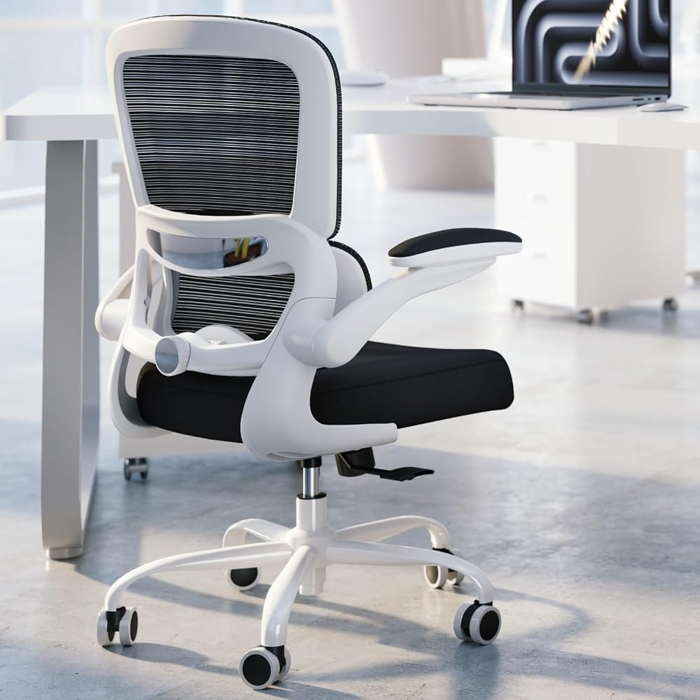
Improve your sitting setup. A chair that fits you makes long sitting easier on your back.
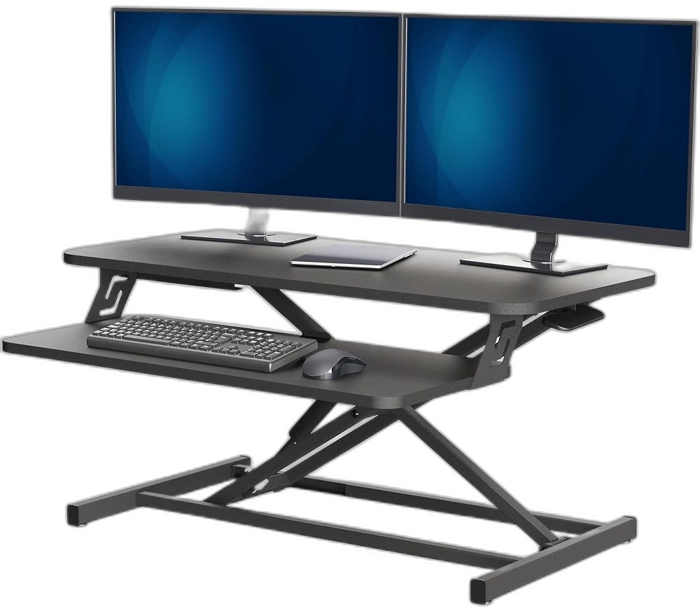
Try standing cheaply with a converter. It sits on your current desk and raises your keyboard and screen.
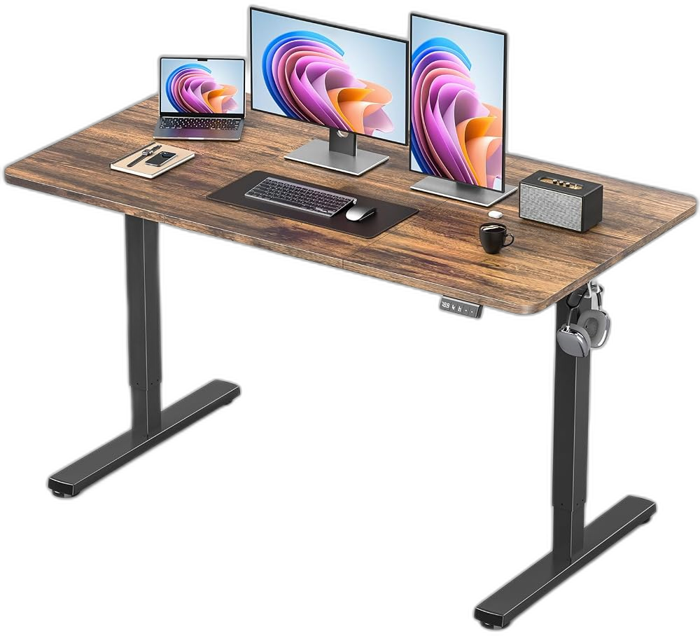
Go all in with an electric desk. One-touch height changes and a full surface.
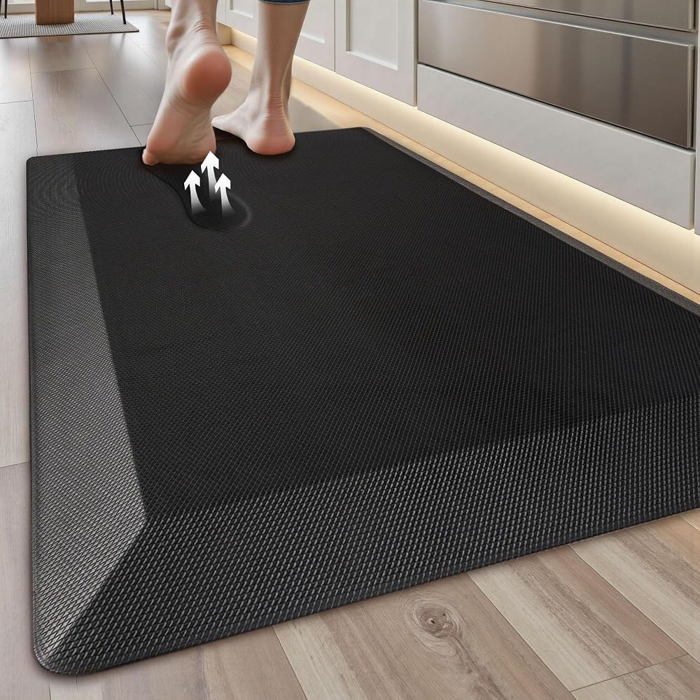
Add a mat to either choice if you stand. It makes standing much easier on your feet.
How to Choose in 5 Questions
Common Mistakes to Avoid
Frequently Asked Questions
Is a standing desk better than a sitting desk?
Not on its own. Studies show standing desks help you sit less, but the health gains are small and the evidence is limited. A large 2024 study found no heart benefit from standing more. The best habit is to mix sitting, standing, and walking.
Is sitting all day really that bad?
The American Heart Association calls too much sitting one of the most common threats to heart health in the U.S., and says the risk shows up even in people who exercise. A 2024 study of 83,013 adults found higher heart and circulation risk above 10 hours of sitting a day.
Is standing all day bad for you?
It can be. CCOHS warns that standing too long can cause foot, knee, hip, and back problems. The same 2024 study linked more than 2 hours of daily standing to a higher risk of varicose veins and leg blood clots. It cannot prove cause, but the signal is clear: do not stand all day.
How long should I sit and stand each hour?
There is no proven ratio. CCOHS says advice ranges from sitting for an hour and standing for 5 minutes, to switching every 20, 30, 45, or 60 minutes. Pick a rhythm that feels good and add a short walk.
Which is better for back pain?
A review of 8 studies found small gains in low back comfort for workers who started pain free. It did not cover people who already have back pain, so ask a doctor or physical therapist about your own situation.
Do standing desks burn more calories?
Only a little. Harvard Health reports about 88 calories an hour standing against about 80 sitting. Walking burned about 210.
Can I get the benefits without buying a standing desk?
Yes. Stand for calls, walk after meals, set a timer to get up every 30 to 60 minutes, or use a high counter for part of the day. A converter is a low-cost way to try standing at your own desk.
Are standing desks good for focus and productivity?
Results are mixed. Some people feel more alert. Harvard Health notes that switching positions can break concentration, and that detail work needing steady hands is often easier seated.
Should I buy a converter or a full standing desk?
A converter costs less and sits on your current desk. A full electric desk gives you the whole surface and smoother adjustment. If you are unsure you will use it, start with a converter.
What if I cannot stand for long?
Then do not force it. Use a good chair, a footrest if your feet do not reach the floor, and short walking breaks. Ask your doctor if standing causes pain or swelling.
Sources and Further Reading
- Cochrane: Health effects of sit-stand desks are still unproven
- CDC library: Sit-stand workstations and low back discomfort (meta-analysis)
- International Journal of Epidemiology: Stationary behaviour and cardiovascular and circulatory disease (2024)
- University of Sydney: Standing more may not reduce cardiovascular disease risk
- Harvard Health: The truth behind standing desks
- Cleveland Clinic: Benefits of standing desks
- American Heart Association: Too much sitting
- CCOHS: Sit/stand desk
- OSHA: Computer workstations, positions
- CCOHS: Anti-fatigue mats
This guide is general information, not medical advice. Last checked October 2026.

Sophia Turner covers budget home decor, seasonal styling, and outdoor spaces at The Dailey House. She has a talent for finding thrift store pieces that look like they cost three times what she paid, and a habit of redesigning her front porch every single season.