

Standing in a bare front yard with no landscaping experience is overwhelming mostly because it feels like there are a hundred decisions to make at once. There aren’t. There’s an order, and once you follow it, each decision only has two or three options left.
Step 1: Assess Before You Buy Anything
Walk your yard at three different times of day and note which areas get full sun, partial shade, and full shade — this single piece of information determines almost every plant choice you’ll make later, so don’t skip it. Also note any low spots where water pools after rain; that’s a drainage issue to solve before planting, not after.
Step 2: The Three Things That Actually Matter
Privacy. Do you need to screen a view of the street, a neighbor’s window, or your own front windows? This usually gets solved with a hedge, a row of tall shrubs, or a trellis with climbing vines — decide this before placing anything else, since privacy plantings are usually the tallest, backmost layer.
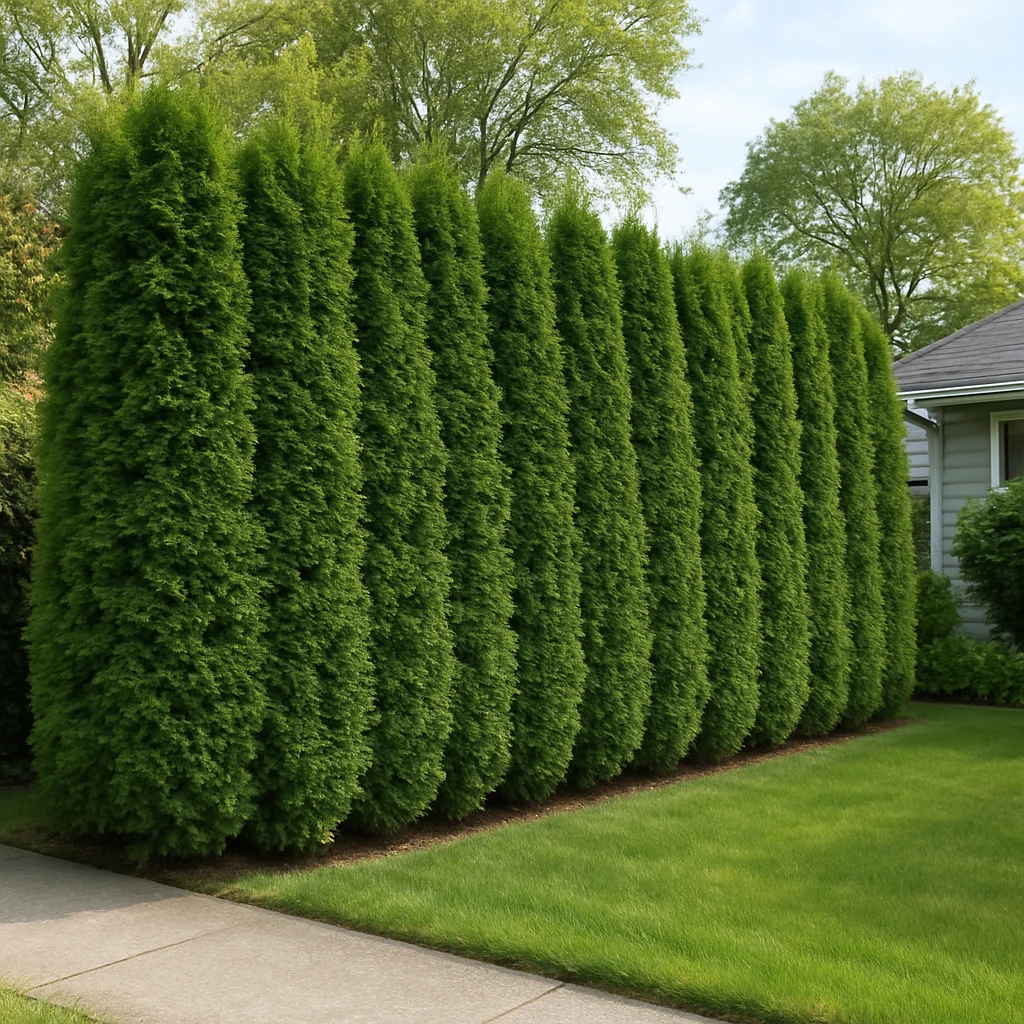
Structure. This means the “bones” of the yard that look good in every season, even winter — evergreen shrubs, a well-placed tree, defined bed edges. Structure is what separates a yard that looks intentional year-round from one that only looks good in July.
Your house’s architecture. A formal colonial home suits symmetrical, clipped plantings; a cottage or farmhouse suits looser, layered beds. Match your landscaping style to the lines of your house rather than picking whatever looks nice on Pinterest in isolation.
Step 3: Layer the Planting
This is the single technique that makes a beginner’s yard look designed instead of scattered. Place your tallest plants — trees or tall shrubs — at the very back of each bed, against the house or fence line. Add a middle layer of medium shrubs or perennials in front of that. Finish with a low front layer of ground cover, small perennials, or annuals along the edge closest to the lawn or walkway.
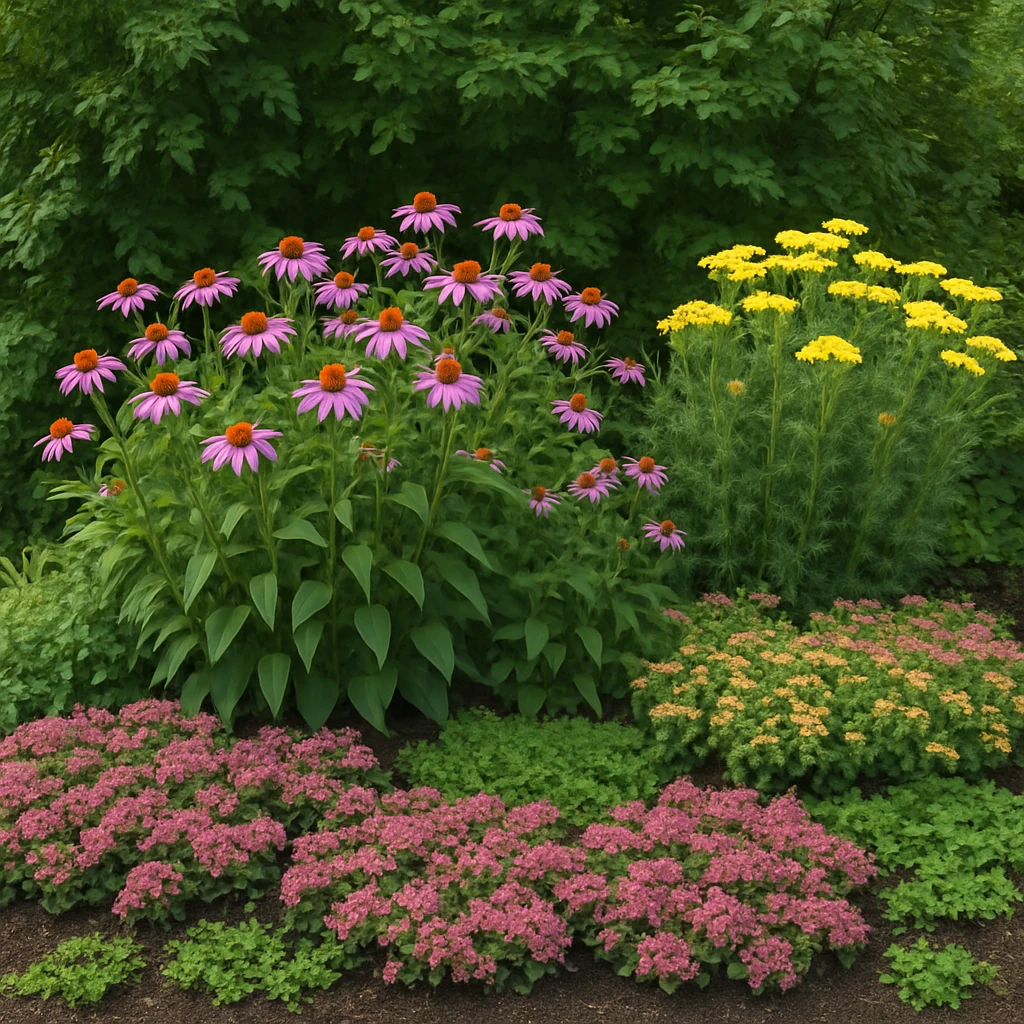
Three layers is enough. Beginners often try to add a fourth or fifth height tier and the bed starts to look busy instead of intentional.
Two mistakes come up more than any others in first-time landscaping discussions. The first, by a wide margin, is landscape fabric under mulch — it’s marketed as a weed blocker, but weeds eventually grow on top of it anyway, and it makes dividing or adding plants later much harder since you have to cut through it. Skip it; a thick mulch layer alone controls weeds nearly as well without the long-term hassle. The second is planting in pairs instead of odd-numbered groups of three or five — odd numbers read as natural, pairs read as a formula.
Step 4: Start Small, One Bed at a Time
Don’t landscape the entire front yard in one weekend. Pick the single bed closest to your front door — the one guests actually see up close — and finish it completely, layered and mulched, before starting a second area. A first-year budget of $150–$300 for one well-executed bed beats $600 spread thin across the whole yard and finished nowhere.
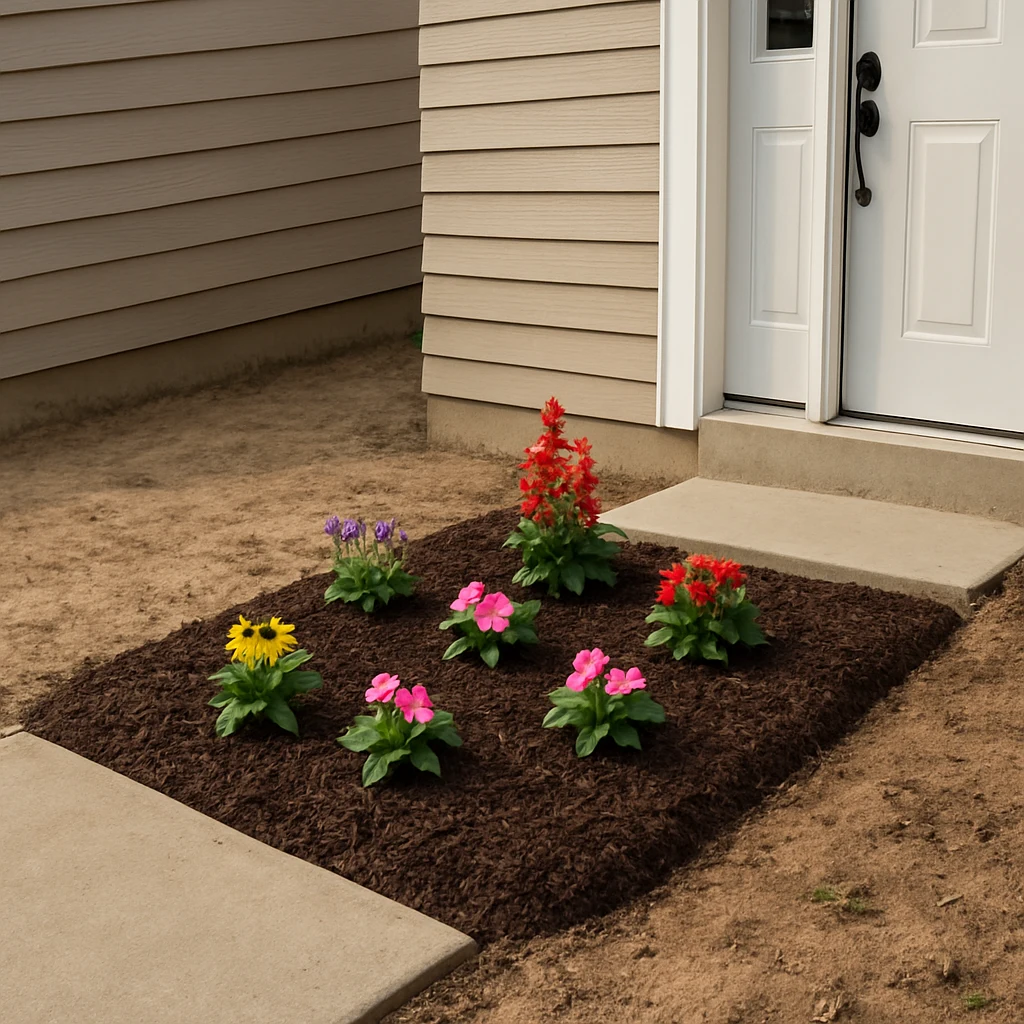
Step 5: Mulch Last
Once everything is planted, a 2-inch layer of mulch finishes the bed, suppresses weeds, and retains moisture while your new plants establish roots. This is also the step that makes a freshly planted bed look complete on day one instead of like a work in progress.
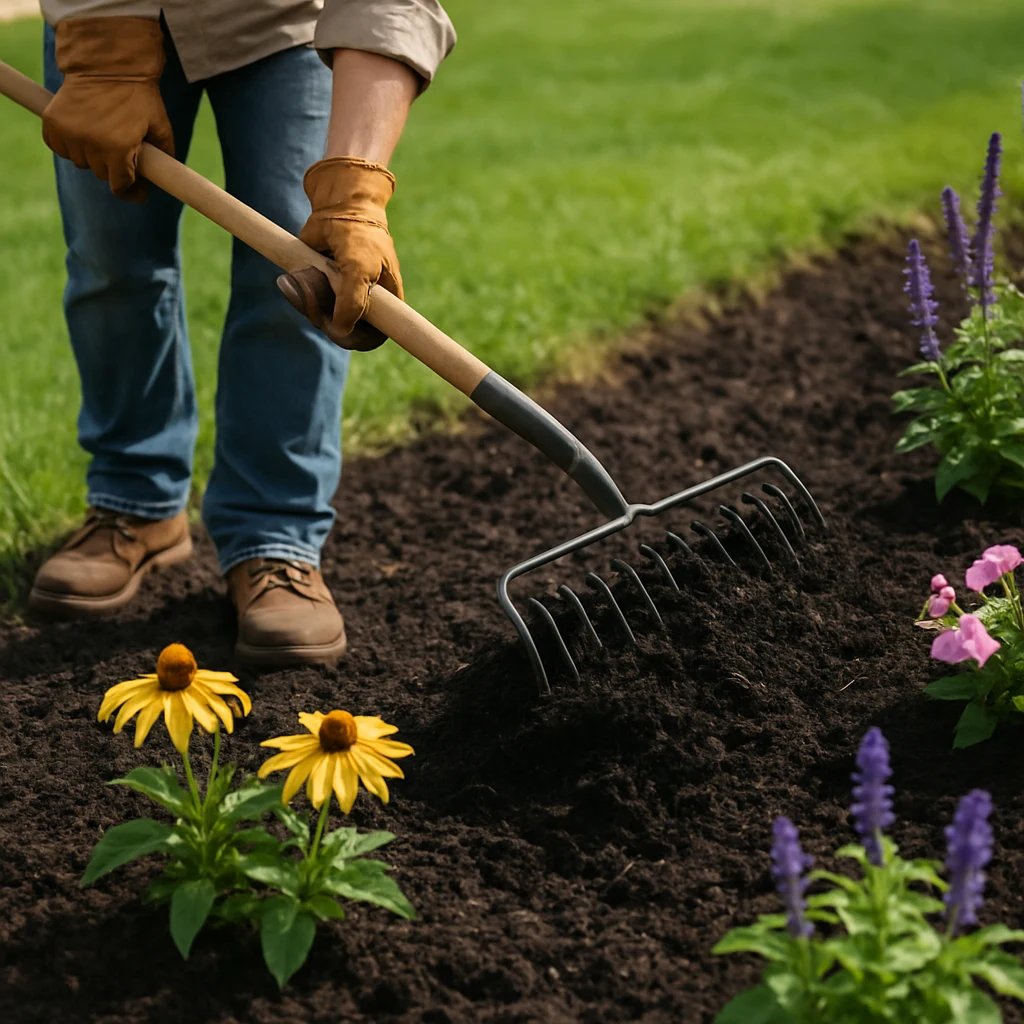
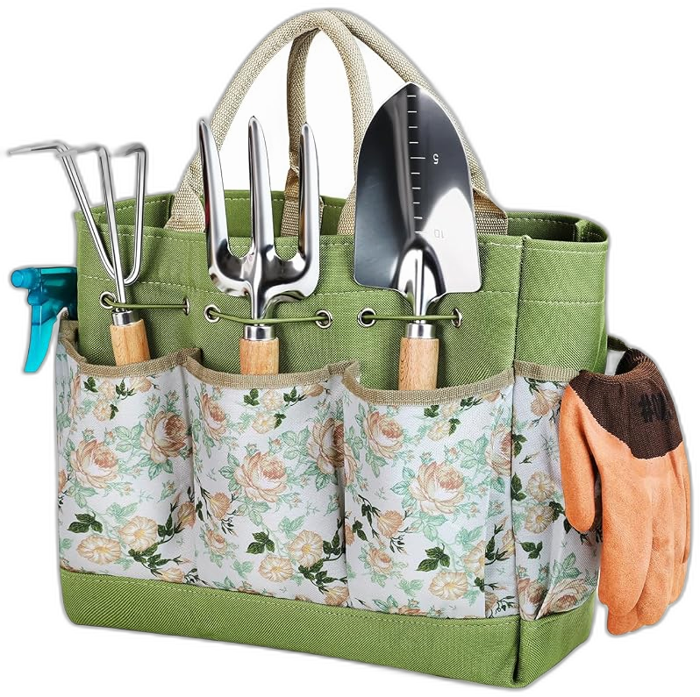
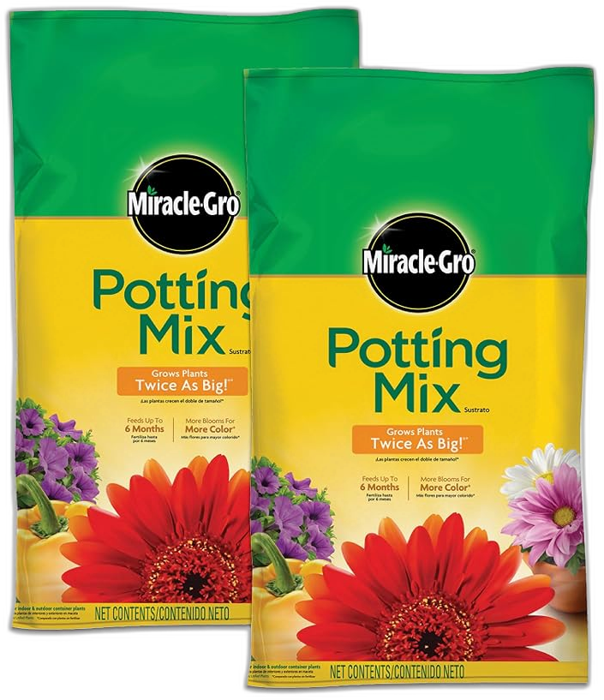
Tools and Supplies for This Project

Frequently Asked Questions
Where do I start when landscaping a front yard for the first time?
Assess sun and shade patterns first, then pick one bed closest to the front door to finish completely before expanding.
How much does beginner front yard landscaping cost?
A single well-executed bed typically runs $150–$300 including plants, edging, and mulch.
What is layered planting?
Placing tall plants at the back of a bed, medium plants in the middle, and low plants at the front to create depth and structure.
Should I landscape the whole yard at once?
No — finishing one bed completely gives a better result than spreading a budget thin across the entire yard.
Why does mulch matter for a new landscaping bed?
It suppresses weeds, retains soil moisture while new plants establish, and makes a fresh bed look finished immediately.
Related Guides
- 18 Front Yard Landscaping Ideas
- 15 Flower Bed Ideas in Front of House
- Best Low-Maintenance Plants for Front of House
- 16 Small Front Yard Ideas

Sophia Turner covers budget home decor, seasonal styling, and outdoor spaces at The Dailey House. She has a talent for finding thrift store pieces that look like they cost three times what she paid, and a habit of redesigning her front porch every single season.