

You measured your desk twice. It still feels wrong. Your shoulders ache by 2 PM, and your knees hit the drawer every time you shift in your chair.
Standard desk dimensions exist for a reason. Most desks miss the mark for most bodies. Here’s the exact math, plus a calculator that fits the numbers to you.
What Is the Standard Desk Height?
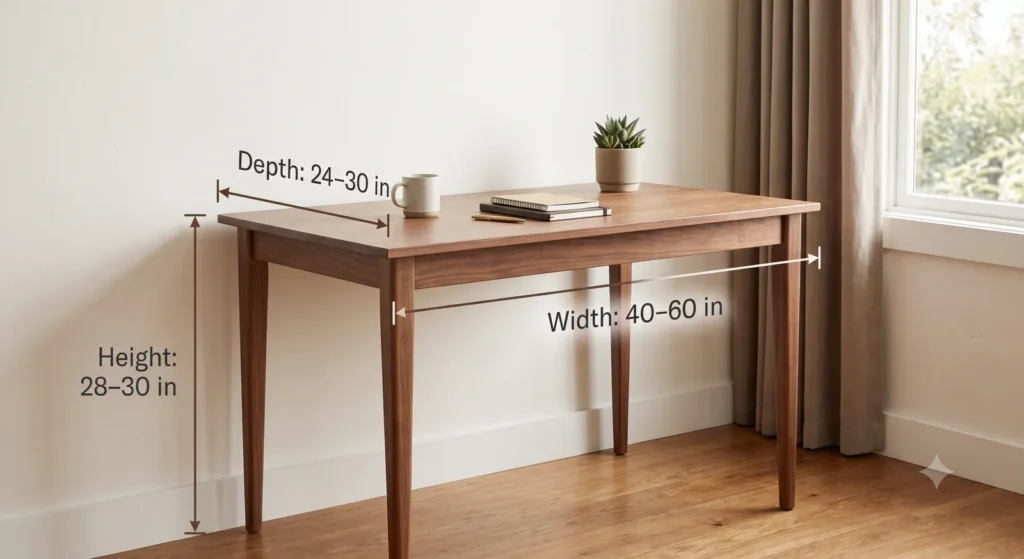
The standard desk height sits at 28 to 30 inches (71 to 76 cm) from floor to surface. Most manufacturers build to 29 inches. That number works for someone around 5’8″ to 5’10”.
But “standard” doesn’t mean “right for you.” A standard study desk height was set for an average adult decades ago. Bodies vary a lot more than that one number suggests.
Here’s the quick reference:
- Standard desk height: 28–30 inches (71–76 cm)
- Standing desk height range: 38–48 inches (96–122 cm)
- Kids’ study desk height: 20–24 inches (51–61 cm), adjustable as they grow
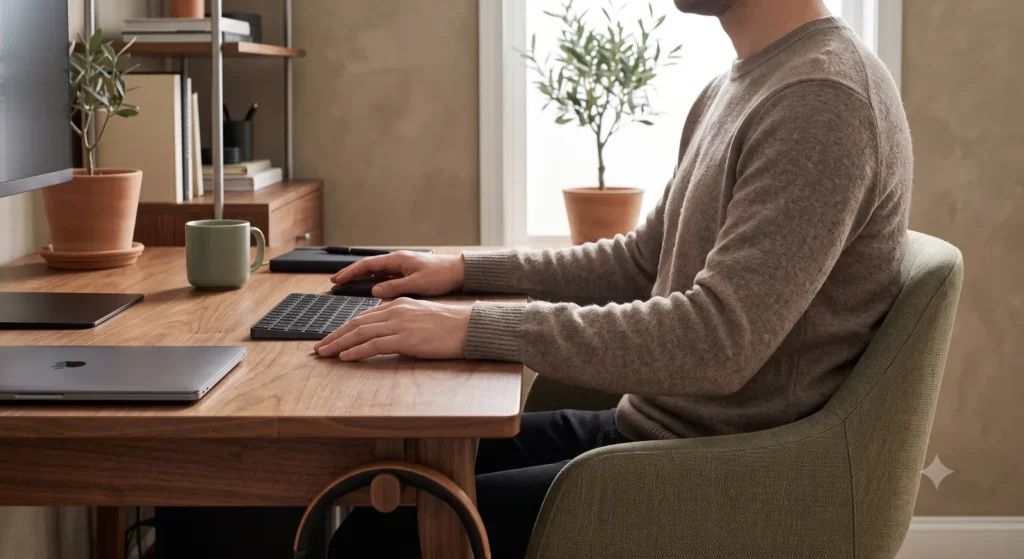
The real test isn’t the tape measure. It’s your elbow. Sit down, relax your shoulders, and rest your forearms on the surface. Your elbows should sit at roughly 90 degrees. If they don’t, the desk is wrong for you, even if it says “standard” on the box.
How High Should Your Desk Be for You?
Your desk height should track your body, not a factory average. Taller users need more clearance. Shorter users need less, or their shoulders creep up toward their ears within an hour.
Use the calculator below. Enter your height, and it returns your ideal desk height, your keyboard tray height, and your monitor eye-line. It takes ten seconds.
Desk Height Calculator
Enter your height to get your ideal desk height, keyboard tray height, and monitor eye-line.
Once you have your number, compare it to what you own. Off by more than an inch? A few fixes work without buying new furniture:
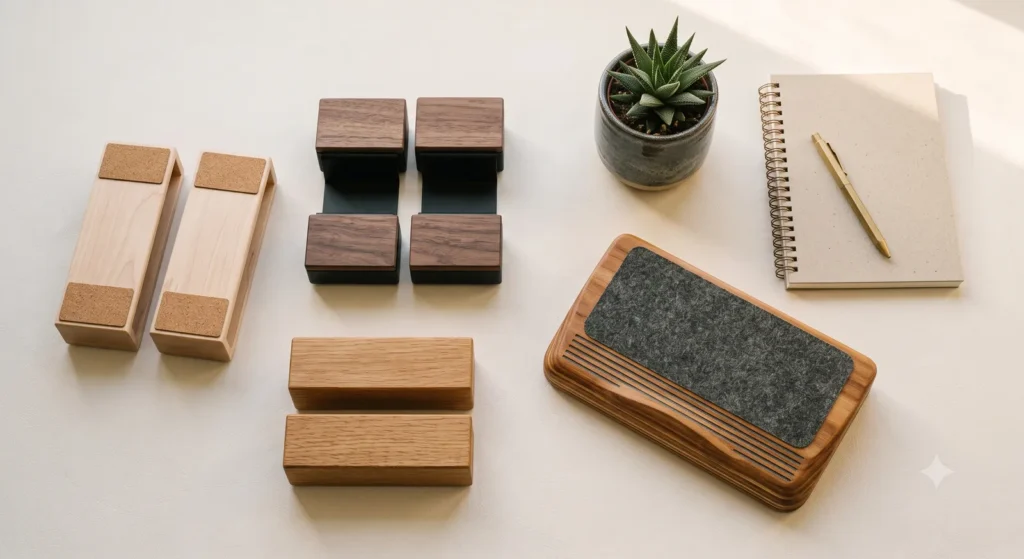
- Desk too low: Add bed risers or a bolt-on leg extender kit
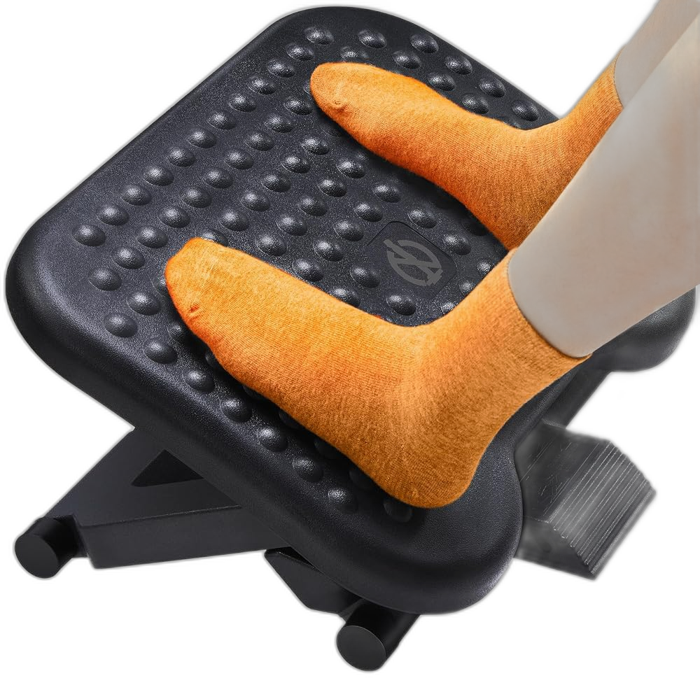
- Desk too high: Lower your chair and add a footrest to keep your feet flat
- Way off in either direction: Look at an adjustable-height desk instead of forcing a fix
How Deep Should a Desk Be?
Desk depth is the measurement people skip, then regret. Standard desk depth runs 24 to 30 inches (61–76 cm) front to back.
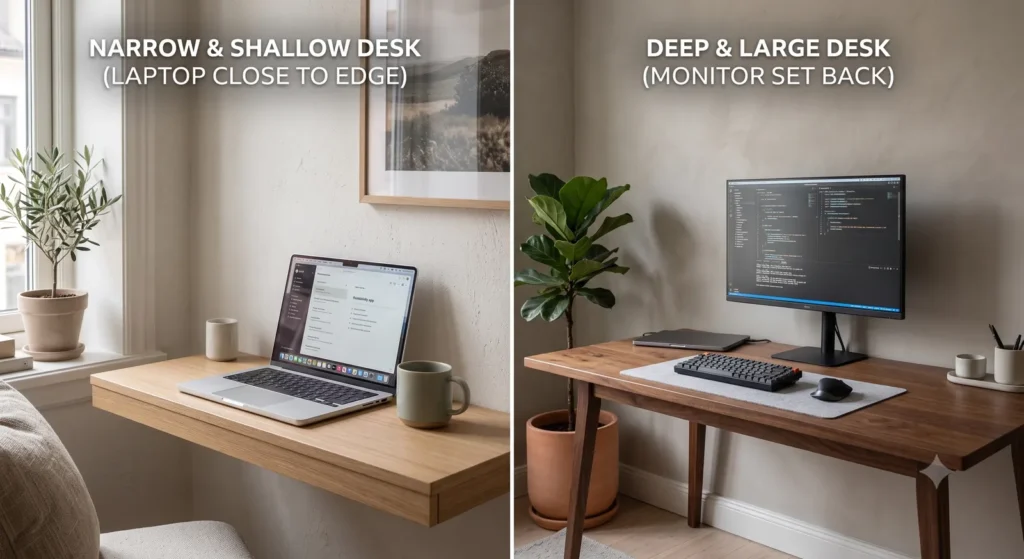
Depth controls two things: monitor distance and legroom. Too shallow, and your screen sits too close to your eyes. Too deep, and you’re leaning forward all day to reach your keyboard.
- Minimum workable depth: 24 inches — fine for a laptop-only setup
- Comfortable depth for one monitor: 28–30 inches
- Depth for dual monitors or a monitor arm: 30 inches or more, so the arm has room to swing
If you sit close to your screen and squint by afternoon, your desk is too shallow. If you’re constantly scooting your chair forward, it’s too deep for your reach.
How Wide Should a Desk Be?
Width depends entirely on what lives on the surface, not on the room size alone. Standard desk width ranges from 40 to 60 inches (102–152 cm).
Here’s how to match width to your setup:
- Laptop only, minimal supplies: 40–42 inches
- Single monitor plus keyboard and notebook space: 48 inches
- Dual monitors, or a monitor plus a laptop stand: 55–60 inches
- Shared or hobby desk (drawing, sewing, crafting): 60+ inches
A wider desk isn’t automatically better. A 60-inch desk in a small room turns into a dumping ground for mail and half-finished projects. Match the width to your actual workflow, not to what looks impressive.
Study Desk vs Computer Desk Sizes
People search both terms, and the confusion is real. Here’s the actual difference.
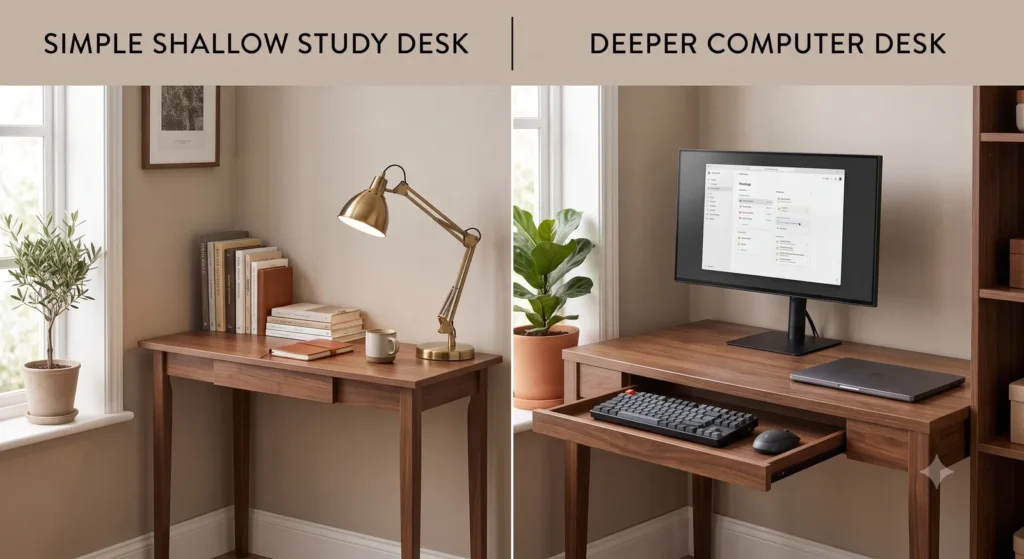
A study desk is built for reading, writing, and paper-based work. Study desk dimensions typically run smaller and shallower — around 40–48 inches wide and 20–24 inches deep — because there’s no monitor to accommodate.
A computer desk is built around screen distance and cable management. Computer desk dimensions run deeper (24–30 inches) to keep the monitor at a healthy viewing distance, often with a keyboard tray built in below the main surface.
If you split time between both — homework by hand and video calls on a laptop — go with computer desk depth. It’s more forgiving for both uses. A shallow study desk with a laptop pushed to the back edge is a neck-strain trap.
Desk Sizes for Small Rooms
Small rooms don’t need small desks. They need the right shape of desk.
- Corner desks reclaim dead space and often deliver more usable surface than a straight desk in the same footprint.
- Floating wall-mounted desks at 30–36 inches wide free up floor space entirely — no legs, no clutter underneath.
- Narrow-depth desks (18–20 inches) work for laptop-only setups against a wall, though skip these if you use a monitor.
The rule that actually matters in tight rooms: leave 36 inches of clearance behind the chair so you can push back and stand without hitting a wall or bed frame. Skip this, and the “compact” desk creates a room that feels smaller, not bigger.
Working with a genuinely tight room? Our guide to foldable desks for small spaces measures wall-mounted and fold-away options against these same dimensions, and small apartment decorating ideas covers the wider layout problem.
Sizing something else in the room? Our Rug Size Calculator and Curtain Size Calculator use the same fit-first approach.
How Much Do Desks Cost?
Price tracks material and mechanism more than size.
- Basic fixed-height desks: $80–$200
- Mid-range desks with cable management or drawers: $200–$450
- Electric standing desks: $300–$700
- Solid wood or custom-built desks: $500–$1,500+
Bigger isn’t always pricier. A 60-inch particleboard desk can cost less than a 42-inch solid oak one. If you’re choosing between size and material on a budget, prioritize material — a smaller solid desk outlasts a larger cheap one by years.
Key Takeaways
- Standard desk height is 28–30 inches, but your elbow angle is the real test
- Standard depth is 24–30 inches; go deeper for dual monitors
- Standard width is 40–60 inches, matched to what sits on the surface
- Study desks run shallower; computer desks run deeper for screen distance
- In small rooms, shape matters more than size — corner and wall-mounted desks win
- Price tracks material and mechanism, not just dimensions
Desk Setup Picks

FAQ
What is the standard height for a computer desk? Most computer desks are built at 28–30 inches. If you’re taller than 5’10” or shorter than 5’4″, that height likely won’t fit your elbow angle — use the calculator above to find your number.
Is 24 inches deep enough for a desk? Yes, for laptop-only use. For a monitor setup, 28–30 inches keeps the screen at a healthier distance from your eyes.
What size desk fits a small bedroom? A 40–42 inch corner desk or a 30–36 inch wall-mounted desk usually fits best, as long as you leave 36 inches of clearance behind the chair.
Should I get a bigger desk than I think I need? Only if you know you’ll use the extra surface. Buying oversized “just in case” tends to create clutter instead of function.
Do standing desks have different standard dimensions? Width and depth stay similar to seated desks. Height range is the difference — standing desks adjust from about 28 inches up to 48 inches to cover both sitting and standing use.
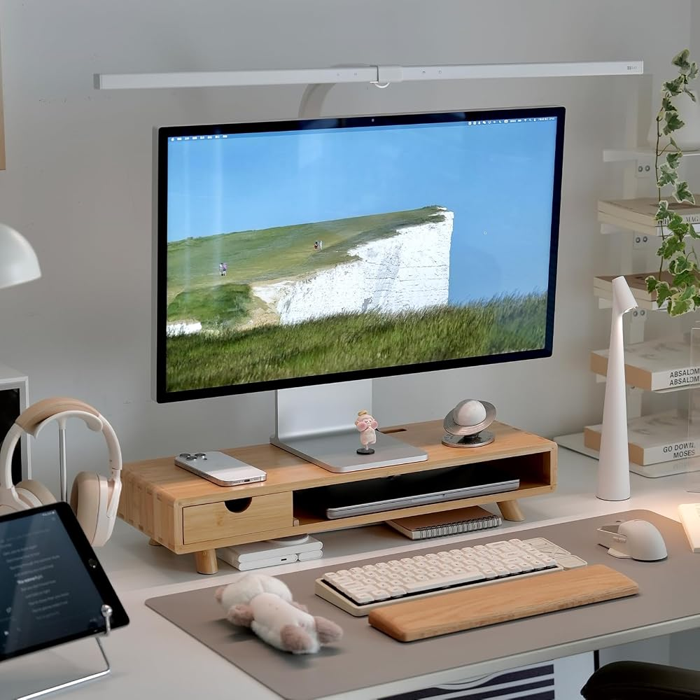
Getting the size right is step one. Chair height, monitor placement, and lighting are what make or break a desk setup once the dimensions are correct.
If this guide saved you a return trip to the store, save it for later and share it with anyone else about to buy a desk blindly.

Daniel Carter covers the practical side of home improvement at The Dailey House — drainage fixes, DIY yard projects, patio makeovers, and the kind of weekend builds that actually get finished. If there's a smarter or cheaper way to do it, he's tested it.