

You don’t have a spare room. You have a corner, a closet, or a kitchen counter that has to double as an office. Paint colors won’t fix that. Placement and organization will.
Here are the home office decor ideas that solve the actual problem — where the desk goes, how to keep it organized, and what to do when there’s no room for a desk at all.
Where to Put Your Desk When the Room Fights You
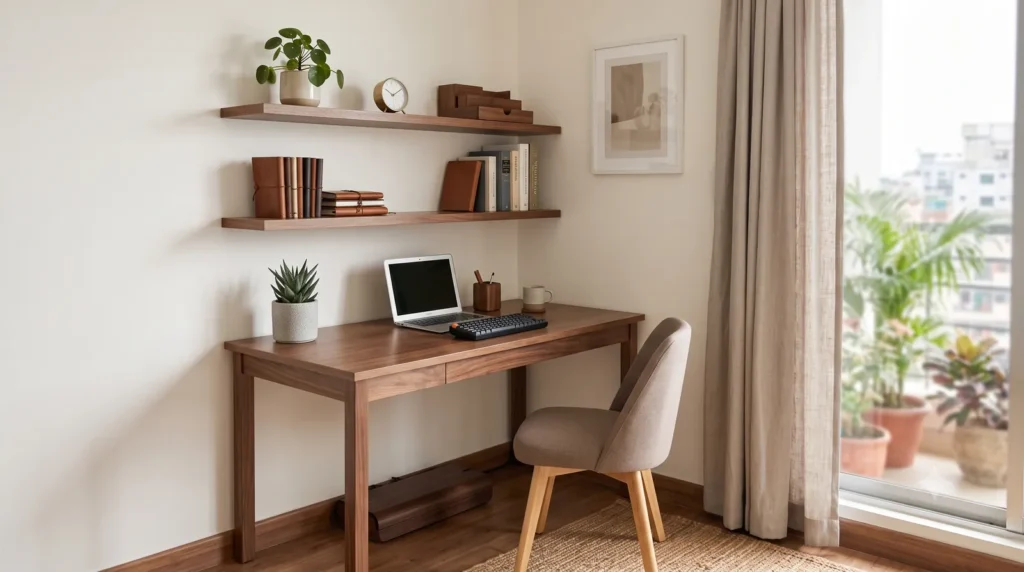
Most rooms weren’t built with a desk in mind. Here’s how to work with what you’ve got instead of forcing a layout that doesn’t fit.
Facing a wall beats facing a window. A window view feels nice for ten minutes, then it becomes a distraction machine. Face the wall, and keep the window to your side for natural light without the glare or the people-watching.
Avoid facing the door if you can. Sitting with your back to the doorway triggers a low-grade alertness that wears on focus over a full day. If the room only allows one layout, add a small mirror angled to catch the doorway in your peripheral vision instead.
Corners aren’t a compromise — they’re often the better option. A desk angled into a corner uses dead space that a straight wall placement wastes, and it naturally boxes out visual clutter from the rest of the room.
Desk Placement Rules for Shared and Multi-Use Rooms
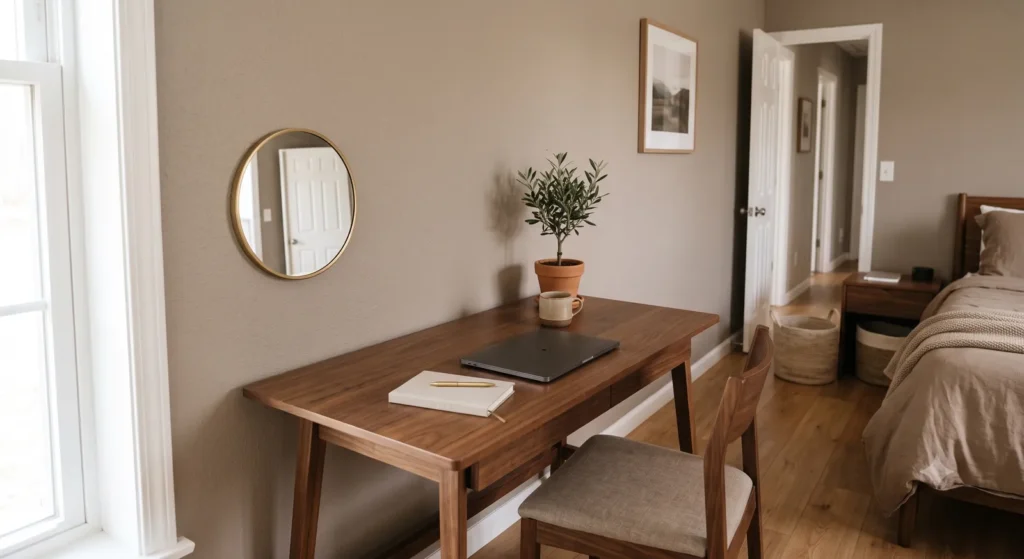
Sharing the room changes the math. A desk in a bedroom, living room, or guest room needs boundaries that a dedicated office doesn’t.
- Put physical distance between the desk and the bed. Even three feet helps your brain separate “work” from “rest.” A desk pushed right up against the bed makes both worse.
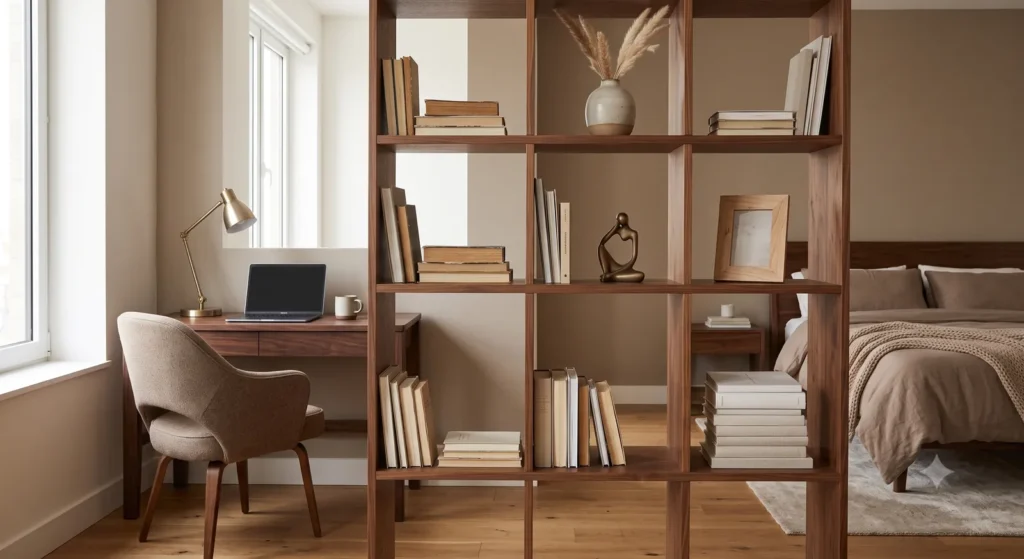
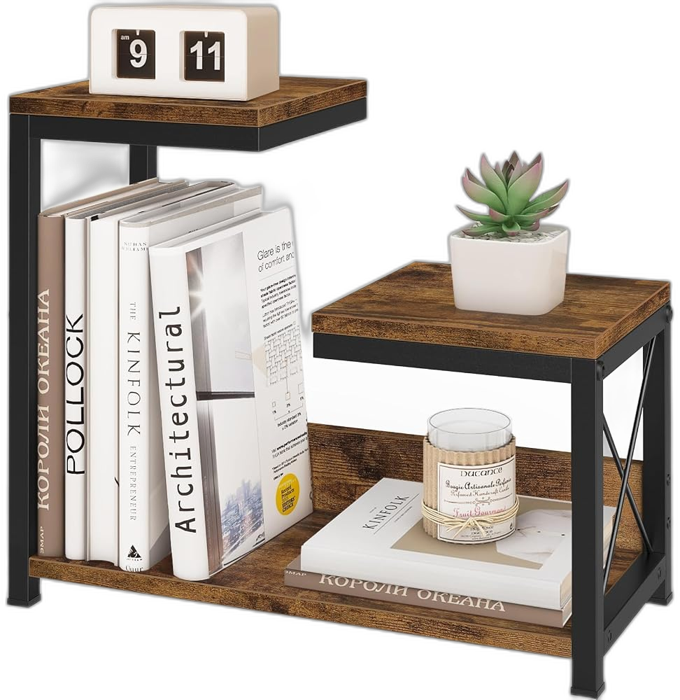
- Use a bookshelf or open shelving unit as a soft divider, not a solid wall. It keeps the room feeling open while still marking the desk as its own zone.
- In a living room, angle the desk away from the TV and main seating. Sightlines matter more than square footage — if you can see the couch, your brain clocks it as a break option constantly.
Which Setup Actually Fits Your Space?
Placement advice only helps once you know what kind of space you’re actually working with. Answer four quick questions, and this tool points you to the layout worth trying first.
Which Home Office Setup Fits Your Space?
Answer 4 quick questions to get your recommended layout.
Home Office Organization Ideas That Keep the Desk Clear
A decorated desk that’s buried in cords and paperwork doesn’t function, no matter how nice the accessories look. Organization comes before decor, not after.
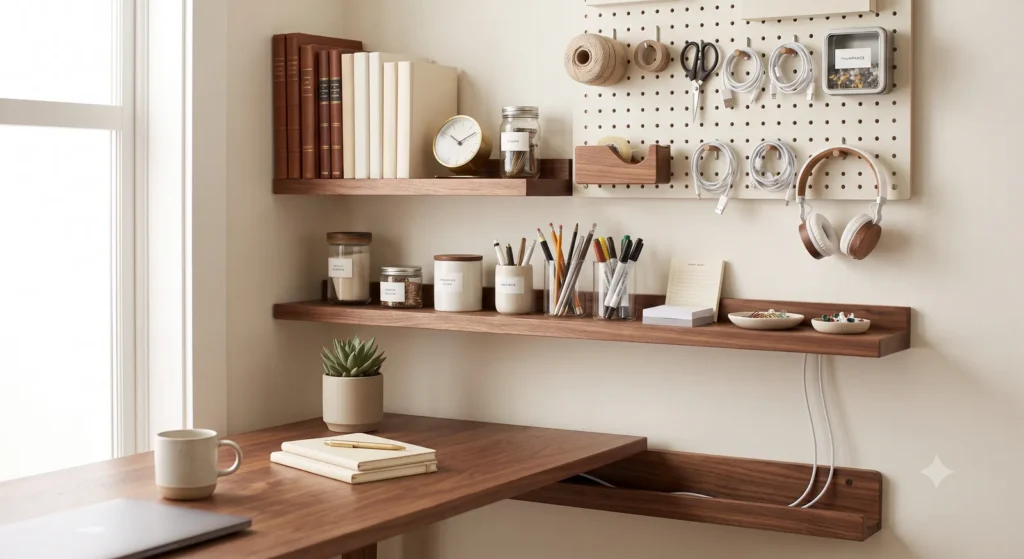
Go vertical first. Wall-mounted shelves and a pegboard above the desk hold supplies without eating desktop space. This matters most in small rooms, where every inch of surface counts double.
Give cables a home, not a tangle. A single under-desk cable tray or a couple of adhesive clips keeps power strips and charging cords out of sight and out of the way of your knees.
Sort paperwork into three categories only: act, file, toss. More categories than that, and the system collapses within a week. A simple three-slot desktop organizer handles this without needing a filing cabinet.
Keep a “landing zone” near the door, not on the desk. Mail, keys, and daily carry items pile up on desks because there’s nowhere else obvious to put them. A small tray by the entrance intercepts that clutter before it reaches the desk.
No-Desk Home Office Setups That Still Work
Not everyone has room for a desk, and that’s fine. These setups deliver a functional workspace without one.
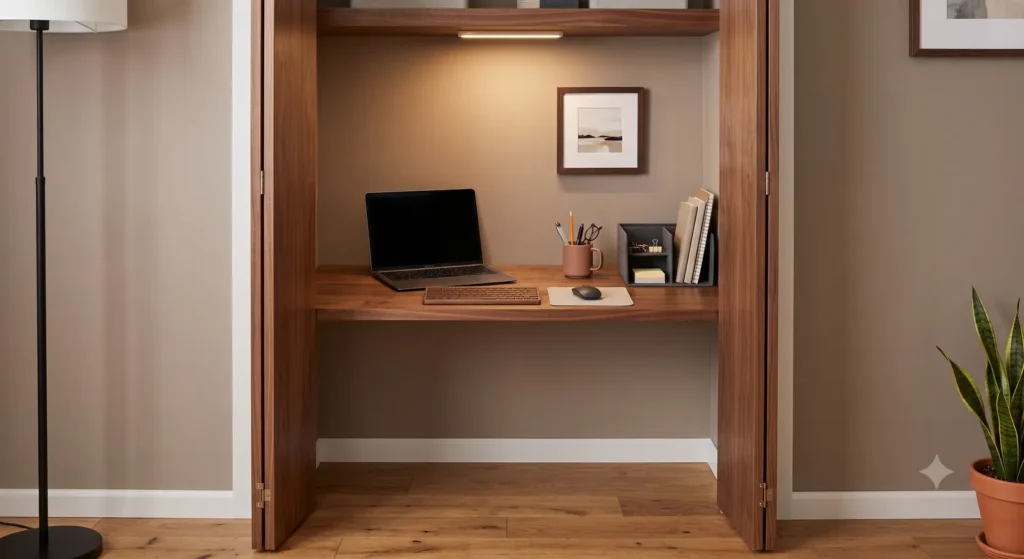
Closet office (“cloffice”). Remove the doors or fold them back, add a slim shelf at desk height, and mount a small light inside. It closes up completely when you’re done for the day.
Wall-mounted fold-down desk. A hinged desktop that folds flat against the wall works in hallways, kitchens, or entryways where a permanent desk isn’t possible. Look for one rated to hold at least 40 lbs if you’re using a monitor.
Kitchen counter with a defined zone. If the counter is the only option, mark a specific section as the “office” with a tray or mat. That boundary matters more than people expect — it keeps work from creeping across the whole counter.
Console table setup. A slim console table against a hallway or living room wall works for laptop-only work. Pair it with a stool that tucks fully underneath when not in use.
Small-Space Organization Tricks When There’s No Office at All
When the “office” is really just a corner of another room, storage has to disappear when work is done.
- Use a rolling cart instead of a fixed shelf. Supplies roll in when you start work and roll into a closet when you finish.
- Pick furniture that already has storage built in — an ottoman with a lift-top lid, a bench with drawers, a coffee table with a shelf underneath.
- Keep the daily-use kit small on purpose. A laptop, one notebook, a charger, and a pen holder is enough for most no-desk setups. Anything beyond that belongs in a bin, not on the surface.
Working with the whole room rather than just the desk? Our small apartment decorating ideas cover zoning and storage beyond the workspace, and the desk size guide has the exact dimensions and clearances referenced above.
Decor That Doesn’t Get in the Way
Once placement and organization are solved, a few decor touches make the space feel intentional instead of improvised.
- One plant, not five — a single snake plant or pothos adds warmth without adding upkeep
- A single piece of art at eye level, not a full gallery wall competing for attention
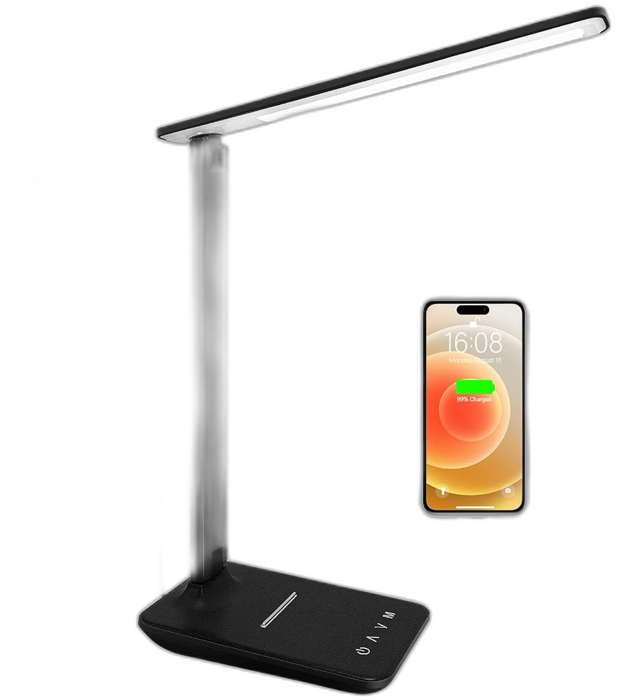
- A desk lamp with warm light instead of relying on overhead lighting alone
Decor is the finishing step here, not the starting point. Skip straight to it, and you end up with a pretty desk that still doesn’t work for how you actually use the room.
Key Takeaways
- Face a wall, not a window or the doorway, for the best default desk placement
- In shared rooms, create distance and use open shelving as a soft divider
- Organize vertically and manage cables before adding any decor
- No desk? A closet, a fold-down wall desk, or a defined counter zone all work
- Keep the daily-use kit small in no-desk and small-space setups
- Decor comes last — placement and organization make the space function first
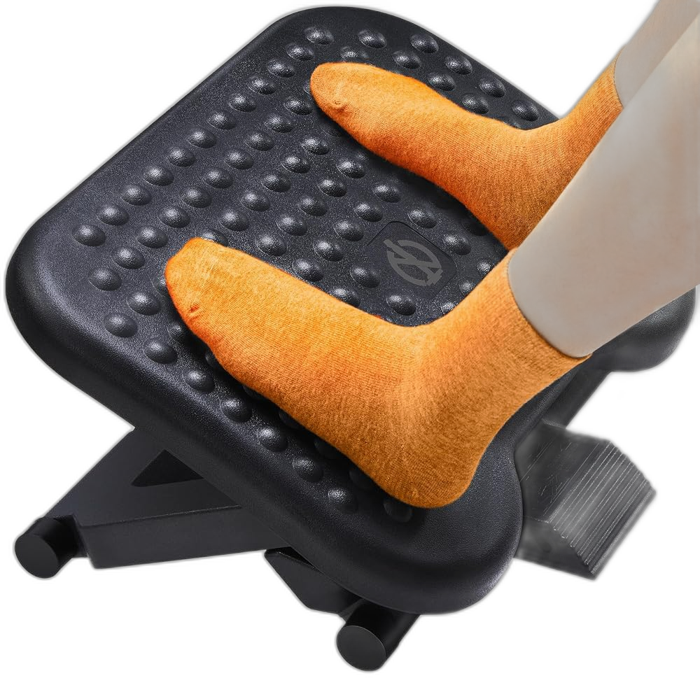
Desk Setup Picks
FAQ
Where’s the best place to put a desk in a small bedroom? Facing a wall, angled into a corner if possible, with at least three feet of separation from the bed. This keeps the room feeling like it has two purposes instead of one blurred one.
How do I set up a home office without a desk? A closet with the doors removed, a wall-mounted fold-down desktop, or a defined zone on a console table or counter all work. Pick based on how permanent you need the setup to be.
How do I keep a shared room from feeling like an office all the time? Use furniture that closes up — a cloffice, a fold-down desk, or a cart that rolls away — so the “office” disappears outside of work hours.
What’s the most important home office organization habit? Sorting incoming paper and clutter into exactly three categories: act, file, toss. Simpler systems get used; complicated ones get abandoned within a week.
Do I need a full desk setup to work productively from home? No. A defined zone, consistent placement, and a small, contained kit of daily-use items matter more than having a dedicated desk.

Daniel Carter covers the practical side of home improvement at The Dailey House — drainage fixes, DIY yard projects, patio makeovers, and the kind of weekend builds that actually get finished. If there's a smarter or cheaper way to do it, he's tested it.