

Few domestic annoyances disrupt your peace and sleep quality quite like a persistent, loud squeak every time you roll over or climb into bed. When your bed sits on bare hardwood floors, that irritating noise is amplified exponentially. Solid wood flooring behaves like an acoustic soundboard, reflecting and magnifying friction vibrations throughout the entire bedroom rather than dampening them the way thick carpet and padding would.
nn
Most homeowners assume a noisy bed means the entire frame is broken and needs replacement. In reality, over 90% of bed noises stem from simple mechanical friction at four predictable contact points: loose corner connection bolts, unpadded wooden slats rubbing against metal side rails, lateral frame sway rocking the headboard against drywall, or bed frame feet slipping microscopically across the polished polyurethane surface of your wood floor.
nn
In this comprehensive guide, we walk you through a foolproof diagnostic process to pinpoint the exact source of the sound, followed by four field-tested hardware solutions and preventative maintenance strategies to silence your bed permanently without damaging your hardwood floor.
nn
Quick Comparison: Best Hardware to Silence a Squeaky Bed on Hardwood
n
Every squeak has a specific mechanical root cause. The table below matches the most reliable, non-damaging hardware to each primary noise zone.
n
| Hardware Solution | Primary Noise Target | Hardwood Floor Safe | Installation Time | Best For | Check Price |
|---|---|---|---|---|---|
| Yecaye Adjustable Anti-Shake Tool | Frame Sway & Wall Bang | Yes (Wall Contact) | 3 Minutes | Headboard & Wall Gaps | Check Price |
| X-Protector Rubber Caster Cups | Leg Shift & Floor Grinding | 100% Non-Marking | 2 Minutes | Caster Wheels & Bed Posts | Check Price |
| Slipstick GorillaPads CB654 | Lateral Bed Slip & Creak | Triple-Layer Floor Safe | 2 Minutes | Heavy Wood & Platform Legs | Check Price |
| iPrimio Solid Rubber Bed Stopper | Rolling Casters on Wood | Deep Chock Base | 2 Minutes | Heavy Roller Wheel Frames | Check Price |
n
n
nn
The 4 Common Sources of Bed Squeaks on Hardwood Floors
n
Before grabbing tools or buying accessories, you must determine whether the squeak is originating from within the bed structure or from the interface between your bed and the bedroom flooring. Understanding these mechanics prevents wasted time and money.
nn
1. Floor Micro-Shifting and Foot Traction
n
Hardwood floors, whether engineered or solid red oak, feature smooth factory finishes such as polyurethane or aluminum oxide. While these finishes look stunning, they provide virtually zero mechanical grip. Whenever a 150 to 200-pound sleeper shifts posture, the bed legs shift laterally by a fraction of a millimeter. This micro-slippage creates a sharp, high-pitched screech or rhythmic ticking against the timber planks.
nn
2. Lateral Frame Sway and Headboard Knock
n
Many bed frames have tall headboards connected by only two lower bolts. When you lean back or move in bed, the headboard acts as a leverage lever, wobbling back and forth. Even if the headboard never fully strikes the wall, the repetitive flexing twists the frame rails, producing groaning sounds at the joint corners. Installing adjustable headboard wall stoppers stops this leverage dead in its tracks.
nn
3. Slat-on-Rail Friction
n
Platform beds rely on a series of transverse wooden or metal slats to support the mattress. Over months of nightly humidity fluctuations, wood slats naturally warp or bow slightly. As you shift weight across the mattress, the edges of these slats rub directly against the perimeter support ledge. This wood-on-wood or wood-on-metal rubbing generates an unmistakable dry, repetitive squeak. Furthermore, if your bed lacks rigid middle bracing, the slats deflect downward under body weight, pulling side rails inward and causing severe mechanical racking. Installing heavy-duty bed slat support center legs props up the center of the bed, eliminates downward deflection, and permanently stops slat rubbing.
nn
4. Loose Fastener Hardware and Dry Joint Pivots
n
Temperature shifts cause wood and steel to expand and contract. Over 6 to 12 months, the bolts securing your bed corners inevitably loosen by a quarter-turn. When a bolt loosens even slightly, the internal steel bracket pivots against the threaded hole under body weight, creating a metallic, high-friction creak.
nn
Step-by-Step Diagnostic Test: Pinpointing Your Bed’s Noise in 5 Minutes
n
To accurately diagnose the exact mechanical fault, follow this 4-step elimination process with a partner:
nn
- n
- The Rock Test (Mattress On): Stand beside the bed and push firmly back and forth against the mattress and footboard. If you hear a creak immediately, check the base of the legs on the hardwood floor. Does a leg lift slightly or slide? If yes, uneven flooring or floor traction loss is your culprit.
- The Mattress Isolation Test: Strip the sheets and slide the mattress completely off the frame onto the floor. Kneel on the mattress directly on the wood floor and shift your weight. Does the noise persist? If so, the sound is inside your mattress (broken innerspring coil or internal box spring frame). If it is silent, the noise is 100% inside your bed frame.
- The Slat Tap Test: With the mattress removed, press down firmly on each individual slat near both ends. Listen for a distinct rubbing or clicking sound against the side rails. Mark any noisy slats with a piece of painter’s tape for padding treatment.
- The Corner Joint Stress Test: Grab each corner post of the empty frame and shake it firmly side-to-side. If the joints creak or have visible play, your corner bolts require tightening and dry lubrication.
n
n
n
n
nn
In-Depth Reviews of the 4 Best Products to Silence Squeaky Bed Frames
nnn
n
n
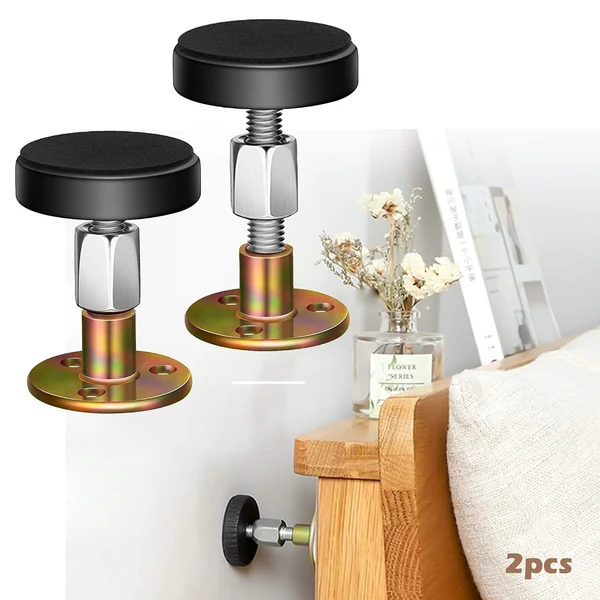
Yecaye Upgraded Adjustable Threaded Bed Frame Anti-Shake Tool (4-Pack)
n
When a bed frame flexes under weight, the headboard acts as a giant tuning fork, transferring rocking motion to the entire frame structure. The Yecaye Upgraded Anti-Shake Tool threads outward between your bed posts and the wall, establishing rigid structural tension that eliminates bed frame wobble at its origin.
n
- n
- Adjustable Reach: Telescopic threaded design adjusts seamlessly from 1.3 to 4.4 inches to span varying baseboard and trim depths.
- High-Density EVA Cushioning: Thick protective foam pads press firmly against drywall without leaving scuffs, paint transfer, or surface dents.
- Solid Carbon Steel Core: Heavy-gauge galvanized metal threading resists compression fatigue under repetitive daily stress.
n
n
n
n
n
n
n
n
nnn
n
n
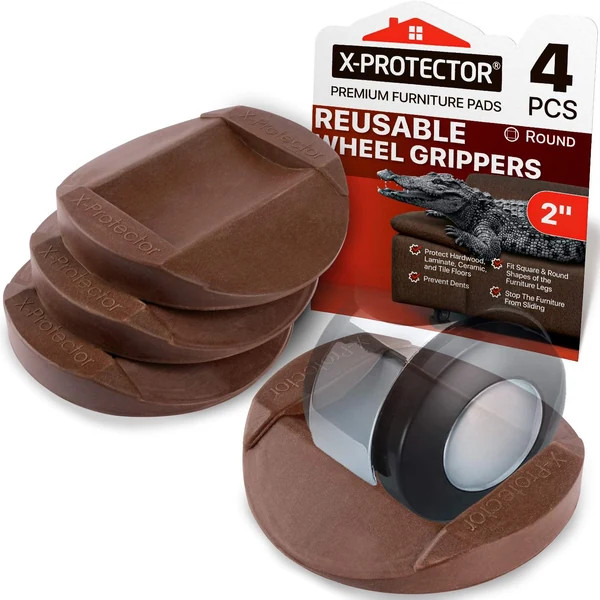
X-Protector Non-Slip Rubber Caster Cups (4-Pack)
n
Bed frames equipped with caster wheels or small square posts are notorious for skating across smooth polyurethane finishes. The X-Protector Rubber Caster Cups utilize deep concave recesses molded from non-marking synthetic rubber that firmly cradles wheels up to 2 inches wide, eliminating both motion and floor-grinding noise.
n
- n
- Concave Wheel Channel: Prevents wheels from turning or twisting out of alignment under normal sleep movement.
- High-Friction Tread Base: Ribbed undercarriage grips wood grain securely without sticky chemical adhesives that could harm timber finishes.
- Floor Safe Formulation: Will not discolor or chemically soften clear polyurethane, oil finishes, or luxury vinyl tile.
n
n
n
n
n
n
n
n
nnn
n
n
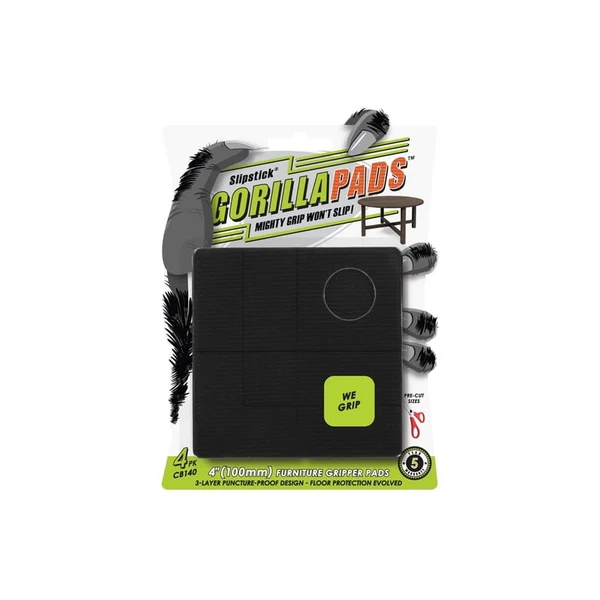
Slipstick GorillaPads CB654 3-Inch Non-Slip Furniture Pads (4-Pack)
n
Heavy solid wood platform beds, upholstered storage frames, and king-size suites generate massive downward force that compresses ordinary pads. Slipstick GorillaPads feature an impenetrable puncture-proof core sandwiched between specially formulated rubber gripping layers that anchor heavy bed feet immovably to hardwood.
n
- n
- Patented Puncture-Proof Core: Rigid composite center prevents heavy square wooden legs from gouging through the pad down to the floor planks.
- Zero Floor Slippage: Provides ten times more lateral traction than standard felt pads, preventing side-to-side racking creaks.
- Pre-Scored Sizing: Easily trims down from 3 inches to 2.5 or 2 inches square using a utility knife for custom-fitted leg profiles.
n
n
n
n
n
n
n
n
nnn

n
n
iPrimio Solid Rubber Bed Stopper & Wheel Chocks (4-Pack)
n
If your bed frame rests on heavy roller wheels or broad steel glides, standard shallow cups can tip over during vigorous movement. The iPrimio Bed Stopper is engineered from a solid, monolithic block of vulcanized rubber featuring a deep, steep-walled channel that physically chocks the wheel in place.
n
- n
- Solid Core Construction: Unlike hollow-backed plastic imitations, this solid rubber chock will not crack, collapse, or deform over years of use.
- Acoustic Vibration Absorption: Heavy, dense vulcanized rubber naturally deadens sound frequencies transmitted from the bed frame into the floor joists.
- Dual Fit Design: Accommodates caster wheels up to 2.5 inches wide as well as square or round flat bed feet up to 3 inches in diameter.
n
n
n
n
n
n
n
n
nn
Step-by-Step Fixes for Each Squeak Zone
nn
Fix 1: Silencing Slat-on-Rail Friction (The #1 Squeak Culprit)
n
If your diagnosis indicated noisy slats, wood-on-wood or wood-on-metal rubbing is happening across your frame’s support rails. Never attempt to glue or permanently screw slats to the rails, as this prevents normal thermal expansion and makes moving the bed later impossible. Instead, create a silent acoustic buffer:
nn
- n
- Remove the Mattress: Clear all bedding and lift the mattress out of the bed frame.
- Inspect the Side Rails: Wipe down the horizontal wooden or metal ledges with a damp microfiber cloth to remove trapped grit and dust.
- Apply Self-Adhesive Felt Strips: Install continuous strips of high-density adhesive felt tape (or the soft “loop” side of heavy-duty adhesive Velcro) along the entire top surface of both side support ledges and the center spine rail. For chair and bed leg applications, dense felt furniture pads offer excellent acoustic buffering.
- Reposition the Slats: Lay the wooden slats back onto the freshly padded rails. The dense felt absorbs all downward and lateral friction, silencing the wood contact completely.
- The Slat Sock Hack (Quick DIY): If you do not have felt tape on hand, take clean old cotton crew socks or microfiber rags, cut them into small squares, and wrap them around the ends of each slat where they touch the side frame.
n
n
n
n
n
nn
Fix 2: Eliminating Internal Bolt Creaks with Dry Lubricant
n
Over time, bed corner bolts lose initial torque, allowing steel brackets to rub against mounting plates. Fixing this requires proper re-torquing and dry lubrication:
nn
- n
- Back the Fasteners Out: Loosen each corner bolt 2 to 3 full turns using an Allen wrench or socket set. Do not completely remove the bolt unless replacing washers.
- Apply Dry PTFE or Silicone Spray: Spray a light coating of dry PTFE lubricant or 100% pure silicone spray onto the bolt threads and between the metal bracket faces. Caution: Never use standard petroleum-based multi-use WD-40 spray on indoor furniture. Standard WD-40 is a solvent, not a long-term lubricant; it smells strongly of petroleum, attracts household dust, and can ruin hardwood floor finishes if it drips.
- Add Rubber or Nylon Washers: Place a flexible nylon or rubber washer between the bolt head and the metal bracket before tightening. This prevents direct metal-on-metal grinding.
- Tighten Diagonally: Tighten bolts progressively in an “X” pattern across each corner to ensure even clamping pressure without warping the frame bracket.
n
n
n
n
nn
Fix 3: Anchoring Frame Legs and Leveling Uneven Hardwood
n
Hardwood flooring in older homes is rarely perfectly flat. If one corner bed leg floats just 1/16th of an inch above the floorboards, the bed rocks diagonally every time you shift weight, banging against the floor planks. To achieve a rock-solid foundation:
nn
- n
- Identify the Floating Leg: Slide a sheet of paper under each leg. If the paper slides beneath a leg without catching, that leg is not bearing weight evenly.
- Shim with Dense Rubber: Place a Slipstick GorillaPad beneath the floating leg. If additional height is required, stack a second non-slip rubber pad or use an adjustable furniture leveler.
- Install Floor Grippers on All Legs: Once leveled, place matching heavy-duty bed stoppers under all remaining posts to lock the entire bed footprint in place.
n
n
n
nn
The Area Rug Anchor Strategy
n
One of the most aesthetically pleasing and architecturally sound ways to eliminate bed frame noise on hardwood is anchoring the entire sleeping suite atop a properly sized area rug. A thick wool or dense polypropylene rug equipped with a premium dual-sided felt-and-rubber rug pad creates an acoustic decoupling barrier between the heavy bed frame and the resonant hardwood subfloor.
nn
When selecting a rug, ensure all four bed legs (or at minimum the footboard legs and lower two-thirds of the bed) sit fully on the rug. If you are uncertain about the correct spatial dimensions for your room, consult our comprehensive guide on choosing the right rug size under a queen or king bed. This structural layout provides complete hardwood protection while permanently silencing floor friction noise.
nn
Hardwood Floor Safety: What NOT to Do
n
When attempting to stop a squeaking bed, many well-intentioned DIYers accidentally cause permanent cosmetic damage to their valuable wood flooring. Avoid these four common mistakes:
nn
- n
- Never Use Liquid Oil or Wax on Floor-Contact Points: Pouring mineral oil, olive oil, or petroleum lubricants around bed feet to stop squeaks will penetrate the wood pores, permanently darkening the grain and ruining the polyurethane seal.
- Avoid Hard Plastic Sliders: Plastic furniture cups may slide easily, but on hardwood they slide too easily and act like coarse sandpaper whenever fine grit gets trapped underneath.
- Don’t Drive Wood Screws into the Floor: Fastening bed frame legs directly into hardwood planks destroys the floorboards and prevents the wood from naturally expanding and contracting across seasonal humidity changes.
- Skip Low-Quality Foam Tape: Cheap open-cell foam tape placed under bed legs will disintegrate into sticky, gummy residue under heavy bed pressure within weeks, requiring harsh chemical solvents to remove from your wood floor.
n
n
n
n
nn
Frequently Asked Questions
nn
Why does my bed frame squeak on hardwood but not on carpet?
n
Carpet and thick underlayment act as an acoustic sponge and mechanical cushion. When bed joints flex or legs shift on carpet, the pile absorbs the vibration and friction silently. On hardwood, the rigid timber surface has zero give, reflecting sound waves upward while allowing bed feet to slip laterally with audible squeaks.
n
nn
Can I spray regular WD-40 on a squeaky wooden bed frame?
n
No. Standard WD-40 Multi-Use is primarily a solvent designed to displace moisture and loosen rusted metal. It evaporates quickly, leaves a pungent chemical smell in the bedroom, attracts dust, and can cause permanent oily stains if it drips onto hardwood floors. Always use a dry PTFE lubricant spray, candle paraffin wax, or bar soap on wood and metal joints instead.
n
nn
How do I fix squeaky wooden bed slats without replacing them?
n
Apply self-adhesive felt furniture tape or adhesive Velcro loop strips directly along the top of the side rails and center support beam where the slats rest. This creates a dense acoustic barrier that cushions the wood-on-wood contact, eliminating squeaks instantly without altering your bed frame permanently.
n
nn
What if the squeak is coming from inside the box spring?
n
Box springs contain internal wooden framework and steel springs that can loosen and squeak internally. You can silence a noisy box spring by slipping a piece of dense corrugated cardboard, an old blanket, or a thin moving pad between the box spring and the bed frame rails. If the internal springs are broken, switching to a low-profile bunkie board or solid platform base is the best long-term solution.
n
nn
Will putting rubber cups under my bed frame legs ruin my hardwood floor finish?
n
High-quality caster cups made from pure vulcanized natural rubber (like X-Protector and Slipstick GorillaPads) are 100% non-marking and safe for hardwood floors. However, beware of cheap imported PVC plastic cups containing petroleum plasticizers, which can chemically react with polyurethane finishes and cause yellowish stains over time.
n
n
nn
Editorial Verdict: The Fastest Route to a Silent Bed
n
Eliminating an annoying squeaky bed on hardwood floors does not require hiring a carpenter or discarding your beloved bedroom furniture. In the vast majority of bedrooms, tackling the problem with a targeted two-pronged approach delivers immediate, lasting peace:
nn
First, lock the frame in place by placing non-slip, puncture-proof pads like the Slipstick GorillaPads under square bed legs, or X-Protector Caster Cups under rolling wheels. Second, if your bed has a tall headboard that rocks under weight, install Yecaye Adjustable Anti-Shake Tools between the frame posts and the wall studs to stop leverage sway completely. Combined with felt tape along your mattress slats, this simple 15-minute maintenance routine restores blissful silence to your bedroom for years to come.
n

Olivia Bennett is the Lead Content Editor at The Dailey House. She specializes in interior styling, bedroom aesthetics, and creating spaces that feel intentional without feeling out of reach. With over a decade of experience covering home interiors, Olivia believes every room should tell you something about the person who lives in it.