

A smokeless fire pit sounds like magic: all the glow of a wood fire, none of the smoke in your eyes. The truth is a little more down to earth. These pits really do cut smoke a lot, but only when you feed them dry wood, light them well, and set them up safely. Get those three things right and you will sit by a clean, bright fire most nights of the season. Get them wrong and you will have a very expensive steel bucket that still smokes.
This guide covers how smokeless pits work, what they cannot do, where to put one, how big it should be, which fuel to burn, how to light and clean it, and which models are worth a look. It also covers the part most buying guides skip: the safety rules, the deck and patio problems, and the things that go wrong in the first month. We use fire safety agencies, the EPA, and the makers of the pits as sources, and we say clearly when a claim comes from a seller.
Quick Answers
- Smokeless means less smoke, not no smoke. Most pits make some smoke while the walls heat up and the fire starts. After that, a hot fire on dry wood makes very little.
- Dry wood decides everything. The EPA says wood should be under 20 percent moisture and seasoned for at least six months.
- Keep it at least 10 feet from your house or anything that can burn (US Fire Administration), and check your local rules first.
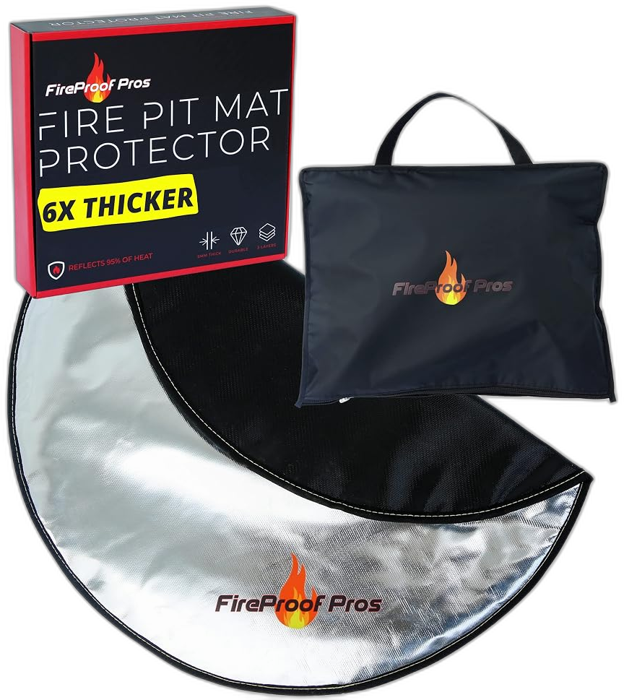
- Protect the surface under it. The bottom of a steel pit gets hot enough to scorch a deck or lawn. Use a stand, a heat mat, or masonry.
- Never use alcohol or liquid-fuel pits that pool fuel. The CPSC has warned about deaths and injuries from them.
- Size by people, not by looks: about 15 inches for two, 19 to 21 inches for three to five, and 24 to 27 inches for a group.
How a Smokeless Fire Pit Works
A normal fire makes smoke for three reasons: the fire is not hot enough, it does not get enough oxygen, or the fuel is wet or poor. Breeo puts it in just those terms on its explainer page (Breeo). Smokeless pits fix the first two problems with their shape and leave the third to you.
The idea is called secondary combustion. Solo Stove, the best known maker, describes the build like this: air enters through holes at the bottom, travels up through the gap between a double wall, gets very hot on the way, and then shoots out of a ring of holes near the rim (Solo Stove). That hot air meets the smoke and unburned gas rising off the fire and burns it a second time. Smoke is mostly fuel that did not burn. Burning it again is both cleaner and hotter.
What Smokeless Pits Can and Cannot Do
| Smokeless pits can | They cannot |
|---|---|
| Cut visible smoke a lot once the fire is going | Make smoke vanish during startup. Expect smoke for the first several minutes. |
| Burn small, dry splits hot and fast | Rescue wet, green, or rotten wood. Wet wood will mostly just smoke. |
| Throw good heat in a ring around the pit | Replace a safe distance from your house or trees. Sparks and heat still travel. |
| Leave a clean white ash and little soot | Work on a windy night as well as on a calm one. Strong wind can disturb the airflow and blow embers. |
| Suit small patios better than open-bowl pits | Remove all bylaws. Many places treat any wood fire as open burning. |
PopSci, which tested a range of these pits, reported that the best ones left very little smoke while the weaker designs were still a big improvement over an open bowl (PopSci). That matches what the makers say. The gap between a great smokeless pit and a good one is real but small. The gap between any smokeless pit and an open metal bowl is large.
The same testers also note the downside: the outside of a pit gets very hot, and a pit that burns at roughly 50,000 BTU will warm you well within about 8 feet. Treat both facts as a safety issue, not a bonus.
Smokeless vs Regular, Gas, and Ethanol Pits
Before you buy, check that a smokeless wood pit is the right kind of fire for you. It is not always.
| Type | Smoke | Effort | Best for | Watch for |
|---|---|---|---|---|
| Smokeless wood pit | Low once hot | You split, stack, light, and clean | Patios, small yards, camping, the real wood-fire experience | Hot outer walls, embers, local burn rules |
| Open steel bowl or ring | High | Same as above | Large yards where smoke can drift away | Smoke in your face, more sparks, more soot |
| Masonry or stone pit | Moderate to high | Build once, burn often | A permanent backyard feature | Cost, a firm level base, and codes |
| Propane or natural gas pit | None | Press a button | Decks, covered patios, places with burn bans (where allowed) | Gas line or tank rules, less crackle, no cooking over logs |
| Alcohol or other liquid-fuel pit | None | Pour and light | Not recommended | Pool fires and flame jetting. See the safety warning below. |
Propane is the main alternative if you want no smoke at all, no ash, and no worry about embers. It is also often the only fire allowed during a burn ban. That is a good reason to keep local rules in mind, which the next section covers. If you want to know more about what makes a good setting for any fire pit, see our guide on small patio ideas.
Fire Pit Safety: The Rules That Matter
This is the part to read twice. Fire pit fires cause injuries every year, and most are avoidable. We rely on the US Fire Administration (USFA), a part of FEMA, for the main numbers.
How Far From the House?
USFA says to use fire pits, outdoor fireplaces, and chimneys at least 10 feet from your home or anything that can burn (USFA). Campfires, it says, should be at least 25 feet from tents, shrubs, and anything that can burn. Bob Vila’s buying guide repeats the 10-foot rule and adds that you should place a pit on brick, stone, or other masonry, and avoid decks unless the decking is composite (Bob Vila).
| Thing nearby | Minimum we suggest | Why |
|---|---|---|
| House walls, siding, eaves | 10 feet or more (USFA) | Heat and sparks can ignite siding, soffits, and trim |
| Fences, sheds, pergolas | 10 feet or more | Same as the house. Wood structures burn. |
| Low tree branches | Overhead clear, with no branches within about 15 to 20 feet in our judgment | Rising heat and sparks dry out and ignite leaves |
| Dry grass or mulch | Clear a bare ring of at least 10 feet, or use a mat under the pit | Grass fires start from one ember |
| Propane tanks and grills | 10 feet or more | USFA pictographs warn to keep fire pits and propane tanks away from the home |
| Seats | About 4 to 6 feet from the pit, with a clear path | Close enough for warmth, far enough to avoid burns |
| Play areas and walkways | Out of the traffic line | Kids and pets run into hot steel |
The tree and seating numbers in the table are our practical suggestions, not code. Always check with your local fire department, because some towns require more than 10 feet or ban wood fires on small lots.
Check Local Rules First
This is the step people skip. Many towns restrict open burning, and some count a smokeless pit as an open fire. Rules often cover:
- Fire pit size limits (often a few feet across).
- Required distance from lot lines as well as structures.
- Seasonal or air-quality burn bans, including “red flag” fire weather days.
- Whether wood is allowed at all, or only gas.
- HOA or lease rules for townhomes and rentals.
Call the non-emergency number of your fire department or check the town website. If you rent, ask the landlord in writing. For more renter ideas, see our small-space patio furniture guide.
Decks, Patios, and Lawns
| Surface | Is it OK? | What to do |
|---|---|---|
| Concrete, pavers, stone, brick | Best choice | Keep the pit on a level, firm area. Check pavers for cracking if they are damp, because trapped water can crack under strong heat. |
| Gravel | Good | A bed of gravel makes a fine base. Keep it level and clear of leaves. |
| Wood deck | Risky | Heat conducts through a steel pit, and embers fall. Use a stand with an air gap and a rated deck mat, and check the deck builder or manual first. |
| Composite deck | Check the maker | Many composite makers say hot items can melt or mark the surface. Read the warranty. |
| Lawn | OK with a mat or a bare ring | Grass will scorch. Use a mat, pavers, or a gravel pad. |
| Under a roof, pergola, or tree | No | Smoke, heat, and sparks collect overhead. |
Heat-shield sellers say a fire pit can reach well over 1,000°F, which is enough to damage decking, and recommend a rated heat shield and an air gap of around an inch between pit and shield (Deck Armor). That is a seller’s claim, so treat the exact numbers with caution, but the idea is sound: a non-combustible barrier and an air gap protect what is below. Check the rating of any mat you buy, and keep the mat at least as wide as the pit plus a safe margin.
Wind, Weather, and Time of Day
- Do not light a fire when wind is gusting. Embers travel.
- Skip the fire during dry spells and fire weather warnings.
- Keep the pit away from falling leaves in autumn. Rake first.
- Do not light a fire when you have been drinking enough to slow your reactions.
People and Pets
USFA says to supervise children closely around fires and keep matches and lighters out of reach, and it recommends a metal screen over wood-burning fires to stop sparks (USFA). A smokeless pit’s outer wall gets very hot, so teach kids the rule that the pit is a “no touch” zone, and set seats so nobody has to pass close to it.
Water, Tools, and Putting It Out
- Keep a garden hose attached and turned on or a bucket of water within reach.
- Keep a shovel or rake nearby for spreading embers.
- Know where your fire extinguisher is.
- Never leave a fire alone, and make sure it is fully out before you go to bed. USFA says to extinguish all fires before you leave the area.
- Let ash cool completely before you move it. Embers can stay hot under ash for a long time, so we suggest waiting a day or two and storing ash in a metal container with a lid, away from the house.
How to Choose a Smokeless Fire Pit
Size: How Many People Do You Want to Seat?
Bob Vila’s guide says fire pits range from about one foot to over two feet across, with portable models around 13.5 inches suiting two to four people and bigger ones seating up to six (Bob Vila). We find it easier to size by seating.
| People | Pit diameter | Typical examples | Space needed (pit plus seats) |
|---|---|---|---|
| 1 to 2 | About 15 inches | Solo Stove Ranger 2.0 (15 inches) | About 10 x 10 feet |
| 3 to 4 | About 19 to 21 inches | Solo Stove Bonfire (19.5), TIKI Social (20), Breeo Y Series (21) | About 12 x 12 feet |
| 5 to 8 | About 24 to 27 inches | Breeo X Series 24 (27.5 inches overall), Solo Stove Yukon 2.0 (27) | About 14 x 14 feet or more |
The space figures are our estimates. They assume a clear zone of about 4 to 6 feet around the pit, a seat width of about 2 feet, and the 10-foot rule from your house. If your patio is smaller than 12 feet across, think about where the nearest wall is, because 10 feet from the house may rule out a patio next to the back door. In that case a portable pit you can move to the lawn or driveway is the better choice.
Material: Stainless, Corten, or Alloy Steel
| Material | Pros | Cons |
|---|---|---|
| Stainless steel | Resists rust, light, easy to wipe down. Turns gold or blue from heat but keeps working. | Costs more. Thinner walls can warp at high heat in some cheap models. |
| Corten (weathering) steel | Thick, sturdy, develops a rust coat that protects the metal, good looks outdoors | Heavy. The rust can stain light patios and decks, so put a mat or base under it. |
| Alloy or painted steel | Cheaper | Bob Vila notes it needs a cover or indoor storage to avoid rust. Paint can burn off. |
Bob Vila says stainless costs roughly twice as much as alloy steel but resists rust and corrosion better (Bob Vila). For most people, stainless steel is a good balance. Corten is a good choice if you want a permanent pit and like the rusty look, but plan the base carefully.
Weight and Portability
PopSci lists weights for several well-known models: Solo Stove Ranger 2.0 at 15 pounds, Solo Stove Bonfire 2.0 at about 28 pounds, TIKI Fire Pit at about 45 pounds, and Breeo X Series 24 at about 62 pounds (PopSci). A pit under about 20 pounds is easy to carry. Past 40 pounds, plan on leaving it in place or using a cart. Weight also matters when you move a hot pit, which you should not do. Wait until it is completely cold.
Stand, Ash Pan, and Heat Shield
Look at the base. A pit with legs or a stand lifts the hot floor off your patio and lets air flow under it, which helps both safety and burn. Some models include a stand or sell one separately. A removable ash pan makes cleanup much easier. A solid base with a lip can hold water in the rain, so check whether the pit drains.
Cooking Over a Smokeless Pit
Many people want to cook over their fire. Some pits have optional grill grates or cooking accessories, and a few are designed for cooking. A tall, narrow pit is better for sitting around than for grilling. If cooking matters, choose a model with an official grate or cooking system and check the weight limit. Also remember that a hot fire is better for cooking than a smoky one, so dry wood is just as important.
Our Picks to Compare
We have not tested these pits ourselves, so we do not rank them or claim that any one is “the best.” We picked models that appear in tests by publishers such as PopSci and Bob Vila and in the Amazon results for smokeless fire pits, so you can compare them side by side. Check the current listing for size, weight, and what is included, because makers update their models.
| Model | Size (from the listing) | Good for | Think about |
|---|---|---|---|
| Solo Stove Bonfire with stand | 19.5 inch | A first smokeless pit for a patio of average size | The outside gets very hot. Use the stand and a mat. |
| Solo Stove Ranger 2.0 | 15 inch | Small patios, balconies where allowed, camping | Smaller fire, shorter logs |
| Solo Stove Yukon 2.0 | 27 inch | Bigger groups and longer logs | Larger footprint and more weight |
| Breeo Y Series | 21 inch, stainless | A portable mid-size pit with a big-brand design | Check the stand and ash handling in the listing |
| Breeo X Series 24 | 27.5 inch overall, Corten steel | A permanent backyard centerpiece | Heavy, rusts by design, needs a firm base |
| TIKI Social | 20 inch | A different look from the plain steel cylinders | Check the weight, stand, and ash handling in the listing |
Solo Stove Bonfire with Stand
This is the pit most people picture when they hear “smokeless.” PopSci’s testers rated its smoke control as excellent and also listed its hot outside as a drawback (PopSci). It is a 19.5 inch stainless pit, which suits three or four people, and the listing includes a stand. If you choose it, pair it with a heat mat and fire tools.
Solo Stove Ranger 2.0
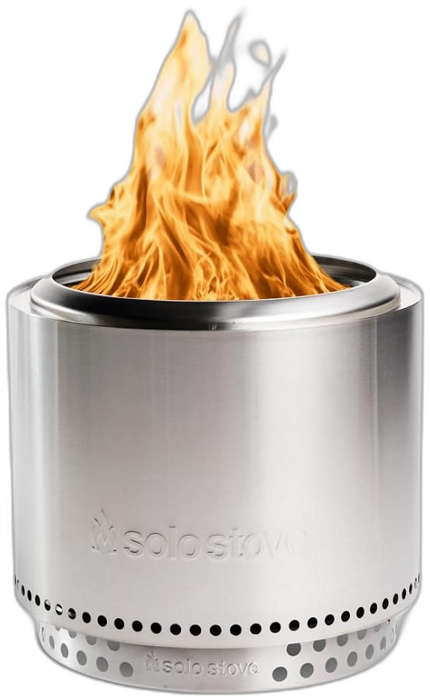
The 15 inch Ranger is the small and light option, around 15 pounds in PopSci’s list. It suits a pair of chairs on a small patio, a trip to the beach where fires are allowed, or a camping weekend. It takes shorter logs, so you will split your wood smaller and feed it more often.
Solo Stove Yukon 2.0
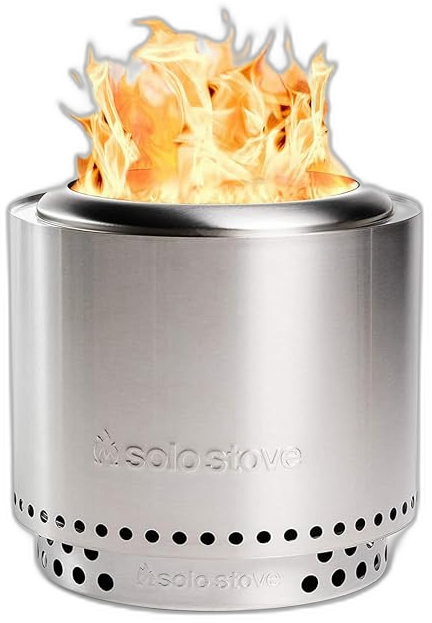
At 27 inches, the Yukon is for groups. It holds more wood and burns longer between feedings, but it needs more clear space and more clearance from everything around it. A bigger fire throws more heat, so do not place it where you would place a small pit.
Breeo Y Series
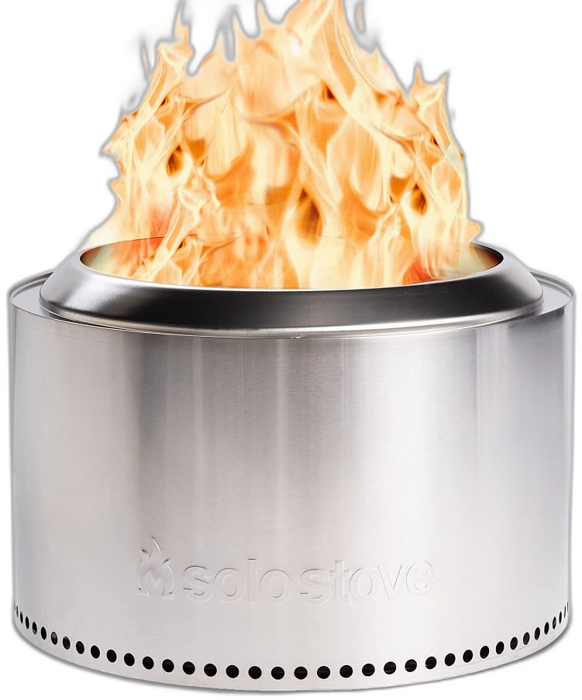
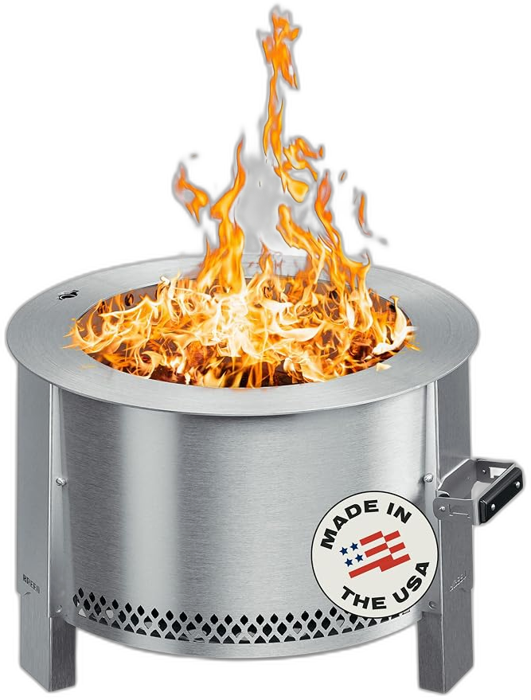
The Y Series is Breeo’s portable pit. The Amazon listing gives a 21 inch stainless size. Breeo uses a raised air vent design at the bottom so air can reach the fire as ash builds up (Breeo). Read the listing for the stand, ash handling, and any cooking parts.
Breeo X Series 24
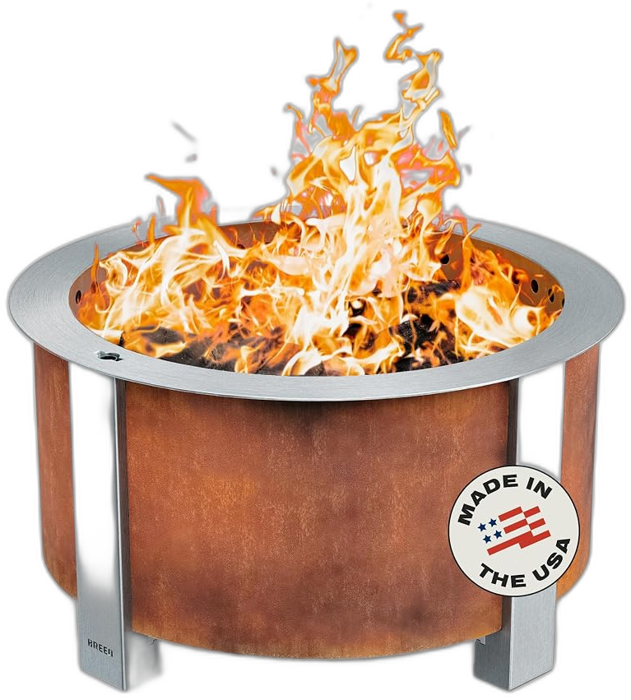
The X Series is a heavy Corten steel pit, listed at 27.5 inches overall. PopSci’s testers praised its fire control and smoke reduction and noted its weight of about 62 pounds (PopSci). Plan a permanent spot on a hard surface. The Corten will rust to a brown finish by design, which can stain a pale patio, so use a mat or a stone base.
TIKI Social 20-Inch
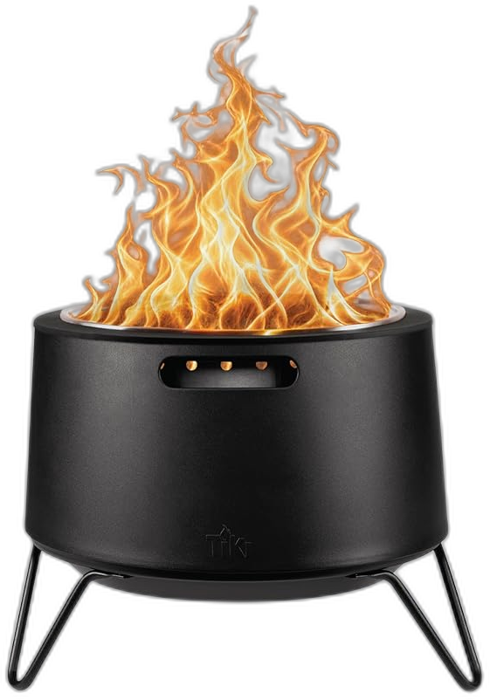
The TIKI Social is a 20 inch pit with a different look from the plain steel cylinders. PopSci’s testers called its smoke elimination very good and gave its weight as about 45 pounds (PopSci). It is a middle path: a little heavier than the portable pits and easier to leave out on a patio.
Which One Should You Buy?
Beyond size, the main choice is portable versus permanent. If you may move house or want to take the pit camping, buy portable. If it will stay on one patio, a heavier pit is fine and may feel more solid.
Firewood: The Part That Decides Whether It Smokes
If your smokeless pit still smokes, nine times out of ten the cause is the wood. The EPA’s Burn Wise guidance is clear: wood should have a moisture content below 20 percent, and it should be seasoned for at least six months (EPA Burn Wise). The EPA says properly seasoned wood is darker, weighs less, and sounds hollow when you knock two pieces together. Wet wood wastes energy and gives off lots of smoke, and the smoke can irritate eyes and lungs.
Choosing and Storing Wood
| Do | Don’t |
|---|---|
| Buy kiln-dried or well-seasoned hardwood such as oak, maple, ash, or hickory | Burn freshly cut “green” wood |
| Split wood small, thinner than your wrist for most smokeless pits | Pile in big rounds that smolder |
| Store wood outdoors, off the ground, with only the top covered (EPA) | Wrap the whole stack in a tarp, which traps moisture |
| Use a cheap moisture meter on a freshly split face | Guess from looks alone |
| Keep the stack away from the house to avoid pests and fire spread | Stack wood against siding or under the deck |
What Never to Burn
The EPA lists things that should never go in a fire because they can release toxic chemicals: household trash, cardboard, plastics, foam, colored ink, coated, painted or pressure-treated wood, plywood, particle board or glued wood, and wet, rotted, diseased, or moldy wood (EPA). Do not burn old pallets unless you know they are untreated, because some are treated with chemicals. Do not use gasoline, lighter fluid, or other accelerants to start the fire. Use firestarters made for the job.
Other Fuels
Some pits can burn wood pellets or lump charcoal. Bob Vila notes that pellets contain less moisture than firewood and take up less storage room (Bob Vila), but check your pit’s manual, because pellets need good airflow and may need a special tray. Charcoal may burn hotter than the pit was designed for, so follow the maker’s guidance. In general, dry hardwood splits are the reliable choice.
How to Light and Run a Smokeless Fire
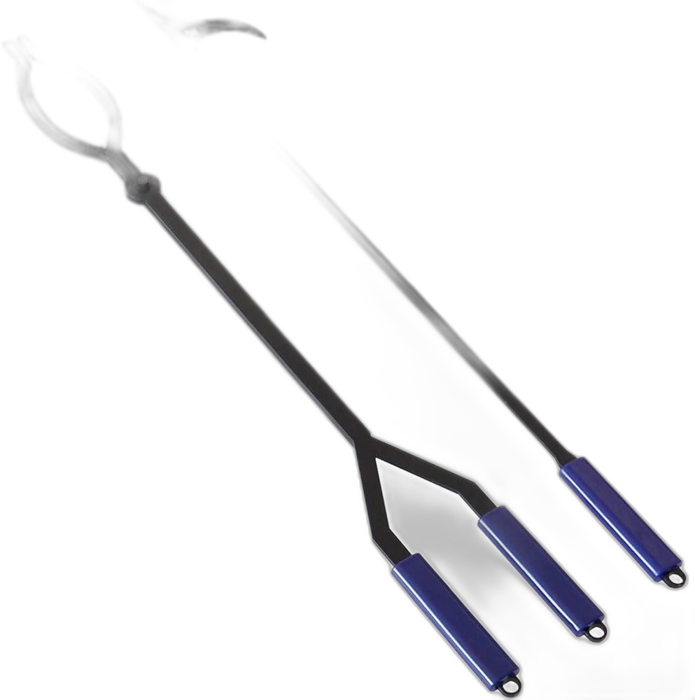
A long set of tongs and a poker keeps your hands well away from the fire. Choose tools at least 28 to 40 inches long, so you are not leaning over the flames.
Troubleshooting: Why Is My Smokeless Pit Smoking?
| Problem | Likely cause | Fix |
|---|---|---|
| Lots of smoke from the start | Wet or green wood | Switch to dry, seasoned wood. Check with a moisture meter. Under 20 percent is the target (EPA). |
| Smoke for several minutes, then clears | Normal startup | Be patient. The walls need to heat before the secondary burn works. |
| Smoke when you add a big log | Large pieces cool the fire and smolder | Use smaller splits and add them one at a time. |
| Smoke and no flame at the rim | Too much wood, or ash blocking air | Do not fill above the upper holes. Clean the ash and check the vents. |
| Fire dies down | Wood packed too tight, or holes blocked | Restack with gaps and clear any ash from the bottom holes. |
| Sparks and embers flying | Wind, wood with pitch or bark, overfilling | Skip windy nights, add a spark screen if the maker offers one, and keep wood below the rim. |
| Pit is changing color | Heat tint on stainless steel | This is cosmetic. Many pits turn gold or blue with heat. |
| Rust on a stainless pit | Moisture in leftover ash or a poor-quality alloy | Empty ash after it cools, dry the pit, and use a cover. |
| Scorched grass or deck | No stand or mat | Add a stand with an air gap and a rated mat, or move to masonry. |
Cleaning, Storage, and Making It Last
- Wait until it is cold. Embers can stay hot for a long time under ash, so wait until the pit and ash are completely cool to the touch.
- Remove the ash. Use a metal scoop and a metal container with a lid. Keep it outside and away from the house, since hot embers can hide in ash.
- Wipe the pit. Use a damp cloth, and a mild soap if needed. Avoid harsh abrasives on stainless steel.
- Dry it. Moisture and ash together can cause staining and rust.
- Cover or store it. A fitted cover keeps rain and leaves out. See our patio furniture covers guide for how to pick and fit a cover, including fire pit covers.
- Check the vents. Clear anything stuck in the air holes before the next fire.
If you leave a Corten pit outdoors, expect it to rust and then stabilize. If you do not want rust marks on your patio, put a mat or stone slab under it.
Setting Up a Safe Fire Pit Area
A fire pit is easier to enjoy when the area around it is planned. Here are three simple layouts, and you can adapt them to your space. For more design ideas, see our guides to small patio ideas, patio floor tiles, and concrete pavers vs patio tiles.
Add a small side table for drinks, a bin or box for dry wood close to the pit but not stacked against anything, and soft lighting so people can see the edge of the pit at night. Outdoor string lights are good for that, but keep the wires and any plastic away from the heat. For the lighting side, see our guide to warm white vs cool white lights, which also work well for outdoor seating.
What Does a Smokeless Pit Cost to Own?
Prices change often, so we do not list them here. The better way to think about cost is the whole setup:
- The pit. Premium stainless pits cost much more than the generic ones you will see in the same search results. Cheaper pits may have thinner steel and shorter lives, so read reviews that talk about warping and rust after a season.
- A stand or heat mat. Often a must on a deck or lawn.
- A cover. Protects the pit and extends its life.
- Tools. Tongs and a poker are inexpensive and make the fire safer.
- Wood. The ongoing cost. Dry hardwood costs more than green wood, but it burns better. Buy in bulk or season your own if you have space.
- Extras. A moisture meter, a spark screen, a grill grate, and a carrying bag.
Common Mistakes
Before You Buy: A Quick Checklist
- Have you checked local burn rules and any HOA or lease rules?
- Do you have a spot at least 10 feet from the house, fences, and trees?
- Is the surface masonry, gravel, or covered with a rated mat?
- Have you chosen a size for the number of people you seat?
- Do you have a source of dry, seasoned wood and a place to store it?
- Do you have tools, a cover, and a hose or water bucket?
- Do you know where the nearest fire extinguisher is?
Frequently Asked Questions
Do smokeless fire pits really produce no smoke?
No. They produce much less smoke once hot, but you will see some during startup, and wet wood will smoke in any pit. The design burns smoke a second time, and that only works when the walls are hot and the wood is dry.
How does a smokeless fire pit work?
Air enters low, heats up in the gap between a double wall, and exits through holes near the rim. That hot air burns the smoke and gases rising off the fire, which is called secondary combustion.
How far should a fire pit be from the house?
The US Fire Administration says at least 10 feet from your home or anything that can burn. Some towns require more, so check your local fire rules.
Can I use a smokeless fire pit on a wood deck?
It is risky. The pit and stand get very hot and embers can fall. Many guides advise masonry instead, or composite decking at the very least. If you do use a deck, use a stand with an air gap and a rated heat mat, and check the deck maker and your local rules.
Can I use a smokeless fire pit on grass?
Yes, with a mat, pavers, or a gravel pad. Bare grass will scorch under the heat and embers can start a grass fire.
What wood should I burn in a smokeless fire pit?
Dry, seasoned hardwood split small. The EPA says wood should be under 20 percent moisture and seasoned at least six months. Kiln-dried wood is a convenient option.
Why is my smokeless fire pit smoking?
The usual causes are wet wood, large logs, overfilling above the upper holes, or the normal startup period before the walls are hot. Switch to dry, small splits and keep the wood below the rim holes.
What size smokeless fire pit do I need?
About 15 inches for two people, 19 to 21 inches for three to five, and 24 to 27 inches for larger groups. Leave a clear zone around the pit for seats and a safe path.
Can I burn charcoal or pellets in a smokeless fire pit?
Some models allow pellets or lump charcoal, but not all do. Check your manual first, since charcoal can burn hotter than the pit was built for and pellets need good airflow.
Are smokeless fire pits legal everywhere?
No. Many places regulate open burning, and some treat smokeless wood pits like any other wood fire. Burn bans, size limits, and HOA or lease rules can apply. Check with your fire department or town before you buy.
Is a propane fire pit better than a smokeless wood pit?
It depends. Propane has no smoke, no ash, and is often allowed during burn bans, but it costs more to set up and has no crackle or cooking over logs. A smokeless wood pit gives the real fire experience with more work.
Why are alcohol or ethanol fire pits dangerous?
The CPSC has warned that pooled liquid fuel can create uncontrollable fires with flames above 1,600°F and can jet flame when refilled if any flame remains. It reports two deaths and at least 60 injuries since 2019.
How do I put out a smokeless fire pit safely?
Let the fire burn down, spread the embers, and make sure it is fully out before you leave or go to bed. Keep water, a shovel, and an extinguisher handy. Do not pour water on a hot steel pit unless the manual says it is safe.
How do I clean a smokeless fire pit?
Wait until the pit and ash are completely cold. Scoop the ash into a metal container, wipe the pit with a damp cloth, dry it, and cover it. Clear any ash from the air holes before the next fire.
Will a stainless steel fire pit rust?
Stainless resists rust but can stain if wet ash sits in it. It often turns gold or blue from heat, which is cosmetic. Empty ash, dry the pit, and use a cover. Corten steel is meant to rust to a protective brown finish.
Sources and Further Reading
- US Fire Administration: Outdoor fire safety
- US CPSC: Consumer alert on alcohol and liquid-burning fire pits
- EPA Burn Wise: Best wood-burning practices
- Breeo: How we’re smokeless
- Solo Stove: Primary and secondary burn
- Popular Science: The best smokeless fire pits tested and reviewed
- Bob Vila: Best smokeless fire pits
- Deck Armor: Fire pit heat shield
Fire pit rules and products change. Check your local fire code and the current product listing and manual before you buy or burn. This guide is general information and not a substitute for advice from your local fire department. Last checked October 2026.

Daniel Carter covers the practical side of home improvement at The Dailey House — drainage fixes, DIY yard projects, patio makeovers, and the kind of weekend builds that actually get finished. If there's a smarter or cheaper way to do it, he's tested it.