

A small patio has one real design problem: everything on it is close enough to see at once, so every choice compounds. The upside is that small spaces respond dramatically to a handful of specific tricks that would barely register on a large deck. You don’t need more square footage — you need the square footage you have to work harder.
Ready to decorate for the season? Check our summer patio decorating ideas.
Make the Boundaries Disappear
- Match your railing or fence color to the house. A dark or contrasting boundary visually caps the space; a boundary that recedes into the background makes the patio feel like it extends further than it does.
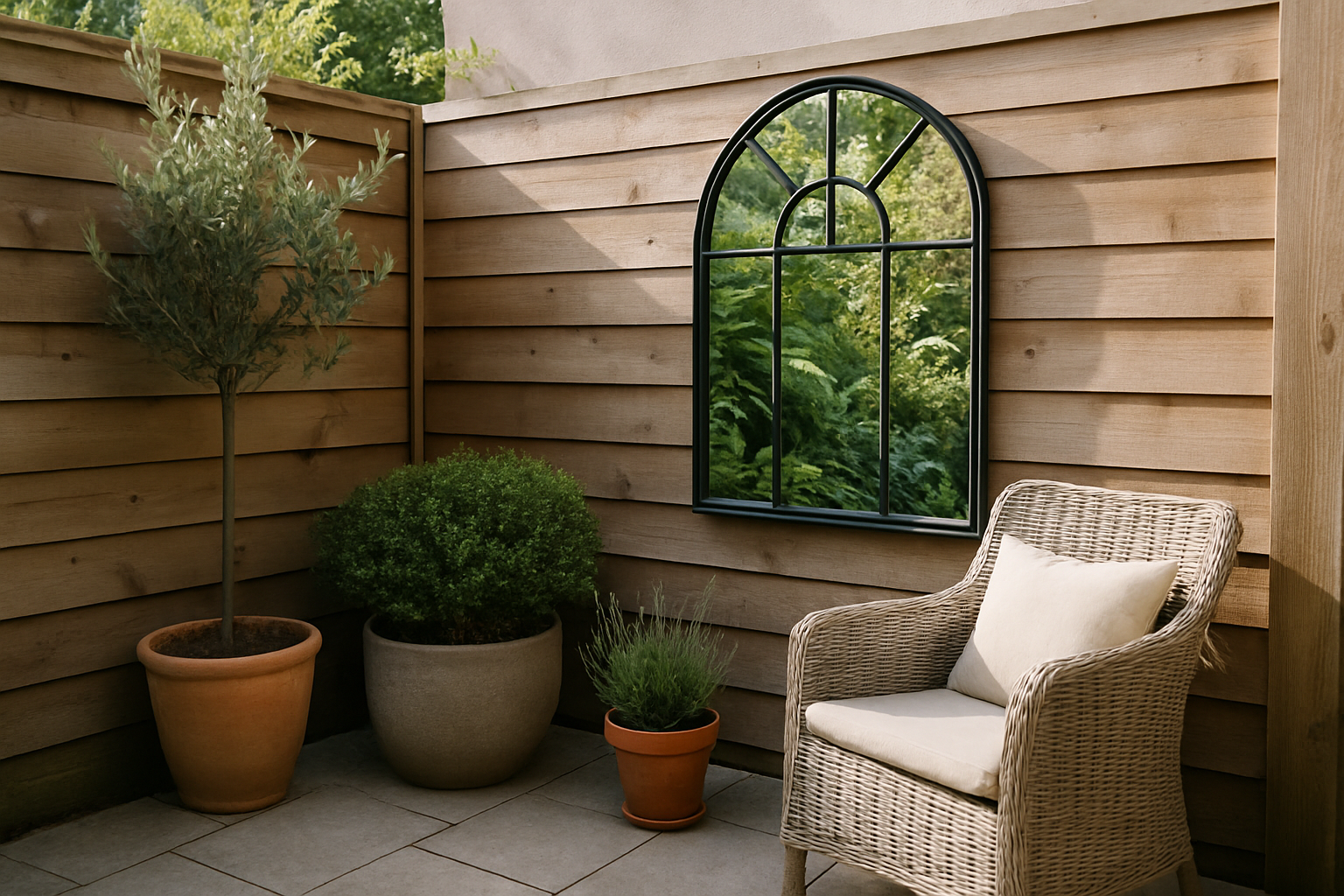
- Use a mirror on a fence or wall. An outdoor-rated mirror reflects greenery or sky and genuinely doubles the perceived depth of a small patio — the same trick that works in small rooms works outside too. Look specifically for a mirror rated for outdoor humidity; standard indoor mirrors will fog and the backing will corrode within a season.
- Skip solid privacy screens in favor of lattice or slatted panels. Solid screens make a small patio feel like a box. Anything you can partially see through keeps a sense of the space beyond it, even if what’s beyond it is just a neighbor’s fence.
- Run flooring in a diagonal pattern. Whether it’s pavers, deck tiles, or painted lines on concrete, a diagonal layout draws the eye along the longer dimension of the space instead of the shorter one, which is a trick borrowed directly from small-room interior flooring.
Furniture That Doesn’t Eat the Room
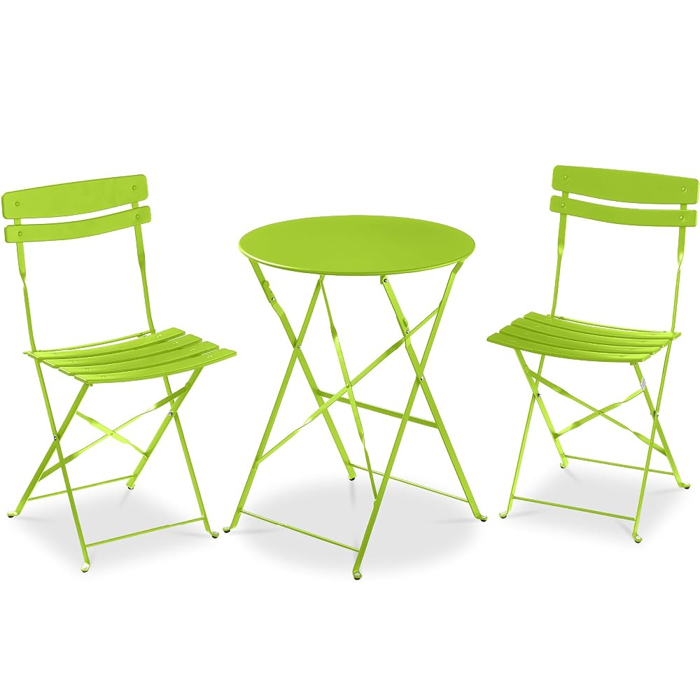
- A bistro set instead of a full dining set. Two chairs and a small round table seat what most small patios actually need to seat, without the footprint of a 6-person table that only gets used twice a year.
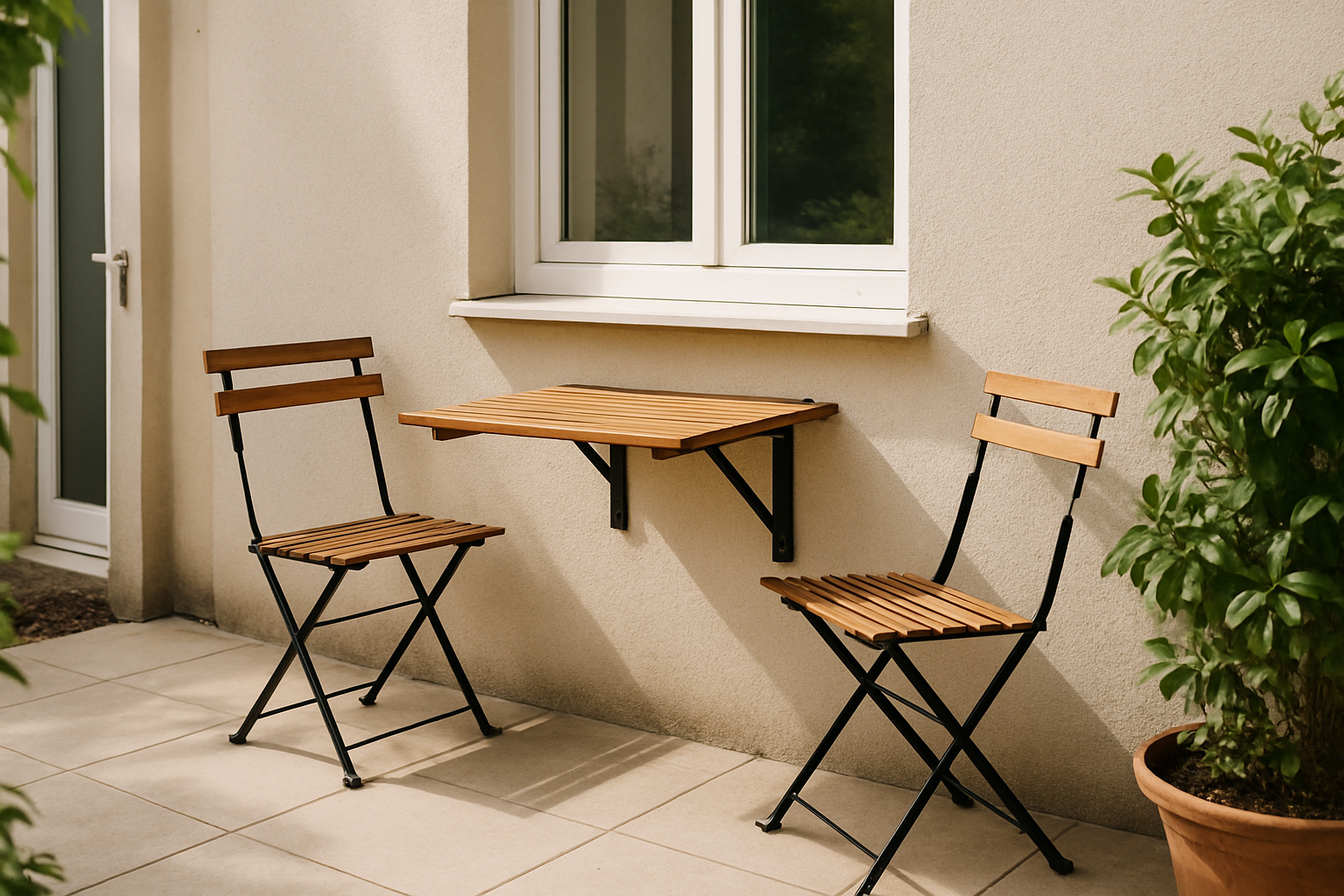
- Wall-mounted or folding furniture. A drop-leaf table that folds flat against the wall when not in use gives you the option of a full dining setup without the permanent floor space cost.
- Furniture with visible legs, not skirted bases. Seeing the floor underneath a chair or table makes the whole footprint read as smaller and lighter than furniture that sits flush to the ground.
- Stackable or nesting side tables. Use two when you’re entertaining, nest them into one footprint the rest of the time.
- A single well-chosen bench instead of multiple chairs. One bench can seat two to three people in the space two armchairs would need, and slides flush against a wall when you need the floor space back.
Vertical Space Is Free Square Footage
- Wall-mounted planters instead of floor pots. Every pot you get off the ground is floor space back in your patio.
- A trellis with climbing plants at the patio’s narrowest point. Vertical greenery draws the eye up, which makes the ceiling of the space feel higher and the whole patio feel less cramped.
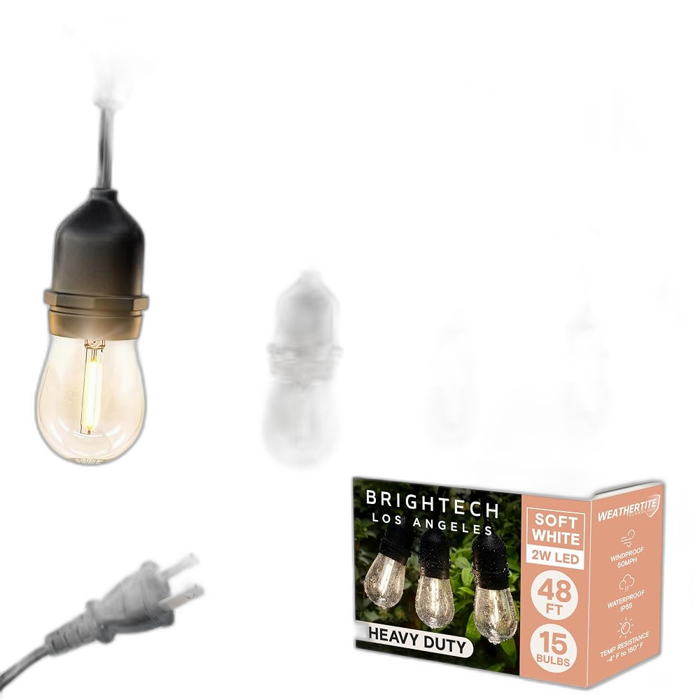
- Hanging string lights on two diagonal points rather than a flat grid. A single diagonal line of lights across a small patio does more to create atmosphere than an even grid, and uses less material.
- A vertical herb garden on a fence or railing. Functional and space-efficient — you get a working garden without dedicating any floor area to it.
Color and Light Tricks
- Light, warm neutrals on flooring and furniture. Dark colors absorb light and make a small enclosed patio feel smaller; light tones bounce light around and open the space up.
- One accent color, used sparingly. A single strong color repeated in two or three small spots (a cushion, a planter, a lantern) reads as intentional; the same color everywhere reads as busy.
- Uplighting on any trees or tall plants nearby. Lighting something above eye level pulls attention upward and outward, past the physical boundary of the patio itself.
- Warm white string lights over cool white. Warm light makes a small space feel cozy and intentional; cool white light tends to read as utilitarian, like a work light.
Small Details That Change the Whole Feel
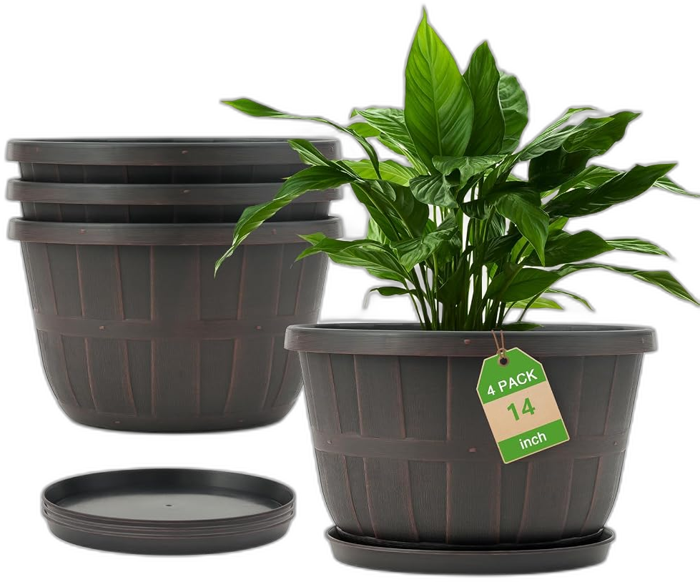
- A single oversized planter instead of several small pots. One large, well-chosen plant reads as a design statement; five small pots read as clutter, even at the same total plant volume.
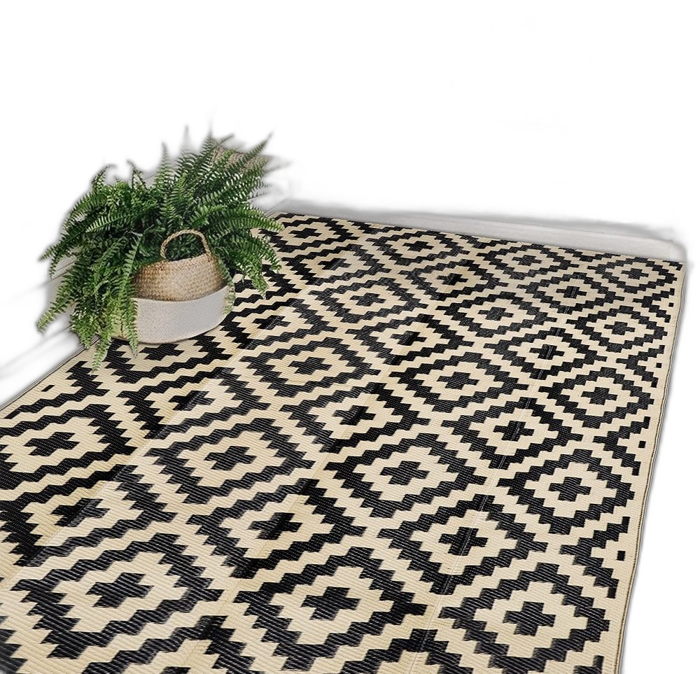
- A rug sized correctly for the space. A rug too small makes a patio look unfinished; the right size (with furniture legs at least partially on it) anchors the whole area.
- Curtains or an outdoor drape on one side. Even a single panel of outdoor fabric adds a sense of “room” to a patio that’s otherwise just an open slab.
- A fire bowl instead of a full fire pit. Gives you the ambiance and focal point of a fire feature without the footprint a built-in fire pit demands.
The One Rule That Matters Most
Every item above works because it does one of two things: gets clutter off the floor, or draws the eye somewhere other than the literal boundary of the space. If you’re only going to change one thing, pick whichever of those two problems your patio actually has. A patio crowded with floor-level pots and furniture needs the vertical tricks. A patio that feels boxed in by a fence or wall needs the boundary-softening tricks. Most small patios only really have one of these problems, not both.
Patio Picks That Fit This Guide
Frequently Asked Questions
How small is too small for a dining table on a patio?
Under about 6×6 feet, a full table plus chairs usually leaves less than the 30″ of clearance needed to walk around comfortably. Below that footprint, a wall-mounted drop-leaf table or a bistro set is a better fit than a standard 4-person table.
Do mirrors actually survive outside long-term?
Ones specifically rated for outdoor or “garden mirror” use do, typically with a rust-resistant frame and a sealed backing. Standard bathroom or wall mirrors will develop black spots on the backing within a season of humidity exposure.
What’s the single best small-patio upgrade under $50?
An outdoor mirror or a single large planter — both address the two core small-space problems (boundary and clutter) for very little money, and both take minutes to install.

Daniel Carter covers the practical side of home improvement at The Dailey House — drainage fixes, DIY yard projects, patio makeovers, and the kind of weekend builds that actually get finished. If there's a smarter or cheaper way to do it, he's tested it.