

Most sofas don’t suffer from a lack of pillows—they suffer from too many of the wrong ones.
In client homes, I routinely remove half the pillows before doing anything else. Not because pillows are bad—but because they’re often used without a system. The result? A sofa that looks “finished” in photos but feels awkward in real life.
This guide refines the original idea into something you can actually execute, whether you’re styling a small apartment in Dhaka or a larger open-plan home.
Why Pillow Overload Happens (And How Designers Fix It)
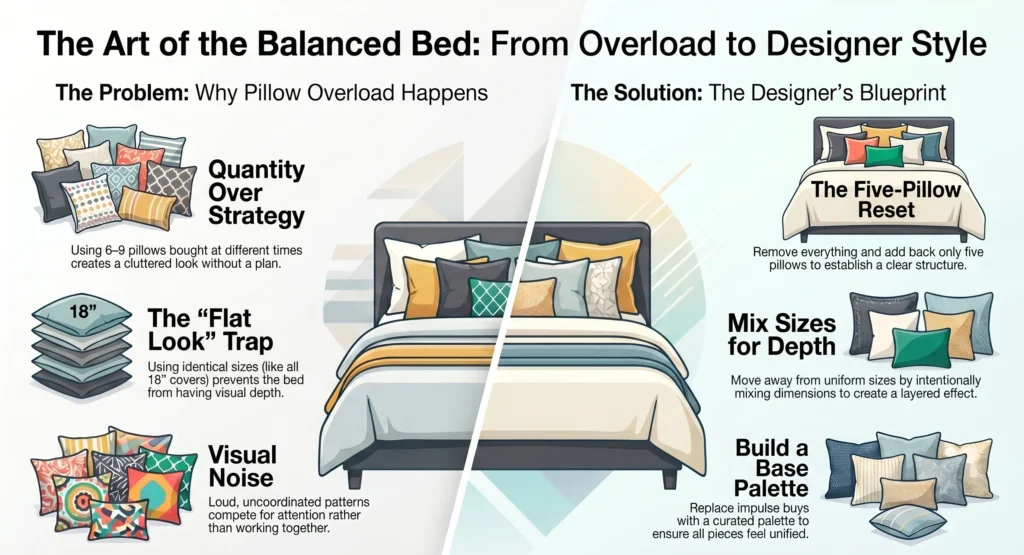
People tend to layer pillows based on what they like individually—not how they work together.
What I typically see in real homes:
- 6–9 pillows bought at different times with no palette plan
- All 18” covers (no size variation = flat look)
- Loud patterns competing for attention
- Cheap inserts that collapse and wrinkle
What designers do instead:
- Limit quantity first, then refine quality
- Build around a base palette, not impulse buys
- Mix sizes intentionally for depth
👉 The fastest fix: Remove everything, then add back only five pillows using a clear structure.
The 5-Pillow Formula (Used in Real Projects)
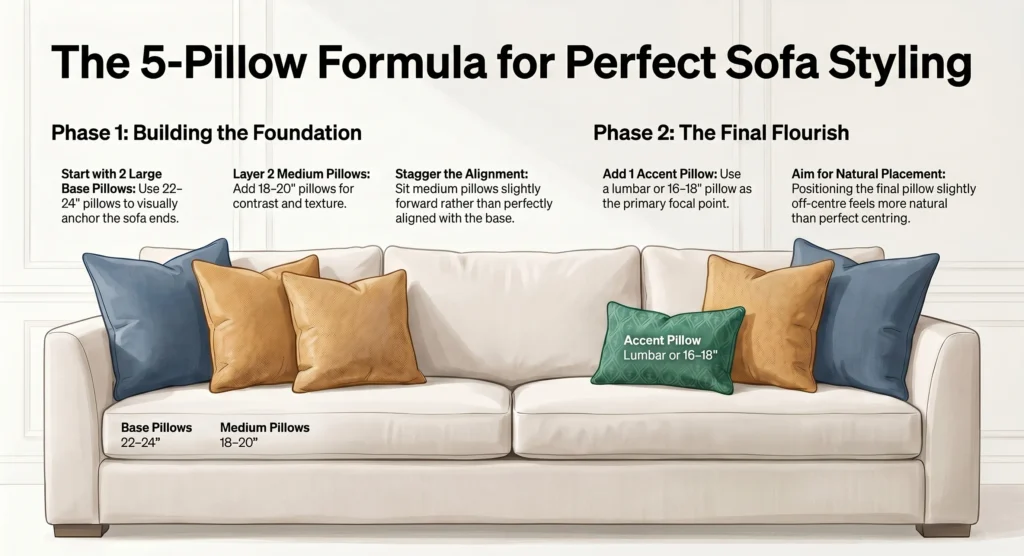
This isn’t just theory—this exact formula is what I use when staging mid-range apartments and high-end living rooms alike.
The Layout That Works Every Time
- 2 large base pillows (22–24”)
- Always start here
- These visually “anchor” the sofa
- 2 medium pillows (18–20”)
- Add contrast or texture
- Sit slightly forward, not perfectly aligned
- 1 accent pillow (lumbar or 16–18”)
- The focal point
- Slightly off-center feels more natural than perfectly centered
What This Looks Like in Practice
Imagine a 3-seat neutral sofa:
- Base: 2 beige linen pillows
- Mid-layer: 2 subtle striped gray pillows
- Accent: 1 rust-colored lumbar
That’s it. Clean, layered, and usable.
Style-Specific Execution (With Real Examples)
The formula stays constant—but the materials and palette define the style.
Modern (Minimal but Not Cold)
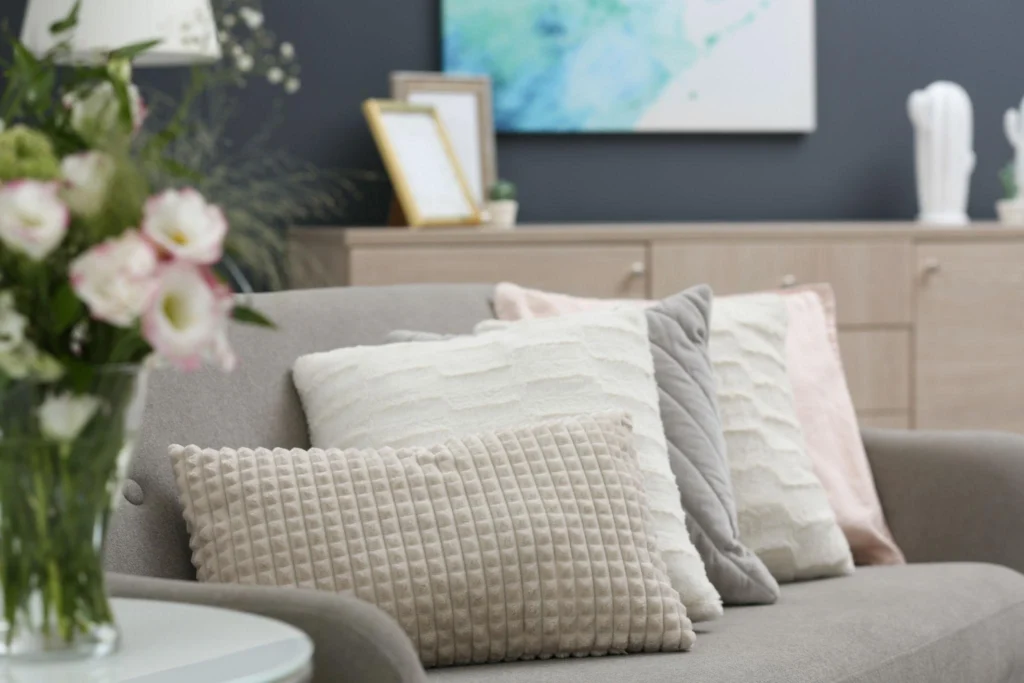
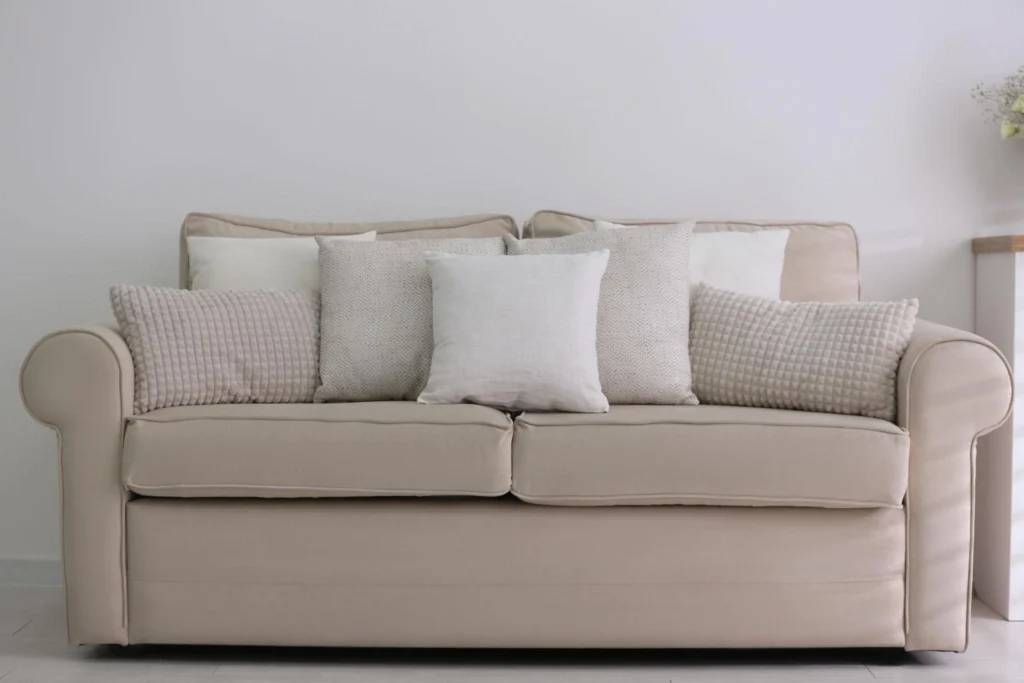
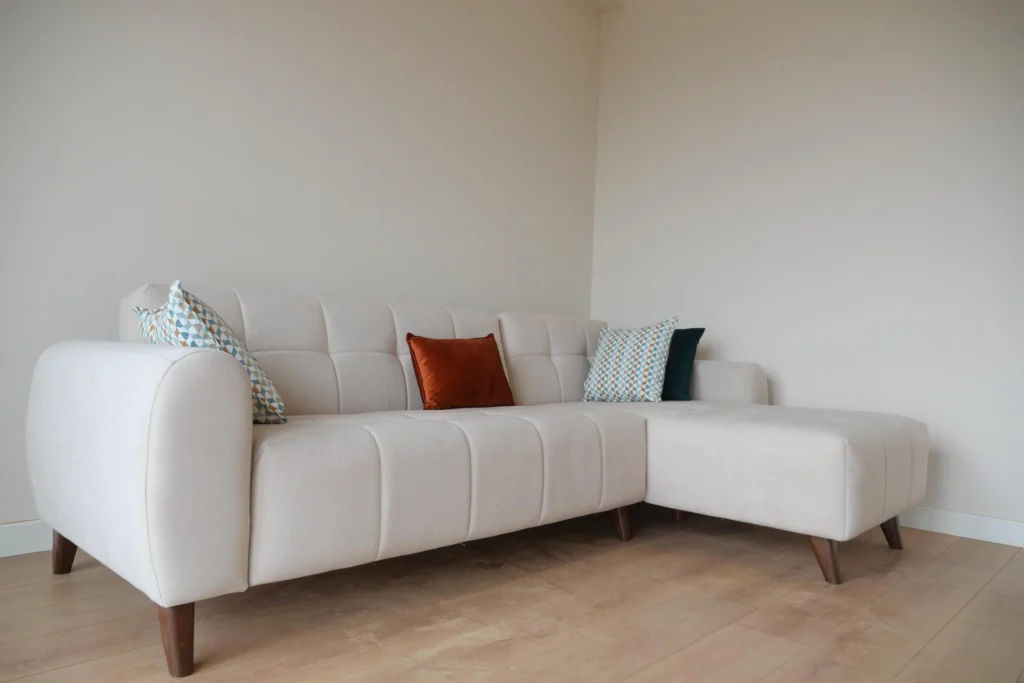
Real-world setup:
- 2 charcoal linen (base)
- 2 light gray textured (mid)
- 1 black leather lumbar (accent)
Key insight:
Modern rooms look expensive when contrast is controlled. Avoid mixing too many tones—stick to 2–3 shades max.
Boho (Relaxed but Controlled)
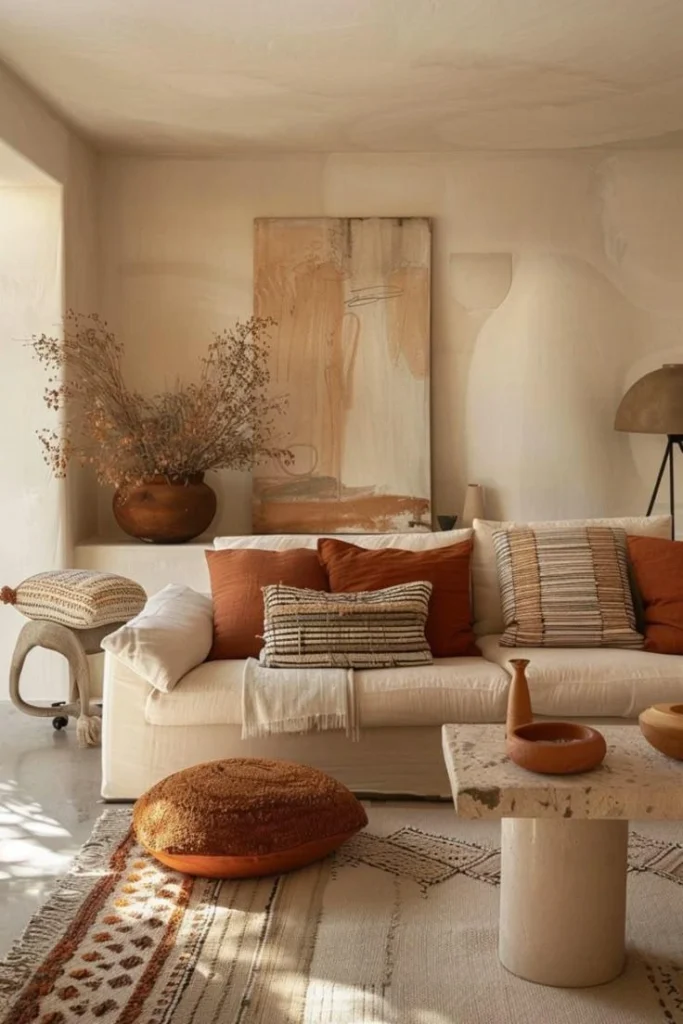
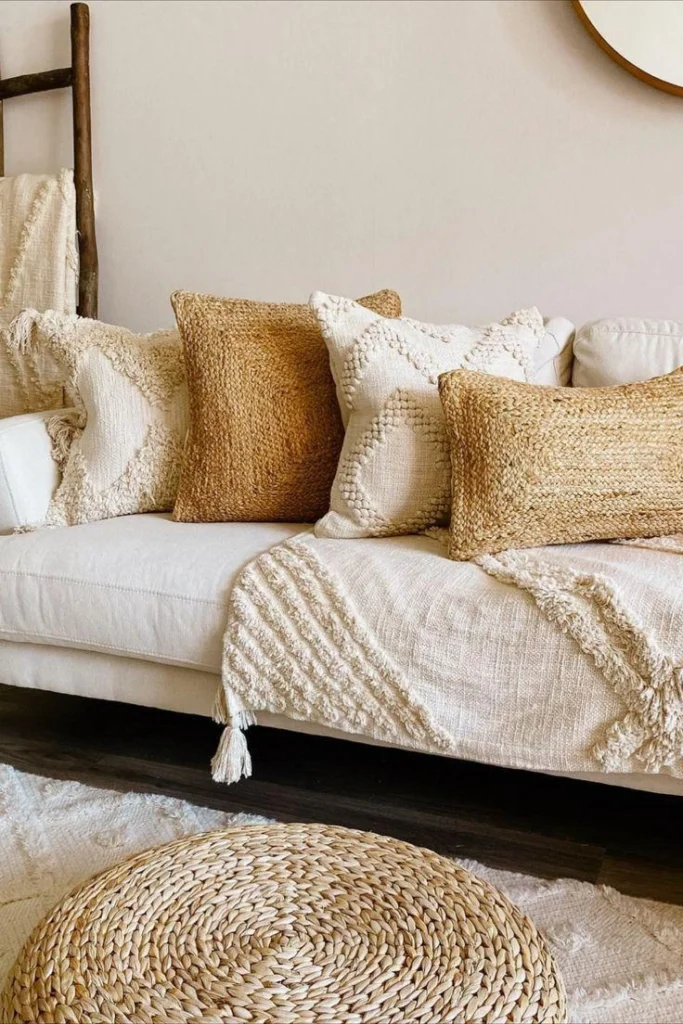
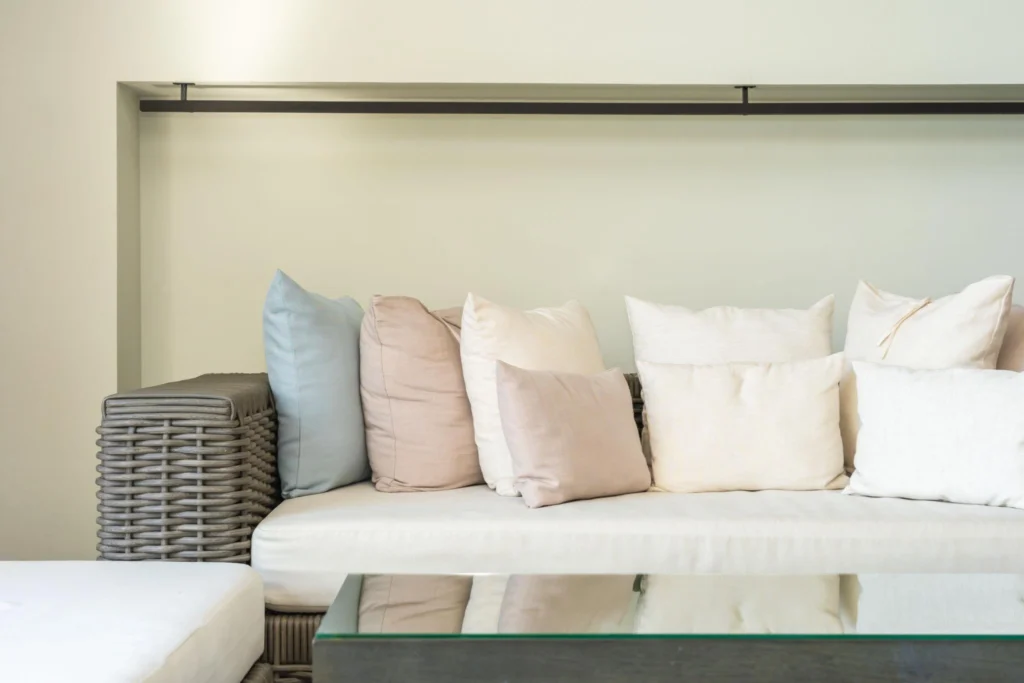
Real-world setup:
- 2 cream woven cotton (base)
- 2 patterned mudcloth (mid)
- 1 embroidered lumbar (accent)
Key insight:
Most people overdo boho with color. The trick is neutral base + textured accents, not five loud prints.
Scandinavian (Soft + Intentional)
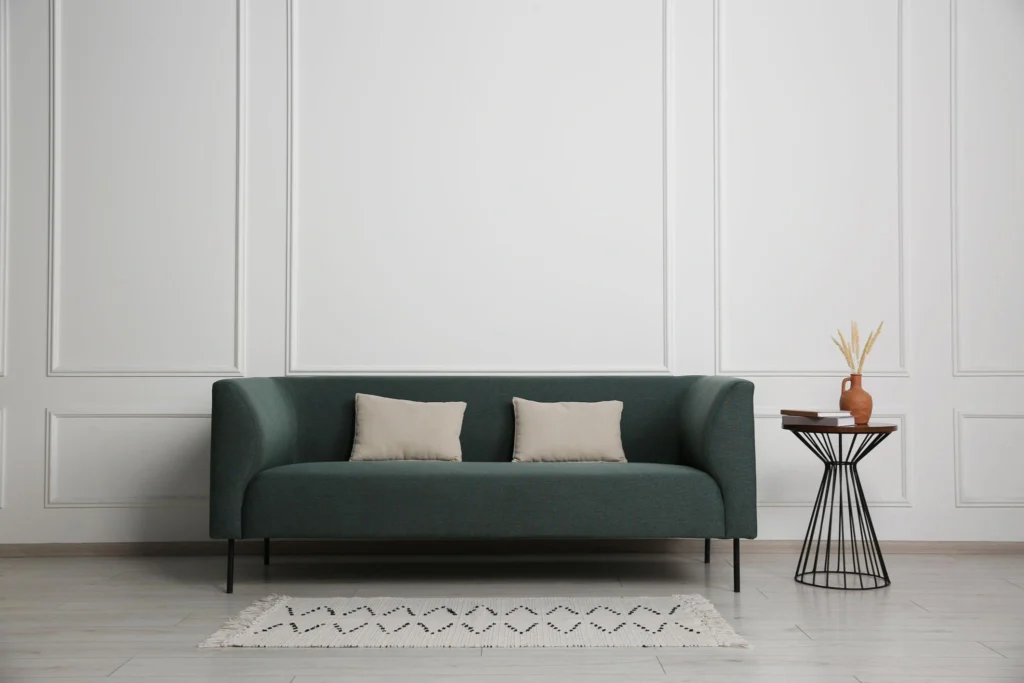
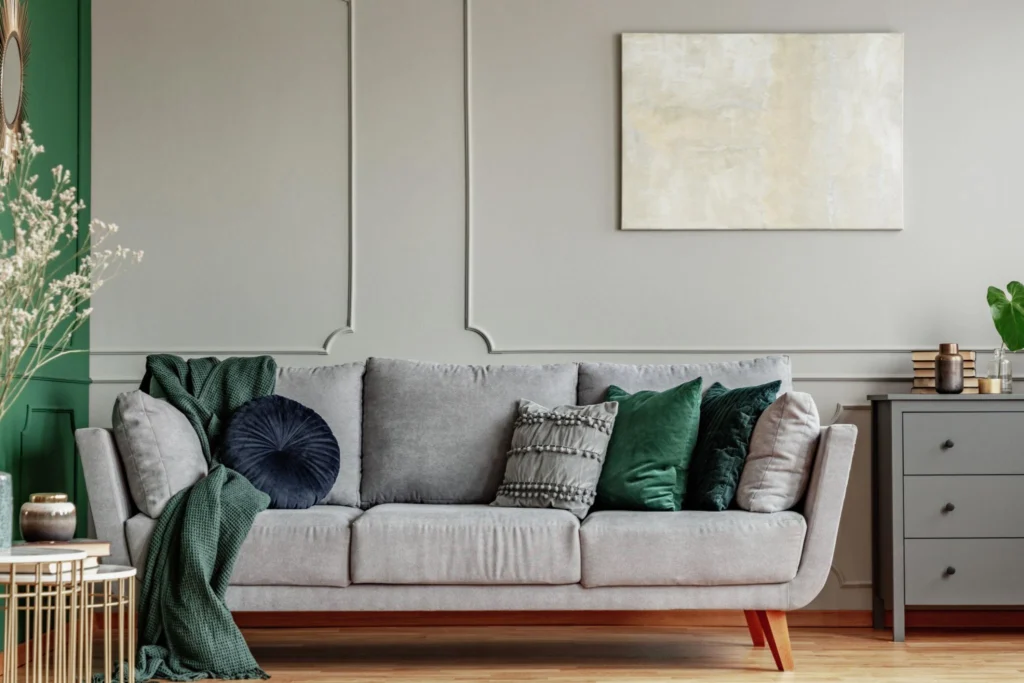
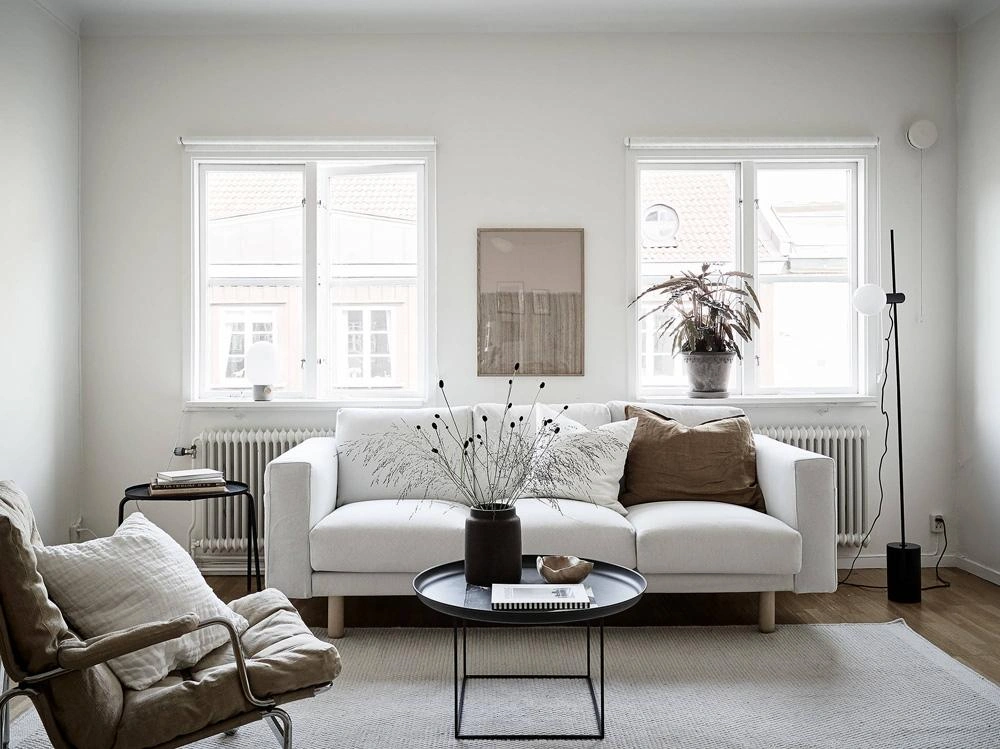
Real-world setup:
- 2 off-white linen (base)
- 2 pale gray cotton (mid)
- 1 muted blue lumbar
Key insight:
Spacing matters more than layering. Leave small gaps—don’t compress everything together.
Traditional (Balanced with Depth)
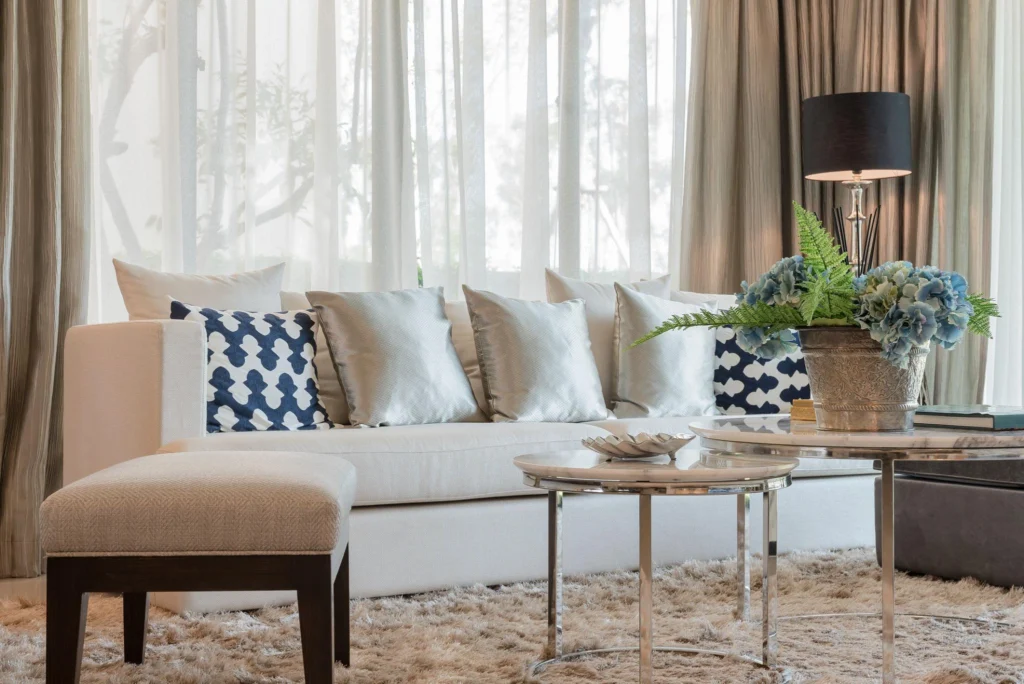
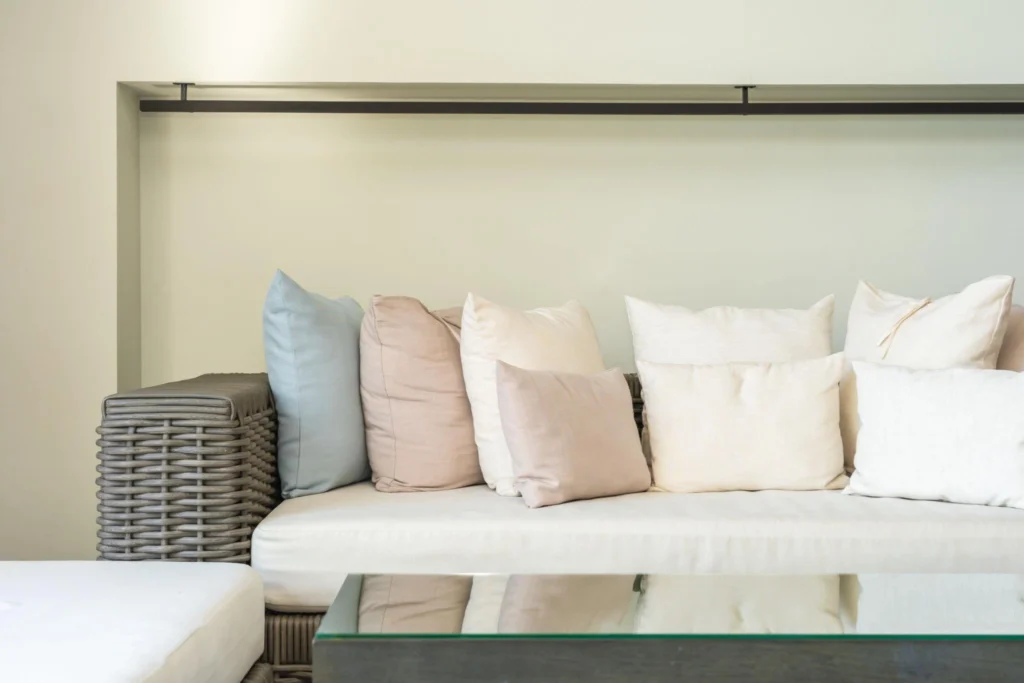
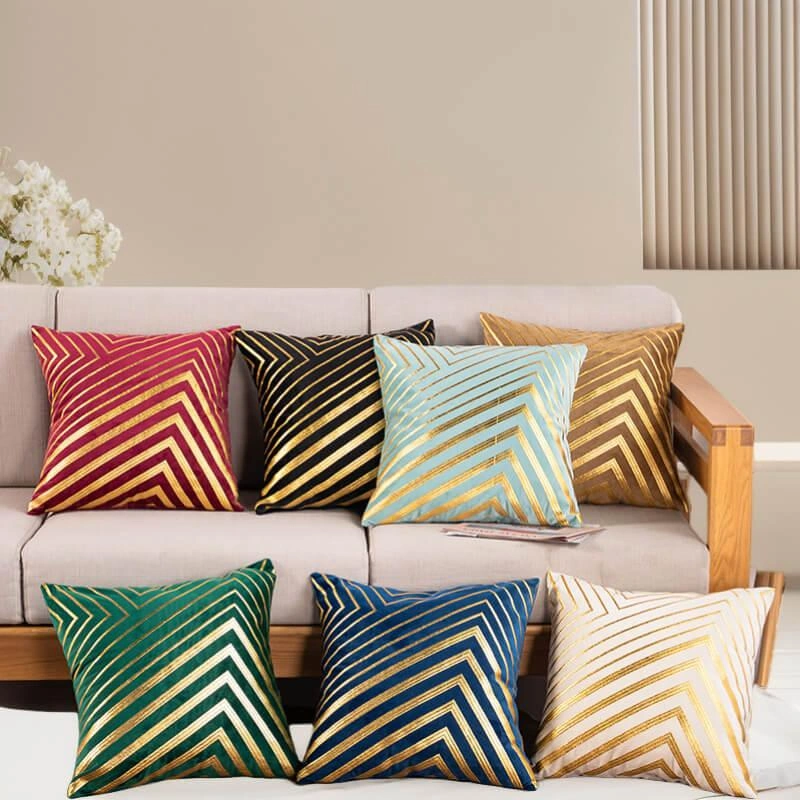
Real-world setup:
- 2 cream damask (base)
- 2 navy velvet (mid)
- 1 gold-accent lumbar
Key insight:
Use fabric richness (velvet, jacquard) instead of adding more pillows.
Color Pairing You Can Actually Follow
Instead of guessing combinations, use this repeatable formula:
- Step 1: Choose 1 base neutral (beige, gray, ivory)
- Step 2: Add 1 supporting tone (blue, sage, camel)
- Step 3: Add 1 accent color (rust, black, blush)
Example You Can Copy:
- Base: warm beige
- Secondary: olive green
- Accent: burnt orange
👉 If you’re unsure: take a color from your rug or curtains—that’s your safest anchor.
Budget vs Luxury: What Actually Makes a Difference
You don’t need expensive pillows—you need smart allocation.
Budget Setup (Looks Good Under $50–$80 Total)
- Buy neutral covers locally or from budget retailers
- Stick to cotton or basic linen blends
- Use microfiber inserts
Upgrade trick:
Steam or iron covers lightly—wrinkles instantly make cheap pillows look worse.
Mid-Range Upgrade (Best Value Move)
- Invest in better inserts (this matters more than covers)
- Look for heavier fabrics (thicker weave = better drape)
Luxury Setup
- Down or feather inserts (they hold shape and “break” naturally)
- Handwoven or artisan covers
- Subtle detailing (piping, embroidery, stitching)
👉 Real designer tip:
Even in luxury homes, only one or two pillows are truly expensive—the rest are balanced basics.
Materials That Instantly Improve Your Sofa
Most people focus on color—but texture is what makes a setup feel designed.
Reliable combinations:
- Linen + velvet + cotton
- Wool + leather + linen
- Cotton + embroidery + woven texture
👉 If all five pillows feel similar when you touch them, you’re missing depth.
Placement Mistakes I See Constantly
These are small—but they completely change the outcome.
Avoid:
- Perfect symmetry (looks staged, not lived-in)
- Over-fluffing every pillow (too showroom-like)
- Using five identical sizes
Do instead:
- Slight overlap (not stacked like books)
- Let one pillow sit slightly angled
- Allow imperfections—it adds realism
Practical “Use Test” (Most Important Step)
After styling:
- Sit down normally
- If you need to move more than two pillows, reduce the count
- If pillows slide or collapse → upgrade inserts
- If nothing stands out → your accent pillow isn’t strong enough
Final Takeaway
The goal isn’t to style your sofa—it’s to make it feel effortlessly finished.
The 5-pillow formula works because it forces:
- Editing instead of adding
- Contrast instead of clutter
- Function alongside aesthetics
If your setup feels off, don’t shop first.
Remove everything.
Rebuild with five.
Adjust until it feels natural.
That’s how designers actually do it.
Living Room Picks to Get the Look
Related Guides

Daniel Carter covers the practical side of home improvement at The Dailey House — drainage fixes, DIY yard projects, patio makeovers, and the kind of weekend builds that actually get finished. If there's a smarter or cheaper way to do it, he's tested it.