

Open shelving isn’t just a design trend—it’s a behavioral choice that shows up in your daily routine. After working on real kitchens (and revisiting them months later), one thing is clear:
Open shelving doesn’t fail because of style—it fails because of mismatch with habits.
This guide is designed to help you make a correct decision upfront, not fix regret later.
What Open Shelving Actually Demands (In Real Homes)
Most articles stop at “it requires organization.” That’s too vague. Here’s what actually happens:
- Dust appears within 3–5 days (faster near roads or windows)
- Grease buildup forms within 2–3 weeks if near a cooktop
- Visual clutter compounds gradually, not instantly
Real example:
In a small apartment kitchen I redesigned, the client loved open shelving—but cooked twice daily. Within a month, spice jars and plates developed a sticky film. We ended up relocating shelves away from the stove and reinstalling a slim cabinet above the cook zone.
Actionable rule:
👉 Never install open shelves directly above or next to a high-use cooking area unless you’re okay cleaning weekly.
Who Open Shelving Actually Works For
1. The Naturally Organized Minimalist
If your baseline is already tidy, open shelving will feel natural—not forced.
What I’ve seen in practice:
Clients who succeed with open shelving typically:
- Own under 25–30 core kitchen items
- Use the same dishware daily
- Dislike visual clutter instinctively
Best styles:
- Scandinavian
- Modern minimalist
Color palette (tested combinations):
- Warm white + light oak + matte black accents
- Soft gray + ash wood + brushed steel
Layout that works:
- 2 shelves max
- 10–12 inches vertical spacing
- Consistent item heights (avoid random tall/short chaos)
Pro tip from installs:
Use slightly deeper shelves (10–12 inches instead of 8). It prevents plates from visually “teetering” and feels more stable.
2. The Functional Cook (Not the Collector)
Open shelving works best when everything is in constant rotation.
Real-world insight:
The most successful setups I’ve seen belong to people who:
- Cook often
- Wash dishes daily
- Avoid storing “backup” items
Ideal styles:
- Modern farmhouse
- Industrial
Material pairing that ages well:
- Medium-tone wood shelves + black steel brackets
- White subway tile backsplash + natural wood
Practical setup:
- Bottom shelf: plates, bowls, mugs
- Top shelf: oils, jars, or lighter items
Mistake to avoid:
Don’t store rarely used appliances (blenders, mixers) on open shelves—they collect dust fast and disrupt visual flow.
3. The Intentional Styler (Who Maintains Weekly)
This is less common than Pinterest suggests.
Reality check:
People who succeed here treat shelves like living displays, not storage.
Best styles:
- Boho
- Eclectic
- Soft contemporary
Color palette ideas:
- Terracotta + cream + olive green
- Sand + warm brown + muted gold
Reliable styling formula (used in client projects):
- 2 stacks (plates or bowls)
- 1 vertical element (vase, bottle, plant)
- 1 small accent object
Repeat across shelves with slight variation.
Weekly reset method (5 minutes):
- Remove 2–3 items
- Wipe surface
- Reintroduce only essentials
This prevents gradual clutter buildup.
Who Will Regret Open Shelving (Be Honest Here)
1. “I’ll Organize It Later” Personalities
If your system relies on future effort, open shelving will expose that gap.
Observed pattern:
- Week 1: styled
- Week 3: mixed items
- Month 2: cluttered and stressful
Better solution:
Install:
- Closed cabinets for bulk storage
- One 24–36 inch open shelf for display
You get the look without operational pressure.
2. Busy Households
Especially families with kids or shared kitchens.
Real constraint:
Open shelving requires maintenance frequency, not just effort.
Common issues:
- Items get mismatched quickly
- Visual noise increases daily
- Cleaning gets postponed
Smarter layout:
- Keep open shelves above eye level only
- Use closed storage below
3. Mixed or Inconsistent Kitchenware Owners
This is the #1 visual failure point.
What clients often underestimate:
Even slight variation (different whites, patterns, shapes) becomes obvious when exposed.
Fix that actually works:
- Switch to one unified set:
- Matte white or off-white plates
- Clear or identical glassware
- Limit mugs to 4–6 visible pieces
You don’t need expensive items—just consistent ones.
4. Small Kitchens (Done Without Restraint)
Open shelving can help small spaces—but only if controlled.
Mistake I’ve corrected multiple times:
Removing all upper cabinets → replacing with shelves → space feels chaotic and smaller
What works instead:
- One section (not full wall) of open shelving
- Light-toned materials only
- Keep upper shelves minimally filled
Budget vs Luxury: What Actually Matters
Budget Setup (That Still Looks Intentional)
Where to spend:
- Matching dishware (high visual impact)
- Thicker shelves (look more expensive instantly)
Where to save:
- Basic brackets (paint them wall color)
- Standard wood boards (sealed properly)
Real tip:
A $40 shelf with well-curated items looks better than a $400 shelf with clutter.
Mid-Range (Best Value Zone)
What improves:
- Stability
- Finish quality
- Visual integration
Recommended upgrades:
- Solid oak or walnut shelves
- Hidden bracket systems
- Custom spacing based on your actual items
Luxury (When It Feels Seamless)
Luxury isn’t about cost—it’s about integration.
What makes it different:
- Shelves align perfectly with cabinetry
- Materials match across the kitchen
- Lighting is built-in, not added later
Common materials:
- Stone (marble/quartz)
- Thick hardwood slabs
- Microcement or plaster back panels
Layout Ideas That Work in Real Life
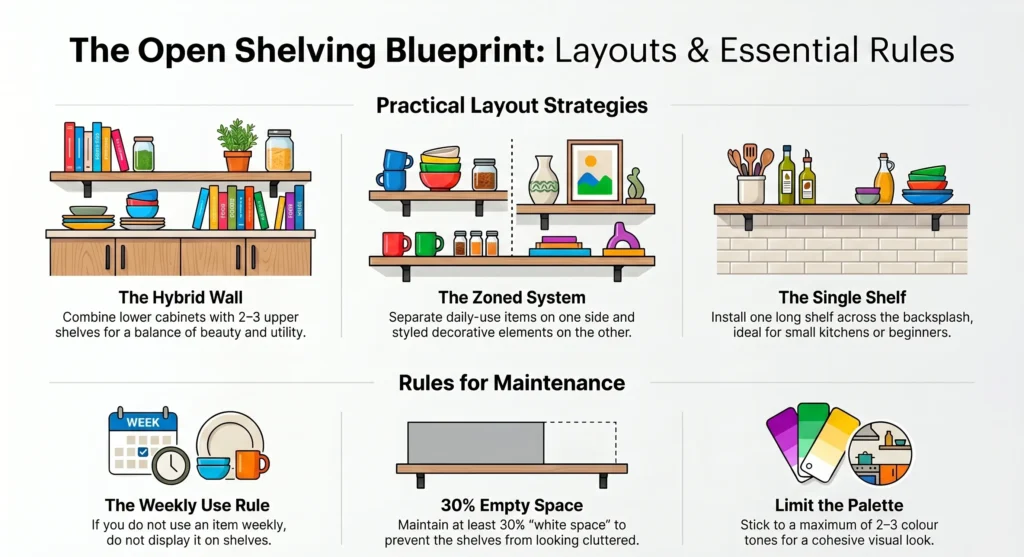
The Hybrid Wall (Most Reliable)
- Lower: cabinets
- Upper: 2–3 shelves
✔ Best balance of beauty + practicality
The Single Shelf Approach
- One long shelf across backsplash
✔ Ideal for small kitchens or beginners
The Zoned System
- Left: daily items
- Right: styled elements
✔ Prevents visual confusion
The Corner Shelf Strategy
- Use shelves only in corner transitions
✔ Softens heavy cabinetry without overexposure
Non-Negotiable Rules (From Real Use)
- If you don’t use it weekly, don’t display it
- Limit your palette to 2–3 tones max
- Stack items instead of spreading them out
- Clean shelves every 5–7 days
- Leave at least 30% empty space
The Honest Verdict
Open shelving is not low-maintenance design—it’s high-visibility living.
It works if:
- You already live in an organized way
- You value visual calm over storage volume
- You’re willing to maintain it consistently
It fails if:
- You rely on hidden storage
- You’re short on time
- You like variety without structure
Final, Practical Recommendation
If you’re unsure, don’t commit fully.
Start with:
- One shelf
- One controlled zone
- One consistent set of items
Live with it for 30 days.
That will tell you more than any design trend ever will.
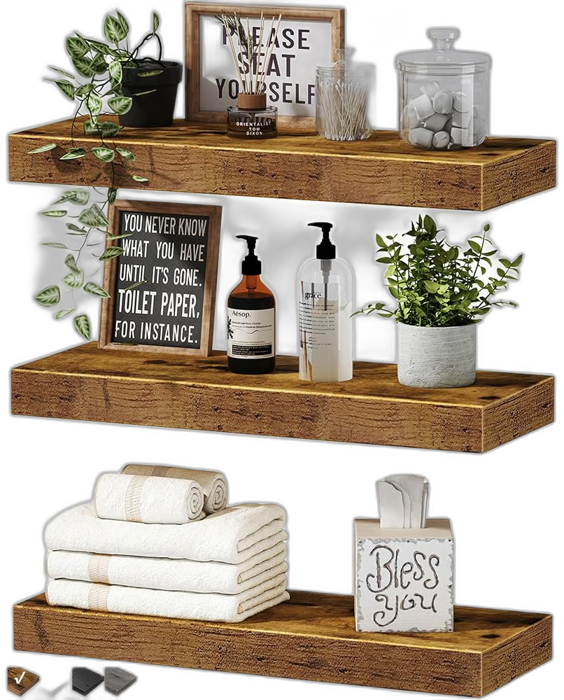
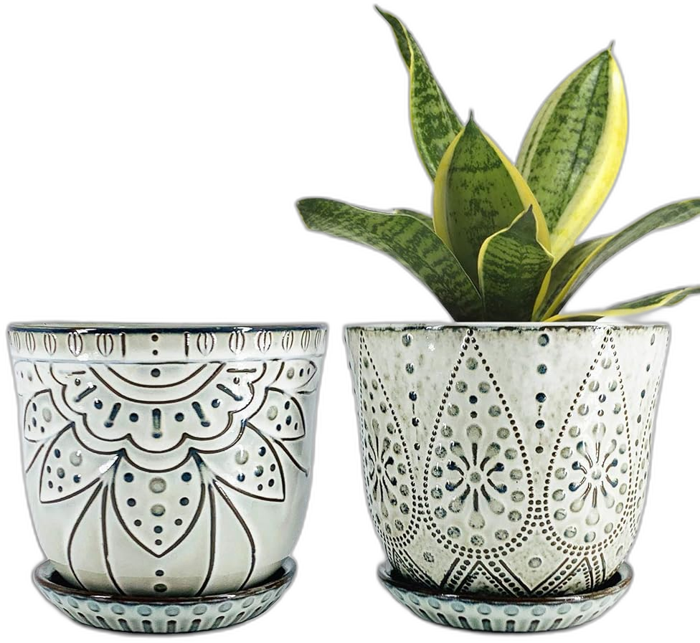
Living Room Picks to Get the Look
Related Guides

Daniel Carter covers the practical side of home improvement at The Dailey House — drainage fixes, DIY yard projects, patio makeovers, and the kind of weekend builds that actually get finished. If there's a smarter or cheaper way to do it, he's tested it.