

Cracked gray concrete steps are the first thing a guest sees and the last thing you notice on your way out — which is exactly why they drag down curb appeal more than almost any other single spot on the house. None of these fourteen fixes require tearing the steps out and pouring new ones.
If your steps just need cosmetic fixes, see our guide on how to makeover concrete front steps without replacing them.
We grouped them by budget, from a $20 can of paint to a full stair rebuild, so you can pick the one that matches what you’re actually willing to spend this weekend.
Paint and Stain Fixes for Under $150
Paint and stain are where almost everyone should start. They cost the least, take a weekend, and hide the two things that make concrete steps look tired: uneven color and old patch repairs.
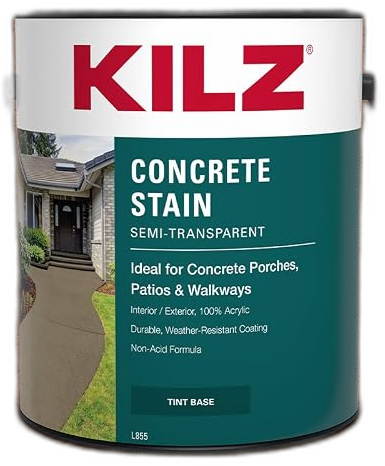
1. Solid-color concrete paint. A single coat of exterior concrete paint in a color that contrasts with your siding — charcoal against white trim, or brick red against gray siding — reads as an intentional design choice instead of bare concrete. Budget-grade concrete paint runs $25–$40 a gallon and covers most front-step sets with one to two coats. It suits anyone who wants the biggest visual change for the least money, and it’s the same category of fix behind our cheap patio floor ideas.
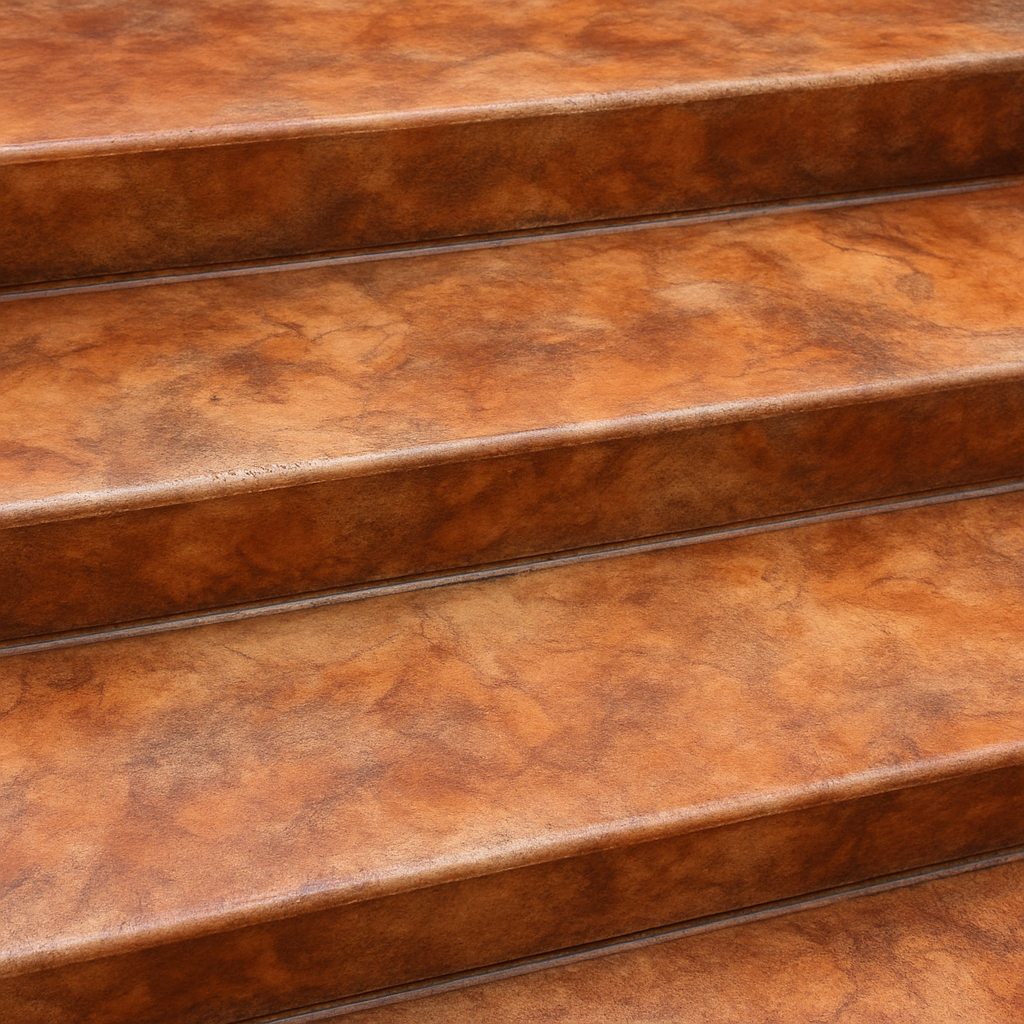
2. Acid stain for a stone-look finish. Unlike paint, acid stain reacts chemically with the concrete, so it never chips or peels the way a topcoat can. It leaves mottled, marbled color that reads as natural stone rather than a painted surface. Expect to pay more than paint — $40–$70 per stair set in materials — and expect some trial and error on color, since acid stain reacts differently to every batch of concrete. Best for steps you want to look upgraded, not just covered up.
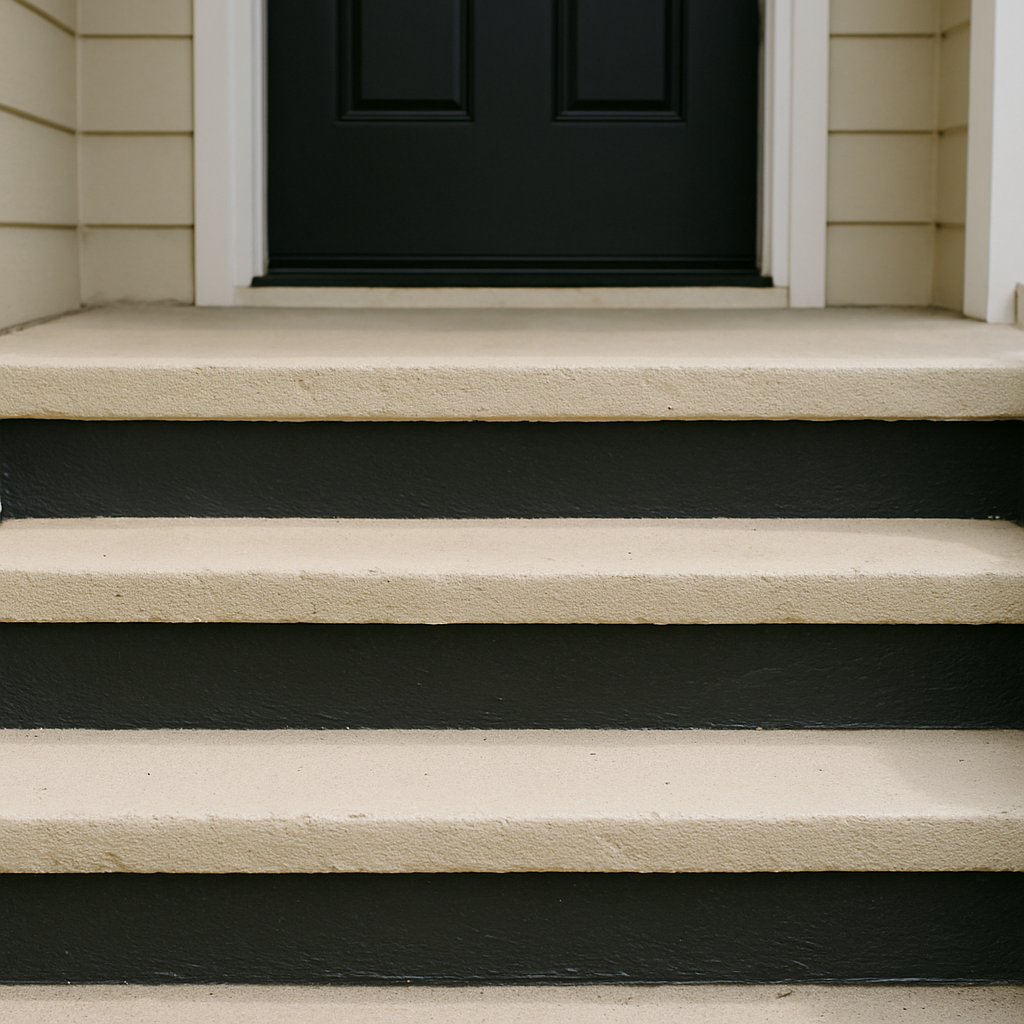
3. Two-tone paint on treads and risers. Paint the horizontal tread surfaces one shade and the vertical risers a contrasting one — cream treads with black risers is the classic version, but sage risers with warm white treads work just as well against a farmhouse exterior. It costs the same as solid-color paint but reads as far more deliberate. This is the fastest way to make builder-grade steps look like they came with the house.
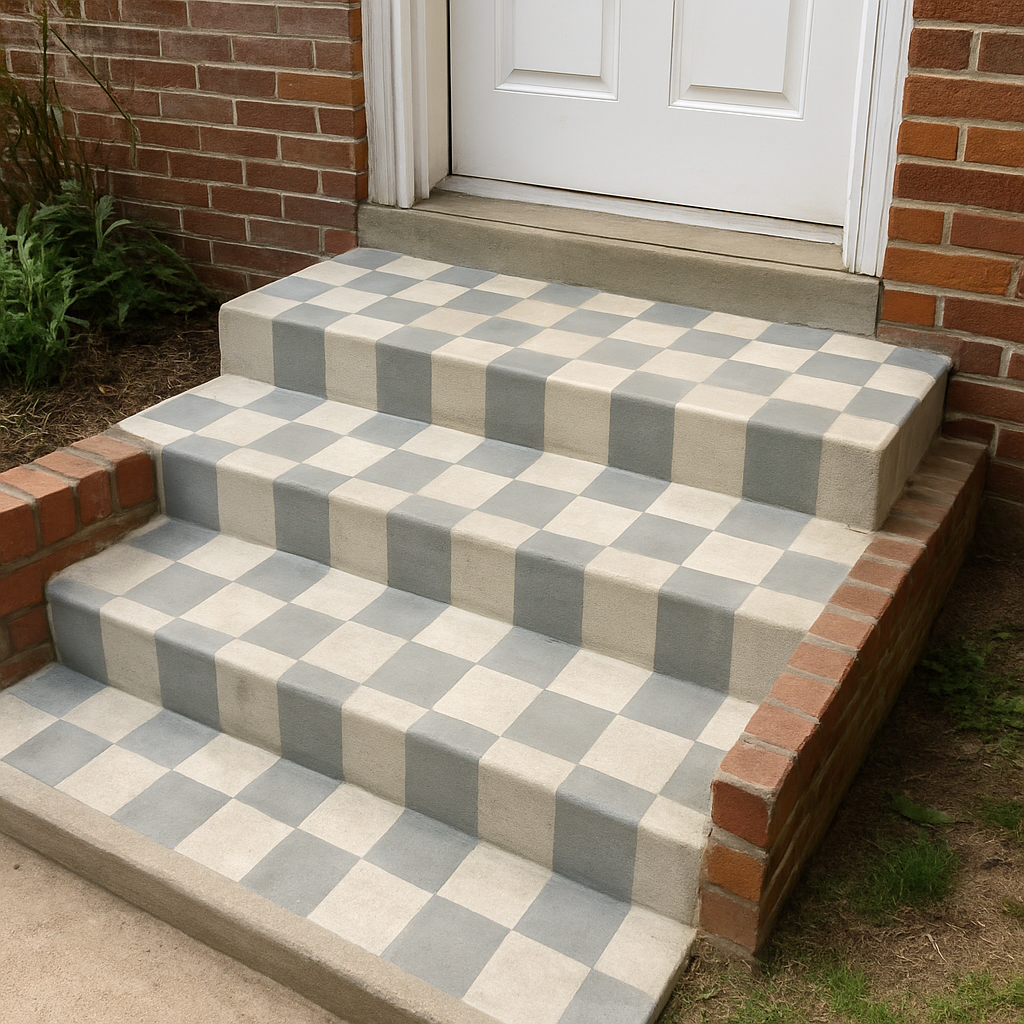
4. A stenciled tile pattern. Painter’s tape or a concrete stencil turns a plain tread into a faux-tile or checkerboard pattern for about $30 in tape and two paint colors. It’s more labor than a solid coat — plan on a full afternoon per step — but it’s the one option on this list that consistently gets saved and repinned on Pinterest, because it looks custom rather than DIY.
Add Grip and Texture Safely
A step that looks good but turns into an ice rink in the rain isn’t a makeover, it’s a liability. These three ideas fix the appearance and the slip risk at the same time.
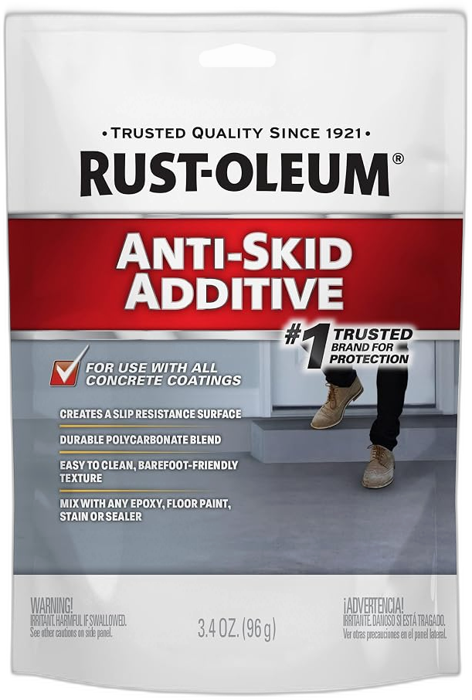
5. Textured non-slip coating. Mix anti-skid additive powder into your paint or topcoat before the final coat — most home improvement stores sell it in the same aisle as concrete paint for $8–$12 a bag. It adds grit you can feel underfoot without changing the color you picked. This is the single change we’d make non-negotiable for any steps that get direct rain or snow exposure, and it pairs with almost any option above.
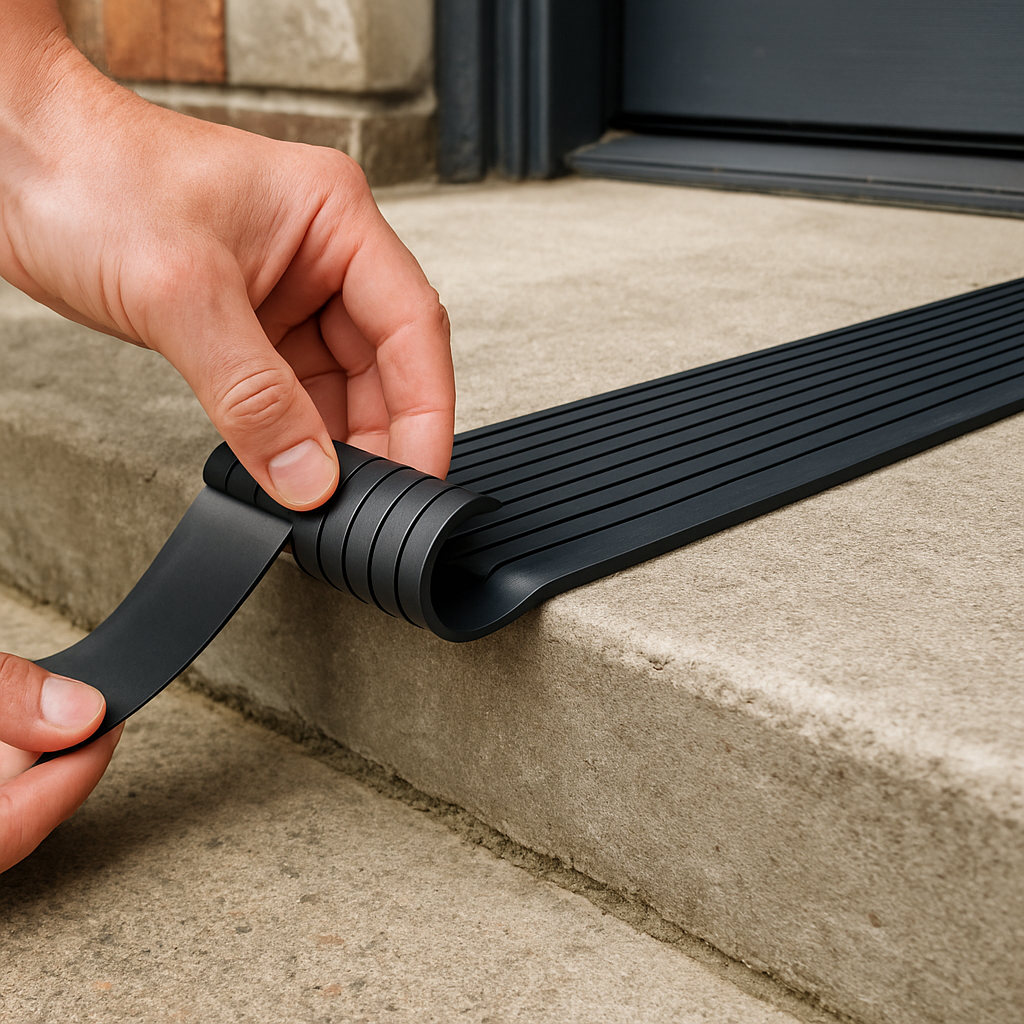
6. Stick-on rubber stair treads. Adhesive rubber treads run $15–$25 per step and install in under ten minutes each with no drying time, which makes them the fastest fix on this entire list. They come in wood-look, stone-look, and solid colors, so they don’t have to look like a warehouse ramp. Best suited to steps you need usable again today, not next weekend.
7. An outdoor stair runner. A woven polypropylene runner rated for outdoor use adds grip, softens the look of bare concrete, and can be swapped out seasonally for about $40–$80 depending on length. It won’t survive standing water the way rubber treads or stain will, so it suits covered porches more than fully exposed steps.
Style It Like a Porch, Not Just Steps
Once the concrete itself looks better, the fastest remaining upgrade is what you put around it. This is the same styling logic behind our front porch flower pot ideas — small additions, big visual return.
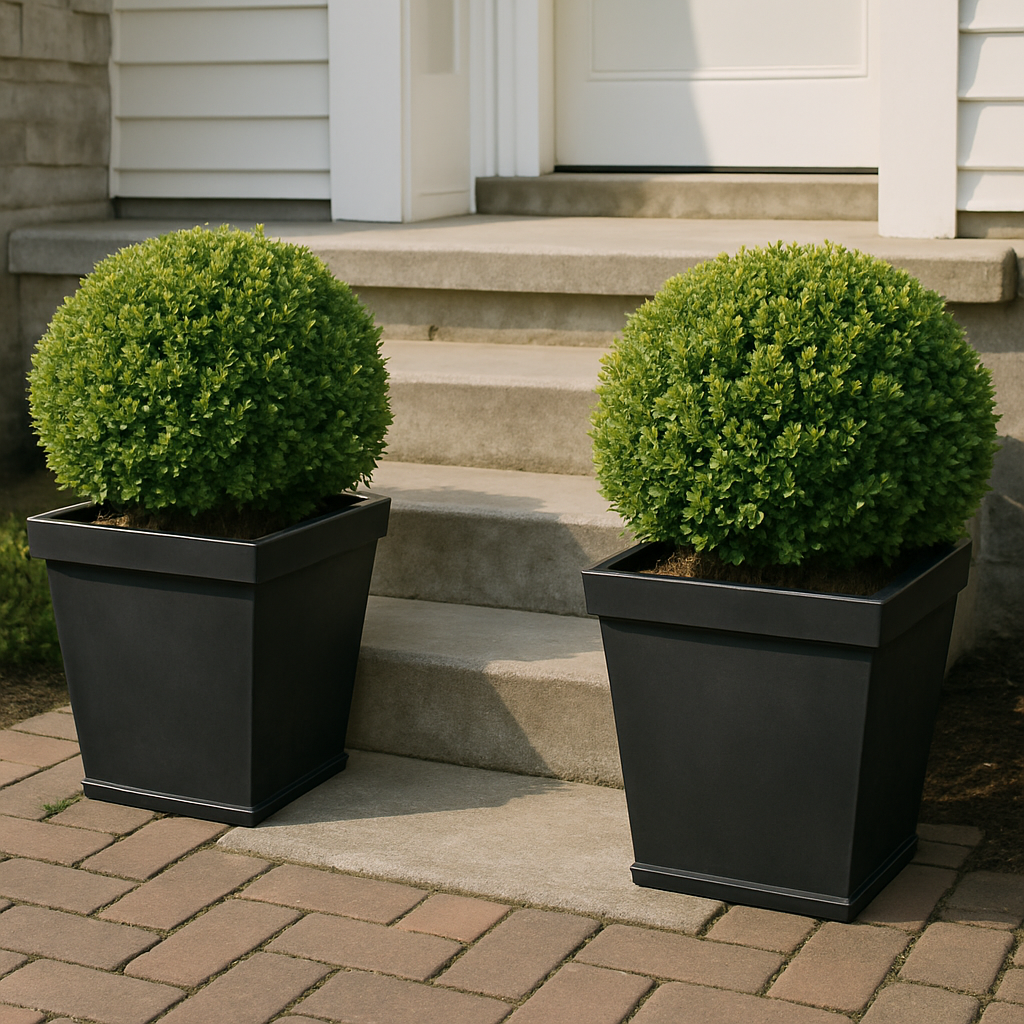
8. Matching planters flanking the base. Two matching planters at the bottom step frame the entrance the way a doorway frame does — even a $15 pair from a hardware store reads as intentional when they match. Fill with something that holds shape without weekly deadheading, like boxwood or ornamental grasses, if you don’t want another maintenance task.
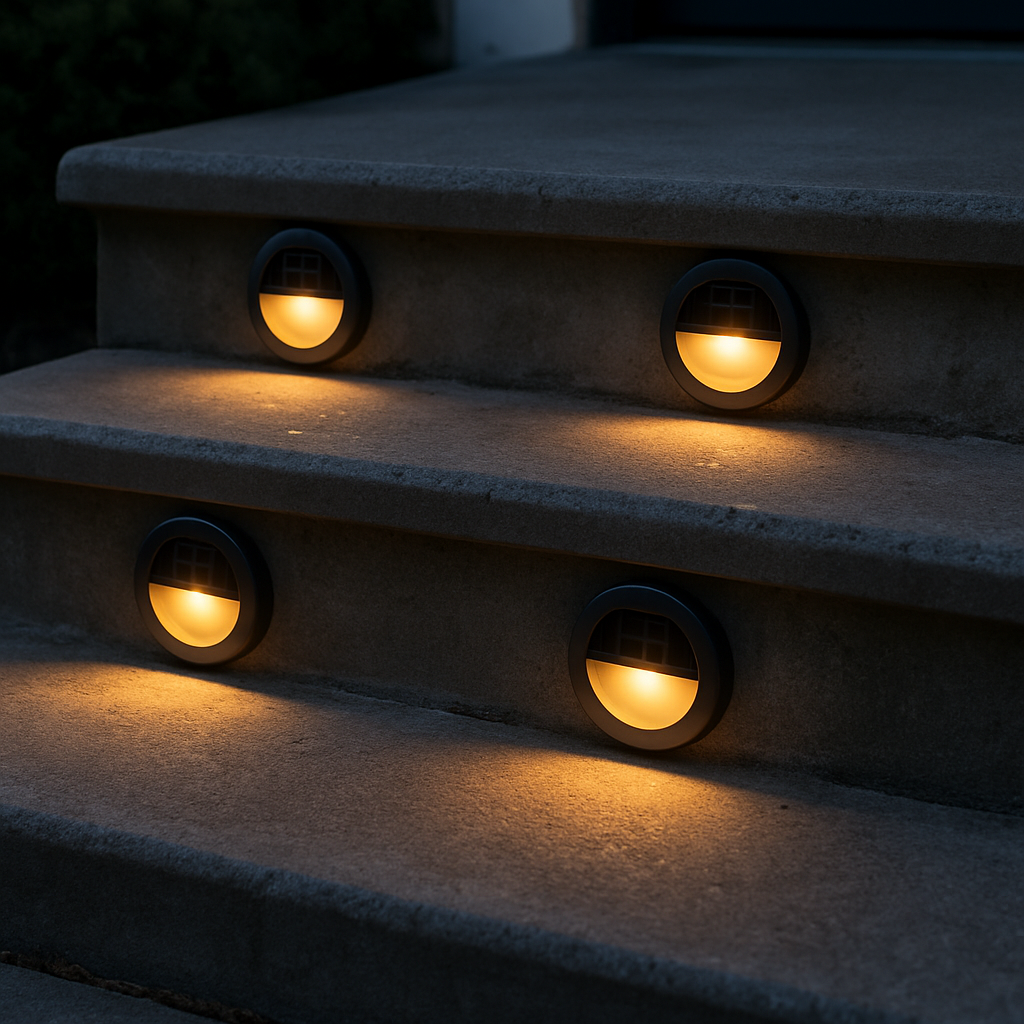
9. Low-voltage or solar step lighting. Small solar puck lights ($20–$35 for a pack of six) recessed into the edge of each riser make steps safer after dark and give the whole entry a finished, higher-end look at night. No wiring required, no electrician, and most kits clip in without tools. This is the upgrade most likely to get compliments from neighbors, since it’s the one part of the makeover that’s visible after sunset.
10. New house numbers near the top step. Modern floating house numbers cost $20–$40 and take fifteen minutes to mount, but they’re one of the highest-leverage curb appeal fixes that exists — every delivery driver and guest looks for them. Position them at eye level near the top of the steps rather than buried by a porch light, and pick a finish (matte black, brushed brass) that repeats elsewhere on your exterior.
11. Seasonal doormat and wreath styling. A doormat sized for the top step (not the standard 18-inch mat lost on a wide landing) and a seasonal wreath on the door above it finish the look for under $50 combined. This is the cheapest item on the whole list and the one worth changing four times a year, since it’s what makes the entry look actively cared for rather than static.
Bigger Upgrades Worth the Splurge
If your steps have real structural issues — deep cracks, crumbling edges, uneven risers — these three go beyond cosmetic and are worth the higher cost.
12. Paver or tile cladding over existing concrete. Thin pavers or exterior tile can be mortared directly onto sound concrete steps without demolition, the same overlay logic we cover in concrete pavers vs. patio tiles. Expect $15–$25 per square foot installed, which puts a typical three-step entry in the $400–$900 range depending on width. This is the option that most closely mimics a full replacement without the demolition cost.
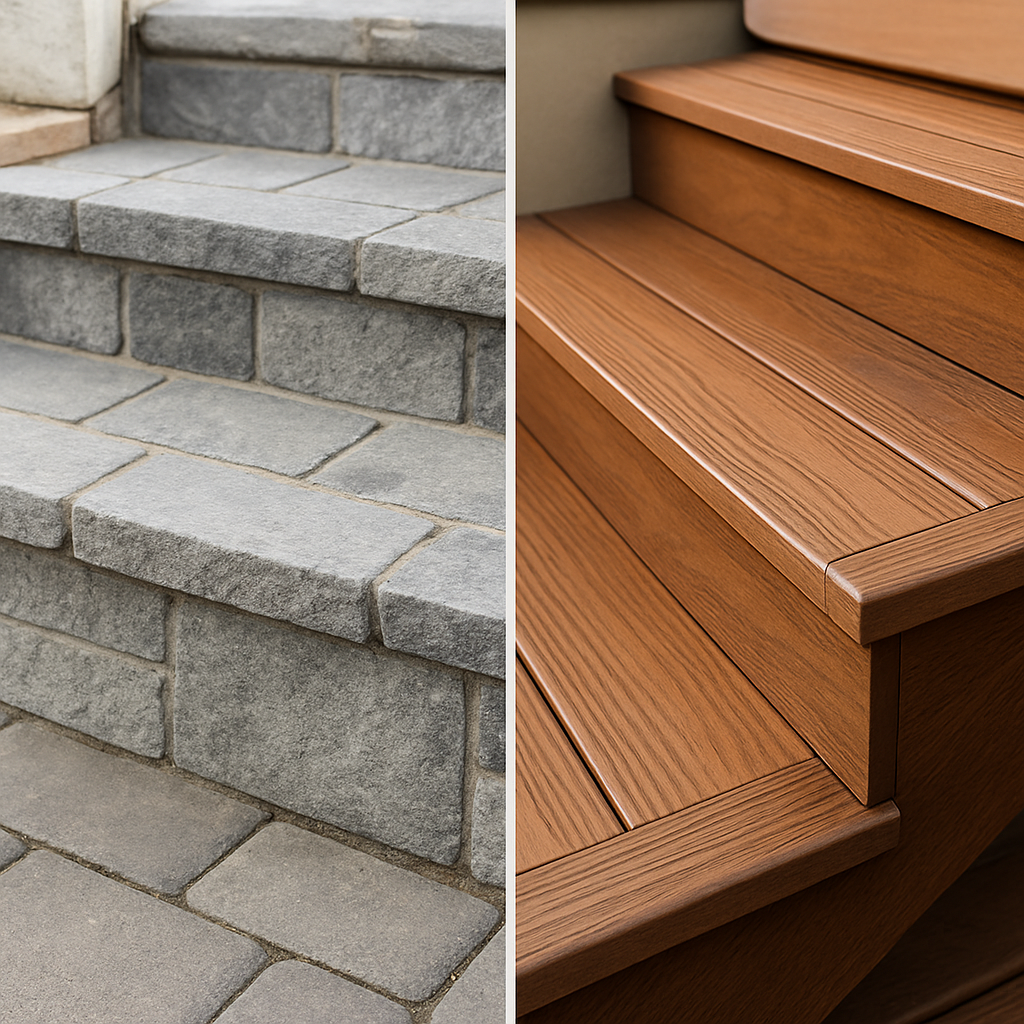
13. Wood or composite stair caps. Pre-cut composite stair caps bolt onto the tread edges to hide chips and add a warm, natural-material look — similar to how our concrete slab patio makeover ideas use composite decking over old slabs. Composite runs $30–$50 per linear foot of tread and won’t rot the way real wood would in direct weather. Best for homes leaning modern-farmhouse or craftsman, where a wood accent ties the entry to the porch above it.
14. A new handrail or railing. If your current railing is rusted iron or missing altogether, a new railing in matte black or natural wood does more to modernize the whole entry than almost any surface treatment. Budget $150–$400 for a basic single-side rail installed, more for wrought iron or a custom width. It’s also the one item on this list that may be required by code depending on your step count and local jurisdiction — worth a quick check before you buy.
Supplies for This Concrete Makeover
Frequently Asked Questions
What’s the cheapest way to make concrete steps look better?
Concrete paint in a contrasting color is the cheapest real fix, costing $25–$40 and taking one weekend for most front-step sets.
Do I need to seal concrete steps after painting them?
Yes — a clear exterior sealer protects the paint from foot traffic and weather, and most brands recommend reapplying it every one to two years.
How do I stop concrete steps from being slippery when wet?
Mix an anti-skid additive into your paint or topcoat, or add stick-on rubber treads, both of which add grip without changing the finished look.
Can I paint over cracked concrete steps?
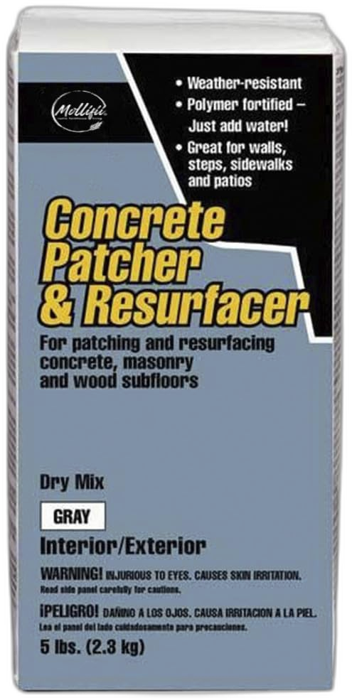
Hairline cracks can be filled with concrete patch before painting, but deep structural cracks should be repaired or assessed by a contractor first.
How long does a concrete step makeover take?
Paint and stain projects typically take one weekend including dry time; overlay or cladding projects usually take two to three days with a contractor.
Do stick-on stair treads work in the rain?
Rubber treads rated for outdoor use handle rain well, but check the adhesive rating before buying if your steps get direct, prolonged exposure.
Related Guides
- Concrete Slab Patio Makeover Ideas
- Concrete Pavers vs. Patio Tiles
- Curb Appeal Trends for 2026
- 18 Front Yard Landscaping Ideas

Sophia Turner covers budget home decor, seasonal styling, and outdoor spaces at The Dailey House. She has a talent for finding thrift store pieces that look like they cost three times what she paid, and a habit of redesigning her front porch every single season.