

Standing desks are popular, but the research is more modest than the ads. Here is what the studies show, who gets the most from one, and how to use one without hurting your feet or back.
The Short Answer
- Most consistent finding: sit-stand desks help people sit less during the workday. The evidence is low quality, but it points the same way.
- Small, early evidence: they may ease low back discomfort in workers who start out pain free.
- Not much: calorie burn. Standing burns only a little more than sitting.
- Limits: most studies are short and small. Nobody knows the long-term health effects yet.
What the Research Shows
You sit less. A Cochrane review looked at 20 studies with 2,174 people. People with sit-stand desks sat 30 minutes to 2 hours less per workday than people with regular desks. The evidence was rated low quality, and there was no long-term data (Cochrane).
No harm showed up. In those studies, standing more did not cause muscle pain, varicose veins, or lower productivity.
Your back may feel better. A review of 8 studies found less low back discomfort for sit-stand users who did not have back pain to begin with. The gain was small, about 0.3 to 0.5 points on a 10-point scale. The authors say we still do not know how much standing helps, or whether it helps people who already have back pain (CDC library).
Calories barely change. Harvard Health reports about 80 calories an hour sitting and about 88 standing. That is about 24 extra calories over three hours. Walking burned about 210 an hour (Harvard Health).
Blood sugar and mood. Some research suggests that standing after meals may help blood sugar return to normal sooner. Harvard Health says these benefits are promising, but not proven.
Standing Desk Benefits for Women
The research above looks at office workers as a group. It does not show that the benefits are different for women. The same tips apply to everyone. Stand in short blocks, wear supportive shoes, and use a mat. If you are pregnant, or you have varicose veins or circulation problems, ask your doctor before you stand for long periods.
Standing Desk Benefits at Home and in a Study Room
When you work from home, you set your own rules. That makes a standing desk easier to use well. You can stand for calls and reading, then sit for focused typing. In a small study room or home office, a converter that sits on your current desk saves space. If you have room for a full desk, check our desk size guide and our ideas for setting up a home office. Short on space? See our picks for foldable desks.
How Long Should You Stand?
Nobody knows the perfect split. Safety guidance says advice ranges from sitting for one hour and standing for 5 minutes, to switching every 20, 30, 45, or 60 minutes (CCOHS). Standing too long can cause foot, knee, hip, and back problems. Harvard Health suggests starting with 30 to 60 minutes a day, then building up slowly. Change position when you feel tired, not only on a timer.
How to Set Up a Standing Desk
What to Buy
A desk converter is the easiest way to start. It sits on the desk you already own and lifts your keyboard and screen. It is also the cheapest way to find out if you like standing.
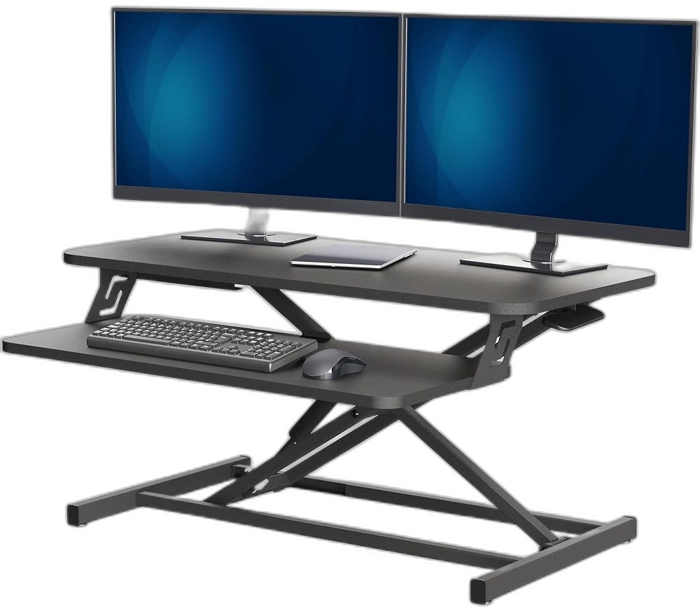
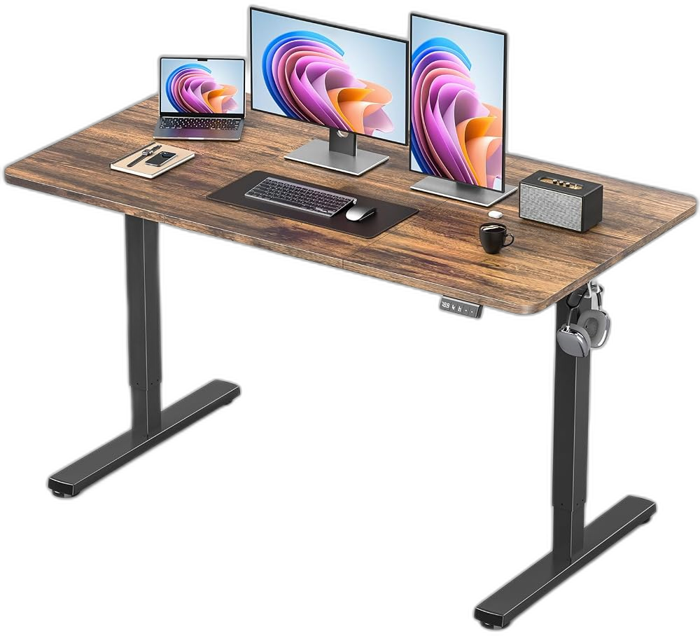
A full electric desk is the smoother long-term choice. You get the whole desktop and one-touch height changes. It costs more and replaces your current desk.
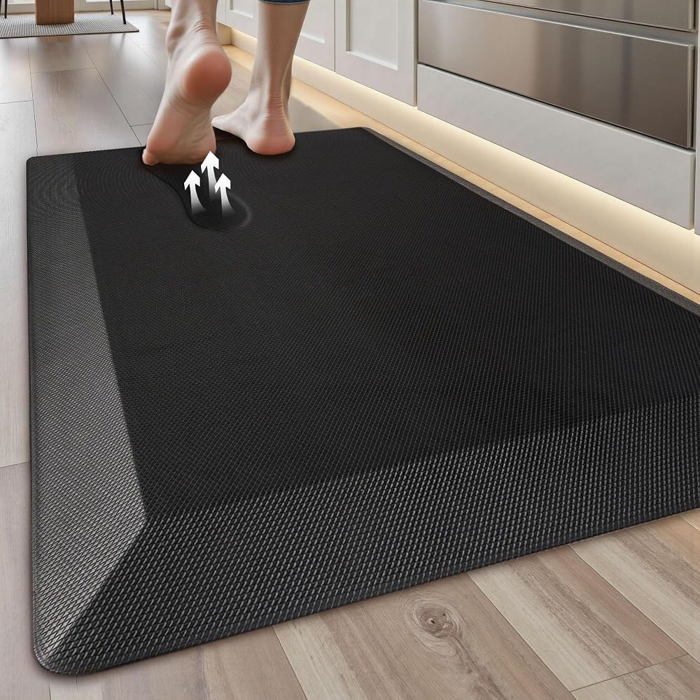
A mat protects your feet and legs. Hard floors get tiring fast. A thick mat gives your feet something softer to stand on.
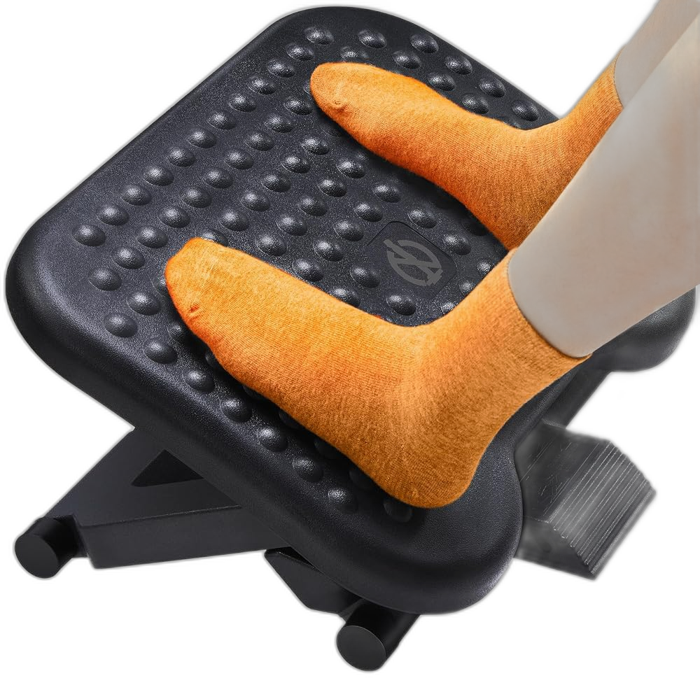
A footrest lets you shift your weight. OSHA suggests resting one foot now and then. A footrest does that, and it works when you sit too.
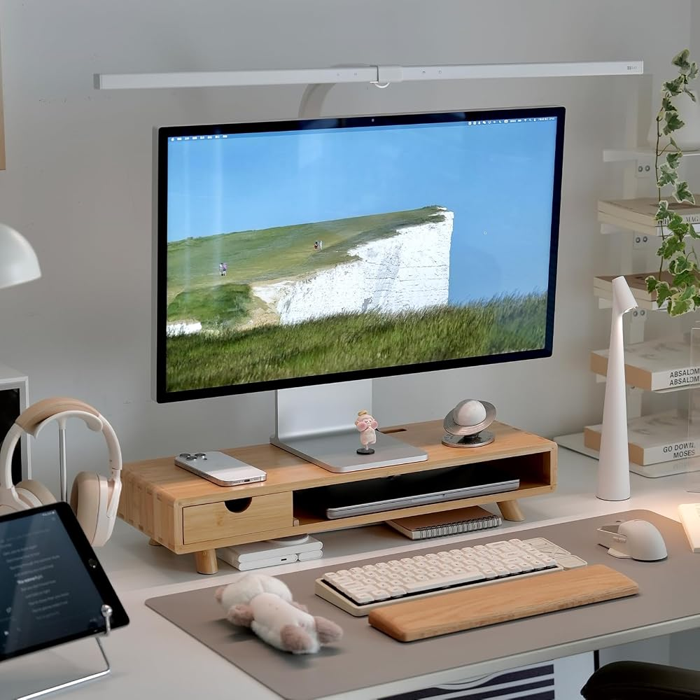
A monitor stand brings the screen up to eye level. This matters most with a laptop or a low desk.
Small Upgrades That Make Standing Easier
Comfort insoles add cushion inside your shoes. They work with or without a mat.

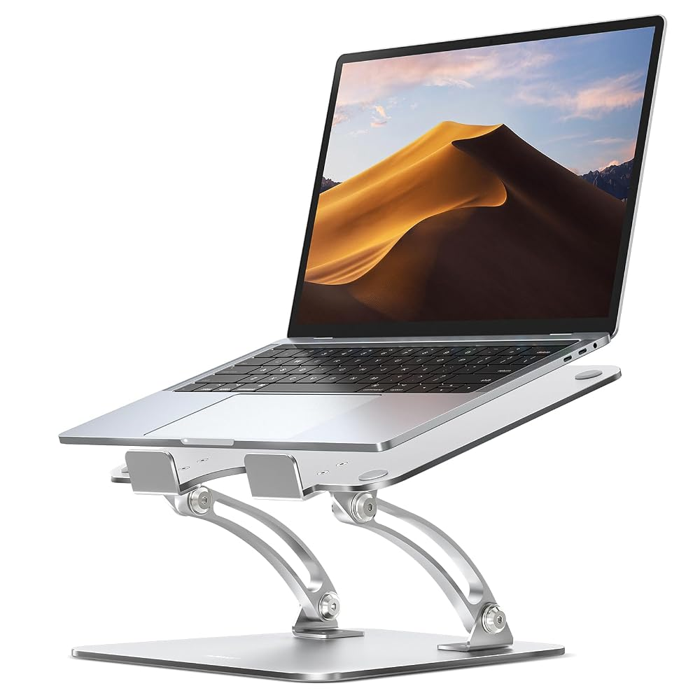
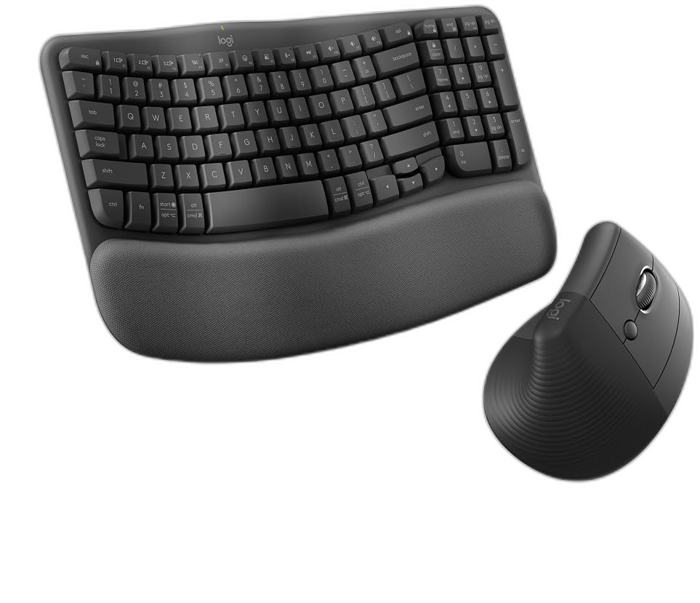
A laptop stand and a separate keyboard and mouse are a must if you work on a laptop. A laptop screen sits too low when your hands are at the right height. Raise the laptop, then type on a separate keyboard.
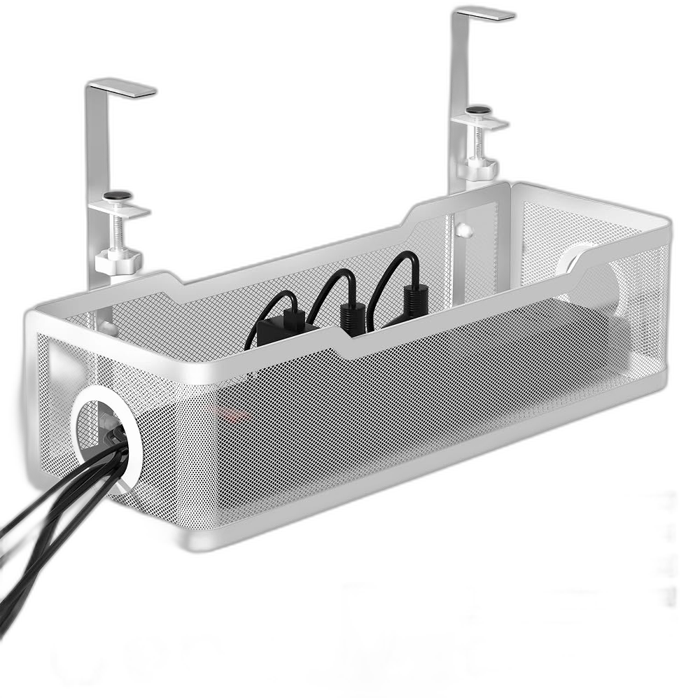
A cable tray keeps cords tidy. When the desk rises and falls, loose cords can snag, so leave some slack and tuck them up out of the way.
Common Mistakes to Avoid
Standing Desk Benefits, Ranked by How Strong the Evidence Is
Not every claim about standing desks is equal. Some have decent support. Others are guesses. This table sorts them so you know what to trust.
| Claimed benefit | How strong is the evidence? | What we found |
|---|---|---|
| You sit less | Fairly consistent, low quality | Sit-stand desk users sat 30 minutes to 2 hours less per workday (Cochrane). |
| Less low back discomfort | Small and early | A review of 8 studies found small gains in workers who began without back pain (CDC library). |
| Better mood and less fatigue | Possible | Cleveland Clinic cites a 2022 study with moderate improvements in fatigue (Cleveland Clinic). |
| Steadier blood sugar after meals | Possible, not proven | Harvard Health calls this promising but unproven (Harvard Health). |
| Burning more calories | True, but tiny | About 8 more calories an hour than sitting (Harvard Health). |
| Protecting your heart | Not shown | A large 2024 study found no heart benefit from standing more (International Journal of Epidemiology). |
| Better focus and output | Mixed | Some people feel sharper. Switching often can also break your concentration (Harvard Health). |
The Downsides Nobody Mentions
Standing is not a free upgrade. A large University of Sydney study followed 83,013 UK adults for about seven years, using wrist-worn trackers instead of surveys. Standing more did not lower the risk of heart disease. People who stood more than 2 hours a day had a higher risk of circulation problems such as varicose veins and blood clots in the legs. The risk rose by about 0.11 for every extra 30 minutes of standing. People who sat more than 10 hours a day had a higher risk of both heart disease and those circulation problems (study, University of Sydney summary).
Keep the limits in mind. The group was older, with an average age of 61. The study watched people over time, so it cannot prove that standing caused the problems. But the message fits the other research: do not trade nine hours of sitting for nine hours of standing. The researchers said to add plenty of everyday movement, like walking breaks and stairs.
Other drawbacks are more everyday. Standing too long can cause foot, knee, hip, and back trouble (CCOHS). Switching to standing all at once can bring on back, leg, or foot pain (Harvard Health). Detail work can feel harder on your feet.
Who Benefits Most, and Who Should Be Careful
Likely to benefit: people who sit for most of the day and rarely get up. Even a modest cut in sitting time is a step in the right direction. The American Heart Association says too much sitting is one of the most common threats to heart health in the U.S., and that the risk shows up even in people who exercise (AHA).
Be careful and ask a doctor first: if you are pregnant, have varicose veins or circulation problems, have joint or balance problems, or have pain that gets worse when you stand. Start with short stands and stop if something hurts.
A 4-Week Plan to Start Standing
This plan is our suggestion. It builds on Harvard Health’s advice to start with 30 to 60 minutes a day and increase slowly. It also respects the Sydney finding that long standing days carry their own risk.
Converter or Electric Desk? How to Choose
Check these before you buy either one:
- Height range. The lowest setting should fit your seated elbow height. The highest should fit your standing elbow height. Our desk size guide shows standard desk heights (28 to 30 inches) and typical standing desk heights (38 to 48 inches).
- Weight limit. Add up your monitors, laptop, and gear, and compare it to the listed limit.
- Surface depth. You need room for the keyboard and for the screen to sit 20 to 40 inches from your eyes (OSHA).
- Wobble. Read reviews for shaking at full height, since that is the most common complaint with tall desks.
- Cord slack. Leave enough cord that nothing pulls when the desk rises.
- Room for your chair. You will still sit a lot of the day.
A converter is the cheaper test. An electric desk is smoother and gives you the whole surface. If you are on the fence, start with a converter and upgrade if you stick with it.
Common Problems and Fixes
| Problem | Try this |
|---|---|
| Sore feet | Use a thick mat, wear supportive shoes, shift your weight, or rest one foot on a footrest. |
| Sore neck | Raise the screen toward eye level. Put a laptop on a stand and use a separate keyboard. |
| Sore wrists | Keep forearms level and wrists straight. Lower the keyboard if your shoulders hunch. |
| Tired lower back | Stand for shorter blocks and move around. Sit when you feel strain. |
| Trouble focusing | Stand for calls and reading. Sit for detailed work that needs steady hands. |
| Desk wobbles | Lower the height a notch, check the feet, and avoid putting heavy gear at the edge. |
Is a Standing Desk Worth It?
For most people who sit all day, yes, as a way to move more. It will not fix your health on its own. The best habit is simple: change position every 30 to 60 minutes, and walk when you can. If you are unsure, try a converter first.
Frequently Asked Questions
Are standing desks worth it?
They can be, if you sit most of the day. Studies show they help you sit less. The health gains are small and the evidence is still limited. A standing desk works best as a reminder to move, not as a cure.
How long should I stand at a standing desk?
There is no one right answer. Safety guidance says advice ranges from sitting for an hour and standing for 5 minutes, to switching every 20 to 60 minutes. Harvard Health suggests starting with 30 to 60 minutes a day and building up.
Do standing desks help back pain?
A review of 8 studies found small gains in low back comfort for workers who started without back pain. It did not look closely at people who already have back pain. If your back hurts, ask a doctor or physical therapist.
Do standing desks help you lose weight?
Not much. Harvard Health reports about 88 calories an hour while standing, against about 80 while sitting. That is roughly 24 extra calories over three hours.
Are there standing desk benefits for women in particular?
The research we read does not show different results for women. The same tips apply: stand in short blocks, wear supportive shoes, and use a mat. If you are pregnant or have circulation problems, ask your doctor first.
Is a desk converter or a full standing desk better?
A converter costs less and sits on your current desk, but it uses desk space. A full sit-stand desk gives you the whole surface and smoother adjustment. If you are not sure you will use it, start with a converter.
Is it okay to stand all day?
No. Standing too long can cause foot, knee, hip, and back problems. A large 2024 study also linked more than 2 hours of daily standing to a higher risk of circulation problems such as varicose veins. Mix standing with sitting and walking.
Do standing desks improve posture?
They can, if you set them up well. Keep your head, neck, and torso in line, your elbows near 90 degrees, and your screen near eye level. A bad setup can be worse than a bad chair.
Can I use a standing desk while pregnant?
Many people do, but ask your doctor. Short standing blocks, supportive shoes, and a mat help. Stop if you feel pain, swelling, or dizziness.
Does standing help with focus?
Some people feel more alert. The research is mixed. Harvard Health notes that switching positions often can break concentration, and that fine detail tasks are often easier seated.
What should I wear at a standing desk?
Wear supportive shoes with some cushion, or add comfort insoles. Barefoot or flat, thin soles on a hard floor tend to hurt sooner.
Do I need an anti-fatigue mat?
It helps. OSHA and CCOHS both suggest mats or similar support when you stand on hard floors, along with supportive shoes and a footrest to shift your weight.
Sources and Further Reading
- Cochrane: Health effects of sit-stand desks are still unproven
- CDC library: Sit-stand workstations and low back discomfort (meta-analysis)
- Harvard Health: The truth behind standing desks
- International Journal of Epidemiology: Stationary behaviour and cardiovascular and circulatory disease (2024)
- University of Sydney: Standing more may not reduce cardiovascular disease risk
- Cleveland Clinic: Benefits of standing desks
- American Heart Association: Too much sitting
- CCOHS: Sit/stand desk
- OSHA: Computer workstations, positions
- CCOHS: Anti-fatigue mats
This guide is for general information, not medical advice. Last checked October 2026.

Sophia Turner covers budget home decor, seasonal styling, and outdoor spaces at The Dailey House. She has a talent for finding thrift store pieces that look like they cost three times what she paid, and a habit of redesigning her front porch every single season.