
Fall flower beds get overlooked because summer blooms fade and it’s tempting to just let the front bed go quiet until spring. But a well-planned fall bed extends your curb appeal season by two extra months for less effort than the spring planting was — most fall plants are more forgiving of neglect. Here’s how to build one, grouped by what each layer contributes.
The Color Backbone: Mums and Asters
1. Chrysanthemums. The classic fall bloomer, available in nearly every autumn shade — rust, burgundy, gold, cream. Plant in odd-numbered clusters of three or five rather than a single row for a fuller look. $8–$15 per pot at full bloom.
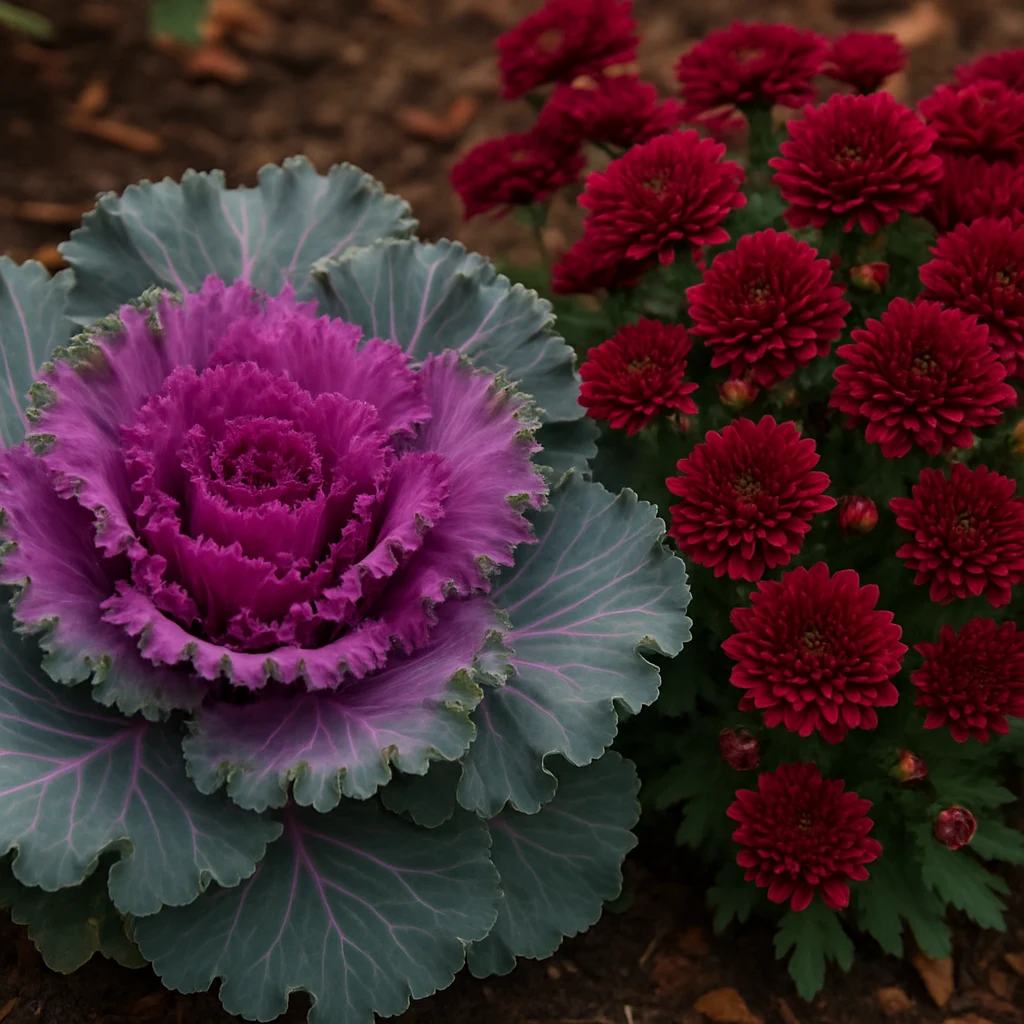
The most common reason mums die within a couple of weeks isn’t the cold — it’s being treated like set-and-forget decor. Their roots stay shallow in the nursery pot, so they dry out fast, especially in fall wind, and need water every day or two rather than a normal once-a-week schedule. Buying pots that are only partly bloomed rather than fully open also stretches the display several weeks longer, since fully bloomed plants are already near the end of their color life when you bring them home.
2. Asters. Bloom slightly later than mums, extending your color window into late fall. Their star-shaped purple and blue flowers pair well against the warmer mum palette for contrast instead of a monochrome bed.
3. Ornamental kale and cabbage. Technically foliage, not flowers, but their ruffled purple-and-cream heads hold color for months longer than any bloom and actually look better after a light frost.
Texture and Height: Grasses and Structure
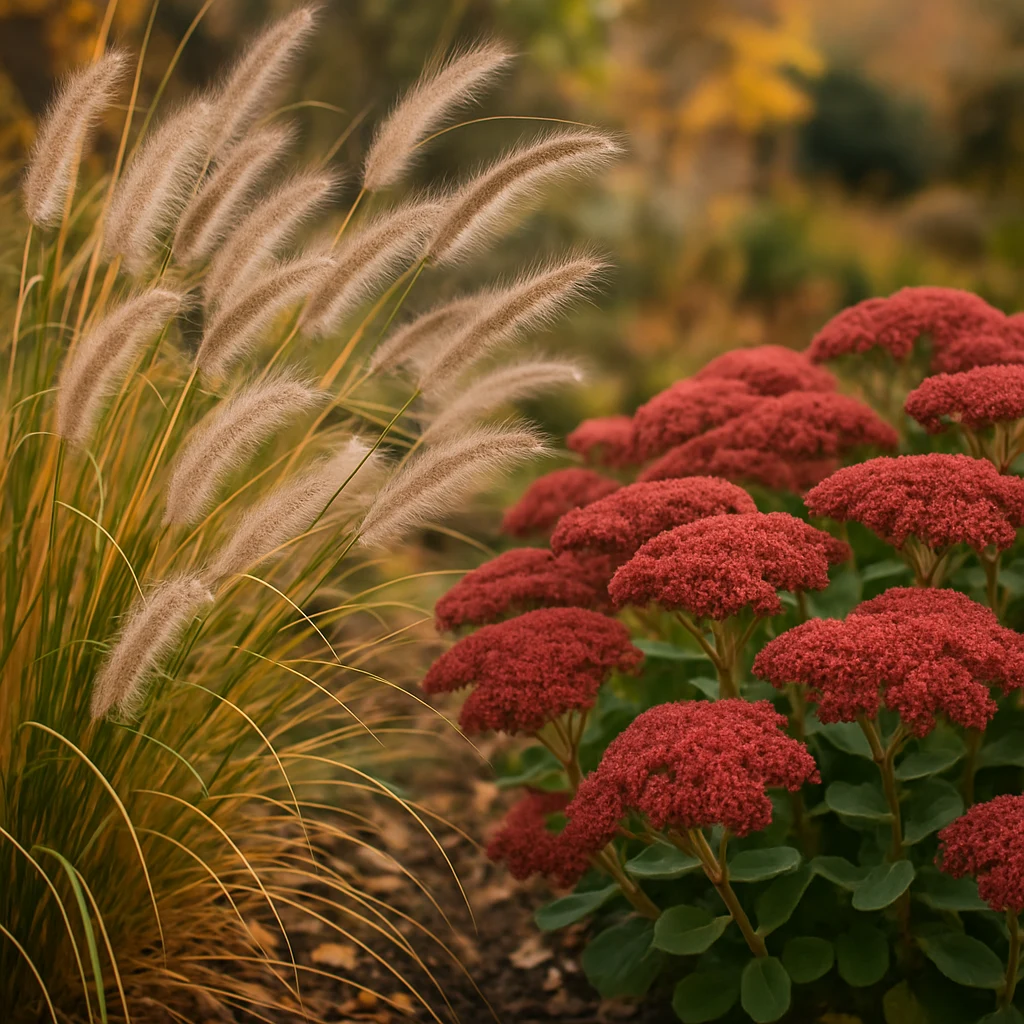
4. Ornamental grasses. Fountain grass or feather reed grass adds movement and a softer texture against the dense mounds of mums, and most varieties hold their tan winter color well into the colder months instead of collapsing.
5. Sedum. A succulent-like perennial that shifts from summer green to deep rust-pink in fall, giving you a plant that changes color on its own instead of needing to be swapped out.
The Seasonal Accents
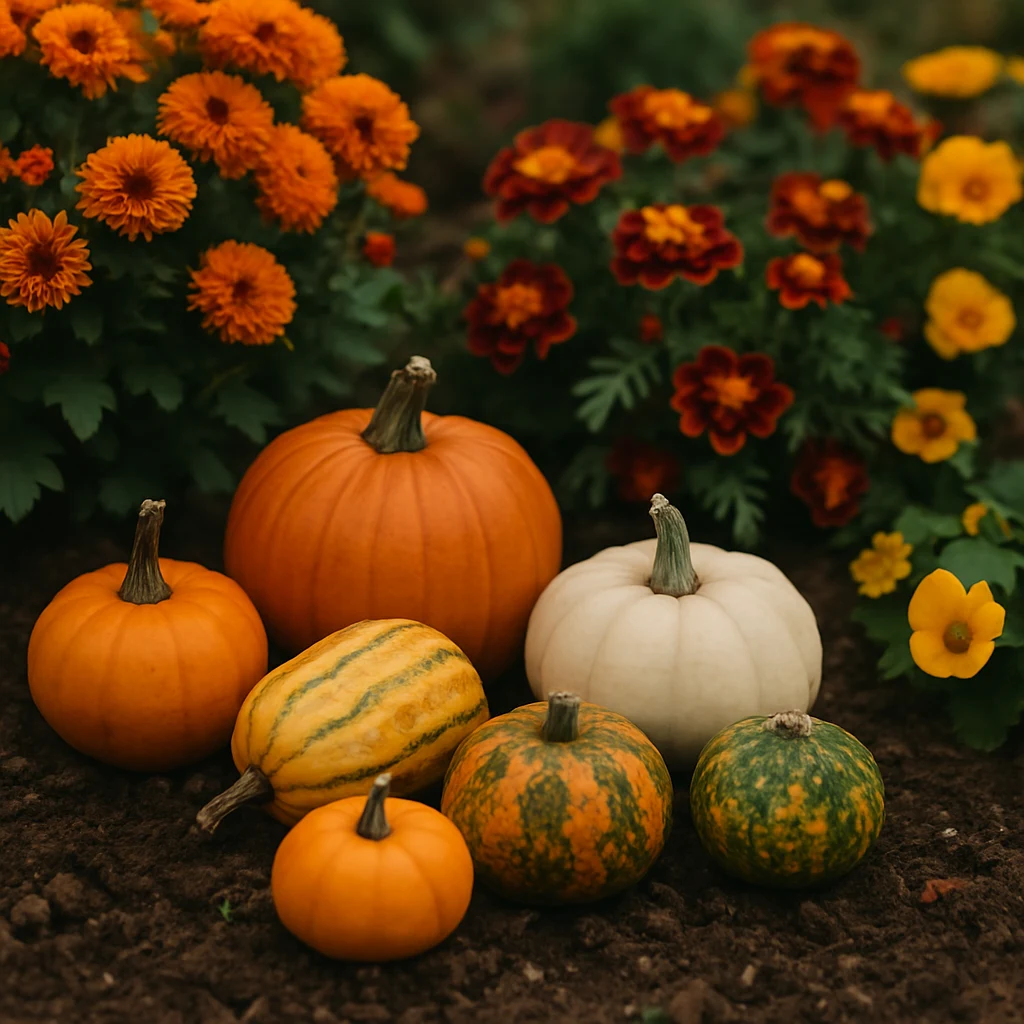
6. Pumpkins and gourds in varying sizes. Tucked among the plants rather than lined up in a row — grouping three different sizes together reads as styled, while a straight row reads as a display shelf.
7. A vintage wheelbarrow or crate as a container. Placed near the walkway and filled with a mix of mums, kale, and a few mini pumpkins, this becomes a single high-impact focal point without redesigning the whole bed.
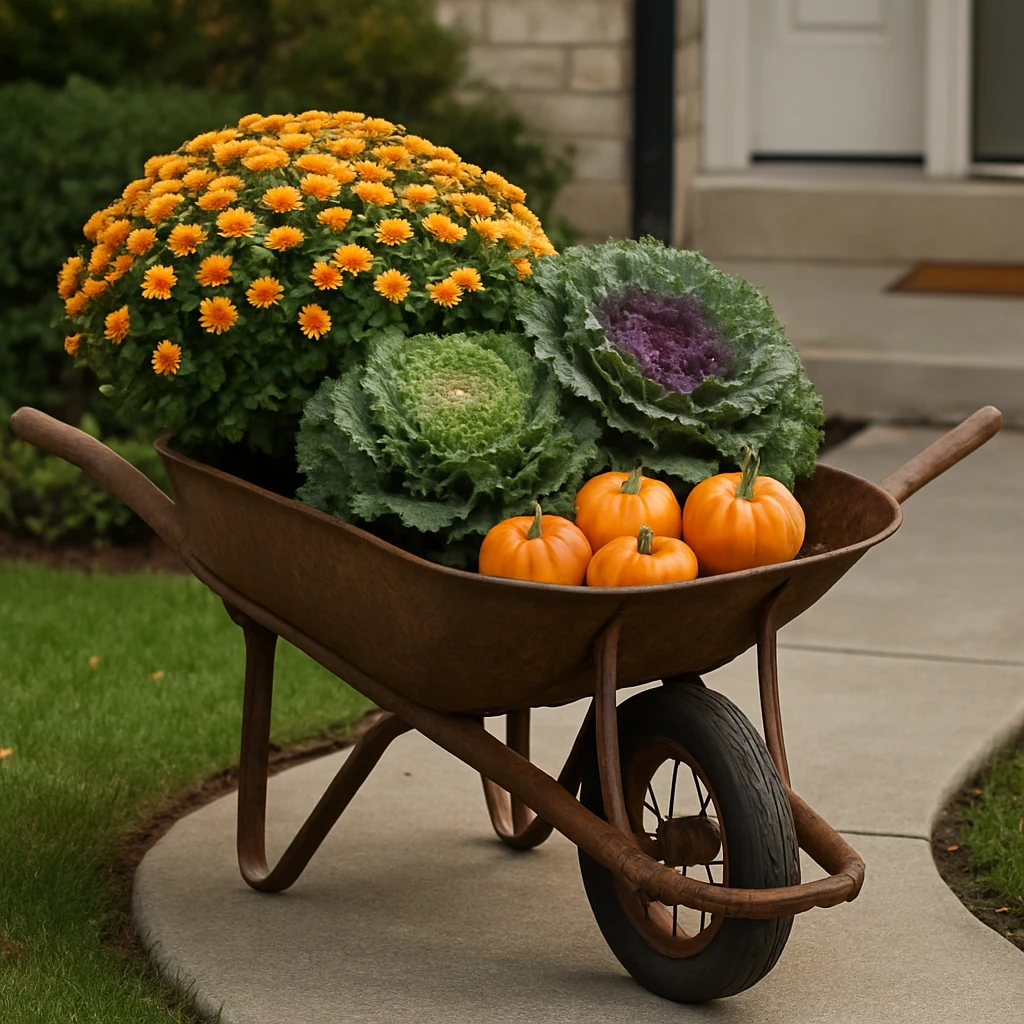
8. Trailing ivy at the bed’s edge. Softens the transition between bed and walkway and stays green through most of fall, which keeps the whole bed from reading as “all one color.”
Putting It Together
Layer the same way you would any bed: grasses and sedum toward the back for height, mums and asters in the middle for color, and kale or trailing ivy along the front edge. Add pumpkins and the wheelbarrow accent last, once the plants are in, so you can see how much bare space is actually left before over-cluttering the display.
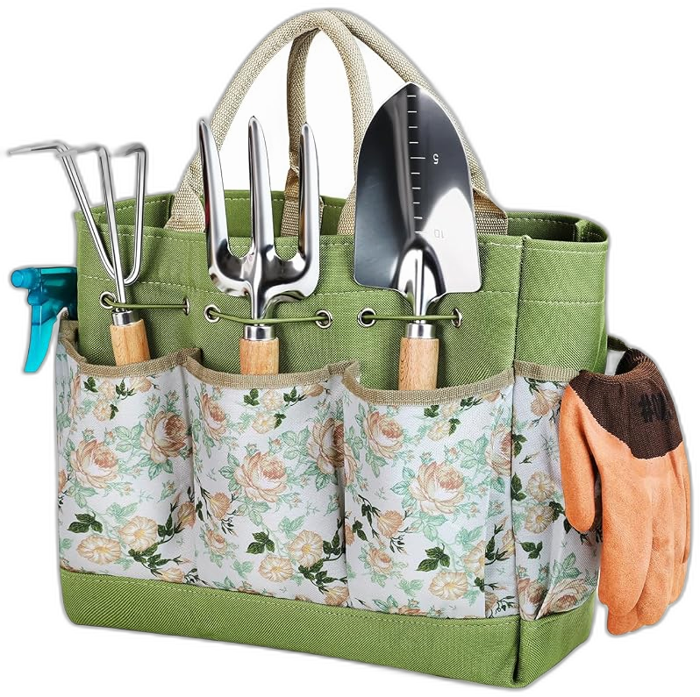
Tools and Supplies for This Project
Frequently Asked Questions
When should I plant a fall flower bed?
Early to mid-September in most climates, while soil is still warm enough for roots to establish before the first hard frost.
Do mums come back every year?
Garden mums can be perennial in warmer zones if planted early and mulched well, but many gardeners treat them as a one-season annual display.
What fall flowers last the longest?
Ornamental kale and sedum hold their color the longest, often lasting through a light frost when mums have already faded.
How do I keep a fall bed from looking cluttered?
Group plants in odd numbers, add pumpkins and accents last, and leave visible negative space rather than filling every gap.
Can I reuse my summer flower bed for fall?
Yes — remove spent summer annuals and replace them with mums, kale, and grasses in the same layout and layering structure.
Related Guides
- 15 Flower Bed Ideas in Front of House
- Best Low-Maintenance Plants for Front of House
- How to Edge Flower Beds Like a Pro
- 20 Cottage Core Farmhouse Aesthetic Ideas

Sophia Turner covers budget home decor, seasonal styling, and outdoor spaces at The Dailey House. She has a talent for finding thrift store pieces that look like they cost three times what she paid, and a habit of redesigning her front porch every single season.