

You found the perfect sofa online. It looked great in the photos. Then it arrived — and it ate your entire living room.
I’ve been there. My first apartment was 380 square feet. I bought a three-seater I loved in the showroom. When it arrived, I had to walk sideways to get to the kitchen. The sofa wasn’t bad. I just never measured anything properly before buying it.
That mistake cost me a full weekend of returns, two confused delivery guys, and a month of sitting on the floor.
Most articles about sofas for small living rooms say the same thing: “go smaller” or “try a loveseat.” That’s not a plan. That’s a shrug.
This guide gives you the actual rules. You’ll learn the exact measurements to take before you shop, which sofa shapes work in tight spaces, how to place your sofa so the room feels bigger, which fabrics hold up in real life, and the six mistakes that send people back to the store.
Let’s start with the only number that matters before you do anything else: your room size.
Measure First. Shop Second.
Before you open a single furniture website, grab a tape measure.
Most people do this backwards. They browse, fall in love with something, and then try to make the measurements work. That’s how you end up with a sofa that technically fits but leaves you 14 inches of walking space on each side.
Here’s what to measure before you shop:
- The room length and width. Write both down.
- The wall where the sofa will sit. This one number determines your maximum sofa width.
- Your doorway width. Standard doors are 30 to 36 inches wide. Many sofas won’t fit through un-disassembled.
- Any hallways or staircase turns the sofa needs to pass through to reach the room.
Small living rooms are typically 120 to 180 square feet, which works out to roughly 10×12 feet to 12×15 feet. If your room falls in that range, you’re working in a tight space. Every inch counts.
The 2/3 Wall Rule
This is the single most useful rule in furniture placement, and almost nobody knows it.
Your sofa should take up no more than two-thirds of the wall it sits against. That’s it. That’s the rule.
If your wall is 12 feet wide, your sofa should be no longer than 8 feet (96 inches). If your wall is 10 feet, cap the sofa at around 80 inches. This leaves breathing room on both sides for end tables, lamps, and visual balance.
Here’s a quick reference:
| Room Size | Max Sofa Width | Best Type |
|---|---|---|
| 10 x 12 ft | 72 to 76 inches | Loveseat or compact 2.5-seater |
| 12 x 12 ft | 76 to 80 inches | Apartment-sized 3-seater |
| 12 x 15 ft | 80 to 84 inches | Standard 3-seater or small sectional |
| 12 x 18 ft | 84 to 90 inches | Standard 3-seater plus accent chair |
The 2/3 Wall Rule for Sofas
The single most useful sizing rule — and almost nobody knows it
Your sofa should fill no more than 2/3 of the wall it sits against
Space on both sides gives room for end tables, lamps, and breathing room
| Room size | Max sofa width | Best type |
|---|---|---|
| 10 × 12 ft | 72–76 in | Loveseat |
| 12 × 12 ft | 76–80 in | Apartment 3-seater |
| 12 × 15 ft | 80–84 in | Standard 3-seater |
| 12 × 18 ft | 84–90 in | 3-seater + chair |
Most buyers focus on sofa width and ignore depth. A sofa over 26 inches deep eats your floor and blocks room flow — even if the width fits perfectly.
Sources: Hernest.com Feb 2026 • Arcedior.com Dec 2025 • GoHomeGuide.com Mar 2026
Watch the Depth, Not Just the Length
Here’s something almost every buyer misses: depth matters more than width in a small room.
A sofa that’s 85 inches wide but only 22 inches deep will feel fine. A sofa that’s 78 inches wide but 35 inches deep will eat your floor space and block all natural flow.
For rooms under 150 square feet, keep sofa seat depth under 24 inches. Anything over 26 inches starts to overwhelm the space, according to Arcedior’s sofa size guide (December 2025).
Sofa Size Calculator
Enter your room measurements and get the exact sofa size that fits — no guessing
Max sofa width
Room size
Depth verdict
Recommended type
The Painter’s Tape Trick
Before you buy anything, do this one thing.
Grab a roll of painter’s tape and mark the sofa’s exact footprint on your floor. Walk around it. Try to sit in the marked area. See if you can still reach the TV, open the door, and move around without bumping into anything.
Interior designer Melissa Roberts swears by this. She says it “maps out the exact size, helping you visualize the new piece” before you commit. It takes five minutes. It can save you weeks of regret.
Free tool: IKEA’s Room Planner at ikea.com/roomplanner lets you map your actual room dimensions and drop in furniture. No account needed.
Now that you have your measurements, let’s talk about which shapes actually work in tight spaces.
Which Sofa Shapes Work Best in Small Rooms
Your measurements tell you what will fit. This section tells you what will also feel right.
A correctly sized sofa in the wrong shape still kills a small room. Here’s what to look for.
Raised Legs Are Your Best Friend
This is the most underused trick in small-space decorating.
A sofa with visible legs lets light pass underneath the frame. Your eye sees the floor continuing under the sofa. The room feels airier and bigger than it actually is.
A sofa with a skirted base that touches the floor does the opposite. It sits heavy. It blocks the floor line. The room feels lower and more crowded.
Room & Board’s design team puts it simply: “A sofa up on legs creates a more spacious look. The open space underneath creates a more spacious feel in a small living room.”
In 2026, mid-century-style sofas with angled wooden legs are having a big comeback — and for good reason. They look sharp and they make small rooms breathe.
Low Backs Keep the Room Open
A sofa with a high back creates a wall effect. It cuts the room in half visually and makes your ceiling feel lower.
A low-back sofa keeps the sightline open. You can see more of the room behind and above it. The space feels taller and less cramped.
Pair a low back with raised legs and you’ve solved most of your small-room problems before you even think about color or fabric.
Loveseats vs Apartment Sofas
A loveseat is typically under 65 inches wide and seats two people comfortably. An apartment-sized sofa runs 68 to 80 inches and seats two to three people.
Both work in small rooms. The difference is width. If your wall is short or your room is especially tight, a loveseat gives you more breathing room. If you regularly have guests or want to stretch out, an apartment sofa is the better call.
Don’t confuse a loveseat with being a compromise. A well-chosen loveseat in a small room looks intentional. A too-big sofa just looks stuck.
Modular Sofas Are Worth Considering
Modular sofas are made of individual pieces you can rearrange. You can configure them as an L-shape, a straight line, or something in between. If your room is awkward or you move often, they’re very practical.
Modular and convertible sofas are growing at 12 to 15% per year through 2026, according to Future Market Insights. IKEA and West Elm are both pushing compact modular designs for urban apartments.
For open-plan rooms where the living area bleeds into the dining space, a compact L-shape modular sofa can define the “sitting zone” without putting up a wall. If that’s your situation, also read our guide on How to Divide a Studio Apartment Into Zones Without Walls for more layout ideas that work alongside your sofa choice.
Raised Legs vs Skirted Base
One choice that changes how big your whole room feels
Choose legs 4 to 6 inches tall — this is the minimum height needed to make a real visible difference in how open your room feels
Angled wooden legs are the top small-space style in 2026. They look sharp and keep the room feeling light and intentional
Skirted bases block the floor line — even a good-looking sofa will make a small room feel lower and more crowded with a skirt touching the ground
Thick rolled arms add visual bulk without adding comfort. Avoid them in any room under 180 sq ft
Sources: Room & Board Design Team • CEO Today Magazine Dec 2025 • Floor Wall Decor 2026
What to Avoid
Some sofa styles just don’t work in small rooms. Avoid these:
- Skirted bases that touch the floor. Heavy, space-eating, hard to clean.
- Thick rolled arms. They add visual bulk without adding comfort.
- Deep bucket seats over 28 inches. They project too far into the room.
- Oversized sectionals in rooms under 180 square feet. They become walls that block movement. More on this in the mistakes section below.
The rule is simple: the more floor and wall you can see, the bigger your room feels. Choose sofas that show the floor and keep the sightline clear.
Sofa Style Matcher
Answer 5 quick questions and find out exactly which sofa type fits your life
Question 1 of 5
How big is your living room?
Question 2 of 5
Who uses the sofa most days?
Question 3 of 5
How often do you have guests over?
Question 4 of 5
What matters most when you choose a sofa?
Question 5 of 5
Are you renting or do you own your home?
Best fabric for you
Ideal width range
Leg style
Key feature to look for
Also worth knowing
Where You Put It Matters as Much as What You Buy
You picked the right sofa. Now put it in the wrong spot and none of it matters.
Most people push the sofa against the wall. Designers almost never do.
Float the Sofa
Pulling a sofa even a few inches away from the wall changes how the room feels. It creates depth. The space looks arranged on purpose rather than furniture crammed into corners.
Interior designer Melissa Roberts says, "Furniture doesn't need to sit flush against a wall — give it room to breathe."
And Floor Wall Decor's 2026 small room guide agrees: "Pushing furniture against walls makes a room feel sparse and formal, not larger."
If you do float the sofa, here's a bonus trick: place a slim console table behind it. It fills the gap, gives you a surface for a lamp or keys, and makes the room look finished. Interior designers use this constantly and it almost never appears in basic decorating articles.
Face the Focal Point
Point your sofa at the room's main feature. That could be the TV, a fireplace, or a large window.
This gives the room a natural anchor. Everything feels placed with intention. Rooms that feel chaotic or cramped often just lack a focal point — the furniture is arranged without direction.
King Living's design guide puts it clearly: "Position the sofa to face the focal point in the room so it becomes a central feature."
Clearance Rules to Know
You need enough space to move around without bumping into things. Here are the numbers:
- 18 to 20 inches between the sofa and coffee table. Enough to reach things, not so much that it feels disconnected.
- 30 to 36 inches for main walking paths. If someone has to turn sideways, the path is too narrow.
- 18 to 24 inches of side clearance from walls or other furniture.
These numbers come from SNAIDERO AMERICA's 2026 living room guide and are confirmed across multiple interior design sources.
Use the Sofa to Define Zones
If your living room doubles as a dining area or home office, the sofa can quietly divide the two spaces. Position it with its back facing the non-living area. This creates a soft boundary without walls or partitions.
This is especially useful in studio apartments and open-plan homes. For a full strategy on this, see our guide on How to Divide a Studio Apartment Into Zones Without Walls.
Add a Mirror
This one tip from interior designer Lucinda Sanford is worth its own callout.
"Mirrors are a brilliant way to instantly open up a small living room," she told Hello Magazine in 2025. "They bounce natural light around a space, making it feel brighter and more expansive."
Hang a mirror on the wall above or behind the sofa. It reflects the room back at you and adds perceived depth. This works especially well in rooms with limited natural light. Speaking of light — if your room struggles with dark corners and low ceilings, our guide on How to Make a Small Room Look Bigger with Paint and Lighting goes deep on exactly this problem.
Fabric and Color: The Choices That Make or Break a Small Room
Before you fall in love with a fabric, answer this question honestly: do you have kids, pets, or a busy household?
Your answer should drive most of what follows.
Color Strategy
Light neutrals open a room up. Beige, warm white, and soft grey all reflect light and make walls feel farther away. That's why 68% of sofa buyers choose neutral colors, according to Gitnux's 2026 couch statistics.
The most powerful trick: match your sofa color to your wall color. When the two tones are close, the sofa doesn't interrupt the room visually. The space reads as one continuous area rather than a box with furniture shoved in it.
The Dark Sofa Exception
Here's something that surprises most people: a dark sofa against a dark wall can actually make a room feel larger.
Dark colors recede. When the sofa and wall are a similar dark tone, the edges of the room blur. The boundaries become less visible. King Living's design team notes that "some stylists love a dark wall and sofa to create the illusion of a larger room."
It's a bolder move. But it works. The light-and-neutral rule is the safe option. The dark-on-dark approach is the design-forward one.
Patterns: Keep Them Small
In a small room, a large bold pattern on the sofa becomes the only thing you see. It competes with everything else and makes the space feel chaotic.
If you want texture and interest, choose subtle weaves. Bouclé, herringbone, and linen blends add visual depth without the noise of a large print. Velvet in a solid color works well too, though it needs more upkeep.
The Fabric Comparison
Here's a straight comparison to help you decide:
| Fabric | Durability | Stain Resistance | Best For | Note |
|---|---|---|---|---|
| Microfiber | High | Excellent | Kids, pets, daily use | 80% better stain resistance than cotton (Gitnux 2026) |
| Leather | Very high | Good | Sleek look, long-term use | Average lifespan 15 years (Gitnux 2026) |
| Performance fabric (Crypton etc.) | High | Excellent | Families, light colors | Spill-proof; tested by Melissa Roberts Interiors |
| Velvet / Bouclé | Moderate | Poor | Low-traffic, style focus | Trending in 2026 but needs care |
| Linen | Moderate | Poor | Warm climates, casual rooms | Breathable but wrinkles easily |
| Cotton | Low to medium | Poor | Secondary or occasional-use rooms | Not ideal for families or pets |
Which Sofa Fabric Should You Choose?
Durability, stain resistance, and real-life suitability — compared honestly
Microfiber Best for families & pets
80% better stain resistance than cotton. Easy to clean. Top pick for busy households.
Leather Best for longevity
Average lifespan 15 years. Wipes clean easily. Needs conditioning to prevent cracking.
Performance fabric Best for light colors
Brands like Crypton are spill-proof. The only way to safely own a white sofa in a real home.
Velvet / Bouclé Trending 2026
Gorgeous in photos but marks easily. Needs regular care. Low-traffic rooms only.
Linen Warm climates only
Breathable and relaxed. Wrinkles easily. Best for coastal or warm-climate homes with low foot traffic.
Cotton Skip for family use
Soft and natural looking. Stains easily and shows wear fast. Better for secondary or occasional-use rooms.
Sources: Gitnux 2026 Couch Statistics • Melissa Roberts Interiors • Homes & Gardens July 2025
A note on washable covers: 62% of buyers now say washable sofa covers are a priority when shopping. If you have kids or pets, this number makes complete sense. Look for slipcover styles or brands that specifically offer machine-washable upholstery.
Always Order Fabric Samples
Don't judge a fabric from a screen. Colors look different under different lighting. Textures feel nothing like they appear in photos.
Most furniture retailers offer free fabric samples if you ask. Order three or four, hold them against your walls and flooring, and see how they look in both daylight and evening light. Melissa Roberts does this on every project. It takes a few extra days and it saves a lot of regret.
When Your Sofa Needs to Do More Than Just Seat People
In a small room, a sofa that only seats people is working half as hard as it could.
This is one of the biggest shifts in how people buy sofas right now. Compact, foldable sofa beds with storage saw a 21% rise in demand among urban dwellers in 2025, according to Business Research Insights. Half of Gen Z buyers specifically look for sofas with multiple functions, according to Gitnux 2026.
Here's what's available and worth knowing:
Sofa Beds
Modern sofa beds have come a long way. The better ones don't look like sofa beds at all. They open into a proper sleeping surface with a real mattress rather than a folded metal bar.
Over 52% of consumers in small living spaces choose sofa beds specifically for the dual function, according to Business Research Insights (2025). If you have guests regularly or live in a studio, a quality sofa bed is a genuine space solution.
Storage Sofas
Some sofas have lift-up seats, hollow bases, or side drawer arms. You can store blankets, books, board games, or anything that would otherwise need its own cabinet. No extra footprint required.
If your small room is also a cluttered room, a storage sofa solves two problems at once.
The Ottoman Swap
Instead of pairing your sofa with a coffee table, try a large ottoman with a lift-up lid.
It stores things inside. It gives you a surface when you put a tray on top. It acts as extra seating when guests come over. And it's softer and less visually heavy than a solid coffee table in a small room.
A good ottoman does three jobs. A basic coffee table does one.
Modular Sofas
Already mentioned in the style section, but worth repeating for function: modular sofas let you reconfigure as your life changes. Moving to a different apartment? Rearrange. Hosting a party? Shift the pieces. Need a home office one day a week? The sofa becomes a room divider.
For renters especially, a modular sofa is the most flexible investment you can make in your living room.
6 Mistakes People Make When Buying a Sofa for a Small Room
You can do everything right and still make one of these six mistakes. Here's how to spot them before they cost you.
6 Mistakes People Make Buying a Sofa for a Small Room
Every single one of these is fixable — if you catch it before you buy
Buying a sofa that's too deep
Choosing a skirted base
Going straight to a sectional
Ignoring the delivery path
Picking a color too bold for the walls
Forgetting the room's natural light
Avoid these and you're already ahead of most buyersRun through this list before you put anything in your cart. It takes 5 minutes and can save you weeks of returns and regret.
Sources: Arcedior Dec 2025 • Hernest Feb 2026 • King Living • Floor Wall Decor 2026
Mistake 1: Buying a Sofa That's Too Deep
This is the most common mistake and the least talked about.
People focus on width (how long the sofa is) and ignore depth (how far it sticks into the room). A sofa that's 35 inches deep can technically fit against your wall but still block all natural movement in the room.
The fix: For rooms under 150 square feet, keep sofa seat depth under 24 inches. Always check the spec sheet, not just the photos. The depth measurement is listed in the product specs — scroll past the photos to find it.
Mistake 2: Choosing a Skirted Base
Skirted sofas look cozy in showrooms and catalog photos. In a small room, they sit heavy and make the space feel lower and more cramped.
The floor-to-ceiling height is one of the easiest things to fake in a small room. Raised legs preserve it. Skirted bases kill it.
The fix: Choose sofas with visible legs at least 4 to 6 inches tall. Let the floor breathe under the frame.
Mistake 3: Going Straight to a Sectional
Sectionals feel exciting. They look spacious in large showrooms. In a 12x12 room, they become a wall of furniture that blocks light and movement.
The fix: In rooms under 180 square feet, only consider a compact sectional where both sides are under 90 inches. Standard sectionals belong in rooms over 200 square feet. When in doubt, use the painter's tape method to test the footprint first.
Mistake 4: Ignoring the Delivery Path
The perfect sofa arrives and won't fit through the front door. This happens more often than retailers will admit.
Standard doorways are 30 to 36 inches wide. Many sofas are wider than that when assembled. Hallway corners and staircase turns make this even harder.
The fix: Before you buy, measure your doorway, hallway width, and any tight corners. Ask the retailer for the sofa's diagonal measurement — that's what matters on a turn. King Living specifically flags this as a step most buyers skip.
Sofa Delivery Path Checker
Check every measurement before you order — not after the delivery truck arrives
Your sofa dimensions
Your delivery path measurements
Additional obstacles
Point by point check
What to do next
Mistake 5: Picking a Color Too Bold for the Walls
A bold statement sofa can look great in a large room with breathing space around it. In a small room, it becomes the only thing you see. The room stops being a room and becomes "the room with the orange sofa."
The fix: Let the sofa be your neutral. Use pillows, a throw blanket, and one accent chair to add personality. You can change those seasonally. You can't change the sofa easily.
Mistake 6: Forgetting the Room's Natural Light
A dark sofa in a north-facing room with little natural light will make it feel like a cave. A white or cream sofa near a west-facing window in a family home shows every mark within a week.
The fix: Match your sofa color to both the room's light conditions and your actual lifestyle. Low natural light means go lighter on the sofa. High traffic with kids or pets means skip white entirely unless you're buying performance fabric.
For more on how to improve light in a small room beyond just sofa choice, read our guide on How to Make a Small Room Look Bigger with Paint and Lighting.
Before You Buy: A Quick Checklist
Run through this before you put anything in your cart:
- Have you measured the room length, wall width, and doorway?
- Is the sofa width within two-thirds of your wall length?
- Is the sofa seat depth under 24 inches (for rooms under 150 sq ft)?
- Did you tape the footprint on your floor and walk around it?
- Does the sofa have raised legs or a visible base?
- Is the fabric realistic for your actual household?
- Did you check the delivery path from the front door to the room?
If you can say yes to all seven, you're in a good position.
The Right Sofa Is Out There for Your Room
Here's the truth: buying a sofa for a small living room isn't harder than buying one for a large room. It just requires more honesty about what will actually work versus what looks good in a photo.
Measure before you browse. Follow the 2/3 wall rule. Pick a sofa with raised legs and a low back. Float it slightly from the wall. Match the fabric to how you actually live, not how you want to live.
And before you hand over any money — tape out the footprint on your floor. It takes five minutes. It has saved more people from furniture regret than any other single step.
Choosing the right sofa for your small living room doesn't have to be overwhelming. Start with your measurements and the rest follows.
Want to take this further? These guides work directly alongside this one:
- How to Make a Small Room Look Bigger with Paint and Lighting — fix dark, low-ceiling rooms before the furniture even arrives
- How to Divide a Studio Apartment Into Zones Without Walls — place your sofa as a room divider that actually works
- How to Style a Small Entryway That Actually Functions — the space just before your living room deserves the same attention
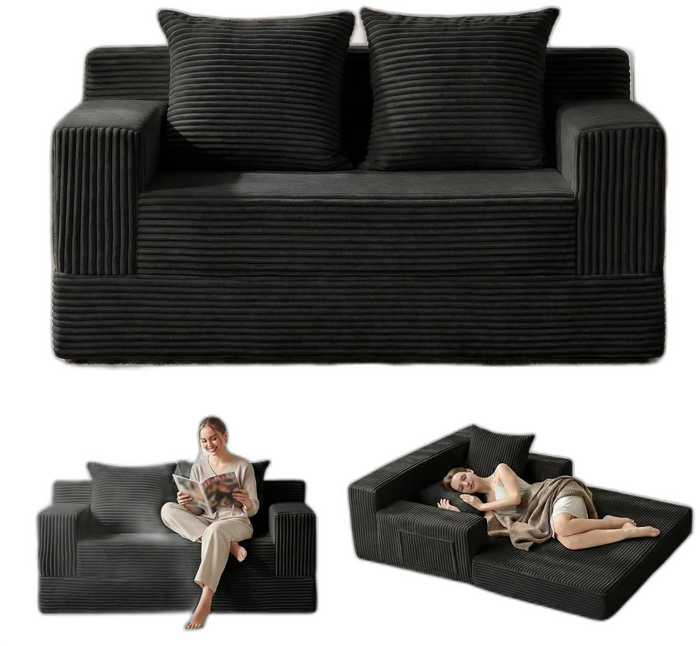
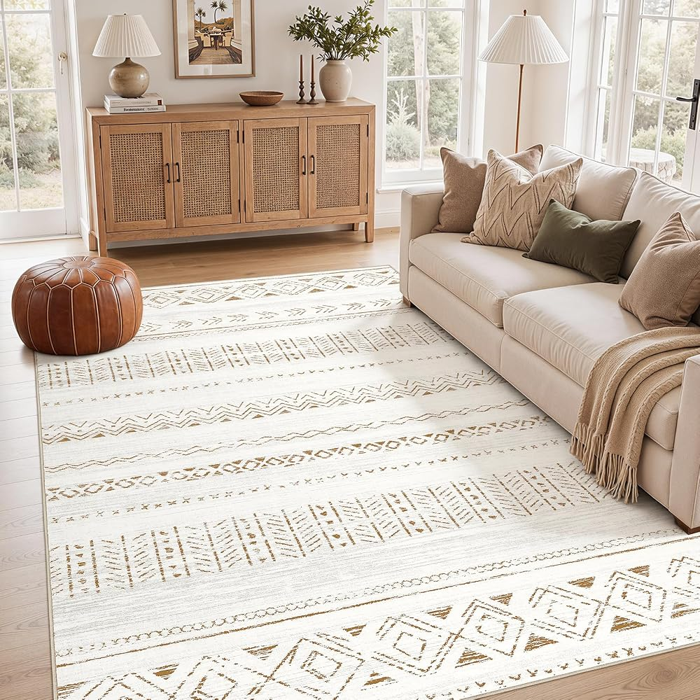
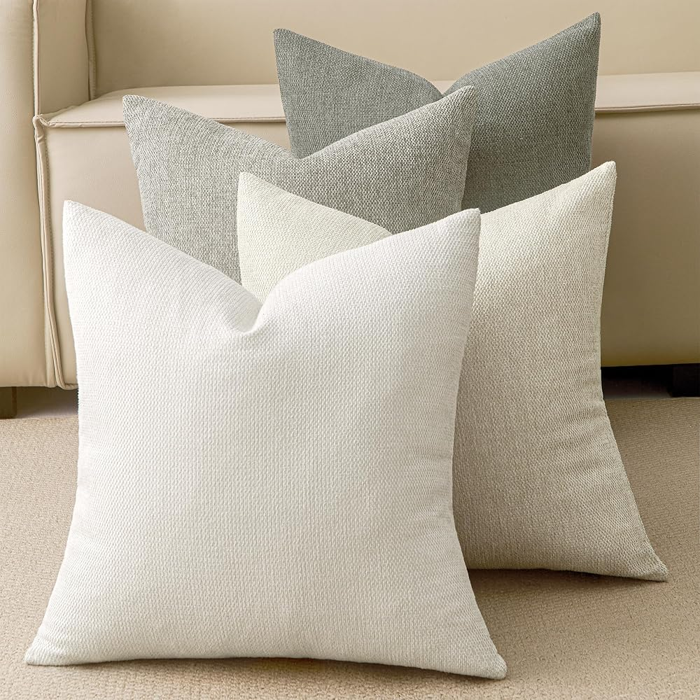
Small-Space Picks That Help
Related Guides

Olivia Bennett is the Lead Content Editor at The Dailey House. She specializes in interior styling, bedroom aesthetics, and creating spaces that feel intentional without feeling out of reach. With over a decade of experience covering home interiors, Olivia believes every room should tell you something about the person who lives in it.