

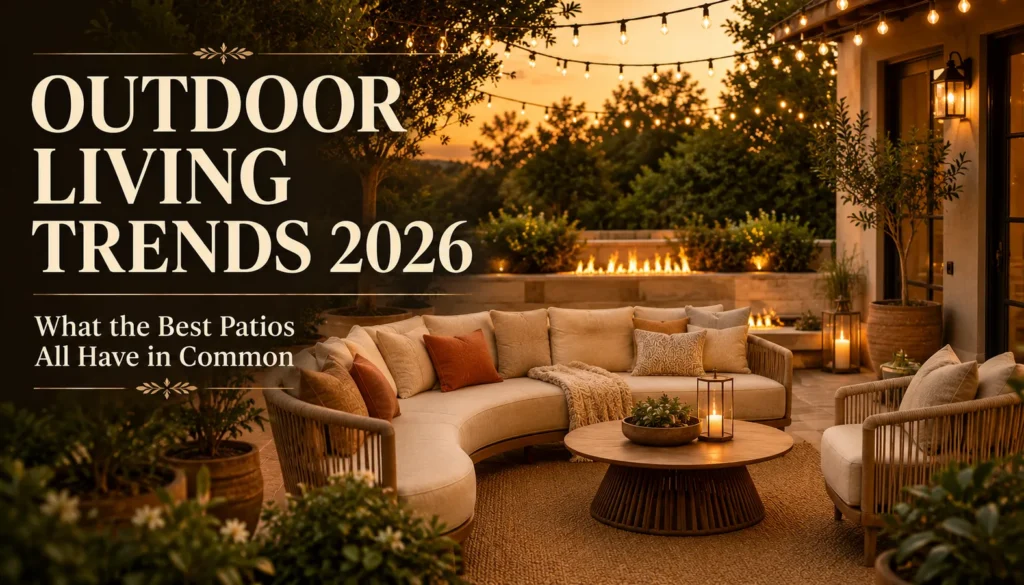
Walk through any of this year’s best-designed patios and you’ll notice the same thing again and again — they don’t feel like an afterthought. They feel like a room.
That’s the real story behind 2026’s outdoor living trends. Here are the 9 patterns showing up across the best patios this year, and what they actually mean for your own space.
Why 2026 Is a Turning Point for Outdoor Design
For years, patios were treated as a seasonal extra — furniture that got put away every fall. That’s shifting fast. Designers and homeowners are now approaching outdoor spaces with the same intention, layout thinking, and long-term investment they’d put into a living room.
That single mindset shift is what’s driving almost every trend on this list.
1. Patios Are Being Designed Like Interior Rooms
The single biggest shift this year: designers are applying the same principles to patios that they’d apply indoors — layout and flow, focal points, layered lighting, scale, and proportion.
That means furniture no longer gets pushed against a railing and called “done.” Instead, patios are built around a clear purpose for every zone, the same way you’d plan a living room around a sofa and a TV.
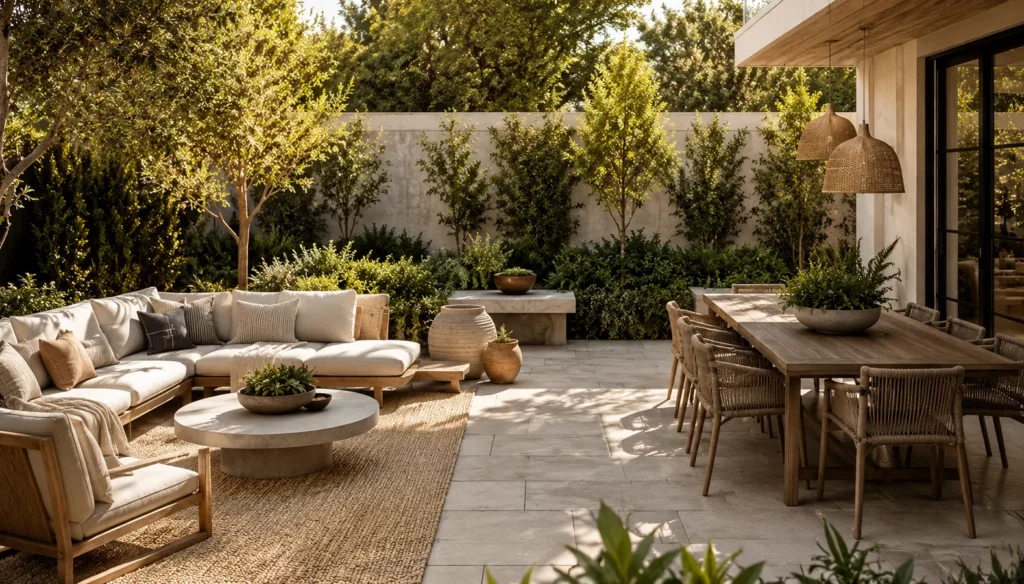
What this looks like in practice: a defined conversation area, a separate dining zone, and a visual focal point (a fireplace, a piece of art, or a statement plant) anchoring the space.
2. Warm Tones Are Replacing Cool Gray
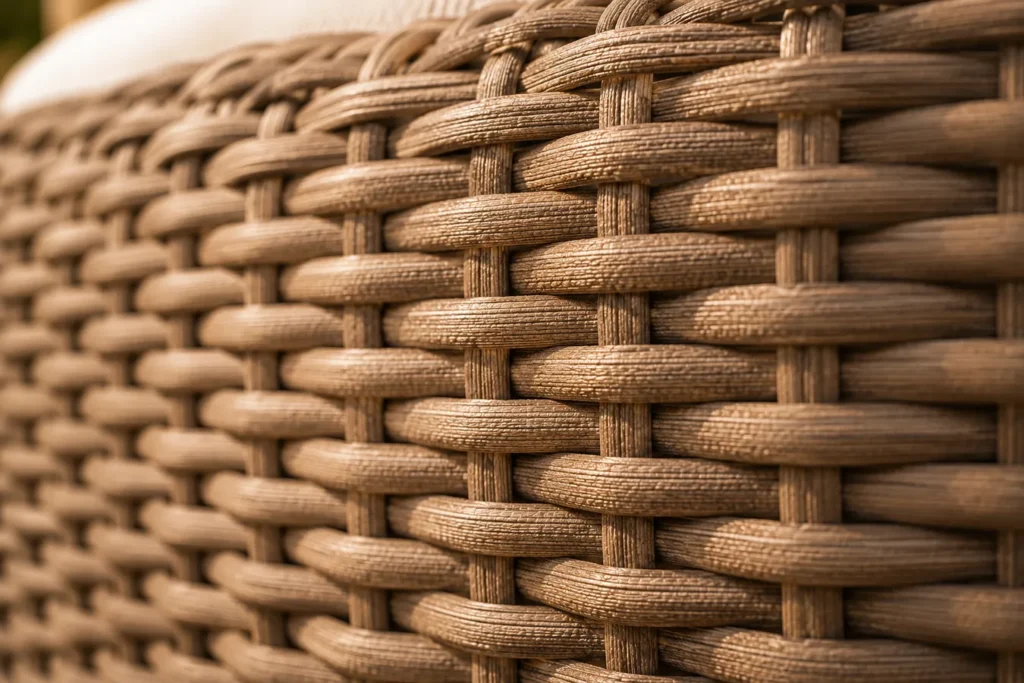
After nearly a decade of cool gray dominating outdoor furniture collections, 2026 is bringing warmth back. Furniture finishes are shifting toward flax, barley, and hazel tones that echo natural materials.
Warmer finishes read as more residential and less “showroom,” and they hold up better visually in direct sunlight, where cool grays can look flat or harsh.
Quick swap: if your current set is a cool charcoal gray, a few warm wood-tone or woven accent pieces can shift the whole space without a full furniture replacement.
3. Curved, Sculptural Furniture Over Sharp Angles
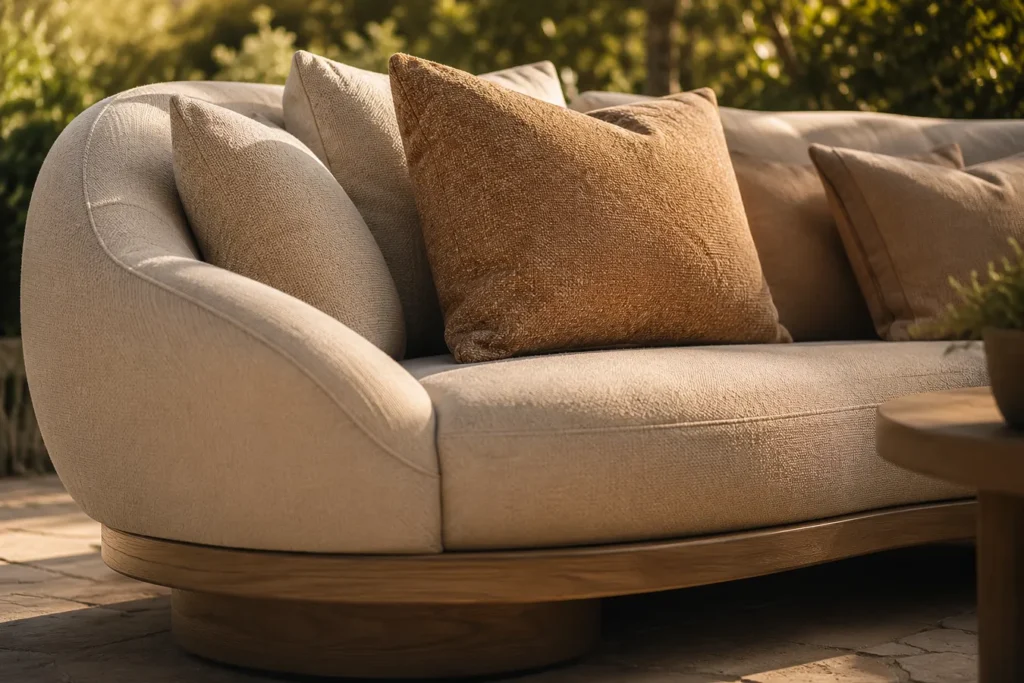
The ultra-angular outdoor sets that defined the early 2010s are giving way to softer, more sculptural forms. Rounded arms, curved backs, and organic silhouettes are showing up across new furniture lines.
The logic is simple: curves read as inviting and conversational, while hard angles create visual distance between pieces.
4. Zoned, Multi-Function Layouts
Instead of one all-purpose patio, 2026’s best outdoor spaces are broken into distinct functional zones — a dining area, a separate lounging area, and often a dedicated cooking or fire zone — rather than one oversized structure trying to do everything.
This zoned approach maximizes usable square footage and creates a smoother transition between indoor and outdoor living, even in more modest-sized backyards.
Small-space version: you don’t need three separate structures — even a small patio can “zone” itself with a rug defining the seating area and a side table marking a secondary spot.
5. Fire Features as Architectural Focal Points
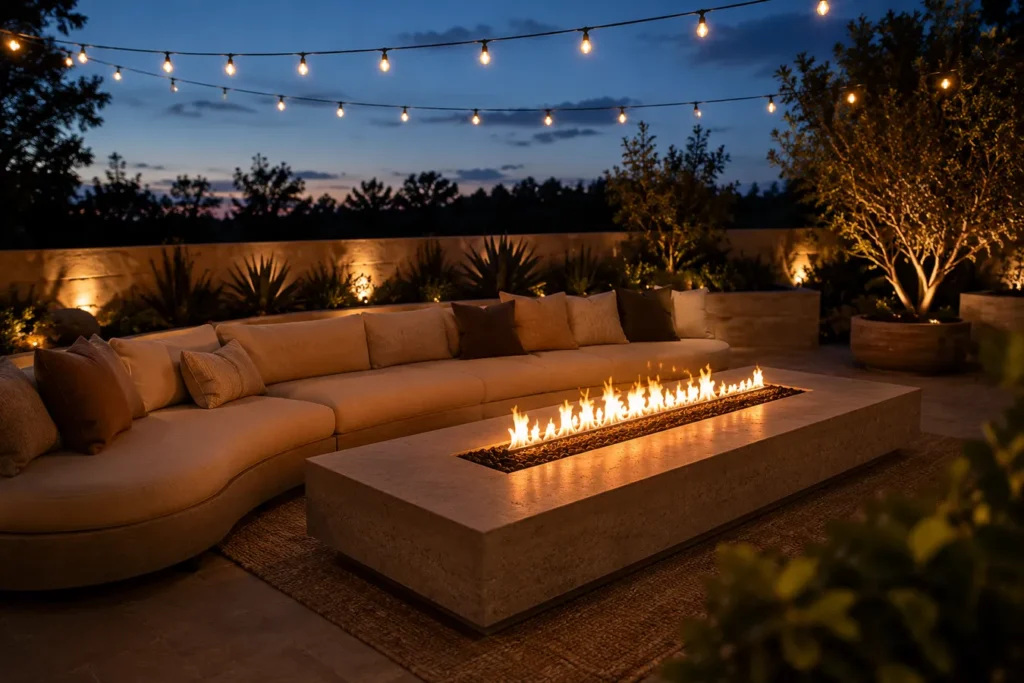
Fire pits and fireplaces have moved from backyard extras to intentional design anchors. Linear and geometric shapes (rectangular, hexagonal) are leading the trend, and tabletop fire features are seeing particularly strong growth thanks to compact, multifunctional appeal.
Sustainability is shaping fuel choice too gas and bioethanol options are increasingly preferred for cleaner burning and easier day-to-day operation over traditional wood-burning setups.
If you’re adding a fire feature, checking local safety guidance (like the National Fire Protection Association’s recommendations) before installation is a smart first step.
6. Outdoor Kitchens Are Leveling Up
2026’s outdoor kitchens have shifted toward modular, prefabricated systems that deliver professional-grade performance without the complexity of a full custom build.
Even compact spaces are getting the full-kitchen treatment — efficient storage, defined cooking zones, and clean layouts that keep smaller footprints from feeling cluttered.
7. Layered, Intentional Lighting
Lighting is being called out repeatedly as the single element that separates a basic patio from a high-end one. A single strand of string lights is no longer considered a finished look on its own.
The trend is toward layered lighting — ambient overhead light, task lighting near seating, and accent lighting highlighting a focal feature — mirroring how lighting is layered indoors.
8. Sustainable, Long-Lasting Materials
Sustainability has moved from a buzzword to an actual purchasing driver. Homeowners are prioritizing durable, weather-resistant materials that reduce long-term maintenance, along with eco-conscious fuel and material choices across furniture, fire features, and hardscaping.
The throughline: 2026 outdoor spending is favoring “buy once” durability over the disposable, seasonal furniture cycle of years past.
9. Organic, Lived-In Boho Layering
Not every 2026 trend is about polish — boho-inspired layering is holding strong, and it’s intentionally imperfect. Floor cushions, overlapping rugs, mismatched lanterns, and hand-thrown pottery are placed based on how the space is actually used, not arranged for a photo.
This trend works especially well for smaller patios or renters, since it’s low-cost and doesn’t require permanent structural changes.
Key Takeaways: What This Means for Your Patio
- Think in zones, not furniture pieces — even a small patio benefits from a defined seating area and a defined secondary spot.
- Warm tones and curves are the easiest, lowest-cost way to modernize an existing setup.
- Lighting is worth the investment — layer at least two light sources before adding more decor.
- Durability now outweighs trend-chasing — buy fewer, better pieces built to last multiple seasons.
- Boho layering remains the most budget-friendly way to make a space feel intentional without a full renovation.
If you’re starting from zero, our [INTERNAL LINK: Patio Makeover for Beginners: Where to Start When You Have No Idea] guide walks through exactly how to apply these trends step by step.
Frequently Asked Questions
What is the biggest outdoor living trend for 2026?
The clearest trend is designing patios with the same intention as an interior room — defined zones, layered lighting, and a clear focal point — rather than treating outdoor space as an afterthought.
Is gray outdoor furniture still in style in 2026?
Cool gray finishes remain usable but are no longer the default. Warmer tones like flax, barley, and hazel are trending as the preferred finish for 2026 outdoor furniture.
Do I need an outdoor kitchen to follow 2026 trends?
No. Modular, smaller-scale outdoor kitchen setups are trending specifically because they let compact spaces get a similar upgrade without a full custom build.
What’s an affordable way to update my patio for 2026?
Layered lighting, a few warm-toned accent pieces, and a boho-style layered rug setup are the most budget-friendly ways to bring a patio in line with this year’s trends without a full furniture replacement.
Are fire pits still trending in 2026?
Yes — fire features remain one of the strongest trends, with linear and geometric shapes and cleaner-burning gas or bioethanol fuel options leading the category.
Final Thoughts
The through-line across every 2026 outdoor trend is the same: patios are being treated like real rooms, not seasonal afterthoughts. You don’t need every trend on this list — pick the one or two that fit your space and budget, starting with layout and lighting, since those two changes affect everything else.

Daniel Carter covers the practical side of home improvement at The Dailey House — drainage fixes, DIY yard projects, patio makeovers, and the kind of weekend builds that actually get finished. If there's a smarter or cheaper way to do it, he's tested it.