

A great summer patio doesn’t need a big furniture budget. It just needs a few layers done well. Texture underfoot. Warm light after dark. A couple of plants that actually love the heat. Most of what follows costs under $50 per item. None of it needs tools.
Do you still need the basics first? Furniture that fits. A surface that isn’t cracked. If so, start with the beginner patio guide. Come back here for the decorating layer once that’s in place.
Why Layering Beats Buying More
Patios that look pricey online almost never have more furniture than yours. They just have more layers. A rug sets a clear edge. Light adds warmth after dark. Plants add color that shifts with the season. Fabric ties it all together. Skip one layer, and the space feels unfinished, no matter how much you spend on the rest. The ideas below go roughly in order of impact. Short on time or cash? Start at the top and work down.
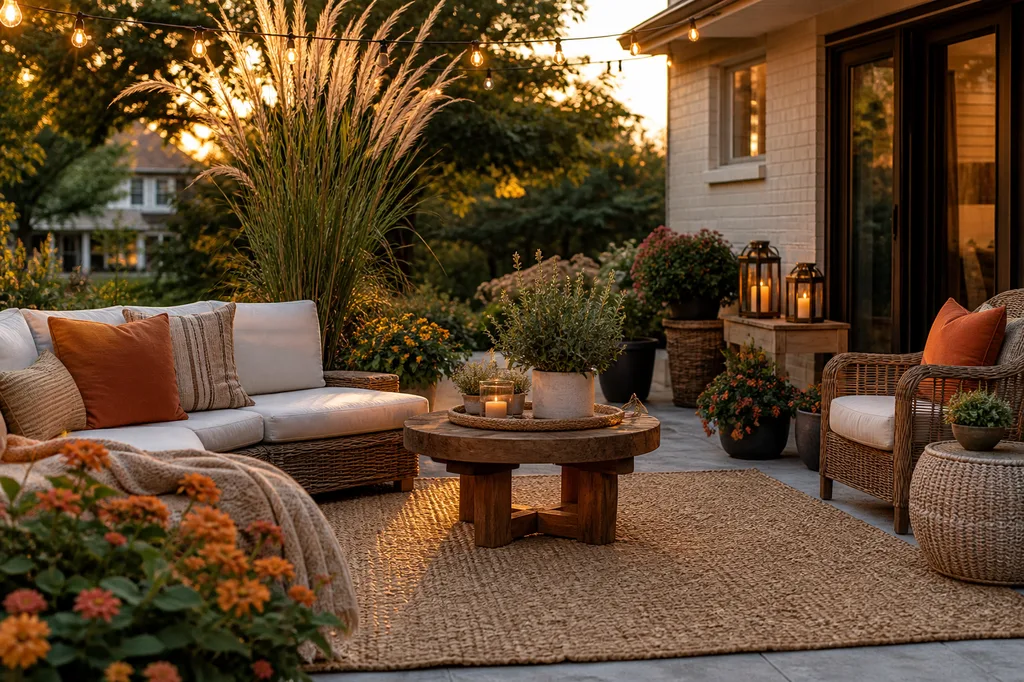
1. Anchor the Space With an Outdoor Rug
A rug is the fastest way to turn a patio into a finished room. Without one, it just looks like furniture parked on concrete. Look for a rug made to handle sun and rain. It won’t fade. It won’t get moldy. Polypropylene works well for this. So does solution-dyed acrylic. Size it to sit just under the front legs of your chairs, not the whole patio. A rug that’s too small looks like an afterthought. Too big, and it swallows the space instead of framing it.
2. Layer at Least Two Light Sources
String lights alone leave half the patio in shadow once the sun drops. Add something at table height too. A couple of lanterns work well. So do battery candles or a solar path light. Now there’s light to actually see your food or a book by, not just a soft glow overhead. Pick warm white bulbs. They feel cozy. Cool white bulbs feel like a parking lot.
3. Add Heat-Tolerant Plants, Not Just Any Plants
A hot, sunny patio kills a lot of pretty plants fast. Stick to plants that love the heat. Group three pots at different heights. Don’t scatter single plants around the edges. A cluster looks styled. Lone pots just look like leftovers. Water them in the early morning, not midday. Less water gets lost to the sun that way.
4. Bring in Weather-Rated Textiles
Outdoor pillows do more for a patio than another chair would. So does a table runner. So does a light throw for cool evenings. Pick fabric that fights fading and rain. Plain cotton will mold and fade within weeks outside. Choose one or two colors. Repeat them across your pillows, a rug edge, and a planter. That’s what ties the whole space together.
5. Give the Space One Focal Point
A small fire pit works well as a focal point. So does a tabletop water feature. So does one big piece of outdoor art. It gives the eye somewhere to land. It makes the whole layout feel planned. Arrange your seats to face it. Not the yard. Not the door. This one change is often what separates a “nice patio” from one that looks styled. It costs nothing extra — it’s just where you point the chairs.
6. Add Shade for the Hottest Hours
A patio that’s too hot from noon to 4pm just won’t get used, no matter how it’s decorated. A market umbrella fixes this. So does a shade sail, or a couple of tall potted trees placed to block the afternoon sun. Most of these options are easy to move if you get the angle wrong the first time.
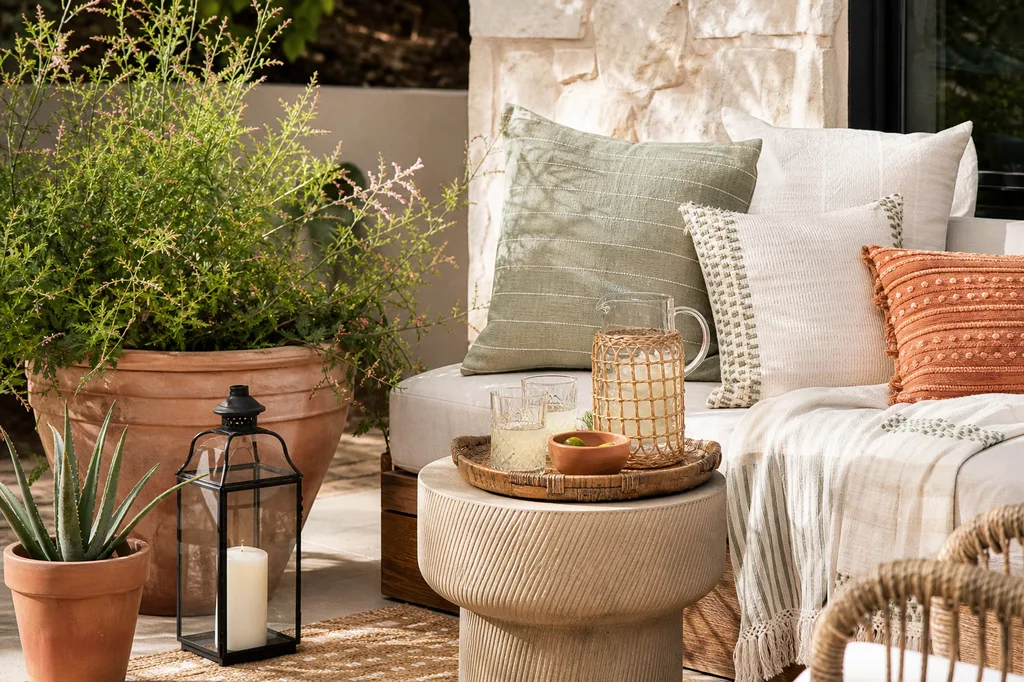
7. Style a Drinks or Snack Station
A small bar cart works well here. So does a tray on a side table. So does an old crate stocked with glasses and a pitcher. It gives the space a purpose beyond just sitting. It makes the patio feel ready for company. Keep it simple. A tray, a pitcher, some napkins, and a small plant is enough. Too much stuff here just looks cluttered, not hosted.
8. Add a Scent Layer
Citronella candles work as bug repellent and decor at once. So do potted herbs like rosemary or lemon balm, or a jasmine vine near the seats. They make the space feel more finished after dark. Most patios skip this step. It’s also one of the cheapest things on this list.
9. Add Height With a Vertical Layer
Most patio decor stays at table height or lower. That leaves the space feeling flat, no matter how much you add. A hanging planter fixes this. So does a trellis with a climbing vine, or a tall floor lantern. All of them pull the eye up and make a small patio feel bigger. Got a railing or fence line? Hang a row of pots at different heights. It adds this same effect without using any floor space — a good trick for small balconies.
10. Keep the Palette Tied to Your House
A patio that ignores your house color always looks a bit off. This is true even when every single piece on it is nice. Pull one or two colors straight from your home’s outside. A trim color. A door color. A brick tone. Repeat them in your pillows, a planter, or a rug edge. This one trick is why some patios look pulled together by a pro. Others just look like a pile of good separate buys.
11. Swap Decor Between Seasons Instead of Starting Over
Buying a whole new set of decor each season adds up fast. Most of it just ends up tossed within a year or two. Instead, pick a base layer that works all year. Your rug. Your seats. Your rail planters. Then swap only the small stuff for summer. Bright pillow covers work well for this. So do a few new plants. So does a fresh table runner. This costs a fraction of a full refresh. It also keeps your patio feeling new, season after season.
A Simple Order to Do This In
Doing all of this at once? Work in this order, so each step doesn’t undo the last one. Rug first — it sets the edge of the space. Lights next, so you can see the space at night. Plants and fabric together after that, for color and texture. Then your focal point. Then the small final touches: the drinks station, the scent layer, the vertical piece. Pick your year-round base as you go, so next season you’re only swapping small pieces, not starting over. Jumping straight to decor before the rug and lights are set is the top reason a patio refresh ends up looking messy instead of styled.
☀️ Summer Patio Decorating Checklist
Check off each layer as you add it, in order.
Frequently Asked Questions
How much does it cost to decorate a patio for summer?
A full set of layers — rug, lights, plants, fabric — usually runs $150 to $300 on a budget. Just want lights and a plant or two? Under $75 gets you there.
What plants survive best on a hot, sunny patio?
Try succulents. Try lantana or geraniums. Try ornamental grasses too. All of them take full sun with little water. Skip ferns and hostas. Both need shade, and most patios don’t have enough of it.
What’s the cheapest way to make a patio feel decorated?
String lights plus one outdoor rug. That’s the biggest visual jump for the lowest cost. Both together often run well under $40. Setup takes under an hour, start to finish.
How do I keep outdoor textiles from fading in the sun?
Pick solution-dyed acrylic fabric. The color runs through the whole fiber, not just on top like a print. Bring cushions inside during long rain to help them last even longer.
Do I need shade if my patio only gets morning sun?
Probably not, at least not urgently. A patio with only morning sun stays usable through the hot part of the day on its own. Save shade for south- and west-facing patios. They take the worst of the afternoon heat.
How do I decorate a small patio or apartment balcony for summer?
Lean on vertical space. Hang a planter. Mount a small lantern. Add a trellis. Floor space is scarce on a small patio, so don’t waste it. One good rug and one focal point — even a small tabletop fire bowl — go further here than a handful of small scattered pieces.
What color palette works best for a summer patio?
Pull one or two accent colors from your home’s outside — trim, door, or brick tone. Don’t pick a palette in isolation. Warm terracotta, sage green, and cream are safe, solid picks. They pair with most homes and won’t look dated after a season.
How do I decorate for summer without buying all new decor?
Keep your rug, seats, and any built-in planters as a base that stays all year. Swap only small, cheap pieces for summer. Pillow covers work well. So does a table runner, or one or two new plants. This costs far less than a full refresh. It still makes the space feel new.
Final Thoughts
None of this needs a big budget. A rug. Layered light. A few plants that love the heat. One focal point. Together, these four things cover most of the gap between a “fine” patio and one that feels truly decorated. Do them in order. The change shows up in a weekend, not a season. Need to fix the surface underneath first? Compare pavers vs. patio tiles or browse budget-friendly patio floor ideas next.

Daniel Carter covers the practical side of home improvement at The Dailey House — drainage fixes, DIY yard projects, patio makeovers, and the kind of weekend builds that actually get finished. If there's a smarter or cheaper way to do it, he's tested it.