

You’ve rearranged the same shelf three times and it still looks wrong.
You added the plant. Then the candle. Then the small basket. Then the framed photo. And somehow, the more you added, the worse it looked.
The problem is not your taste. It is not your budget. It is not even the shelf.
It is that there is too much on it.
Most people decorate by filling space. Every empty surface feels like something left unfinished. So they add more, hoping the next piece will finally pull it together. But the room keeps feeling busy, draining, and hard to relax in.
There is a simple fix that professional designers have used for years. It is called the 50% empty space rule. It does not cost anything. It does not require you to throw your things away. And it works because of how your brain actually processes what it sees.
This article explains the science, the rule, and exactly how to apply it in every room of your home.
Why Your Decorated Room Still Feels Stressful
Room Surface Clutter Scorer
Move each slider to match how many items are currently on each surface. The 50% empty space rule says half of every surface should be intentionally clear.
Target: leave at least 10 of 20 slots visually open
Target: designers recommend keeping 70–75% of counters clear
Target: maximum 3 items (lamp, one personal, one functional)
Target: 40% open wall space surrounding each piece
Target: group items on a tray so the surface beneath reads as clear
You walk into the living room. Everything looks nice. The colors work. The furniture fits. But something still feels off, and you cannot name it.
Here is what is actually happening.
Your brain does not just see a room. It processes every single object in it. Each item on a shelf, each thing on a counter, each piece of art on the wall, all of them are competing for your attention at the same time.
Your brain has to sort through all of them, decide what matters, and figure out where to focus.
That takes energy. And it never really stops.
Neuroscientists have found that when multiple visual objects are in front of you at once, they compete for space in your brain’s visual cortex. Your neural networks cannot easily focus on one thing when ten other things are also demanding attention.
A 2024 Yale study confirmed that visual clutter directly alters information flow in the primary visual cortex, reducing your ability to concentrate.
It is not just mental focus either. Research published in Personality and Social Psychology Bulletin found that cluttered environments raise cortisol levels by 18 to 25 percent compared to organized spaces.
Cortisol is the hormone your body releases when it is under stress. Your decorated room is quietly keeping your body on edge.
Clinical psychologist Dr. Scott Bea puts it plainly: “Existing in a cluttered environment taxes our brains because the cluttering objects compete for our attention.”
The fix is not a new color scheme. It is less, not different.
What the 50% Empty Space Rule Actually Means
The 50% Empty Space Rule
A room-by-room cheat sheet for calmer, more intentional spaces
Group items in clusters of 2 to 3 with deliberate gaps between each group.
Used less than 3 times a week? That appliance belongs in a cabinet.
Lamp. One personal item. One functional item. Everything else goes in a drawer.
A bare wall is not unfinished. It is breathing room that makes your art worth seeing.
Place items on a decorative tray so the surface beneath reads as intentionally open. Remove anything you have not touched in two weeks.
The rule is straightforward. On any visible surface in your home, roughly half of it should be empty.
That means shelves, countertops, tabletops, dressers, and walls. Not all of them stripped bare. Just half of each one, left open on purpose.
Think of two bookshelves side by side. One has books packed from end to end, with small items stuffed into every gap. The other has clusters of books separated by small open spaces, with a few objects placed with room around them.
Both shelves have the same number of books. But one feels calm and the other feels chaotic.
That gap between the clusters is not emptiness. It is breathing room.
Rooms feel chaotic not because they are small, but because every available surface gets filled over time, piece by piece, without anyone noticing.
A candle here. A small bowl there. Another frame. Each addition seems harmless. Together, they create what designers call clutter creep.
Professional designers often use a 60/40 ratio, leaving 60% of a surface clear and filling only 40% with objects. The 50% rule is a more realistic starting point for most homes. It gives you a clear target without being so strict it feels impossible.
Negative space, which is the open area you intentionally leave empty, is what allows the rest of the room to make sense. It is the pause between design choices that lets each piece be seen.
This is not minimalism. Nothing permanent has to leave your home.
The Science That Backs It Up
That low-level tiredness you feel at home, the kind that is hard to explain, often comes directly from your environment.
Every visible object in a room requires a small mental decision. Should I look at that? Does that need attention? Is that out of place? You make these decisions automatically, without thinking. But they add up.
Researchers at the Rocky Mountain College of Art and Design describe this as decision fatigue, a type of cognitive overload where the brain gets worn down by constant low-level processing.
Over time, chronic visual clutter keeps your nervous system in a low-grade stress state.
As one study from Motherly described it, this can feel like a persistent, mild version of the fight-or-flight response. Your body is ready to react to something, but there is nothing to react to. That is exhausting.
Interior designer Lexi Goddard, Senior Designer at D+K in Chicago, explains what happens when you remove that pressure:
“There are more places for the eye to rest. It is a much more calming approach to design.”
Designer Artem Kropovinsky, founder of Arsight, adds another angle: “When you have fewer items in a space, each one becomes more important and impactful.”
When everything competes for attention, nothing wins. When you give objects room, the ones you chose to keep actually get noticed.
Empty space is not wasted space. It is rest for your brain.
How to Apply the 50% Rule Room by Room
Different rooms have different surfaces. Here is where to start in each one.
Shelves and bookcases
Start by taking everything off one shelf. Put it all on the floor. Now only put back half of it, arranged in small clusters with deliberate gaps between them. Live with that for a few days before deciding if anything else needs to return.
If you have not noticed an item in months, it does not need to be on display. As the team at Living Etc. noted after testing this rule, items that collect dust on shelves are the easiest first candidates to rotate out.
Action step: Pick one shelf today. Remove half. See how the room feels tomorrow morning.
Kitchen countertops
The kitchen is where clutter creep is fastest. Small appliances, mail, fruit bowls, oil bottles, cutting boards, they accumulate without effort.
Interior designers commonly advise keeping 70 to 75% of countertops clear when the kitchen is not in active use. The 50% rule is your starting point if that feels too extreme. Focus first on appliances you use less than three times a week. Those belong in a cabinet.
Action step: Count every item currently on your counter. Move anything you have not used in the past three days into a cabinet for one week.
Bedroom surfaces
Your bedroom has one job: help you rest. A nightstand covered in books, chargers, creams, glasses cases, and reminders does the opposite.
A well-edited nightstand has three items: a lamp, one personal item, and one functional item. That is it. A bedroom with carefully placed furniture and minimal surfaces feels more restful because your brain does not have to process a to-do list every time you lie down.
Action step: Clear your nightstand completely. Put back only three items and leave everything else in a drawer.
Walls
Not every wall needs something on it. A bare wall is not an unfinished wall. It is a visual break.
When you do hang art, designers recommend that the open wall space surrounding the piece takes up roughly 40% of that wall’s area. That breathing room is what makes the artwork feel intentional rather than stuffed in.
Action step: Walk through your home and identify one wall that has art or objects that could be removed. Take them down for a week before deciding if they should go back.
This is a starting audit, not a permanent verdict. Nothing you remove today has to be gone forever.
What to Do With What You Remove
Here is the part that makes this rule easier to follow.
You do not have to get rid of anything.
The goal of the 50% rule is not to own less. It is to show less at one time. That means the items you remove from surfaces can simply move to storage and come back later.
Rotate your decor seasonally. Box up half of your display items and swap them every few months. When the stored pieces come back out, they will feel fresh instead of invisible. You will actually notice them again.
Use closed storage wherever possible: baskets with lids, cabinets, drawers, and boxes. Things do not need to be visible to be useful. Most items in a home are used, not admired.
Before anything new comes into your home, ask one question: does this add function or meaning? If the answer is no, or if you cannot answer within a few seconds, it is probably not worth the visual space it will take up.
The simplest long-term habit is the one-in-one-out rule. When something new comes in, something currently on display goes into rotation or leaves. This keeps surfaces from slowly filling back up over months.
The goal is not a bare home. It is a home where everything you see is worth seeing.
How to Tell If You Have the Balance Right
Take a photo of the room right now on your phone.
This is the fastest and most honest test. Visual clutter that your brain has learned to filter out becomes obvious in a photograph. You will see it differently the moment it is on a small screen. If your first reaction is “wow, that is a lot,” you have your answer.
The second test is the doorway test. Leave the room for ten minutes. Come back and stand in the doorway. Notice your first feeling before your brain adjusts. Is it calm, or is it busy?
If you want something more specific, count the distinct visual focal points you see from that doorway.
Most interior designers suggest that more than seven to nine competing points of visual interest makes a room feel overwhelming. If you count fifteen things all pulling at your attention equally, the room has no hierarchy. The eye does not know where to land.
The final check is one simple question for each visible item: does this earn its place here?
Not does it look nice. Not does it have sentimental value.
Does it earn its place on this specific surface, in this room, at this time? If the answer takes too long to come, that is useful information.
When there is open space between elements, the room can breathe. Your eyes can rest. And you can actually relax in it.
If you walk in and feel nothing in particular, that is the goal. Calm does not announce itself.
The One Surface Test
The 50% empty space rule is not about owning less. It is about showing less at one time.
Your brain needs visual rest. Your home can give it that without feeling cold, bare, or unfinished. Negative space is not a design choice reserved for expensive homes or professional decorators. It is something you can create today, in any room, with no budget.
Pick one surface in your home right now. A shelf, a counter, a nightstand. Remove half of what is on it. Do not overthink it. Just take half away and put it in a box.
Live with it for a week before deciding if anything needs to go back.
That one surface will teach you more about the empty space rule than anything written here. And if the room feels calmer when you walk in the next morning, you will know exactly what to do next.
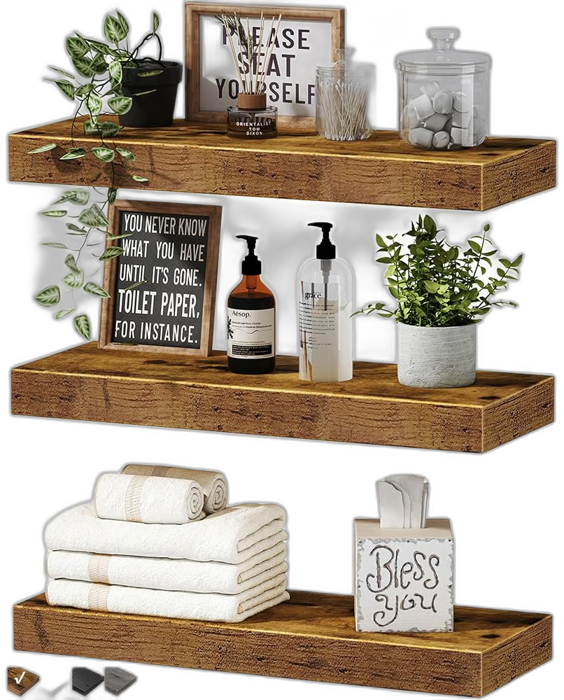
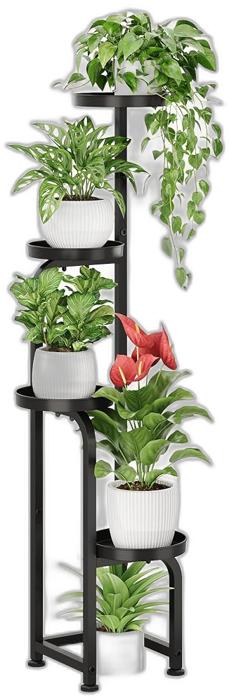
Small-Space Picks That Help
Related Guides

Olivia Bennett is the Lead Content Editor at The Dailey House. She specializes in interior styling, bedroom aesthetics, and creating spaces that feel intentional without feeling out of reach. With over a decade of experience covering home interiors, Olivia believes every room should tell you something about the person who lives in it.