

Few bedroom annoyances are as instantly disruptive as a headboard that bangs against the wall every time you roll over, sit up to read, or climb into bed. Beyond the embarrassing rhythmic thumping that echoes into neighboring bedrooms or apartment units, repeated headboard impacts cause progressive structural damage to your home: rubbed-off paint, shredded drywall paper, indented plaster, and loose frame bolts. Fortunately, stopping a wobbly headboard does not require expensive custom carpentry or ugly makeshift pillow stuffing.
Quick Summary: Best Headboard Wall Stoppers at a Glance
- Best Overall Threaded Stabilizer: Yecaye Upgraded Adjustable Bed Frame Anti-Shake Tool (4-Pack) — Telescopic threaded steel design with high-density EVA wall pads that adjusts from 1.3 to 4.4 inches to completely eliminate bed wobble.
- Best Thick Foam Wall Bumpers: Caseling Extra-Thick EVA Foam Headboard Bumpers (4-Pack) — Peel-and-stick high-resilience acoustic foam blocks that cushion tight gaps under 1.5 inches without mechanical installation.
- Best Heavy-Duty for King Platform Beds: BESy Heavy-Duty Metal Anti-Shake Bed Stopper — Solid aircraft-grade alloy construction with reinforced threaded shafts built to support immense lateral thrust on heavy solid wood frames.
- Best Invisible Clear Silicone Protectors: Kraftex Clear Silicone Headboard Wall Protectors (8-Pack) — Discreet transparent dome bumpers that blend seamlessly into light-colored paint while absorbing sharp kinetic impact.
Quick Comparison: Top 4 Headboard Wall Stoppers Tested
| Product | Stopper Type | Adjustable Gap Range | Wall Protection Surface | Best Suited For | Action |
|---|---|---|---|---|---|
| Yecaye Anti-Shake Tool | Threaded Telescopic Screw | 1.3 to 4.4 inches | Dense EVA Foam Cushion | Wobbly Metal & Wood Frames | Check Price |
| Caseling Headboard Bumpers | Peel & Stick Foam Blocks | Fixed 1.0 to 1.5 inches | Closed-Cell EVA Acoustic Foam | Upholstered Headboards | Check Price |
| BESy Metal Bed Stopper | Reinforced Alloy Screw | 1.8 to 4.2 inches | Heavy Wool Felt Buffer | Heavy King & Queen Timber Beds | Check Price |
| Kraftex Clear Wall Protectors | Adhesive Silicone Dome | Flush to 0.75 inches | Soft Silicone Polymer | Minimalist & Renter Drywall | Check Price |
Why Headboards Bang Against Walls: The Physics of Frame Leverage
To permanently stop headboard noise, it helps to understand why beds bang in the first place. Most homeowners assume a banging headboard means the bed frame is broken. In reality, headboard knocking is a pure physics problem created by cantilever leverage and kinetic momentum:
- The Tall Fulcrum Effect: A standard headboard rises between 36 and 54 inches above floor level, while its only mounting bolts are located near the bottom 12 inches of the mattress frame. This creates a tall lever arm. Even a tiny 1-millimeter micro-shift at mattress level multiplies into 2 to 3 inches of violent movement at the top crest of the headboard.
- Slick Flooring Slippage: If your bed sits on bare timber flooring without high-traction anchors, the base of the frame shifts backward every time body weight drops onto the mattress. If your bed frame rolls or slides on hardwood, you should always combine wall stoppers with certified rubber bed stoppers for hardwood floors to prevent the legs from migrating across the room.
- Drywall Cavity Amplification: Drywall is essentially a giant acoustic drum skin stretched over 16-inch hollow wooden studs. When a 100-pound solid wood or metal headboard hits the drywall, the hollow wall cavity acts as a soundboard, amplifying a quiet tap into a booming bass thump that transmits throughout the entire building structure.
In-Depth Reviews: The 4 Best Headboard Wall Stoppers Tested
Under $12 (4-Pack)
Yecaye Upgraded Adjustable Bed Frame Anti-Shake Tool (4-Pack)
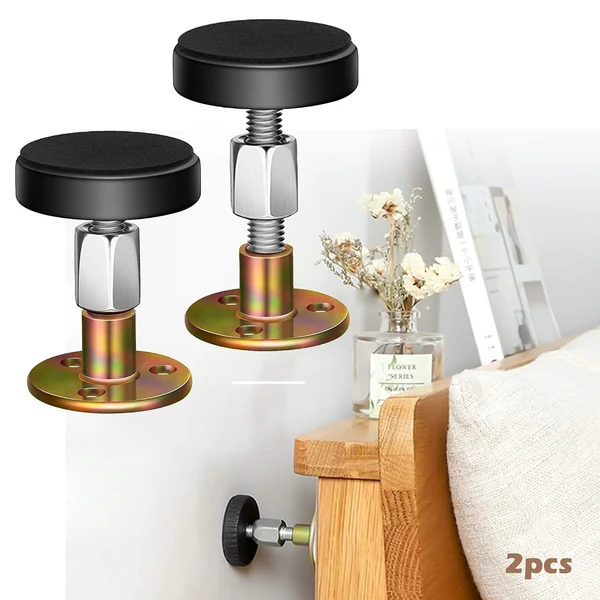
The Yecaye Upgraded Adjustable Threaded Anti-Shake Tool is the undisputed champion of headboard stabilization. Engineered with a precision-machined threaded steel cylinder, each unit allows you to dial in the exact millimeter distance between your bed frame and the drywall, locking the headboard under rigid mechanical tension.
Each tool features a sturdy circular base with high-tack 3M double-sided foam tape that mounts securely to the back of your headboard uprights. The wall-facing end is capped with a thick, high-density shock-absorbing EVA foam cushion that grips the drywall without leaving dark scuff marks or denting the gypsum plaster. Because the threaded rod rotates smoothly by hand, you can expand or contract the stabilizer without needing screwdrivers or wrenches.
What We Like
- Telescopic modular extension pieces accommodate narrow to wide wall gaps.
- Threaded tension mechanism completely eliminates 100% of frame vibration.
- Dense EVA foam cushion prevents drywall dents and absorbs acoustic thump.
- Extremely easy tool-free installation takes under 5 minutes.
Things to Consider
- Base adhesive is very strong; always adhere to furniture, not directly to wallpaper.
- Over-tightening can push the headboard forward slightly; tighten until snug only.
Under $15 (4-Pack)
Caseling Extra-Thick EVA Foam Headboard Bumpers (4-Pack)
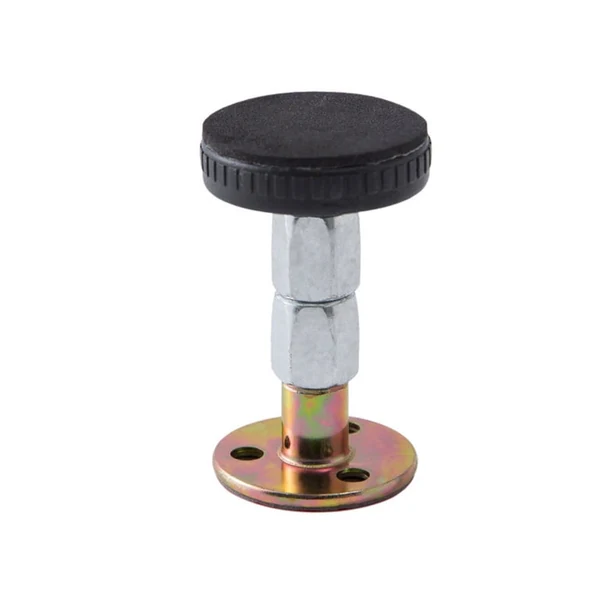
If your headboard is upholstered in plush linen or velvet and sits close to the drywall (between 0.75 and 1.5 inches), mechanical threaded rods can be awkward to mount. The Caseling Extra-Thick EVA Foam Headboard Bumpers provide a soft, shock-absorbing solution that cushions impacts silently without rigid hardware.
Constructed from closed-cell, acoustic-grade EVA foam, these large bumper blocks act like high-performance vehicle shock absorbers. When the headboard flexes back, the dense foam compresses gently, dissipating kinetic energy and converting noisy strikes into silent, imperceptible contacts. The broad surface area distributes pressure across several square inches of drywall, preventing pressure dings in soft rental apartment plaster.
What We Like
- Large contact surface area prevents localized indentations on soft drywall.
- Closed-cell acoustic foam absorbs sound waves better than solid rubber.
- Zero metal parts to creak, rattle, or scratch bedroom furniture.
- Can be easily stacked or trimmed with a utility knife for custom depth.
Things to Consider
- Fixed 1.25-inch thickness will not span large wall gaps over 2 inches without stacking.
- Soft foam provides cushioning rather than absolute rigid immobility.
Under $16 (4-Pack)
BESy Heavy-Duty Metal Anti-Shake Bed Stopper with EVA Cushion
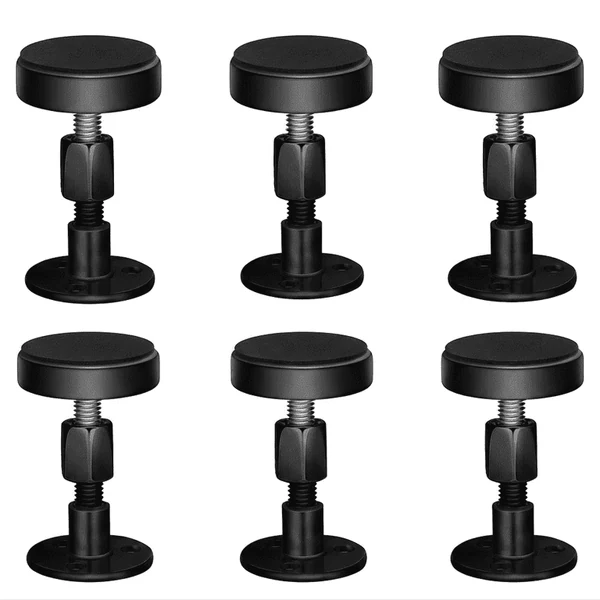
Heavy California King platform beds, thick latex hybrid mattresses, and solid oak bed frames exert immense kinetic thrust when someone sits back abruptly. Plastic stabilizers frequently strip their internal threads under this level of shear force. The BESy Heavy-Duty Metal Anti-Shake Bed Stopper is engineered specifically for maximum load support.
Machined from heavy carbon alloy with a corrosion-resistant black electrostatic finish, BESy stabilizers feature an oversized 1.5-inch threaded bolt that never wobbles or strips. The tool includes multiple screw-in extender barrels, allowing you to span gaps from 1.8 inches all the way to 4.2 inches with zero loss in rigidity. When paired with high-capacity rolling under-bed storage drawers, the rock-solid positioning keeps your entire bedroom alignment perfectly true.
What We Like
- Heavy-duty metal barrel withstands intense lateral force without bending.
- Modular threaded extenders make custom gap fitting effortless.
- Dual-layer felt and EVA pad prevents drywall scuffs and paint peeling.
- Substantially reduces mattress squeaks from loose bed frame joints.
Things to Consider
- Heavier weight requires firm adhesion to clean, wax-free furniture wood.
- Minimum gap requirement is 1.8 inches; too thick for flush headboards.
Under $12 (8-Pack)
Kraftex Clear Silicone Bed Headboard Wall Protectors (8-Pack)
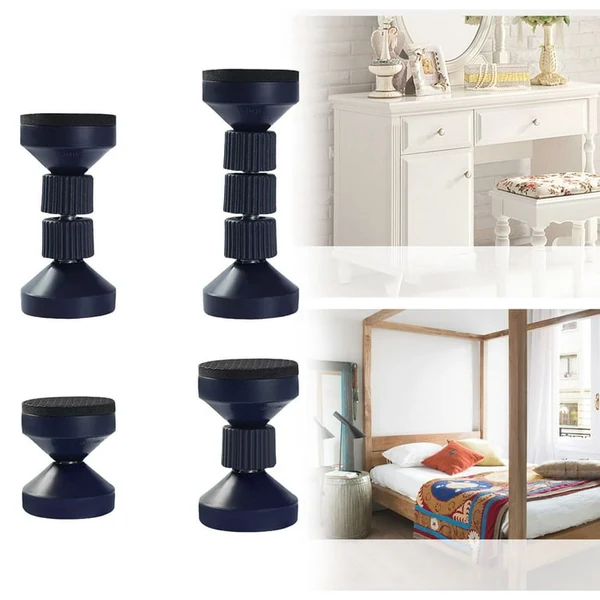
For bedrooms where the headboard sits nearly flush against the wall (under 0.75 inches), large threaded stabilizers will not fit. The Kraftex Clear Silicone Wall Protectors offer a sleek, nearly invisible solution that absorbs sharp impacts without altering bedroom aesthetics.
Each protector is molded from crystal-clear, non-yellowing medical-grade silicone with a domed convex surface. The micro-cushioned interior collapses under pressure to dampen noise, while the transparent profile completely disappears against white, beige, or pastel bedroom walls. With 8 units in every pack, you can place protectors along the upper corners of your headboard and matching nightstands to prevent all furniture scuffs.
What We Like
- Crystal-clear transparent design blends into any bedroom wall paint.
- Soft, elastic silicone cushions contacts without marking or scuffing drywall.
- Ultra-low 0.4-inch profile fits behind tight headboards with zero wall gap.
- 8-pack provides ample protection for headboard, nightstands, and door handles.
Things to Consider
- Only suitable for gaps under 0.75 inches; cannot span wide wall gaps.
- Dampens sound and protects paint, but does not rigidly immobilize loose frames.
How to Stop a Headboard from Banging: 4 Step-by-Step Fixes
Eliminating headboard noise permanently requires attacking both the top leverage point and the bottom floor connection. Follow these four proven steps to make your bed completely motionless and silent:
Step 1: Install Adjustable Threaded Stabilizers at the Top Corners
Measure the distance between the rear upright posts of your headboard and the wall. For gaps between 1.5 and 4 inches, install two threaded anti-shake tools near the top left and top right corners of the headboard. Position the adhesive base against the headboard post and twist the threaded barrel outward until the EVA foam pad makes firm, snug contact with the drywall. This triangulates the frame, eliminating the leverage that causes banging.
Step 2: Tighten All Headboard-to-Frame Bolts
Over time, the lateral rocking of mattress movement loosens the hex bolts connecting your headboard to the bed frame rails. Grab an Allen wrench or socket set, remove the mattress, and inspect each bolt. If the bolt spins freely or the pre-drilled holes in the wood have widened slightly, add a rubber washer or split lock washer beneath the nut before tightening down firmly. This stops the joint from pivoting.
Step 3: Anchor Bed Legs on Non-Slip Rubber Cups
Even the best wall stoppers will fail if the bottom of your bed is free to skate across slick polyurethane hardwood floors. When the legs slide forward, the headboard pulls away from the wall stoppers; when the bed slides back, it slams into them. Lock your floor contact points by installing dense vulcanized rubber caster cups under all four outer legs and any central support posts.
Step 4: Balance the Bed with a Large Area Rug
Placing your Queen or King bed on an oversized area rug adds hundreds of pounds of friction dampening. When properly anchored on a dense felt-and-rubber rug pad, the rug absorbs frame vibrations before they can transmit into floor joists or wall studs. If you are shopping for bedroom floor coverings, reference our detailed guide on choosing the right rug size for queen and king beds to ensure the rug extends far enough past the headboard to provide stable anchoring.
Renter-Safe Wall Protection: Preventing Drywall Paper Tears
If you live in a rental apartment or leased condo, losing your security deposit over drywall damage is a constant worry. Taking three simple precautions ensures 100% damage-free wall protection:
- Adhere to the Furniture, Never the Wall: All high-quality anti-shake tools and bumper pads include self-adhesive backing. Always adhere the sticky side to the back of the wooden or metal headboard frame, leaving the soft foam or felt side to rest against the painted wall. Never stick adhesive directly to painted drywall or wallpaper.
- The Hairdryer Removal Technique: When moving out, if you ever need to remove adhesive tape from your headboard, use a household hairdryer on medium heat for 45 seconds to soften the adhesive resin. The tape will peel away cleanly without stripping furniture stain or leaving gummy residue.
- Avoid Cheap Rubber Suction Cups: Cheap suction-cup style wall bumpers often contain synthetic petroleum plasticizers that chemically react with water-based latex wall paint, creating stubborn circular yellow stains that bleed through fresh coats of primer. Stick with certified non-reactive EVA foam or pure medical-grade silicone.
Buyer’s Guide: How to Choose the Right Headboard Stopper
Before ordering stabilizers, take a measuring tape behind your bed and check these three critical variables:
1. Measure the Exact Wall Gap
Use a tape measure to check the gap between the back edge of your headboard and the wall at three heights: near the top, in the middle, and near the bottom mattress line. Because baseboards project outward 0.5 to 0.75 inches at floor level, most headboards lean slightly backward toward the top. If your gap is under 0.75 inches, choose silicone bumpers like Kraftex; if your gap is between 1.5 and 4 inches, select threaded tools like Yecaye or BESy.
2. Assess Headboard Weight and Construction
If you have an open metal spindle headboard or a lightweight hollow IKEA frame, standard 2-piece threaded tools work effortlessly. If you have an ultra-heavy solid walnut or reclaimed oak platform bed, opt for heavy carbon steel stabilizers with thick M12 bolts to withstand the massive kinetic momentum of the frame.
3. Check Stud Alignment Behind the Bed
Whenever possible, align your headboard wall stoppers so the foam pads press directly against the drywall where an internal vertical wall stud is located (typically spaced every 16 inches). Pressing against a solid wooden stud provides an unyielding acoustic foundation that will never crack or indent hollow drywall sheets.
Frequently Asked Questions
Do headboard wall stoppers cause dents or damage to bedroom drywall?
No, provided you choose stoppers equipped with high-density EVA foam or broad felt pads. These materials distribute pressure across a wide surface area and absorb kinetic impact. Avoid narrow, unpadded metal screws or rigid plastic plugs, which can puncture soft drywall if over-tightened.
How many headboard stoppers do I need for a Queen or King bed?
For standard Twin and Full beds, two stoppers positioned at the top left and top right corners are sufficient. For Queen and King bed frames, four stoppers are highly recommended: two at the top outer corners and two positioned midway down the frame uprights to eliminate mid-span flex.
Can I use headboard bumpers on an upholstered or velvet headboard?
Yes. For upholstered headboards, peel-and-stick EVA foam blocks like Caseling or clear silicone dome pads like Kraftex are ideal. If you use threaded stabilizers, adhere the metal base directly to the exposed wooden mounting uprights or rear structural framing rather than the fabric face.
Will anti-shake tools stop my bed frame from squeaking?
Yes, significantly. Most bed squeaks are caused by the micro-twisting of loose frame joints when lateral force pushes against the headboard. By stabilizing the top of the frame firmly against the wall, anti-shake tools eliminate frame racking and silence annoying mechanical creaks.
What if the gap between my headboard and wall is more than 4 inches?
If your wall gap exceeds 4 inches due to deep heating radiators or wide baseboard trim, choose modular heavy-duty tools like the BESy Metal Bed Stopper, which allow you to screw together multiple barrel extenders to span gaps up to 5 inches safely without losing structural stability.
Editorial Verdict: Which Headboard Stopper Should You Choose?
Stopping an annoying, loud headboard from banging against the drywall restores peace and quiet to your bedroom while protecting your home from costly wall repairs. For the vast majority of bedrooms with wall gaps between 1.5 and 4 inches, the Yecaye Upgraded Adjustable Threaded Anti-Shake Tool provides the ultimate blend of precise millimeter adjustment, durable steel construction, and floor-safe EVA cushioning. If your bed frame sits nearly flush against the wall or features delicate upholstery, the peel-and-stick Caseling Extra-Thick EVA Foam Bumpers offer immediate, damage-free acoustic silencing in seconds.

Olivia Bennett is the Lead Content Editor at The Dailey House. She specializes in interior styling, bedroom aesthetics, and creating spaces that feel intentional without feeling out of reach. With over a decade of experience covering home interiors, Olivia believes every room should tell you something about the person who lives in it.