

Disclosure: TheDaileyHouse is reader-supported. When you buy through links on our site, we may earn an affiliate commission at no extra cost to you. We only recommend products verified for floor safety and durability.
Few sounds make a homeowner’s stomach drop quite like peeling back an old area rug and discovering a yellowed, sticky waffle pattern baked permanently into pristine hardwood floors. Even worse is lifting a rug to find fine dirt trapped beneath the backing that has acted like sandpaper, dulling and scratching the wood’s polyurethane coat with every step.
A good rug pad is not an optional accessory—it is your floor’s insurance policy. It stops heavy rugs from bunching, keeps high-traffic runners from turning into slip hazards, cushions joints, and creates a breathable barrier that keeps dirt from grinding into floorboards.
However, not all rug pads are safe for hardwood. In fact, the cheap synthetic plastic pads sold in big-box stores are often the very culprits that cause thousands of dollars in floor refinishing damage. In this guide, we break down which materials are genuinely safe, how to choose the right thickness for each room, and the 4 best rug pads and grippers available on Amazon that protect your finish while keeping your rugs firmly in place.
Styling an Area Rug Under a Bed or Living Room?
Rug pads should always be sized 1 to 2 inches smaller than your rug perimeter. Before ordering, check our complete Rug Size for Queen & King Bed Guide or use our free Interactive Rug Size Calculator to verify your exact room dimensions. If your bed frame rests partly on bare timber boards, pair your pad with our top-tested Bed Stoppers for Hardwood Floors to lock the frame in place.
Quick Comparison: The 4 Best Rug Pads Safe for Hardwood
Here is our curated summary of the top-rated rug pads and grippers on Amazon, evaluated for floor finish safety, gripping power, and cushion depth:
| Product Pick | Material | Thickness | Grip & Cushion | Best For | Action |
|---|---|---|---|---|---|
| Mohawk Home Dual Surface Best Overall | Recycled Felt + Textured Rubber | 1/4″ (0.25″) | Balanced Grip & Softness | Living rooms, bedrooms, 8×10 and 9×12 rugs | Check Amazon |
| RugPadUSA Cloud Comfort Best Luxury Cushion | 100% Visco-Elastic Memory Foam | 7/16″ (0.44″) | Max Cushion (No Grip) | Large anchored rugs under heavy beds & sofas | Check Amazon |
| RugPadUSA Super Lock Best Low-Profile | 100% Natural Rubber & Jute | 1/16″ (Low profile) | Maximum Grip (Zero Bulk) | Hallway runners, entryways, low door clearance | Check Amazon |
| NeverCurl V-Shape Grippers Best Corner Fix | Rigid Polymer V-Design | Wafer-thin edge | Stops Curling Corners | Fixing curling rug edges; under $15 impulse fix | Check Amazon |
Why Cheap Rug Pads Destroy Hardwood (The Chemical Danger)
Most budget rug pads sold for $8 to $12 are made from polyvinyl chloride (PVC) foam. To make rigid PVC flexible and squishy, manufacturers inject chemical plasticizers (phthalates). These plasticizers are not chemically bound to the plastic—over time, they evaporate and migrate downward into your floor.
When exposed to heat, humidity, or the natural pressure of foot traffic, this plasticizer migration creates a chemical reaction with modern hardwood finishes (particularly polyurethane and water-based varnishes):
- The Waffle Mark Imprint: The plasticizer softens your wood’s protective topcoat, bonding the mesh grid directly into the varnish. When you pull the rug up, the waffle pattern remains fused to the wood.
- Yellowing & Discoloration: Cheap synthetic latex and PVC oxidize and stain light oak, maple, and bleached hardwood floors with stubborn yellow or brown patches.
- Sticky Residue: Low-grade adhesives break down, leaving a gummy film that traps black dust and requires aggressive scraping or costly sanding.
The Safe Solution: Stick to two proven materials—recycled condensed felt for cushioning and protection, and 100% natural tree rubber for non-slip traction. Neither contains petroleum plasticizers, glues, or off-gassing agents that react with wood finishes.
In-Depth Reviews: The 4 Best Rug Pads for Hardwood Floors
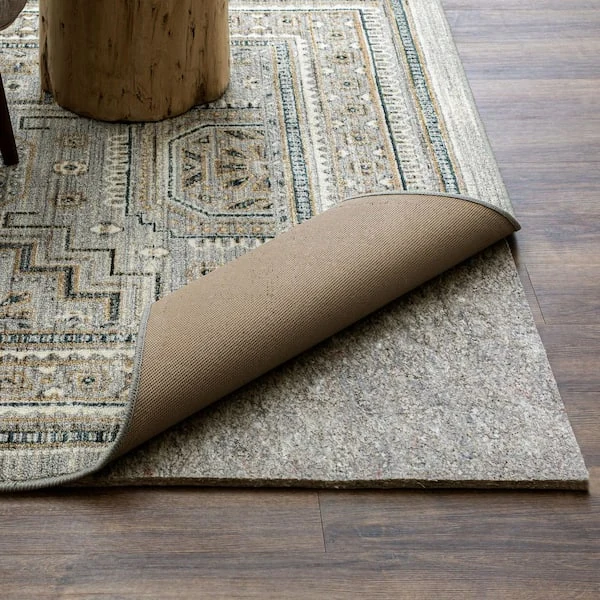
Mohawk Home Dual Surface Felt & Latex Non-Slip Rug Pad (1/4″)
- Dual-Surface Design: Natural rubberized backing grips hardwood; needle-punched felt top grabs the rug underside.
- Optimal 1/4″ Cushion: Adds noticeable softness underfoot without making rugs a tripping hazard or jamming standard doors.
- Certified Safe: Green Label Plus certified; zero off-gassing, petroleum plasticizers, or floor-staining chemicals.
- Easy to Custom Cut: Trims cleanly with sharp kitchen shears to fit any standard or non-standard rug size.
If you want the most versatile, universally trusted rug pad on the market, the Mohawk Home Dual Surface is the benchmark. With tens of thousands of verified positive ratings, it solves both rug slipping and floor scratching in one simple package.
The secret is its reversible engineering: when placed on hardwood, laminate, or tile, you lay the textured rubber backing down against the floor. This prevents even active family pets or kids from sliding the rug. The plush felt side faces up toward your rug, where needle-punched fibers interlock with your rug’s weave to stop wrinkles and center bunching.
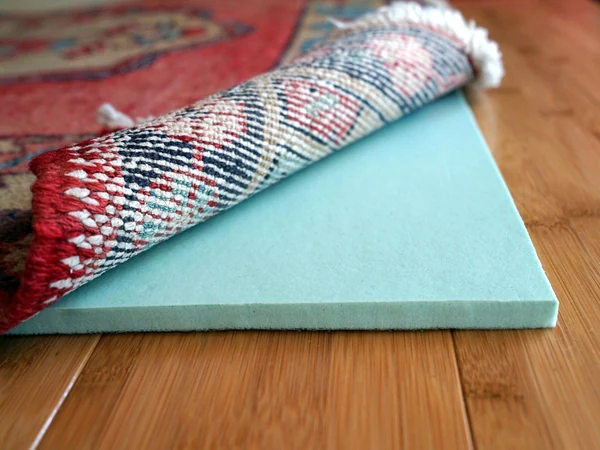
RugPadUSA Cloud Comfort Memory Foam Rug Pad (7/16″)
- Hotel-Grade Memory Foam: Made from 100% visco-elastic memory foam engineered for maximum plush comfort.
- Superior Sound Dampening: Drastically absorbs footsteps and echo in primary suites and second-story bedrooms.
- Pure Hardwood Safety: Zero PVC, no phthalates, and no sticky chemical backings. Won’t stain polyurethane finishes.
- Moisture & Spill Barrier: Closed-cell foam resists pet accidents and spills from seeping into wood floorboards.
If you have a large area rug anchored under a queen or king bed, or in a cozy living room sitting area where furniture already prevents slipping, your priority isn’t rubber grip—it’s pure, cloud-like luxury underfoot. The RugPadUSA Cloud Comfort is specifically designed for this purpose.
At 7/16-inch thick, stepping onto an area rug paired with this pad feels like walking on a five-star hotel mattress. Because heavy bed posts and nightstands anchor the rug in place, you don’t need rubber traction. Note: Because of its generous thickness, do not place this pad in high-traffic entryways where swinging interior doors need to clear the rug.
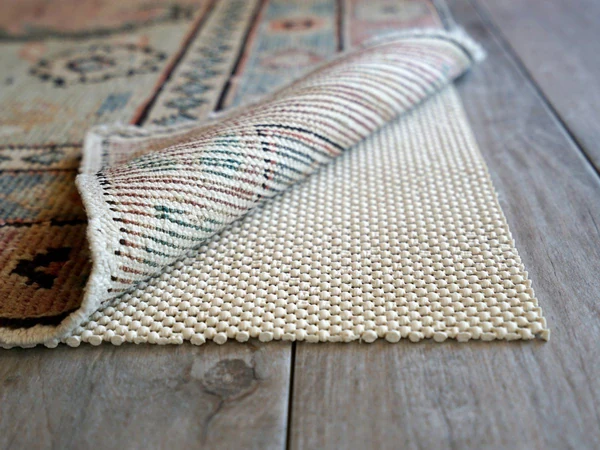
RugPadUSA Super Lock 100% Natural Rubber Rug Pad
- Ultra Low-Profile: Just 1/16″ thin—doors glide completely unobstructed without catching or jamming.
- 100% Real Tree Rubber: Sourced from natural rubber trees; contains no synthetic PVC or petrochemical adhesives.
- Industrial Anti-Slip Grip: Keeps hallway runners, kitchen mats, and small accent rugs locked firmly to slick hardwood.
- Open-Weave Ventilation: Allows wood floors to breathe naturally and makes routine vacuuming effortless.
Have an entryway runner, hallway rug, or bathroom accent that constantly slides underfoot or catches on the bottom of the door? The RugPadUSA Super Lock is the ultimate low-clearance solution.
While cheap plastic waffle pads look similar, the Super Lock is crafted from pure, sustainably harvested natural tree rubber. It delivers twice the gripping power of synthetic plastics without leaving sticky grid marks or chemical residue on your polyurethane finish.
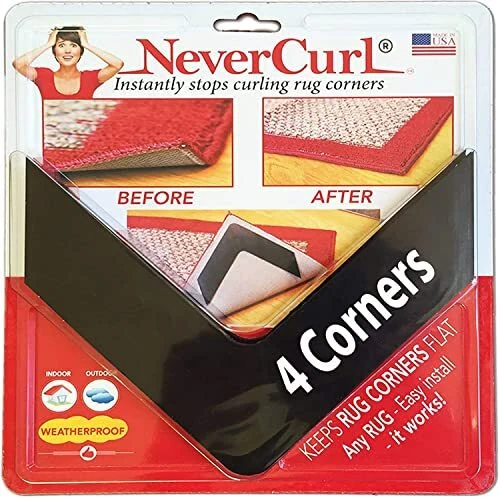
NeverCurl V-Shape Rug Corner Grippers (4-Pack)
- Stops Ugly Corner Curling: Heavy-duty V-shaped polymer braces force flipped-up rug corners to lie flat instantly.
- Adheres to Rug Only: Premium adhesive bonds securely to the rug underside; the floor-facing surface is non-adhesive rubber.
- Zero Floor Damage: Won’t pull up wood finish, leave gummy tape residue, or peel polyurethane when moved.
- Weatherproof & Washable: Works on indoor area rugs, outdoor patio rugs, and even machine-washable runners.
Sometimes you don’t need an entirely new full-size rug pad—you just need to stop the four corners of your area rug from dog-earing and tripping guests. The NeverCurl V-Shape Grippers are hands-down the best $14 problem-solver on Amazon.
Unlike double-sided carpet tape (which leaves stubborn adhesive gunk on hardwood), NeverCurl uses a peel-and-stick backing that bonds only to the rug fabric. The bottom that touches your floor is a high-traction rubber foot that holds the corner flat against the wood without sticking to it.
Room-by-Room Guide: How to Pick the Right Thickness
A common mistake is buying the same rug pad thickness for every room. In reality, each living zone requires a specific balance between cushion and door clearance:
- Bedrooms (7/16″ to 1/2″): Choose maximum cushion. Because beds anchor the center of the rug, slippage is minimal. A thick memory foam pad transforms a standard low-pile rug into a plush sanctuary for bare feet.
- Living & Dining Rooms (1/4″): Choose a balanced dual-surface felt and rubber pad. 1/4-inch thickness provides excellent sound dampening and cushion while preventing dining chairs from wobbling or digging into the pile.
- Entryways & Hallways (1/16″ to 1/8″): Choose a pure natural rubber low-profile pad. Any pad thicker than 1/8-inch in front of an exterior or interior door will jam the door swing and cause fraying.
The 1-Inch Trimming Rule: How to Fit Your Pad Perfectly
Never place a rug pad that is the exact same size as your area rug! If the pad extends all the way to the edge, the thick perimeter will lift the rug border off the floor, creating an unsightly raised lip that catches toes and trips people.
The Golden Trimming Formula: Your rug pad should be trimmed to be 1 to 2 inches smaller than your rug on all four sides.
For example, if you have an 8′ × 10′ area rug (96″ × 120″), your rug pad should be trimmed to approximately 7’10″ × 9’10″ (94″ × 118″). This allows the edges of your rug to taper gracefully down to meet the hardwood floor, hiding the pad completely while eliminating tripping edges.
How to Trim It in 3 Easy Steps:
- Unroll and Position: Lay your rug pad on the clean hardwood floor and place the area rug directly on top, centering it carefully.
- Fold Back and Mark: Fold back one side of the rug. Use a tape measure and a marker or chalk to draw a line 1 to 1.5 inches inside the rug’s outer edge.
- Cut with Heavy-Duty Shears: Use sharp utility shears or kitchen scissors to cut along the chalk line. Avoid box cutters directly over hardwood, which can slip and scratch your wood planks!
5 Costly Rug Pad Mistakes Homeowners Make
Avoid these common traps to keep your floors and rugs in pristine condition for years:
- Placing a Rug Pad on Freshly Finished Wood: If your hardwood floors were recently stained or finished with polyurethane, wait at least 30 days for the finish to fully off-gas and cure before laying any rug pad. Trapping uncured fumes will ruin the finish regardless of the pad material.
- Using Carpet Tape on Hardwood: Never use double-sided adhesive carpet tape directly on hardwood floors. The acrylic adhesive bonds permanently to polyurethane and leaves yellow stains that require chemical solvents or sanding to remove.
- Skipping Pads Under Heavy Furniture: Many believe that a heavy king bed or sectional couch eliminates the need for a rug pad. While the furniture stops sliding, dirt still sifts through the rug weave. Without a pad, that grit grinds into your floor finish like sandpaper.
- Buying Cheap PVC Mesh Pads: As detailed above, cheap plastic mesh pads off-gas plasticizers that chemically fuse waffle prints into floorboards. Always verify 100% natural rubber or recycled felt.
- Ignoring Radiant Heated Floors: If you have in-floor radiant heating, synthetic plastics degrade even faster under continuous warmth. Only use breathable natural rubber or heat-certified felt pads like Mohawk Home.
Need more bedroom and home styling inspiration? Check out our guides on how to choose the right rug size for a queen and king bed, how to style a bedroom like an interior designer, and how to make small rooms feel larger.
Frequently Asked Questions
What rug pad material is safest for hardwood floors?
100% natural rubber and recycled condensed felt are the safest materials for hardwood floors. Natural tree rubber provides high-traction grip without glues or plasticizers, while dense felt provides soft cushioning and sound absorption without chemical off-gassing.
Will a rubber rug pad ruin hardwood floors?
Natural rubber will not ruin hardwood floors. However, cheap synthetic rubber or PVC mesh pads containing chemical plasticizers can react with polyurethane finishes, causing sticky residue, discoloration, and permanent waffle marks. Always choose certified natural rubber or felt.
Which side of a dual-surface rug pad goes down on hardwood?
On hardwood, tile, and laminate floors, the textured rubber side goes down against the floor to prevent slipping, while the soft felt side faces up to interlock with the rug backing. When used over wall-to-wall carpeting, flip it so the felt side faces down.
How thick should a rug pad be?
For bedrooms and living rooms, a 1/4-inch to 7/16-inch pad provides the ideal balance of plush comfort and soundproofing. For hallways, entryways, and areas near swinging doors, use an ultra-thin 1/16-inch to 1/8-inch natural rubber pad to prevent door jams.
How much smaller should a rug pad be than the area rug?
A rug pad should be trimmed to be approximately 1 to 2 inches smaller than the rug on all sides. This keeps the pad completely hidden from view and allows the perimeter of the rug to taper smoothly to the floor, eliminating tripping hazards.

Olivia Bennett is the Lead Content Editor at The Dailey House. She specializes in interior styling, bedroom aesthetics, and creating spaces that feel intentional without feeling out of reach. With over a decade of experience covering home interiors, Olivia believes every room should tell you something about the person who lives in it.