 Save
Save
Modern Farmhouse is one of those styles that looks effortless when it’s done well — and weirdly off when it isn’t. The gap between a genuinely warm, lived-in farmhouse room and a Pinterest cliché is smaller than you’d think. This guide covers everything: the colours that actually work, the furniture worth investing in, room-by-room advice, and the mistakes that make it look staged rather than real.
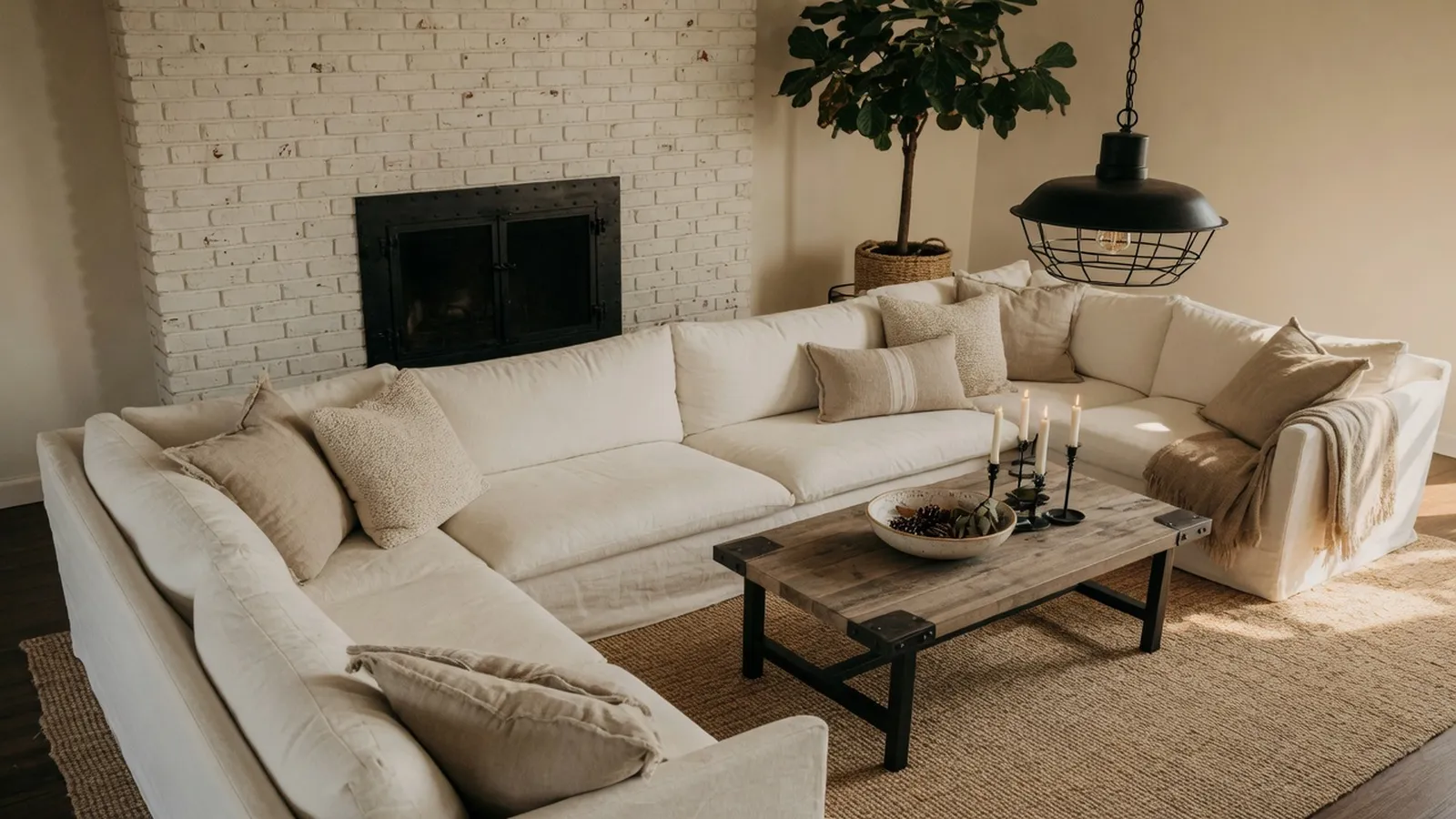
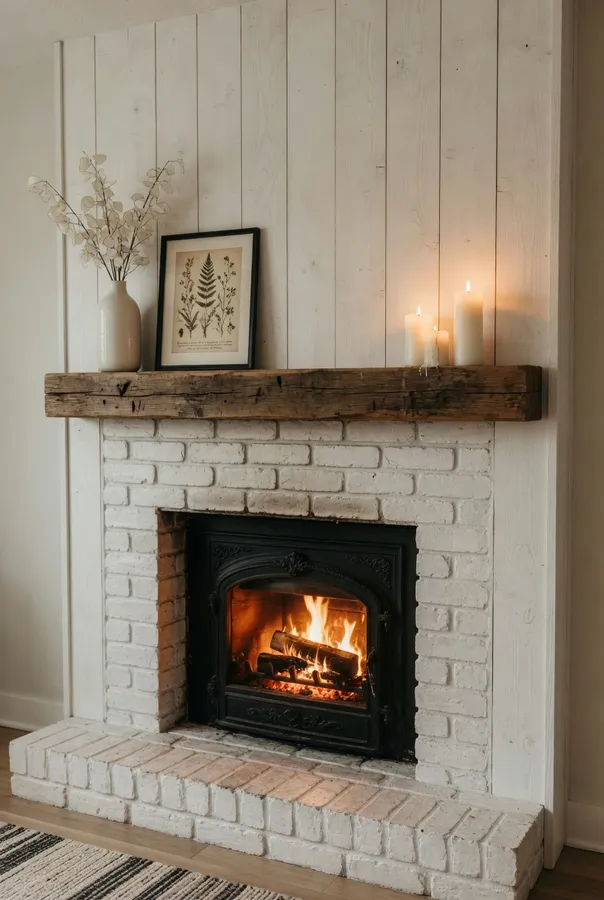
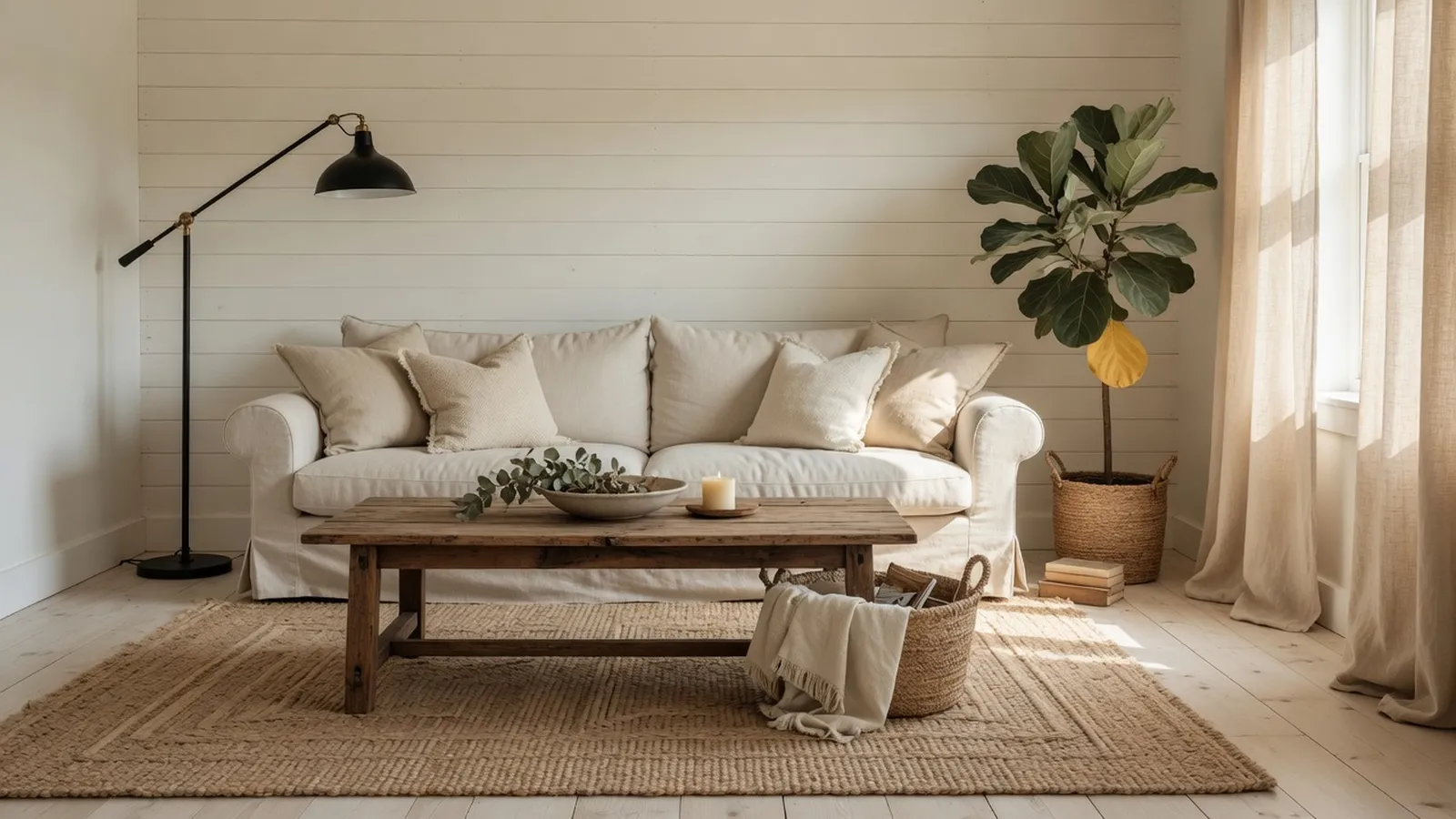
A well-done Modern Farmhouse living room — warm, layered, and genuinely comfortable rather than staged.
Modern Farmhouse sits at the intersection of two things: the warmth and character of an old rural home, and the cleaner, more structured sensibility of contemporary design. It’s not a strict historical style — it’s more of a feeling. Comfortable without being sloppy. Collected without being cluttered. Natural without being rustic.
The “modern” part matters more than people realise. Without it, you end up in straight-up country territory — mason jars everywhere, roosters on the walls, distressed everything. The modern edit is what pulls it into this decade. Clean lines in the furniture. Restraint in the colour palette. Intentionality about what actually goes in the room.
What makes it so consistently popular on Pinterest and in real homes is that it suits how people actually want to live. It’s cosy but not fussy. It works in old houses and new builds. It photographs beautifully. And it doesn’t require an enormous budget — a lot of the aesthetic comes from texture, material, and proportion rather than expensive individual pieces.
The core tension of Modern Farmhouse: every element should feel like it has been in the room for a while, but the room itself should look like someone with a good eye put it together. That balance — worn versus curated — is what separates the style from both sterile minimalism and cluttered country.
Modern Farmhouse is recognisable because of a specific combination of materials, tones, and forms. Get these right and the room reads correctly even if you swap out individual pieces.
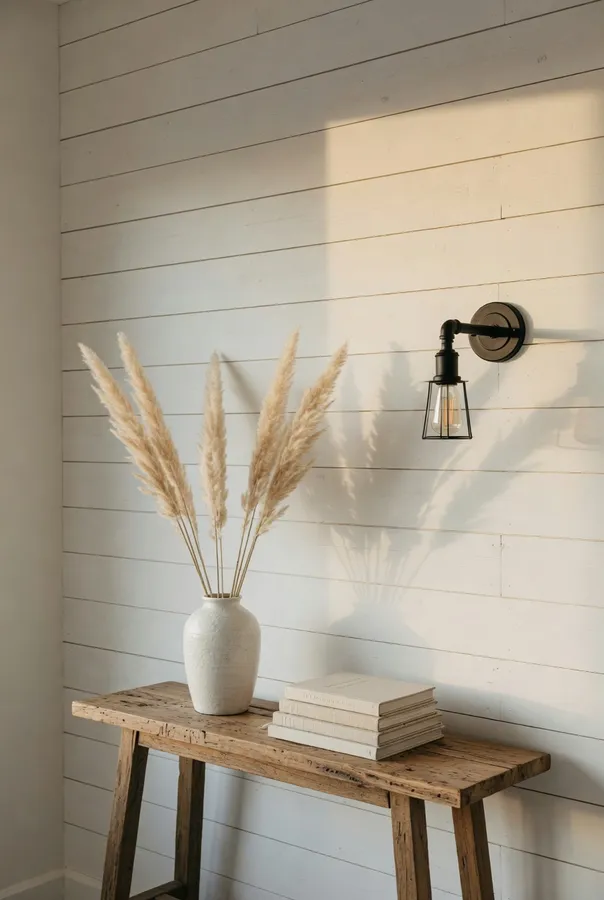
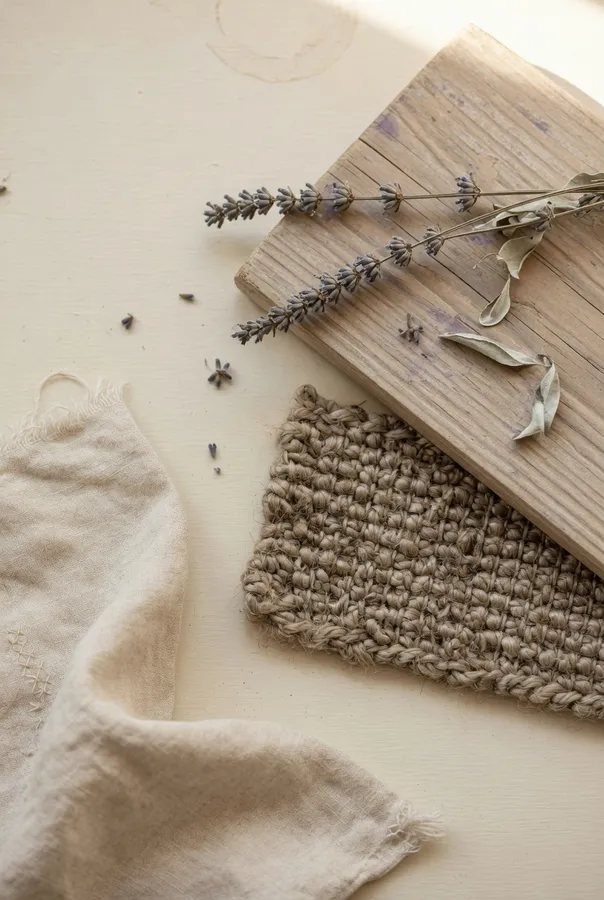
Left: shiplap done right — one wall, properly styled. Right: the textures that define the palette — linen, jute, and raw wood.
The palette is warm and restrained. Most rooms in a well-done Modern Farmhouse home use just two or three tones — and they are all from the same warm family. The drama comes from texture and contrast (wood against white, black hardware against cream), not from colour.
Hover the swatches to see each colour. The near-black is used only as an accent — hardware, light fixtures, window frames.
For walls: Farrow & Ball All White No.2005 (the warm white to know), Benjamin Moore White Dove OC-17 (the most popular farmhouse white in the US), Sherwin-Williams Accessible Beige SW7036 (for rooms where you want more warmth), and Farrow & Ball Elephant’s Breath (the greige that works in every room it’s ever been in).
For trim and ceilings: Always use a warmer white than you think you need. If your walls are White Dove, your trim can be Chantilly Lace. If your walls are a warm cream, your trim can be the same colour in eggshell versus flat — the sheen difference is enough to define the trim without a colour contrast.
Want a palette matched to your specific room’s light and existing furniture? Take the free Room Colour Palette Quiz → It takes 60 seconds and gives you three colours with exact paint names.
The living room is where Modern Farmhouse either clicks or falls apart. The temptation is to do too much — shiplap on every wall, three different textures in every corner, signs everywhere. Resist it.
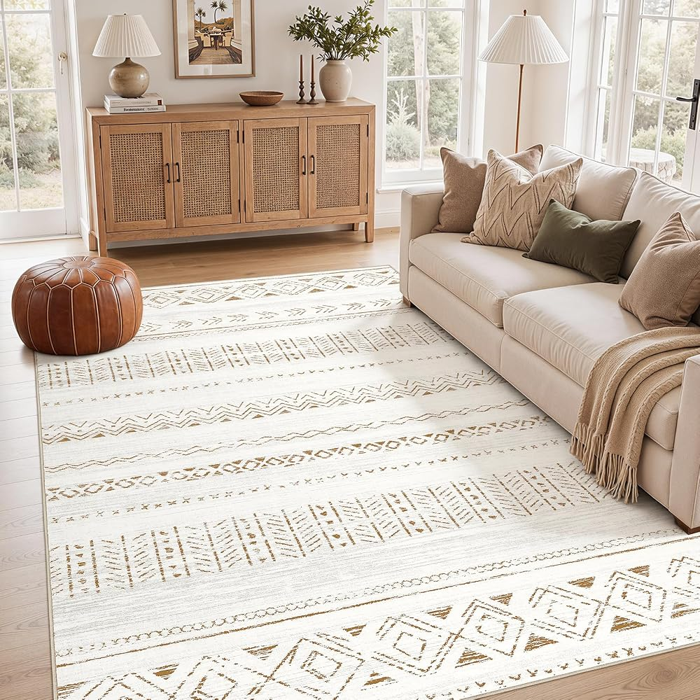
Start with a slipcovered sofa in linen or cotton — off-white or a warm greige. A single shiplap wall (usually behind the sofa or the fireplace wall) is more than enough. A large jute rug grounds the seating area. One or two vintage or antique accent pieces — an old wooden trunk as a coffee table, a worn leather armchair — provide the character. Everything else stays quiet.
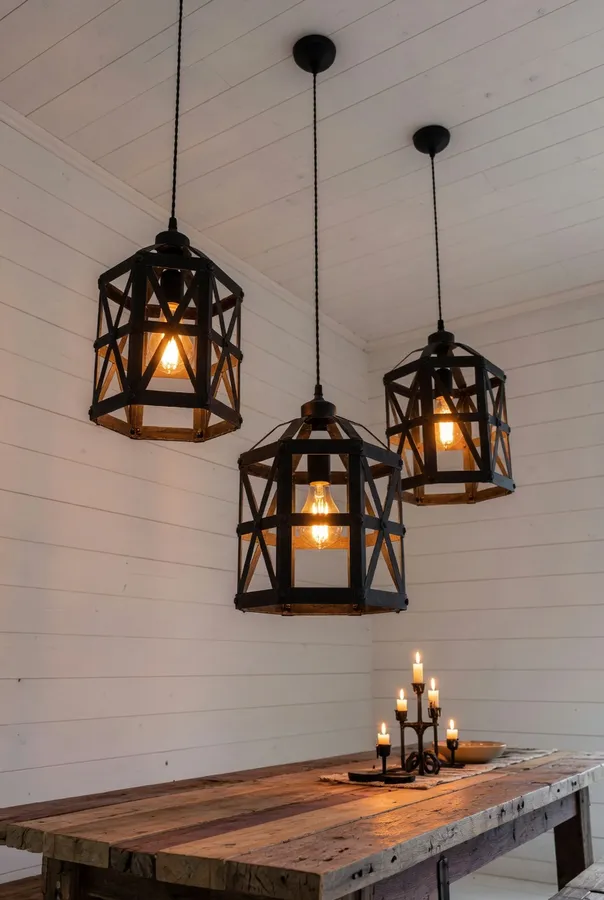
Lighting is where most people underinvest in this room. A statement pendant or chandelier in black metal or aged wood over the seating area does more for the farmhouse feel than almost any other single purchase. Skip the matching lamp sets. Mix a floor lamp with table lamps in different heights.
The fireplace wall is the most impactful single project in a farmhouse living room. White shiplap, a wood beam mantel, and a black iron firebox surround do most of the work.
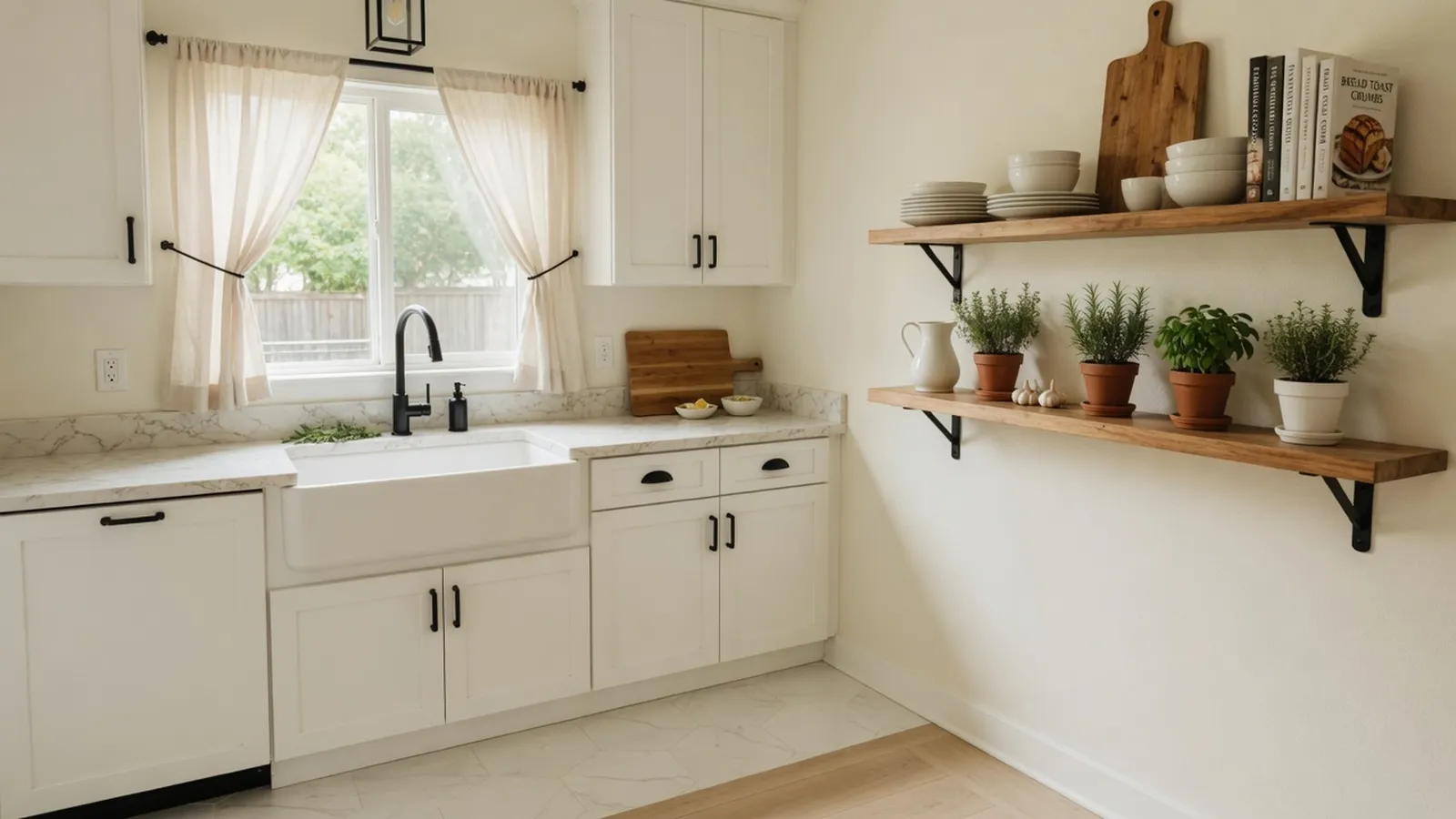
Modern Farmhouse kitchens are built around a few non-negotiable elements: the apron-front sink, open shelving on at least one wall, and Shaker-style cabinet doors in white or a muted sage. Everything else is secondary.
The countertop debate — butcher block versus quartz versus marble — comes down to how you cook. Butcher block is the most farmhouse-authentic and the warmest looking, but it requires maintenance. White quartz with subtle veining gives you the marble look without the anxiety. If you go marble, seal it religiously.
Open shelves work best when they’re genuinely edited. Three white plates, two ceramic pitchers, a wooden cutting board, and a few plants — that’s a shelf. Not seventeen items of varying height and origin. The shelf styling is what visitors actually look at, so get it right.
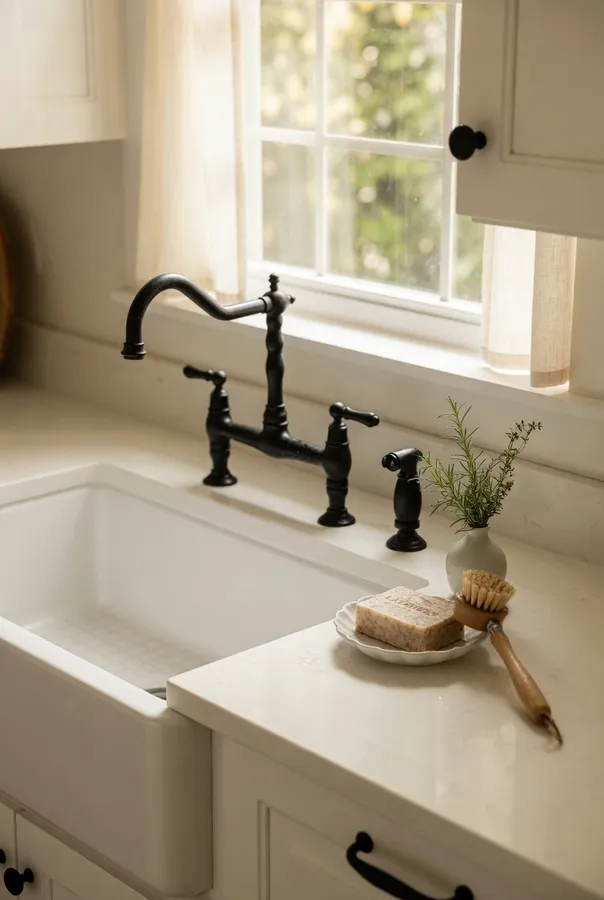
The apron-front sink is the single most defining element of a farmhouse kitchen. White fireclay with a matte black bridge faucet — everything else follows from here.
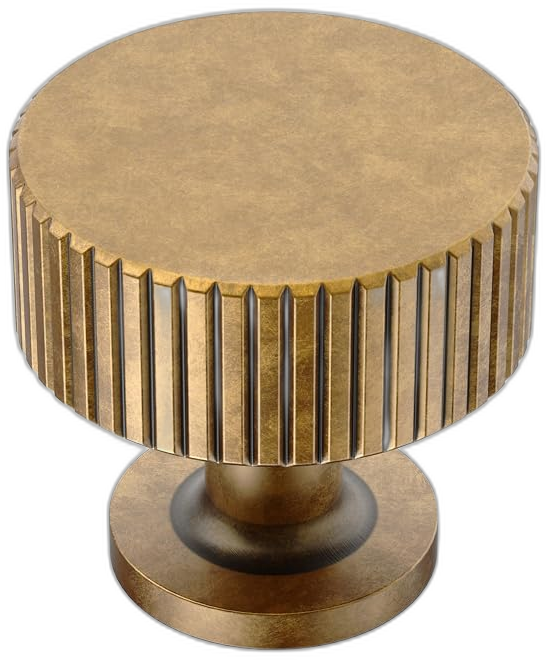
Hardware: matte black pulls and knobs throughout, or unlacquered brass if you want something warmer and more antique. Don’t mix metals unless one is clearly dominant.
The bedroom is the easiest room to get right in Modern Farmhouse — and the hardest to get wrong because the temptation to pile on layers is strongest here.
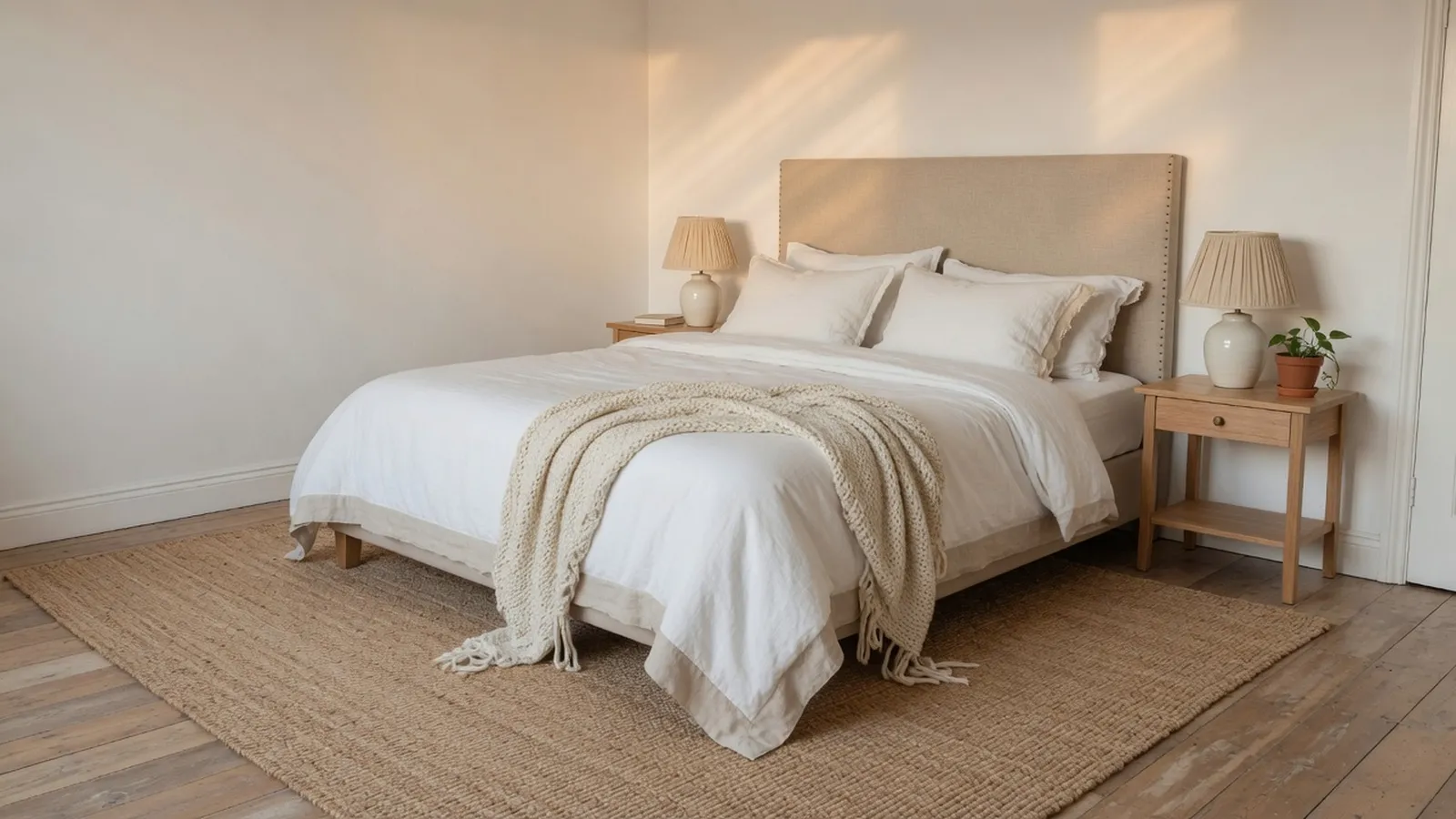
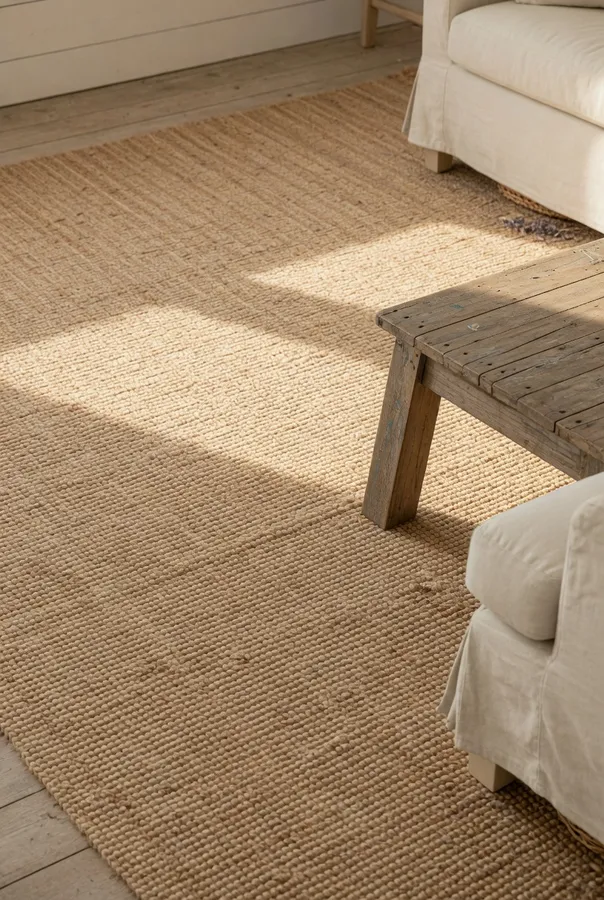
A linen duvet in white or oat is the foundation. Layer two or three pillows in complementary tones — don’t match everything, but keep them within the same warm family. A throw in a loose knit or waffle weave draped at the foot of the bed. Under the bed, a large jute or wool rug that extends at least 24 inches on both sides.
The headboard is the room’s statement piece. Upholstered in cream or light linen fabric, or in natural wood with simple joinery, it sets the tone. Skip tufting — it reads as traditional rather than farmhouse. Skip metal — that belongs in industrial or contemporary rooms.
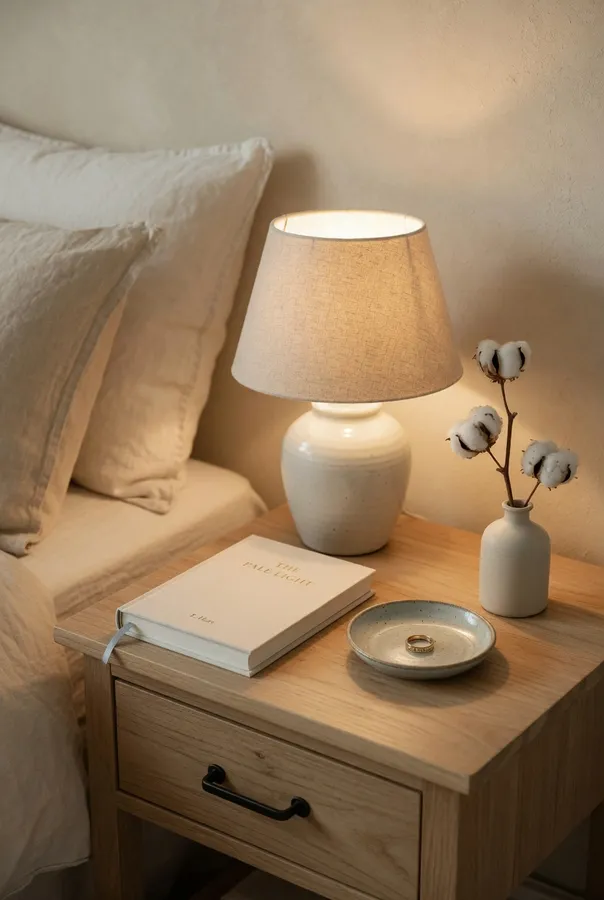
Left: the bedside table is a vignette — keep it to three or four objects maximum. Right: a jute rug is non-negotiable in a farmhouse room — the texture does the work that colour can’t.
One architectural detail (shiplap above the headboard, a reclaimed wood accent panel, or simply a beautifully plastered wall in a warm tone) is all the room needs to feel intentional.
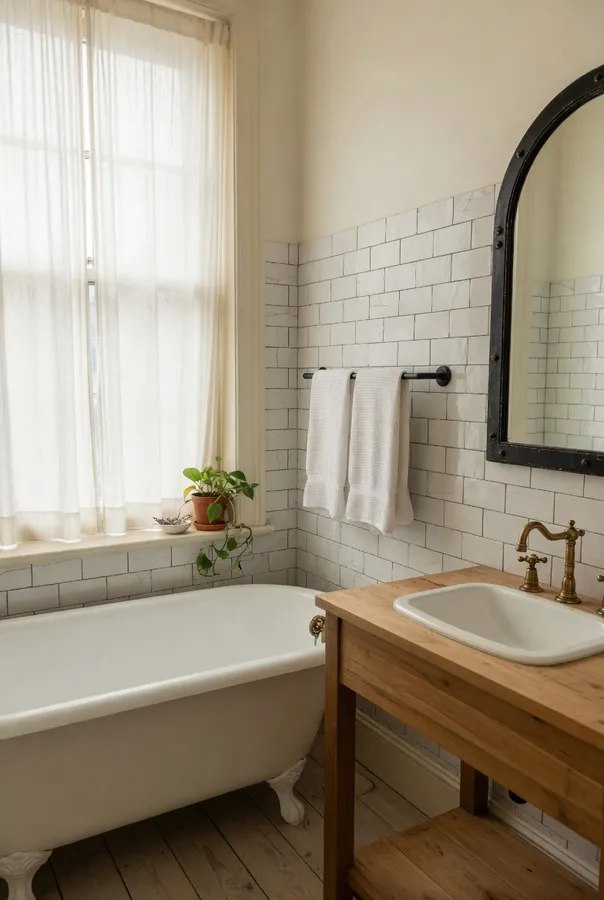
Modern Farmhouse bathrooms reward simplicity. A white ceramic or fireclay freestanding tub if the space allows. White subway tile with dark grout — either charcoal or black — for the shower surround. A vanity in a warm wood tone or painted in white with antique brass or matte black fixtures.
The mirror matters more in bathrooms than in any other room. An arched mirror in aged wood or black metal instantly reads farmhouse. A plain rectangular mirror reads generic. The difference in cost is small; the difference in outcome is significant.
Cotton waffle-weave towels in white or off-white, folded or hung simply. A small vintage stool. A ceramic soap dish. Bathrooms in this style are about restraint — three well-chosen objects look far better than a shelf of mismatched bottles.
You don’t need a lot of furniture for Modern Farmhouse — you need the right pieces. These are the ones that define the style and are worth spending more on, because cheaper versions rarely look right.
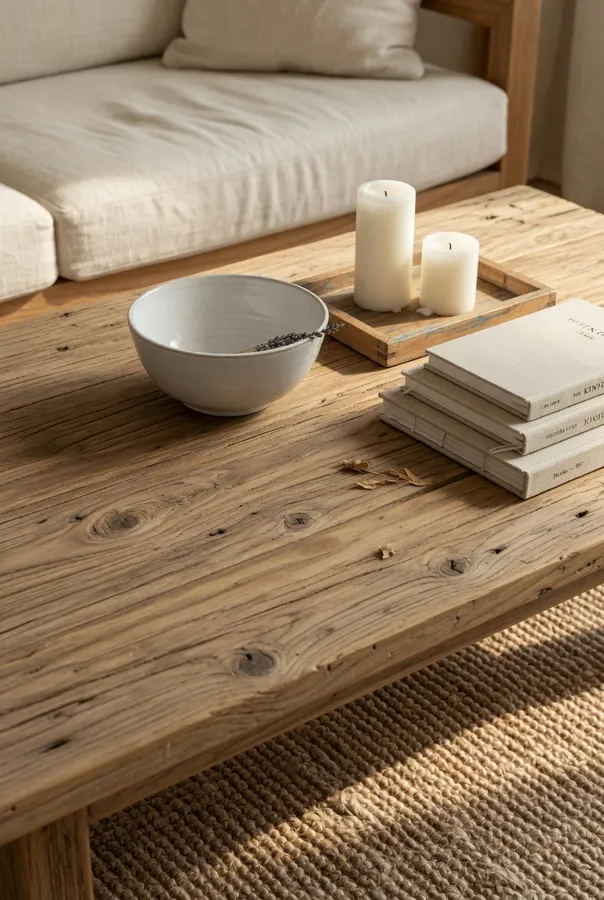
Left: genuine reclaimed wood reads immediately — the knots and grain are the point. Right: black metal pendants are the most impactful single purchase in a farmhouse kitchen or dining room.
Left: reclaimed wood — the real thing, with genuine knots and grain. Right: black metal pendants are the single most transformative light fixture choice in a farmhouse room.
Modern Farmhouse is the most imitated style on Pinterest, which means it’s also the most clichéd. These are the elements that instantly tip a genuine farmhouse room into parody territory.
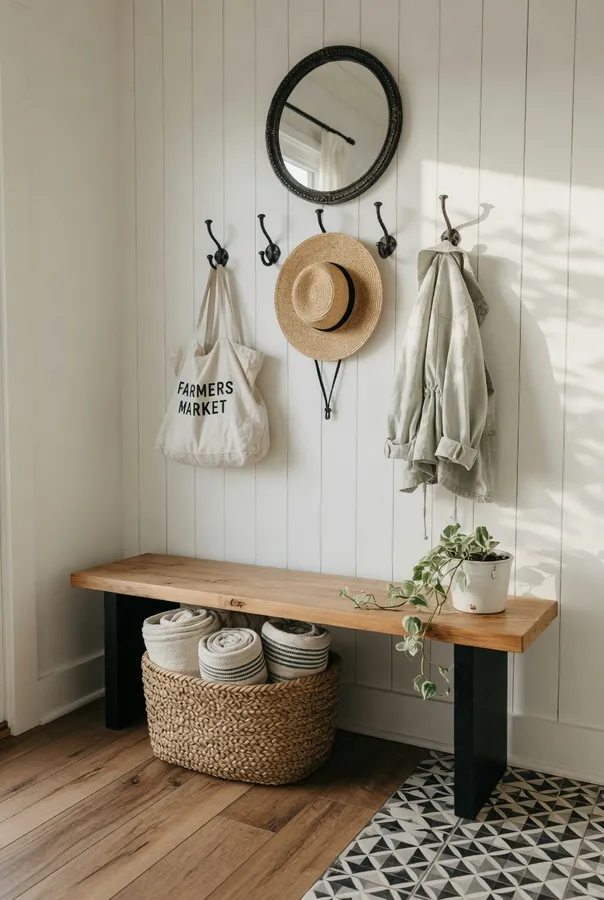
The entryway sets the tone for everything that follows — shiplap, black iron hooks, natural wood, and one round mirror is all it takes.
The best Modern Farmhouse rooms usually blend a second style in. Done right, this prevents the space from feeling like a mood board recreation. Here are the combinations worth knowing.
Take the free Interior Design Style Quiz — 8 questions and you’ll know exactly which style matches your taste, with a personalised colour palette and key pieces list.
Take the Free Style Quiz →The entryway sets the tone for everything that follows — shiplap, a wood bench, black iron hooks, and one plant is all it takes.

Olivia Bennett is the Lead Content Editor at The Dailey House. She specializes in interior styling, bedroom aesthetics, and creating spaces that feel intentional without feeling out of reach. With over a decade of experience covering home interiors, Olivia believes every room should tell you something about the person who lives in it.