

Your climate picks your tile before any brand does. A material rated perfect for a covered Arizona patio can crack apart in a Minnesota winter — and a tile built for direct sun somewhere sunny may fade fast anywhere with less UV to toughen it up first.
Here’s how to find the best patio floor tiles for your outdoor space, based on what’s actually under your feet and above your head — not just what looks good in a showroom photo.
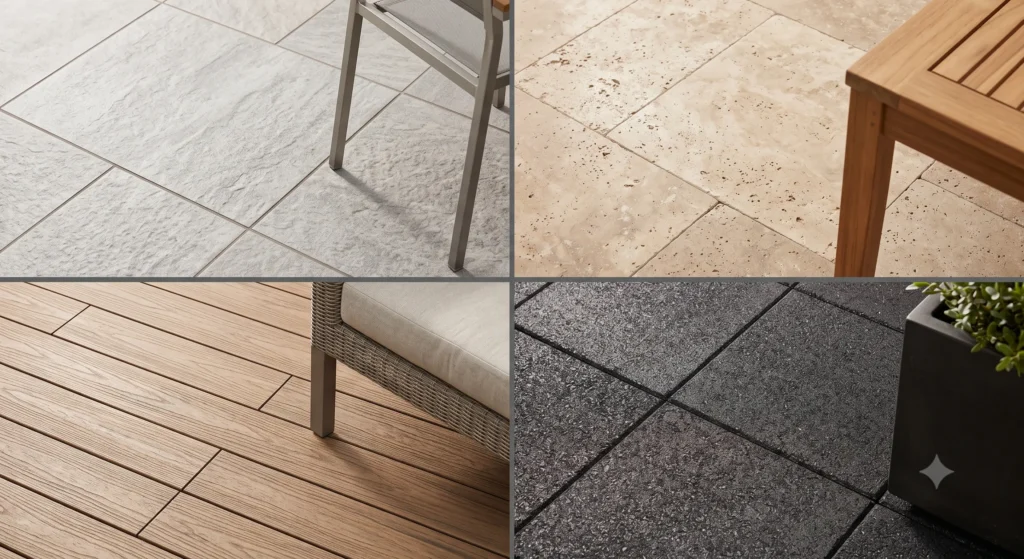
Best Patio Floor Tiles at a Glance
| Material | Cost per sq ft | Best For | Watch For |
|---|---|---|---|
| Porcelain Pavers | $3–$8 | Cold climates, long-term homes | Needs a level, prepared base |
| Natural Stone | $5–$15+ | Covered patios, high-end look | Slippery when polished; needs resealing |
| Composite Deck Tiles | $2–$6 | DIY installs, renters | UV rating varies a lot by brand |
| Rubber Pavers | $3–$7 | Pools, kids, pets | Retains heat in full sun |
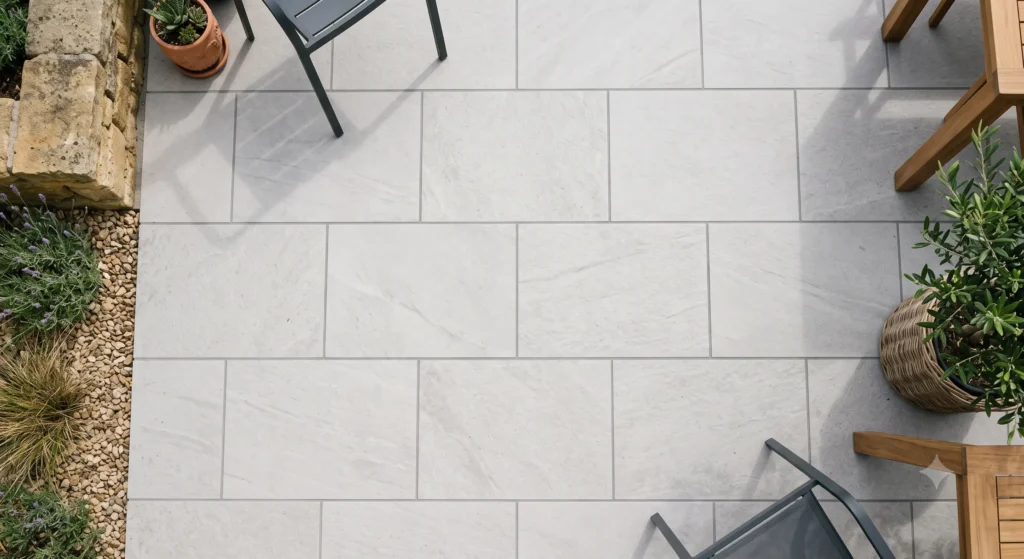
Porcelain Pavers: The Most Durable Patio Tile
Porcelain is the most durable outdoor tile available, full stop. It’s fired at extremely high heat, which makes it nearly non-porous. That means it won’t absorb water — so freeze-thaw cracking, the main way outdoor tile fails in cold climates, essentially isn’t a risk.
It also resists UV fading better than composite or rubber over years of direct sun exposure.
- Cost: $3–$8 per square foot (tile only, before installation)
- Best for: long-term homeowners, or any climate with real winters
- Watch for: porcelain needs a level, properly prepared base. Laid over an uneven slab, individual pavers can rock underfoot — that’s an installation issue, not a product flaw. Ask about pedestal systems if you’re tiling over an existing uneven surface; they let each paver sit level independently.
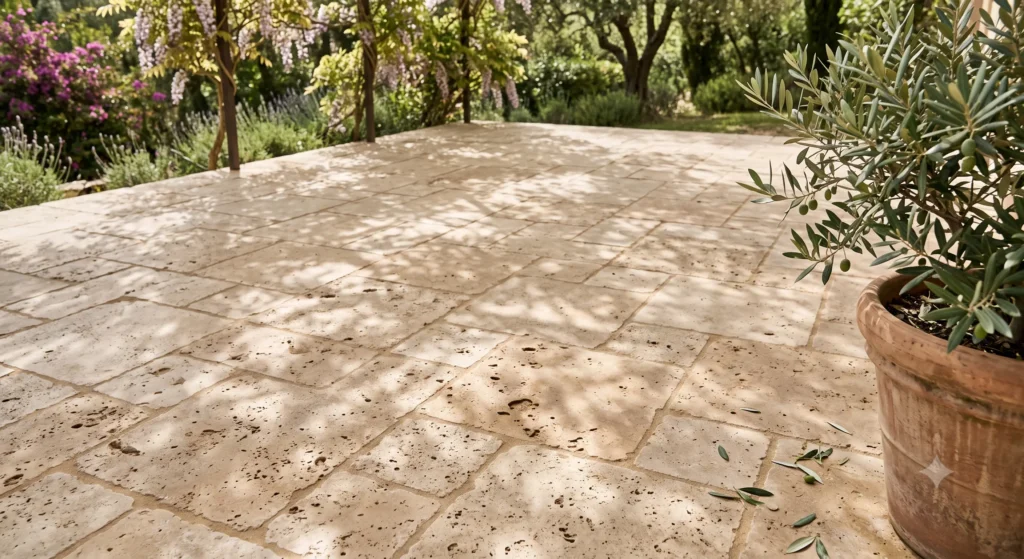
Natural Stone: Travertine, Slate, and Flagstone
Real stone is the traditional high-end choice, and it earns that reputation. No two pieces are identical — something porcelain and composite still can’t fully replicate, no matter how good the printing technology gets.
The tradeoff is porosity. Most natural stone needs sealing on installation and resealing every 1–3 years, or it will absorb water, stain, and in cold climates, crack from freeze-thaw the same way unsealed concrete does.
- Cost: $5–$15+ per square foot, depending on stone type. Travertine tends to run more budget-friendly; slate and flagstone run higher.
- Best for: covered or partially covered patios, where sealing maintenance stays manageable
- Watch for: stone gets genuinely slippery when wet. Look for a honed or tumbled finish rather than polished if the patio gets rain or pool splash.
Composite Deck Tiles: Best for DIY
Interlocking composite tiles — usually wood-plastic composite — are the easiest DIY option on this list. They click together with no mortar or adhesive, and they can go directly over an existing slab.
Quality swings hard by brand here. Cheaper composite can fade or turn brittle in high-UV climates within 2–3 years, while a well-formulated composite is rated for 15+ years outdoors.
- Cost: $2–$6 per square foot
- Best for: renters, or anyone who wants a full weekend install with zero cutting or mortar
- Watch for: check the UV rating and fade warranty specifically. This is where cheap and quality composite diverge most, and it’s rarely visible from a listing photo alone. A 10+ year fade warranty is a reasonable baseline.
Two well-reviewed options worth a look: THYOI Premium Acacia Wood Deck Tiles for a genuine wood-look finish, or EchoDeck Interlocking Patio Tiles for a larger all-weather set.
Rubber Pavers: Best Around Pools and Play Areas
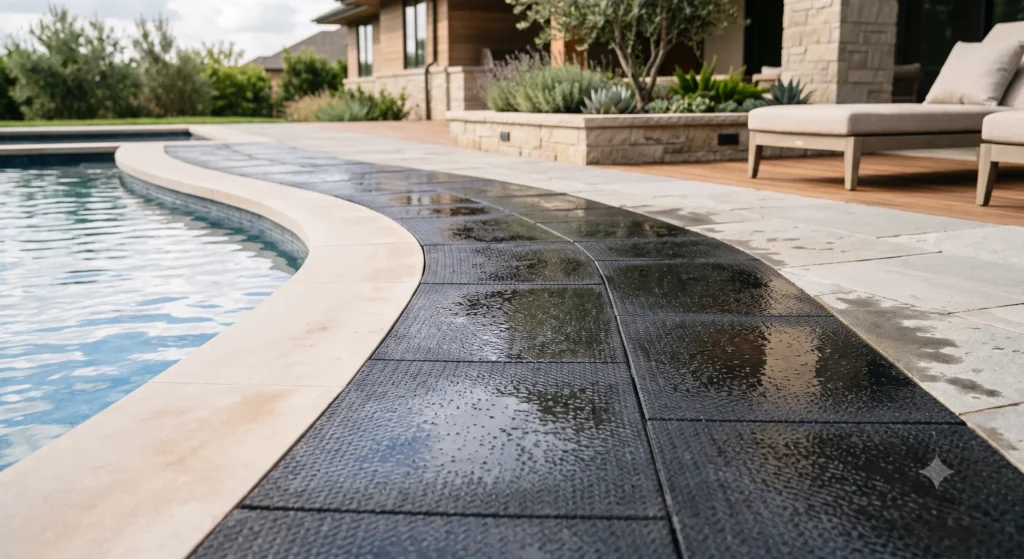
Made from recycled rubber, these are the softest option underfoot, and the most forgiving of an uneven or slightly cracked slab — the material flexes instead of cracking.
They’re also the best pick around pools or play areas, since they stay slip-resistant even when wet.
- Cost: $3–$7 per square foot
- Best for: households with kids, pets, or anyone prioritizing comfort over a showroom look
- Watch for: rubber retains more heat than stone or porcelain in direct sun. Worth considering carefully for uncovered, south-facing patios in hot climates. Lighter colors help offset this.
Which Patio Tile Is Actually Best for Your Space?
The comparisons above only help once you know your own climate, coverage, and budget. Answer three quick questions, and this tool narrows it down for you.
Which Patio Tile Fits Your Space?
Answer 3 quick questions for a material recommendation.
How to Choose Based on Climate and Budget
- Cold winters with freeze-thaw cycles: porcelain first, sealed natural stone second. Anything porous and unsealed is a real risk here.
- Covered or shaded patio: natural stone or composite both perform well without the UV-fade concern that comes with direct sun.
- Full sun, hot climate: porcelain resists fading best. If you go composite, check UV ratings closely.
- DIY weekend project, no experience: composite or rubber interlocking tiles — no mortar, no cutting, no cure time.
- Long-term investment, hiring installation: porcelain or natural stone, professionally laid on a proper base.
- Budget is the deciding factor: composite covers the most square footage per dollar, with a shorter realistic lifespan than porcelain as the tradeoff.
Installation Cost Adds Up Fast — Plan For It
Every price above is materials only. Professional installation typically adds $5–$15 per square foot on top, depending on material and whether the existing surface needs prep work first.
This is exactly why interlocking composite and rubber tiles stay so popular for DIY — skipping the labor cost is often a bigger savings than any difference in material price.
Can You Mix Tile Types on One Patio?
Yes, and it’s an increasingly common design move. Porcelain or stone in the main seating zone, with a cheaper composite or gravel border defining the edges, gives you a premium look without covering the full footprint in your most expensive material.
Key Takeaways
- Porcelain is the most durable choice and the safest bet for cold, freeze-thaw climates
- Natural stone looks the best but needs regular resealing to avoid cracking and staining
- Composite is the easiest DIY option — but check the UV/fade warranty before buying
- Rubber pavers are the top choice around pools, kids, and pets
- Installation typically adds $5–$15 per square foot beyond material cost
- Mixing materials — premium in the center, budget at the edges — is a legitimate design strategy, not a compromise
FAQ
Which patio tile is least slippery when wet? Textured or tumbled-finish porcelain and honed natural stone both perform well. Avoid polished stone finishes near any water source — pools, hot tubs, or spots that get regular rain without cover.
Can you mix tile types on one patio? Yes. Porcelain or stone in the main seating zone with a composite or gravel border at the edges is a common, budget-friendly design choice.
How do I know if my climate has real freeze-thaw risk? If your area regularly crosses above and below freezing repeatedly through winter — rather than staying consistently below freezing for the whole season — that’s the freeze-thaw cycle that damages porous materials. Consistently cold climates are actually gentler on unsealed stone than ones that thaw and refreeze often.
What’s the cheapest patio tile that still lasts? A well-formulated composite with a 10+ year fade warranty offers the best balance of low cost and real longevity. Cheaper unrated composite can fail within 2–3 years in high-UV climates.
Do porcelain pavers need sealing like natural stone does? No. Porcelain’s low porosity means it doesn’t need sealing the way natural stone does, which is part of why it costs less to maintain over time despite a similar or lower upfront price.

Daniel Carter covers the practical side of home improvement at The Dailey House — drainage fixes, DIY yard projects, patio makeovers, and the kind of weekend builds that actually get finished. If there's a smarter or cheaper way to do it, he's tested it.