

Your living room is where the cottage core farmhouse look either lands or doesn’t. It’s the biggest room, the one guests see first, and the one where small mistakes — a harsh light, a wrong texture, furniture pushed to the walls — quietly undo everything else you’re doing right.
The good news: you don’t need to redo the whole room. The ideas below are grouped into four layers. Start with one layer. Let the next one build on it. Skip what doesn’t fit your space. That slow, collected approach is the look.

1. Seating & Layout — The Foundation
Every room needs the bones right before the styling layer works. These four ideas get the seating and layout right for a cottage core living room, starting with the single most important piece.
1. A Slipcovered Sofa in Natural Fabric
This is the most important piece in the room — not the most expensive necessarily, just the one everything else works around. A slipcovered sofa in cotton or linen checks every box: it softens with use, it wrinkles (that’s the look), and the cover comes off for washing. That last one matters more than you think in a living room that gets daily use.
Look for a loose slipcover, not a fitted one. Loose means it’s designed to be removed and that rumpled, relaxed fit is intentional. Tight slipcovers or upholstered-only sofas read more modern and are harder to clean. Color-wise, go for natural cream, oatmeal, or a very soft sage. Avoid pure white — it shows every dog paw and coffee drip, and the whole point of this look is that it stays lived-in without looking dirty.

2. A Cane-Back or Rattan Accent Chair
One accent chair in cane, rattan, or bentwood adds more visual texture to a room than any throw pillow can. It’s light, breathable, and brings in the natural-material layer that defines the whole cottage core look. Place it at an angle to the sofa, not squared off, with a small side table beside it. This creates a conversation nook without needing a second sofa.
Where to find one: thrift stores and estate sales have cane-back chairs for a fraction of retail. A fresh coat of milk paint on the frame — in cream or a faded sage — makes a tired secondhand piece look intentional and on-style.

3. A Coffee Table Worth Looking At
Your coffee table sits at the center of the room, literally. A reclaimed-wood trunk works well. So does a vintage blanket chest. So does a table with turned wood legs and a worn painted finish. The key: skip the glass tops and mirrored surfaces. They read modern, show fingerprints, and don’t fit this look at all. Look for wood with visible grain, a slightly distressed paint finish, or a warm stone top.
A curved or oval shape softens the room more than a rectangle does. That’s a small detail that makes a genuine difference when you’re standing in the room versus looking at a photo of it.

4. An Upholstered Ottoman for Extra Seating
An ottoman pulls double duty: extra seating when you have guests, a footrest for everyday use, and a surface for a tray holding a book and a candle. Pick one in a warm linen or a textured weave. Skip leather — it reads modern farmhouse, not cottage core. A round ottoman in cream or oatmeal is the most versatile shape here. It softens a room full of straight lines without taking up the visual weight of another chair.

2. Walls, Windows & Backdrops
These four ideas change the feel of the room without moving a single piece of furniture. They work on the background — what the eye sees when it looks past the sofa.
5. An Arched Mirror as the Focal Point
An arched mirror above the fireplace or a console table is one of the fastest ways to signal cottage core without adding clutter. The curve breaks up the straight lines of the wall. It bounces light around the room. And it reads as architectural — like it was always there, not added as an afterthought. Look for a wooden frame in a warm tone. Skip gold or silver metal frames, which lean more traditional or mid-century depending on the style.
No fireplace? Lean a large arched mirror against the wall instead of hanging it. That casual lean is cottage core by definition — collected, not decorated.

6. Layered Linen Curtains
Single-panel curtains look thin. Blackout curtains look like a bedroom. What works here is two layers: a linen or cotton sheer against the window, and a heavier opaque linen panel on the outside. The sheer diffuses harsh daylight into a soft glow. The outer panel adds weight and frames the window. Together they make the room feel instantly softer and more finished. Hang the rod as high as the ceiling allows, not right above the window frame. That tricks the eye into thinking the room is taller than it is.

7. A Gallery Wall of Botanical Prints
Vintage botanical prints — ferns, wildflowers, herbs — are practically the wallpaper of the cottage core aesthetic. They cost very little to source. The best place to find them is old books from thrift stores or free botanical illustration archives online. Frame them in simple wood frames that don’t match exactly. Mix the sizes: one large print flanked by two smaller ones reads better than a grid of identical frames. Arrange them on the floor first before putting a single nail in the wall.

8. Beadboard or Shiplap Below Chair Rail
This is the one architectural change on this list, and it’s genuinely worth considering. Adding beadboard or shiplap to the lower third of your wall — below a chair rail — adds the exact texture and warmth that defines a cottage interior. It doesn’t require a contractor if you use peel-and-stick beadboard panels, which have improved dramatically in quality in recent years. Paint it cream, warm white, or a very pale sage. Leave the upper wall in the same color family but a lighter shade. That contrast is what makes the room feel finished rather than flat.

3. Texture, Textiles & the Styling Layer
This is the layer that makes a room look styled rather than just furnished. It’s all about what you add on top of the bones. These three ideas are easy to change with the seasons or your mood.
9. Chunky Knit Throws and Mixed-Texture Pillows
A chunky cable-knit throw draped over the corner of the sofa does more visual work than any single decor object in the room. The thickness and the open weave add contrast against a smooth linen slipcover. Pair it with pillows in three textures: one linen, one velvet (in sage or antique rose), and one woven or embroidered. Three pillows is the right number for a standard sofa. More than that starts to look like a bedding section at a department store. Stick to the cottage core palette — cream, sage, antique rose, terracotta — and vary only the texture, not the color family.

10. A Woven Jute or Seagrass Rug
A vintage-style patterned rug is a classic cottage core choice, but there’s another option that works as well or better in a living room: a natural-fiber rug in jute, seagrass, or sisal. These bring texture to the floor without competing with the patterns on your pillows, throws, and botanical prints. They’re durable, affordable, and naturally warm-toned. Layer a smaller wool or patterned rug on top for a collected-over-time look. That rug-on-rug layering is one of the most recognizable cottage core styling tricks, and it costs nothing extra beyond the two rugs you’d own anyway.

11. A Mantel or Console Styled With Collected Objects
If you have a fireplace mantel, it’s the natural focal point for styling. Keep it sparse by design: three to five objects, grouped in odd numbers. A stack of old hardcover books. A single dried floral arrangement in a stoneware vase. A couple of candlesticks at different heights. That’s enough. The whole point is that it looks like it came together over time, not like a styled shelf from a furniture catalog. No mantel? A narrow console table against any wall does the same job. Style it the same way and treat it as the room’s secondary focal point.

4. Lighting & Atmosphere
Lighting is the most underestimated layer in any room, but especially in a cottage core living room. The wrong light — harsh overheads, cool white bulbs — undoes everything the textiles and the palette are doing. These three ideas fix that.
12. Warm-Toned Table Lamps With Fabric Shades
Overhead lights are the enemy of this look. A single ceiling fixture casts shadows and makes the room feel flat after dark. Replace it with two or three table lamps placed at different heights around the room. The shades should be fabric — linen, cotton, or paper — not glass or metal. Fabric shades soften and warm the light, while hard shades throw a harsher glow. Look for lamps with ceramic or wood bases on the secondhand market; they’re easy to find and usually cheaper than new. Fit them all with warm-white bulbs (2700K). Cool white bulbs make the whole room feel like a waiting room, no matter how good everything else is.

13. A Collection of Candlesticks at Varying Heights
Nothing warms a room after dark faster than real candlelight. A cluster of candlesticks in wood, brass, and ceramic — all different heights — grouped on the mantel or coffee table is pure cottage core. They don’t all need to be lit at once. The visual weight of the candles themselves does the work even when they’re unlit. Stick to cream, ivory, and beeswax tones. Avoid colored or scented candles in bright packaging, which look like a drugstore impulse buy rather than a collected object.

14. A Floor Lamp That Reads as Furniture
Most floor lamps are purely functional — a bare pole with a shade on top. For this look, the lamp itself should contribute. A wooden tripod base. A turned-wood column. A brass or ceramic body that could pass for an antique. The shade should be large, linen, and cream or oatmeal. Arc floor lamps and sleek modern designs are the wrong shape here. Place it near the reading chair or the end of the sofa, where it fills the corner with a soft glow rather than lighting the whole room.

The Palette That Makes All of This Work Together
Every idea above works best when the colors stay in the same family. Cream and oatmeal as your base. Sage and moss green for depth. Terracotta and muted antique rose for warmth. A touch of warm wood tone running through the furniture pieces. Keep pure white and stark black out of this room — they read crisp and clean, which is the opposite of the faded, layered look you’re building here.
Not sure which exact shades fit your room’s light? The Room Colour Palette Quiz builds a custom 3-color palette based on your room’s size, light exposure, and style preferences. It asks seven questions and takes about 60 seconds.
Frequently Asked Questions
Related guides: Bedroom Decor Ideas and the Interior Design Style Quiz if you’re figuring out whether cottage core fits your whole home, not just the living room.
Pin for Later
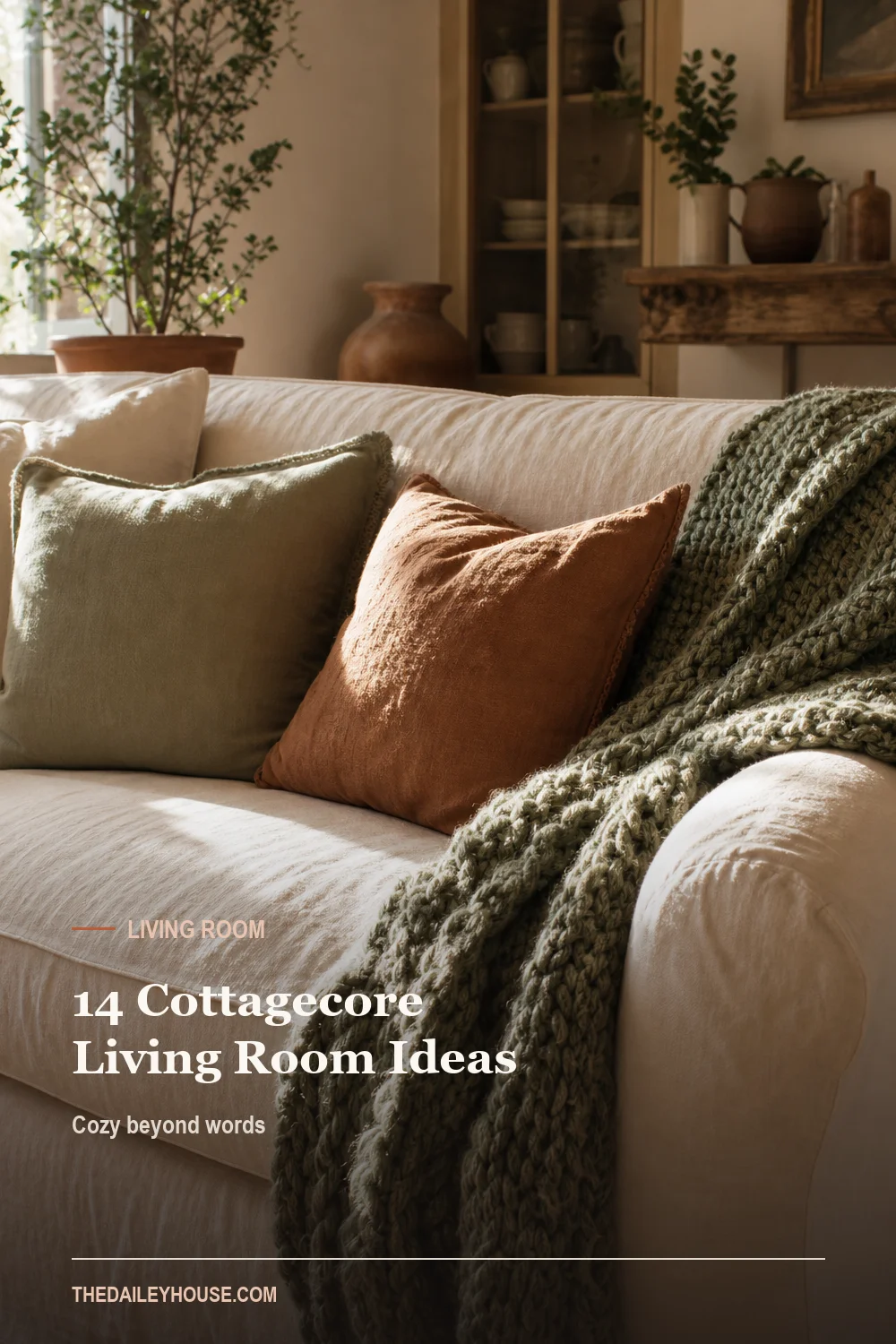
Save this pin to your Cottage Core Farmhouse board. Each of the 14 ideas above is also pinnable individually — just hover any image and hit the Pin it button.
Final Thoughts
A cottage core living room doesn’t happen in a weekend. It happens in layers, over time, as you find the right pieces. That’s not a limitation — it’s the thing that makes the finished room look real instead of designed. Pick one idea from the first section and one from the second. Start there. Let the room tell you what it needs next.
For more on this style, see 20 Cottage Core Farmhouse Aesthetic Ideas for Every Room — the full-room guide that this living room article builds on.

Olivia Bennett is the Lead Content Editor at The Dailey House. She specializes in interior styling, bedroom aesthetics, and creating spaces that feel intentional without feeling out of reach. With over a decade of experience covering home interiors, Olivia believes every room should tell you something about the person who lives in it.