

Your front flower beds are the first thing people see — so they need to look good without demanding hours of your weekend.
Deciding what to plant? Our annuals vs perennials comparison breaks down which is the better long-term choice.
These 10 plants were selected for one reason: maximum curb appeal with minimum effort. Each pick is drought-tolerant, pest-resistant, or repeat-blooming (many are all three).
Whether you’re starting from scratch or replacing high-maintenance annuals, this list gives you real options for every budget and front yard style.
⚡ Quick Picks: Best Low-Maintenance Front Yard Plants at a Glance
| Pick | Plant | Best For | Budget |
|---|---|---|---|
| 🥇 Overall Best | Knockout Roses | All-season color + wow factor | $15–$35 |
| 🥈 Runner Up | Coneflower (Echinacea) | Wildlife-friendly + drought tough | $8–$20 |
| 💰 Best Budget | Black-Eyed Susan | Mass planting on a budget | $5–$12 |
| ✨ Premium Pick | Lavender | Fragrance + pollinator magnet | $12–$28 |
| 🌿 Best Spreader | Creeping Phlox | Ground cover + spring color burst | $8–$18 |
| 🌾 Best Texture | Ornamental Grasses | Year-round structure | $15–$40 |
| 🩵 Best Blue/Purple | Salvia (May Night) | Deer resistance + repeat bloomer | $10–$22 |
| 🌸 Best Perennial | Daylily | Spreading color with zero fuss | $7–$18 |
| 💜 Best for Shade | Hosta | Shaded front beds under trees | $10–$25 |
| 🐝 Best Pollinator | Catmint (Nepeta) | Edging + bee/butterfly draw | $9–$20 |
1. Knockout Roses — Best Overall for All-Season Curb Appeal
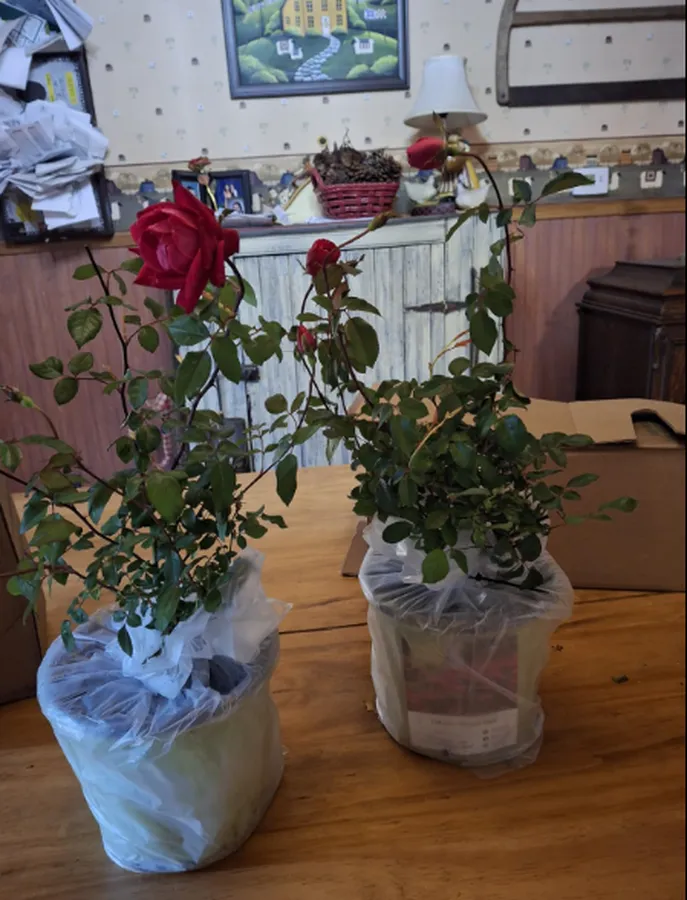
Why We Love It: Knockout Roses bloom continuously from late spring through the first hard frost — no deadheading required. They’re the rare rose that actually earns the “low maintenance” label without sacrificing the showstopping color that makes a front yard stand out.
Best For: Homeowners who want traditional floral color without the fussy maintenance of classic hybrid tea roses.
Specs at a Glance:
- Mature size: 3–4 ft tall × 3–4 ft wide
- Sun requirement: Full sun (6+ hours)
- Hardiness zones: 5–11
- Bloom season: Spring through fall frost
- Disease resistance: High (black spot resistant)
Pros:
- Blooms for 6+ months without deadheading
- Available in red, pink, coral, yellow, and white
- Highly disease-resistant compared to standard roses
- Works as a specimen plant OR mass planted in rows
Cons:
- Needs full sun — won’t perform well in shaded beds
- Requires annual pruning in early spring for best shape
- Mid-range price point — budget adds up for large beds
One Downside: In consistently hot, humid climates, you may need a light fungicide spray mid-summer to keep foliage clean.
Who It’s Best For: Anyone wanting maximum visual impact with a traditional garden feel and minimal daily work.
2. Coneflower (Echinacea) — Best for Wildlife-Friendly, Drought-Tough Beds
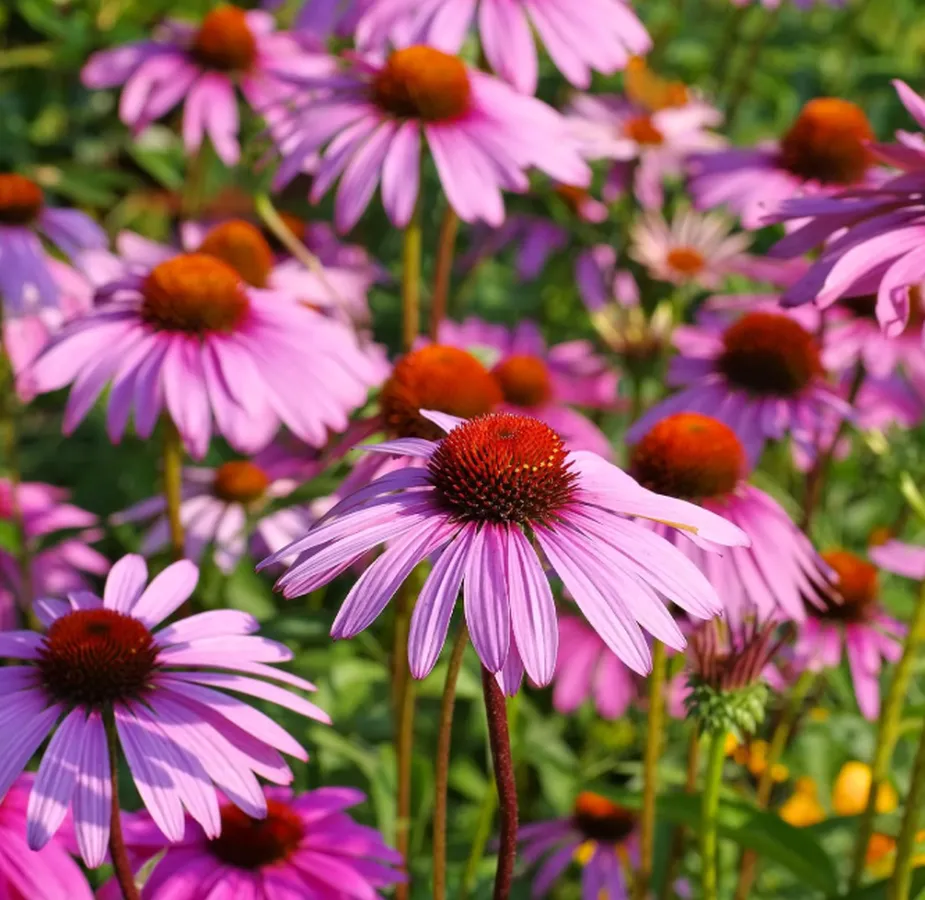
Why We Love It: Coneflowers are practically indestructible once established. They tolerate drought, poor soil, and summer heat — then reward you with bold daisy-like blooms in pink, purple, orange, and white from midsummer through fall.
Best For: Homeowners in hot, dry climates who want beautiful flowers without constant watering or fussing.
Specs at a Glance:
- Mature size: 2–4 ft tall × 1.5–2 ft wide
- Sun requirement: Full sun to part shade
- Hardiness zones: 3–9
- Bloom season: Midsummer through fall
- Deer resistance: High
Pros:
- Extremely drought-tolerant once established
- Attracts butterflies, bees, and goldfinches
- Spreads naturally to fill beds over time
- Available in 10+ colors beyond traditional purple
Cons:
- Slow to establish first year (minimal blooms)
- Doesn’t bloom until midsummer — gaps in spring color
- May need dividing every 3–4 years
One Downside: First-year plants may disappoint — they’re building root systems. Year two is when Echinacea truly delivers.
Who It’s Best For: Natural garden lovers, wildlife gardeners, and anyone in USDA zones 3–9 with hot summers.
3. Black-Eyed Susan (Rudbeckia) — Best Budget Pick for Mass Planting
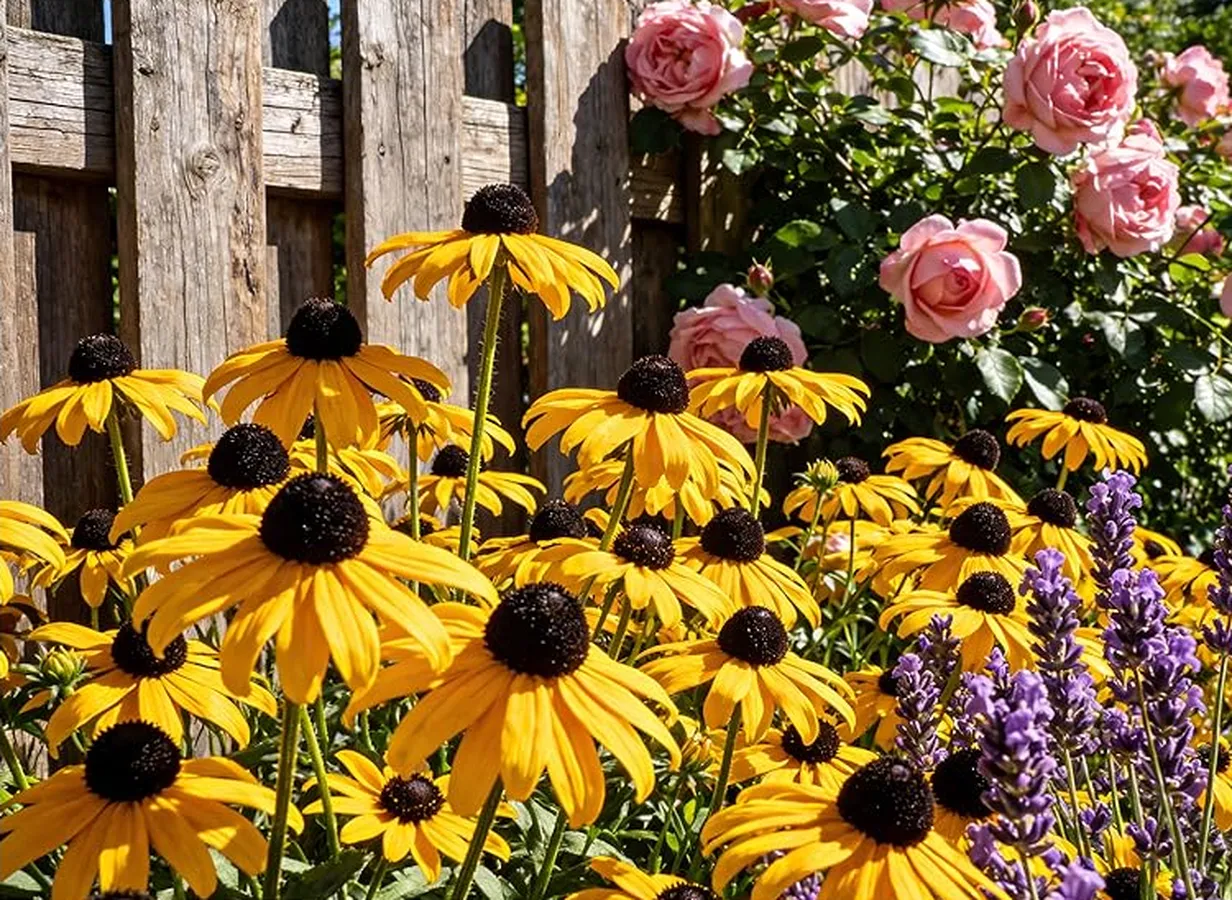
Why We Love It: At $5–$12 per plant (or even cheaper from seed), Black-Eyed Susans deliver golden-yellow waves of color from mid-summer through fall. They self-seed freely, meaning your planting gets bigger — and cheaper — every year.
Best For: Budget-conscious homeowners filling large front beds or anyone wanting a cheerful, cottage-garden aesthetic on a tight budget.
Specs at a Glance:
- Mature size: 2–3 ft tall × 1.5–2 ft wide
- Sun requirement: Full sun
- Hardiness zones: 3–9
- Bloom season: July through October
- Self-seeding: Yes (can spread aggressively)
Pros:
- Extremely affordable — seeds cost pennies
- Naturalizes and multiplies year after year for free
- Drought tolerant and heat hardy
- Pairs beautifully with purple coneflower and ornamental grasses
Cons:
- Can spread aggressively — may need editing
- Primarily available in yellow/golden tones (limited color range)
- Prone to powdery mildew in humid climates
One Downside: Self-seeding is a feature and a problem — you’ll spend a few minutes each spring pulling seedlings from spots you don’t want them.
Who It’s Best For: Budget shoppers, large bed fillers, and anyone who loves that sunny wildflower meadow look.
4. Lavender — Best Premium Pick for Fragrance + Pollinators
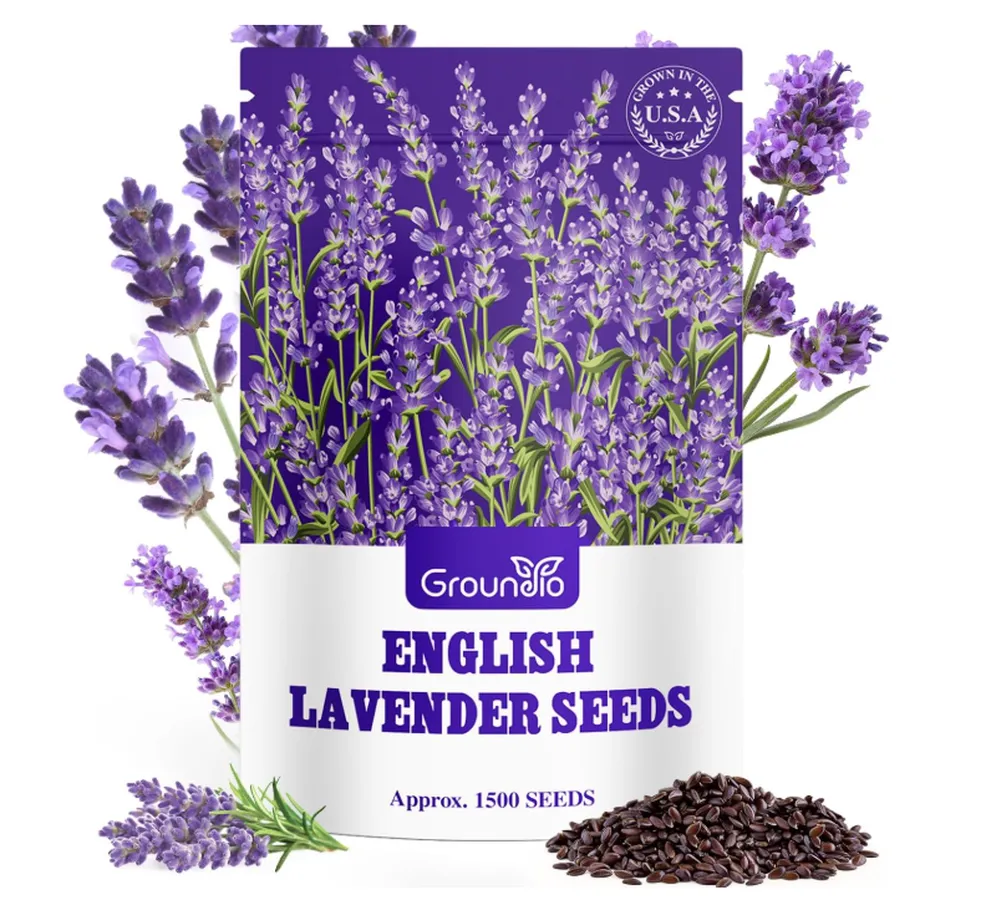
Why We Love It: Lavender earns every penny of its slightly higher price with fragrant purple spikes, silvery foliage that looks beautiful even when not in bloom, and nearly zero disease or pest pressure. Once established, it’s one of the most drought-tolerant plants you can grow.
Best For: Homeowners who want an elegant, Mediterranean feel with year-round visual interest and the added bonus of incredible fragrance.
Specs at a Glance:
- Mature size: 1.5–3 ft tall × 2–4 ft wide (variety dependent)
- Sun requirement: Full sun (essential)
- Hardiness zones: 5–9 (English varieties hardiest)
- Bloom season: Early to midsummer (reblooms with deadheading)
- Drought tolerance: Very high once established
Pros:
- Fragrant — smells incredible near front doors and walkways
- Silver-gray foliage provides year-round structure
- Highly deer and rabbit resistant
- Low water needs after year one
Cons:
- Will not tolerate wet, clay soils — needs excellent drainage
- Not reliably hardy below Zone 5
- Requires pruning after bloom to prevent woody stems
One Downside: Lavender planted in poorly drained soil will die. If your beds are heavy clay, amend aggressively or choose a raised bed placement.
Who It’s Best For: Homeowners in zones 5–9 with sunny, well-drained beds who want a sophisticated, fragrant statement plant.
→ Shop English Lavender Plants
5. Creeping Phlox — Best Ground Cover for Spring Color
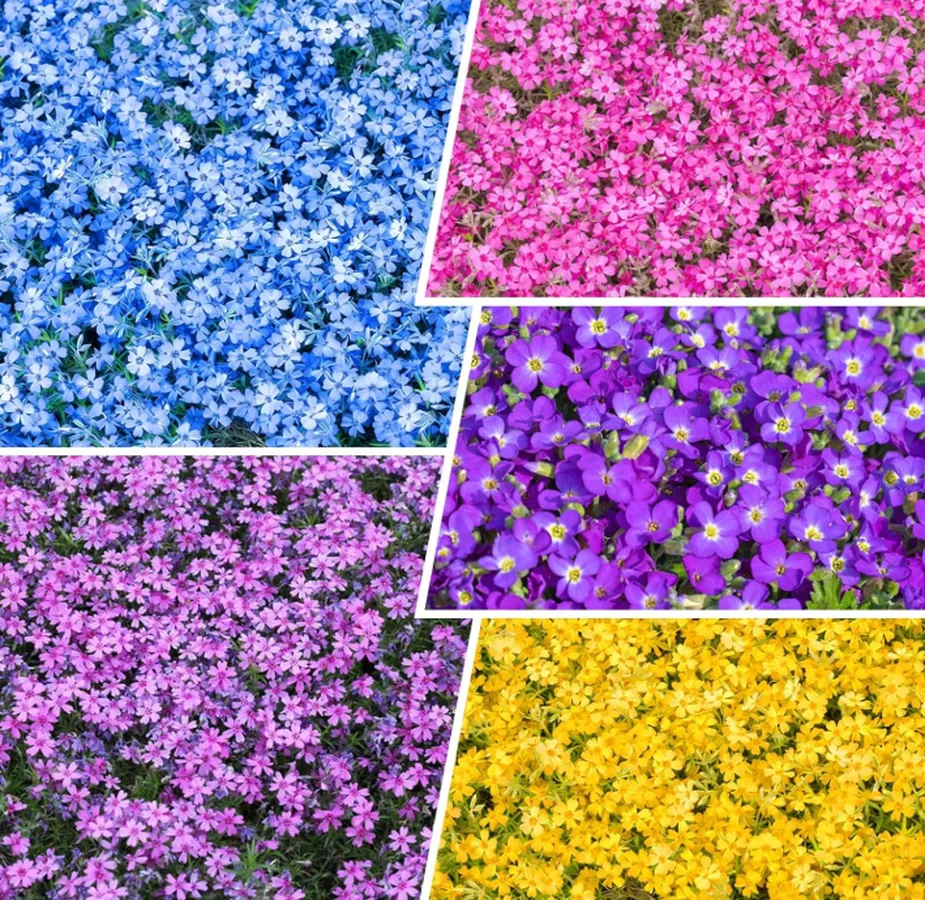
Why We Love It: Creeping Phlox creates a carpet of pink, purple, or white flowers every spring that’s so dense it suppresses weeds naturally. It cascades beautifully over bed edges, rock walls, and slopes — and after its spring show, the evergreen mat keeps beds looking tidy all year.
Best For: Sloped front beds, rock garden edges, or any area where you want a natural weed-suppressing ground cover with a dramatic spring flush.
Specs at a Glance:
- Mature size: 4–6 inches tall × 2 ft wide
- Sun requirement: Full sun to light shade
- Hardiness zones: 3–9
- Bloom season: April–May (spring only)
- Evergreen: Yes
Pros:
- Dense mat suppresses weeds without mulch
- Evergreen foliage keeps beds neat 12 months a year
- Spreads to fill gaps naturally over 2–3 seasons
- No deadheading or dividing needed
Cons:
- One bloom season only (spring) — no summer or fall color
- Slow to establish and spread
- Can look sparse and scraggly if planted in too much shade
One Downside: Creeping Phlox is a spring one-hit-wonder — pair it with summer bloomers like coneflower or salvia to maintain color through the season.
Who It’s Best For: Anyone with slopes, rock borders, or shaded edges who wants low effort and stunning spring impact.
6. Ornamental Grasses — Best for Year-Round Structure and Texture
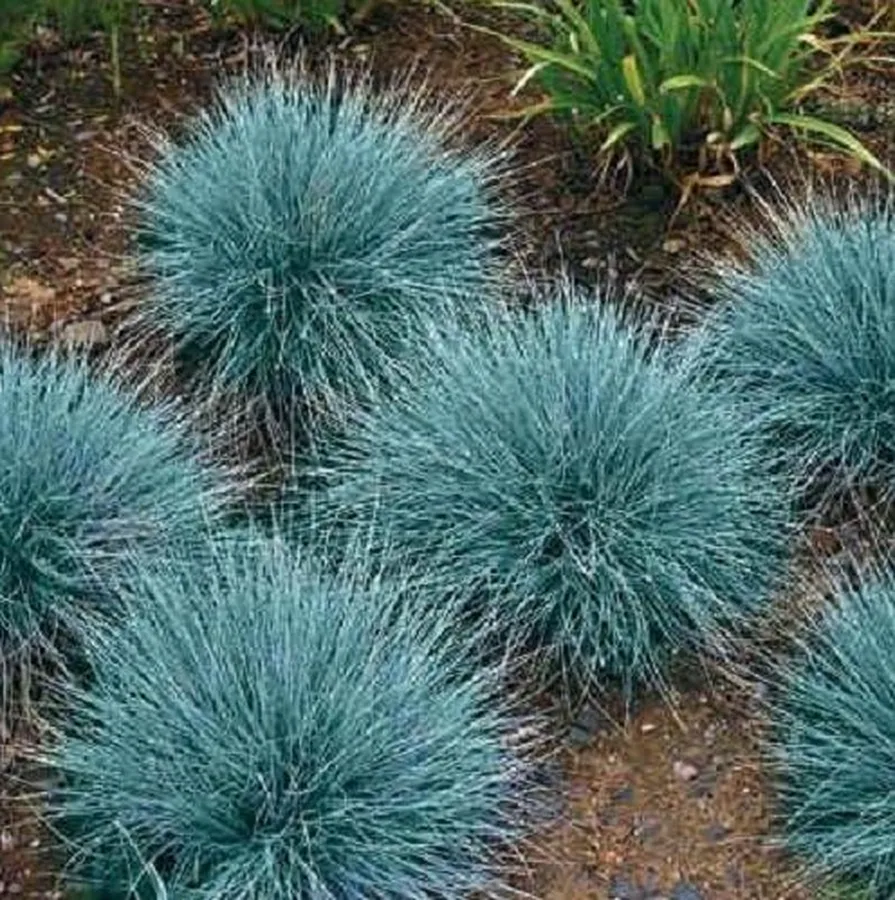
Why We Love It: Ornamental grasses do something no flowering perennial can — they look great in every single season. Feathery plumes wave in summer breeze, turn golden in fall, and provide dramatic skeletal structure through winter. They require almost zero maintenance.
Best For: Homeowners who want architectural structure, movement, and four-season interest without replanting or deadheading.
Specs at a Glance:
- Popular varieties: Karl Foerster (upright), Miscanthus (fountain), Blue Oat Grass (compact)
- Mature size: 2–6 ft tall depending on variety
- Sun requirement: Full sun to part shade
- Hardiness zones: 4–9
- Maintenance: Cut back once per year (late winter)
Pros:
- Four-season visual interest — no off-season
- Extremely drought tolerant once established
- Provides movement and texture no other plant offers
- Very few pest or disease issues
Cons:
- Limited flower color — primarily neutral tones
- Large varieties can overwhelm small beds
- Annual cutback requires shears or hedge trimmer
One Downside: Some ornamental grasses (especially Miscanthus) can become invasive in certain regions. Check your local extension office before planting.
Who It’s Best For: Minimalist and modern landscapers, homeowners in drought-prone areas, and anyone who loves low-maintenance structure.
7. Salvia (May Night) — Best Deer-Resistant Repeat Bloomer
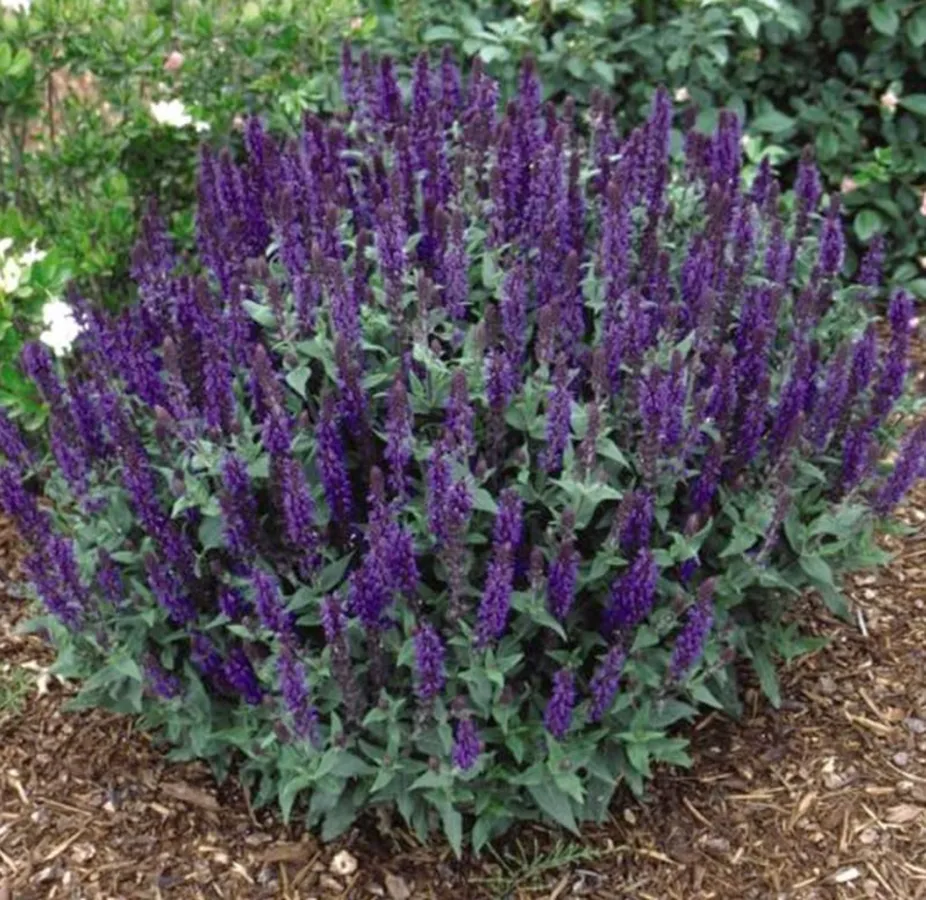
Why We Love It: May Night Salvia produces deep indigo-purple flower spikes that deer absolutely avoid — making it a lifesaver in suburban yards. Cut it back after the first flush and it blooms again, providing color from late spring through early fall.
Best For: Homeowners with deer pressure, or anyone wanting bold vertical color in a front bed without the maintenance headache.
Specs at a Glance:
- Mature size: 18–24 inches tall × 18–24 inches wide
- Sun requirement: Full sun
- Hardiness zones: 4–8
- Bloom season: May–September (reblooms with deadheading)
- Deer resistance: Very high
Pros:
- Deer and rabbit resistant
- Deadheads quickly for rebloom
- Compact, tidy habit — won’t sprawl or flop
- Attracts hummingbirds and pollinators
Cons:
- Requires deadheading for best rebloom (light effort)
- Limited to purple/blue color range
- Not reliably perennial in zones below 4
One Downside: Salvia blooms slow noticeably in intense summer heat — it tends to rest in July then surge back in August. Don’t panic if it quiets mid-summer.
Who It’s Best For: Deer-country homeowners, pollinator garden builders, and anyone who loves the blue-purple color palette.
8. Daylily — Best Spreading Perennial for Zero-Fuss Color
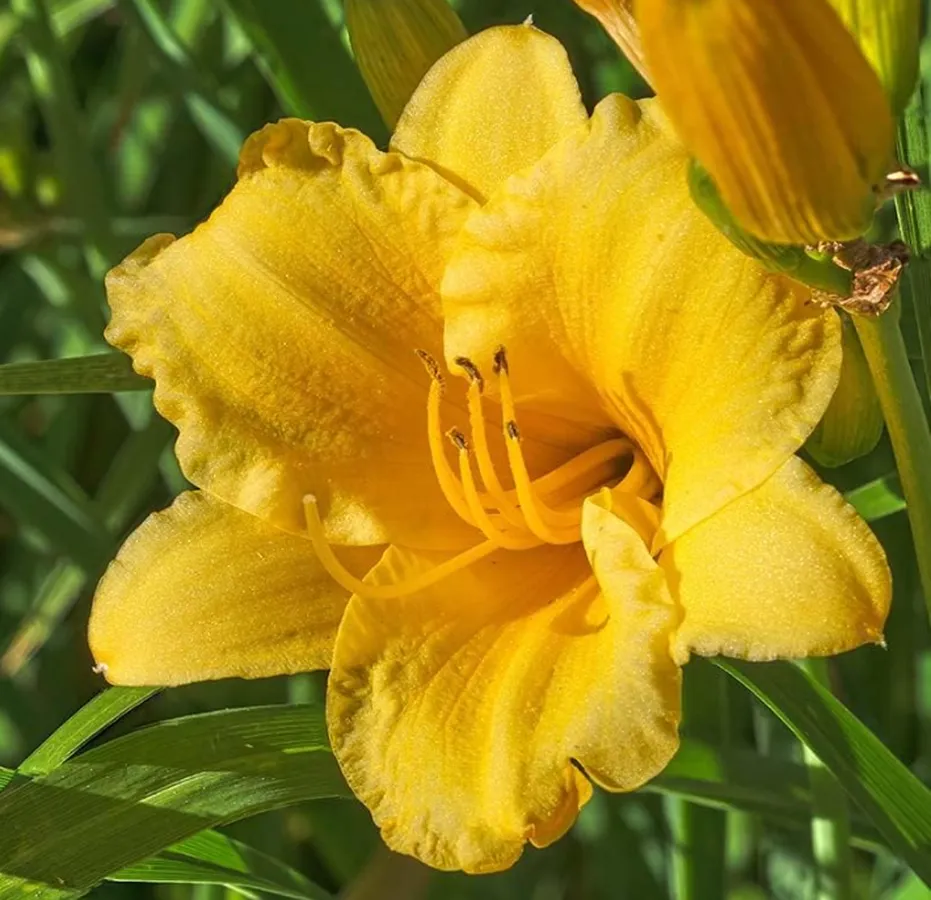
Why We Love It: Daylilies are practically unkillable. They thrive in poor soil, tolerate drought, and spread reliably year after year without any intervention. Modern reblooming varieties like ‘Stella de Oro’ give you waves of color from June through August without deadheading.
Best For: Homeowners who want a set-it-and-forget-it perennial that fills in more space every year without replanting costs.
Specs at a Glance:
- Mature size: 1–3 ft tall × 1–2 ft wide
- Sun requirement: Full sun to part shade
- Hardiness zones: 3–10
- Bloom season: June–August (reblooming varieties extend to September)
- Division: Every 4–5 years recommended
Pros:
- Tolerates poor soil, clay, and drought once established
- Spreads to fill gaps — free plants every few years when you divide
- Available in hundreds of colors: yellow, orange, red, pink, bicolor
- No deadheading required for most modern varieties
Cons:
- Foliage can look ragged after bloom period ends
- Aggressive spreaders — may crowd other plants
- Needs dividing every few years or flowering declines
One Downside: Post-bloom daylily foliage is not attractive. Plant them behind lower ground covers that mask the fading leaves.
Who It’s Best For: Anyone filling large beds on a budget, or homeowners who want reliable color with minimal attention year after year.
9. Hosta — Best Low-Maintenance Plant for Shaded Front Beds
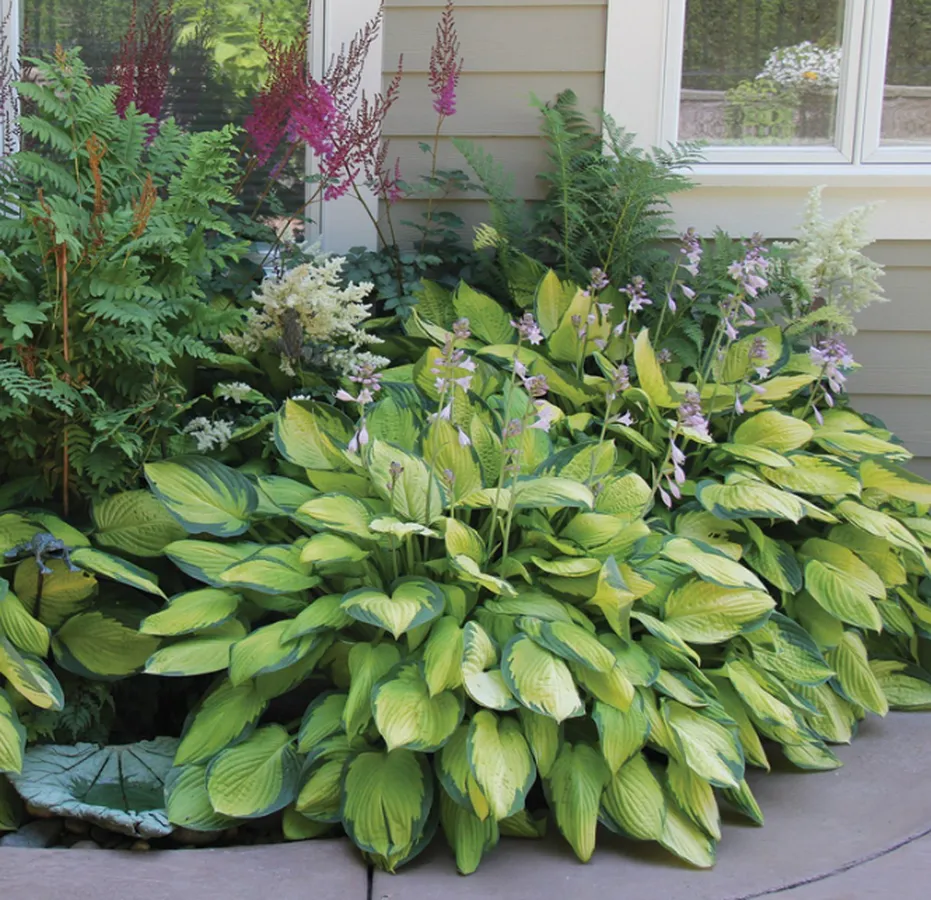
Why We Love It: If your front yard beds are under mature trees and get limited sun, Hostas are your answer. They produce spectacular foliage in green, gold, blue-gray, and variegated patterns — and they come back bigger and better every year with zero effort.
Best For: Homeowners with shaded or part-shade front beds who need plants that genuinely thrive (not just survive) without sun.
Specs at a Glance:
- Mature size: 6 inches to 4 ft tall × 1–6 ft wide (variety dependent)
- Sun requirement: Part shade to full shade
- Hardiness zones: 3–9
- Bloom season: Summer (lavender/white flowers — bonus feature)
- Slug sensitivity: High in humid climates
Pros:
- The premier shade-tolerant perennial — no competition
- Available in dozens of sizes, colors, and textures
- Long-lived — some hostas grow for 30+ years
- Dramatically increases in size and impact each season
Cons:
- Slugs and deer love them — protection often needed
- Dies back completely in winter (no winter interest)
- Slow to establish — patience required year one
One Downside: If deer are active in your neighborhood, hostas will be eaten. Use deer repellent spray or choose slug-resistant varieties like Sum and Substance.
Who It’s Best For: Shaded front yards, woodland-style landscapes, and homeowners under large trees with limited sun options.
10. Catmint (Nepeta) — Best Edging Plant for Pollinators
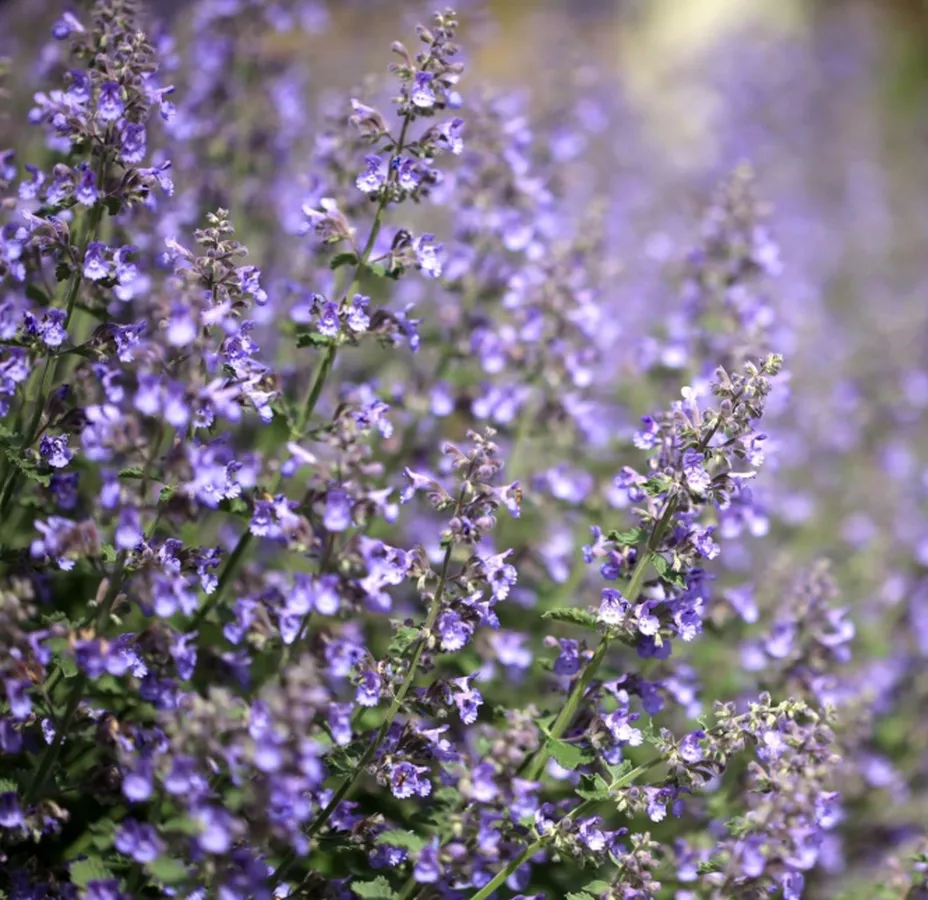
Why We Love It: Catmint is one of the most underrated front-yard plants available. It produces mounds of lavender-blue flowers from late spring through summer, pours over bed edges beautifully, and attracts bees and butterflies by the dozen. Cut it back mid-summer and it rebounds with a full second flush.
Best For: Front bed edging, walkway borders, or any spot where you want a soft, flowing mound of color that also doubles as a pollinator magnet.
Specs at a Glance:
- Mature size: 12–24 inches tall × 24–36 inches wide
- Sun requirement: Full sun to part shade
- Hardiness zones: 3–8
- Bloom season: May–September with mid-summer cutback
- Deer and rabbit resistance: Very high
Pros:
- Blooms prolifically for months
- Soft, mounding habit works beautifully as a bed edger
- Highly deer, rabbit, and aphid resistant
- Extremely drought tolerant once established
Cons:
- May flop open mid-summer without support or mid-season cut
- Some cats are attracted to it (like catnip)
- Can look messy if not cut back after first bloom flush
One Downside: Catmint looks best when you cut it back by half after the first June bloom — a 10-minute job that triggers a spectacular August rebloom.
Who It’s Best For: Pollinator gardeners, edging enthusiasts, and anyone who wants effortless soft color from spring through fall.
📊 Full Comparison: Best Low-Maintenance Front Yard Plants
| Plant | Sun | Zones | Bloom Season | Deer Resistant | Price Range | Best For |
|---|---|---|---|---|---|---|
| Knockout Rose | Full sun | 5–11 | Spring–Fall | Moderate | $15–$35 | All-season color |
| Coneflower | Full–Part sun | 3–9 | Midsummer–Fall | Yes | $8–$20 | Drought + wildlife |
| Black-Eyed Susan | Full sun | 3–9 | July–October | Moderate | $5–$12 | Budget mass planting |
| Lavender | Full sun | 5–9 | Early–Midsummer | Yes | $12–$28 | Fragrance + elegance |
| Creeping Phlox | Full–Light shade | 3–9 | April–May | Yes | $8–$18 | Spring ground cover |
| Ornamental Grass | Full–Part sun | 4–9 | Year-round interest | Yes | $15–$40 | Structure + texture |
| Salvia May Night | Full sun | 4–8 | May–September | Very High | $10–$22 | Deer resistance |
| Daylily | Full–Part sun | 3–10 | June–August | Moderate | $7–$18 | Spreading perennial |
| Hosta | Shade–Part shade | 3–9 | Summer (foliage) | No | $10–$25 | Shade beds |
| Catmint | Full–Part sun | 3–8 | May–September | Very High | $9–$20 | Bed edging |
How to Choose the Best Low-Maintenance Plants for Your Front Flower Beds
Sun Conditions — Match the Plant to Your Yard
Before buying a single plant, observe your front beds for one full day. Full sun means 6+ hours of direct sunlight. Part shade means 3–6 hours. Full shade is under 3 hours. Planting a sun-lover like Lavender in a shaded bed, or putting Hostas in blazing afternoon sun, will kill them regardless of how “low maintenance” they’re supposed to be. Your sun conditions narrow your list immediately.
Hardiness Zone — Never Skip This Step
Every plant on this list has a USDA zone range. Planting outside that range means annual replacement costs. Check your zone at the USDA Plant Hardiness Zone Map before purchasing. Zone 5 and below means Lavender won’t survive winter. Zone 9 and above means some cold-hardy perennials like Catmint may struggle. Matching zone to plant is the single most important factor in long-term, low-maintenance success.
Deer and Rabbit Pressure
If deer visit your neighborhood, half of this list needs protection. Hostas and Daylilies are essentially deer candy. Heavily deer-resistant picks include Lavender, Salvia, Catmint, Ornamental Grasses, and Coneflower — all aromatic or textured in ways deer avoid. If deer pressure is high, build your entire front bed from deer-resistant varieties and skip the others entirely.
Bloom Season Layering — Plan for Color All Season
The smartest front-yard beds combine plants that bloom in sequence rather than all at once. A proven three-season combination: Creeping Phlox (spring) + Salvia (early summer) + Coneflower (midsummer–fall) + Ornamental Grass (year-round structure). This approach gives you continuous color from April through October with zero replanting.
Budget vs. Premium Strategy
Budget approach ($5–$15/plant): Fill with Black-Eyed Susans, Daylilies, and Coneflowers. These spread and multiply — your $100 investment becomes a full bed in 3 seasons without spending more.
Premium approach ($15–$40/plant): Anchor the bed with Knockout Roses and Ornamental Grasses, then fill in with mid-range perennials. This approach gives you faster impact and higher curb value from day one.
Frequently Asked Questions
What are the easiest plants to grow in front yard flower beds for beginners?
Black-Eyed Susan, Daylily, and Coneflower are the top three for true beginners. All three tolerate poor soil, periods of drought, and planting mistakes. They return reliably each year and spread on their own — all without any deadheading or dividing in the first few seasons.
What low-maintenance plants come back every year?
All 10 plants on this list are perennials that come back year after year in their hardiness zones. Knockout Roses, Coneflowers, Daylilies, Hostas, Ornamental Grasses, Salvia, Catmint, Lavender, Creeping Phlox, and Black-Eyed Susan are all classified as perennials — meaning you plant once and they return every season.
What are the best low-maintenance plants for front of house in full sun?
For full sun front beds, Knockout Roses, Coneflower, Black-Eyed Susan, Lavender, Salvia May Night, and Catmint are all excellent choices. Pair Knockout Roses as the anchor, fill mid-bed with Coneflower and Black-Eyed Susan, and use Catmint as a low edging plant for a beautiful, layered full-sun bed.
What plants are deer-resistant for front yard beds?
The most reliably deer-resistant picks from this list are Lavender, Salvia May Night, Catmint, Coneflower, and Ornamental Grasses. All five have strong scents or rough textures that deer typically avoid. Avoid Hostas and Daylilies entirely if deer pressure is consistent in your area.
How do I plan a front yard flower bed that blooms all season?
Use a layered bloom strategy: plant Creeping Phlox for April–May color, Salvia and Knockout Roses for May–July, Coneflower and Black-Eyed Susan for July–October, and Ornamental Grass for year-round structure. This four-layer approach means something is always blooming or visually interesting from early spring through late fall.
Final Thoughts
For most front yards, Knockout Roses deliver the strongest all-season impact with the least effort. If you’re on a budget, start with Black-Eyed Susan and Daylilies — they’ll multiply and fill your beds for free over the next few seasons. For shaded beds, Hostas have no real competition.
The key to any truly low-maintenance front bed is matching the right plant to your actual conditions — sun, zone, and deer pressure — rather than choosing based on looks alone.
Related article — “Best Front Yard Landscaping Ideas on a Budget“
Related article — “How to Design a Flower Bed from Scratch (Step-by-Step)“

Sophia Turner covers budget home decor, seasonal styling, and outdoor spaces at The Dailey House. She has a talent for finding thrift store pieces that look like they cost three times what she paid, and a habit of redesigning her front porch every single season.