Knowing when kids need a study desk is key to supporting their learning and development. This guide helps parents identify the right age and signs, choose the best desk, and create a productive study space.
Key Takeaways
- Age 5–6 is the ideal time: Most children start formal homework around kindergarten or first grade, making this the perfect time to introduce a study desk.
- Look for developmental signs: If your child shows interest in writing, drawing, or focusing on tasks, they’re ready for a dedicated workspace.
- Ergonomics matter: A properly sized desk and chair promote good posture and reduce fatigue during study sessions.
- Create a distraction-free zone: A study desk works best in a quiet, well-lit area away from TVs and high-traffic zones.
- Involve your child in the choice: Letting them pick their desk increases ownership and motivation to use it.
- Adjust as they grow: Choose an adjustable or growing desk to save money and ensure long-term comfort.
- Consistency builds habits: Using the desk daily helps establish a routine and improves focus over time.
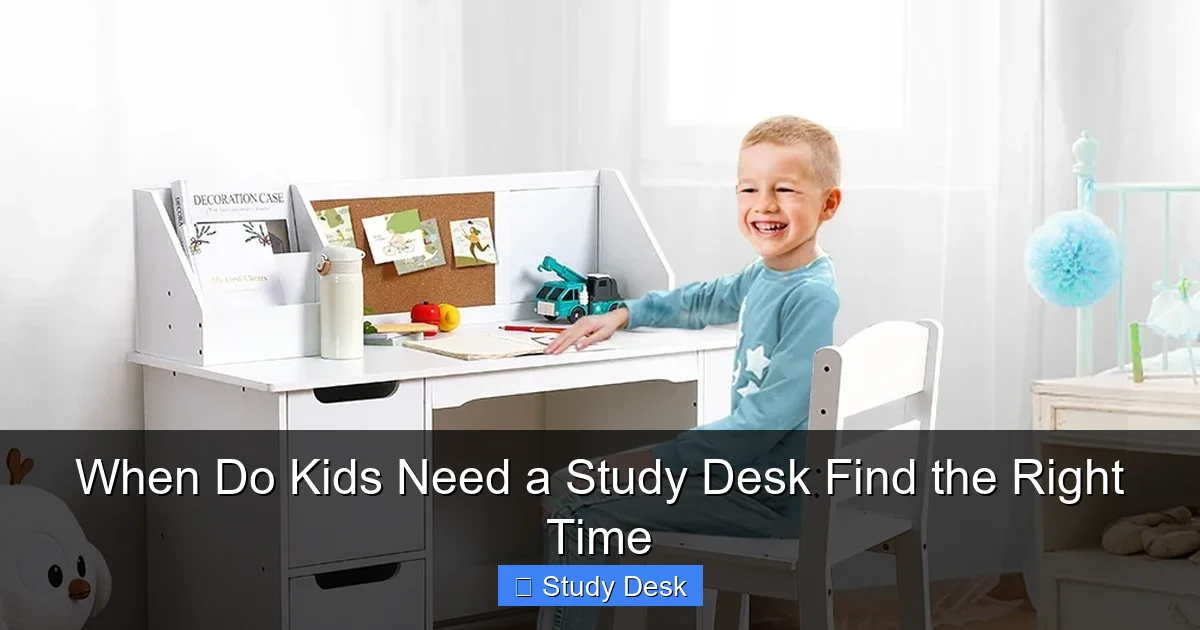
When Do Kids Need a Study Desk? Find the Right Time
As your child grows, their learning needs evolve. What starts with coloring books and finger painting soon transitions into homework, reading assignments, and creative projects. At some point, you may wonder: When do kids need a study desk? The answer isn’t just about age—it’s about readiness, routine, and environment.
A study desk isn’t just a piece of furniture. It’s a tool that supports focus, organization, and independence. But introducing one too early—or too late—can backfire. This guide will walk you through the signs that your child is ready, the best age to make the switch, and how to choose the right desk for their needs. Whether you’re a parent, guardian, or educator, you’ll learn how to create a study space that encourages learning and builds lifelong habits.
By the end of this guide, you’ll know exactly when to get a study desk, what features to look for, and how to make the most of this important learning tool.
Understanding the Right Age for a Study Desk

Visual guide about When Do Kids Need a Study Desk Find the Right Time
Image source: timeforkids.com
Many parents assume that a study desk is only necessary once a child starts elementary school. But the truth is, the need for a dedicated workspace can begin earlier—or later—depending on the child.
Typical Age Range: 5 to 7 Years Old
Most children begin formal homework around age 5 or 6, typically in kindergarten or first grade. This is when teachers start assigning simple tasks like tracing letters, reading short books, or completing worksheets. At this stage, a study desk becomes useful for providing a consistent, comfortable place to work.
However, some kids may be ready earlier. Preschoolers around age 4 who show strong interest in writing, drawing, or puzzles may benefit from a small, low-height desk. On the other hand, some children may not need a full desk until second or third grade, especially if they’re still developing fine motor skills or prefer to work on the floor or at the kitchen table.
Developmental Readiness Matters More Than Age
Instead of focusing solely on age, watch for developmental signs that your child is ready for a study desk:
- Interest in seated activities: If your child can sit still for 10–15 minutes to draw, read, or do puzzles, they’re likely ready.
- Desire for independence: Kids who want to “do their own work” or ask for their own space are showing readiness.
- Improved fine motor skills: Being able to hold a pencil, use scissors, or write their name suggests they’re prepared for desk-based tasks.
- Routine awareness: If your child understands daily routines (like brushing teeth or getting dressed), they can adapt to a study routine.
These signs often appear between ages 4 and 6, but every child is different. Trust your instincts and observe your child’s behavior.
Signs Your Child Is Ready for a Study Desk

Visual guide about When Do Kids Need a Study Desk Find the Right Time
Image source: timeforkids.com
You don’t need to wait for a teacher’s recommendation or a specific birthday. Here are clear signs that your child is ready for their own study space.
They Ask for Their Own Space
If your child says things like, “I want my own table” or “Can I do my drawing here?”, they’re telling you they need a dedicated area. This desire for ownership is a strong indicator of readiness.
They Struggle to Focus in Common Areas
Working at the kitchen table might work for quick tasks, but it’s full of distractions—noise, foot traffic, TV, and food. If your child gets easily distracted or refuses to do homework in shared spaces, a study desk in a quieter area can help.
Homework Is Becoming Regular
Once homework becomes a daily or weekly expectation, a study desk provides consistency. It signals that learning is important and deserves its own time and place.
They’re Developing Organizational Skills
A study desk helps kids learn to keep supplies in one place—pencils, paper, books, and folders. If your child is starting to care about where things go, a desk supports that growth.
Posture and Comfort Are Issues
If your child slouches, leans on the table, or complains of back pain while working, it’s a sign they need a properly sized desk and chair. Ergonomics play a big role in focus and health.
Choosing the Right Study Desk for Your Child
Visual guide about When Do Kids Need a Study Desk Find the Right Time
Image source: ak1.ostkcdn.com
Once you’ve decided your child is ready, the next step is picking the right desk. Not all desks are created equal—especially for growing kids.
Size and Height Matter
A desk that’s too high or too low can cause discomfort and poor posture. Here’s how to get it right:
- Desk height: Should allow your child’s elbows to rest at a 90-degree angle when writing.
- Chair height: Feet should be flat on the floor (or a footrest), with knees at a 90-degree angle.
- Desktop space: At least 30 inches wide to hold a notebook, pencil case, and small supplies.
For younger children (ages 4–6), look for desks around 20–22 inches high. For ages 7–10, 24–26 inches is typical. Adjustable desks are ideal because they grow with your child.
Material and Durability
Kids can be rough on furniture. Choose a desk made from sturdy materials like solid wood, engineered wood (MDF), or metal. Avoid flimsy plastic unless it’s high-quality and reinforced.
Look for rounded edges to prevent injuries and a scratch-resistant surface that’s easy to clean. Whiteboards or chalkboard tops can be fun for creative kids.
Storage Options
A good study desk includes storage to keep supplies organized. Features to consider:
- Drawer or cubby for pencils, erasers, and rulers
- Shelf for books or notebooks
- Hutch or organizer for papers and folders
- Built-in charging station (for older kids with tablets)
Even a small desk with a single drawer can make a big difference in keeping things tidy.
Adjustability and Growth
Kids grow fast. An adjustable desk that can be raised or lowered saves money in the long run. Some models even convert from a toddler desk to a teen workstation.
Look for desks with:
- Height-adjustable legs
- Removable or extendable tabletops
- Modular designs that add shelves or drawers later
This flexibility ensures the desk stays useful for years.
Style and Personalization
Let your child help choose the color or design. A desk they love is more likely to be used. Fun options include:
- Desks shaped like rockets, castles, or animals (great for younger kids)
- Neutral tones like white, gray, or natural wood (better for older kids)
- Customizable nameplates or stickers
Avoid overly themed desks that may feel “babyish” as they grow.
Setting Up the Perfect Study Space
A desk alone isn’t enough. The environment around it plays a big role in focus and motivation.
Choose the Right Location
Place the desk in a quiet, low-traffic area. Ideal spots include:
- A corner of the bedroom
- A dedicated study nook
- A quiet part of the living room (if supervised)
Avoid areas near TVs, video game consoles, or windows with heavy foot traffic.
Lighting Is Key
Good lighting reduces eye strain and improves concentration. Use:
- Natural light from a window (but avoid glare)
- A desk lamp with warm, adjustable brightness
- Overhead lighting as a backup
LED lamps with a color temperature of 3000K–4000K are ideal for reading and writing.
Minimize Distractions
Keep the study area free of toys, games, and electronics (unless used for learning). Use storage bins to hide clutter.
If your child uses a tablet for homework, consider a docking station that keeps it charged and out of the way when not in use.
Add Personal Touches
A few personal items can make the space inviting:
- A small plant (like a succulent)
- A framed photo or drawing
- A motivational poster or quote
But keep decorations minimal—too many can become distractions.
Building a Study Routine
A study desk is only effective if it’s used consistently. Here’s how to build a routine that works.
Set a Regular Study Time
Choose a consistent time each day—right after school, before dinner, or after a short break. Consistency helps the brain associate the desk with focus.
Start Small
Begin with 10–15 minute sessions. Gradually increase as your child’s attention span grows. Use a timer to make it fun.
Use a Visual Schedule
Create a chart with pictures or words showing the daily routine. Include tasks like “Read for 10 minutes,” “Do math worksheet,” and “Put supplies away.”
Praise Effort, Not Just Results
Celebrate your child’s focus and effort, even if the work isn’t perfect. Say things like, “I’m proud of how hard you worked today.”
Make It Comfortable
Let your child choose a special pencil case, a favorite notebook, or a cozy cushion. Small comforts make the routine more enjoyable.
Troubleshooting Common Problems
Even with the best setup, challenges can arise. Here’s how to handle them.
Problem: My Child Refuses to Use the Desk
Solution: Start by using the desk together. Sit with your child and do a fun activity like drawing or puzzles. Gradually reduce your involvement as they become comfortable.
Problem: The Desk Is Too Small or Too Big
Solution: Measure your child’s height and compare it to desk dimensions. If it’s too small, look for an adjustable model. If it’s too big, add a footrest and lower the chair.
Problem: Supplies Get Lost or Disorganized
Solution: Use labeled bins or drawer dividers. Do a weekly “desk cleanup” together to reset the space.
Problem: My Child Gets Distracted Easily
Solution: Remove distractions from the area. Use noise-canceling headphones or play soft background music. Try the “Pomodoro Technique”—25 minutes of work, 5 minutes of break.
Problem: The Desk Feels “Boring”
Solution: Rotate fun supplies—new markers, stickers, or themed notebooks. Let your child decorate the space with removable wall decals.
When to Upgrade or Change the Desk
As your child grows, their needs will change. Here’s when to consider an upgrade.
Around Age 10–12
Pre-teens often need more space for larger books, laptops, and projects. Look for a larger desk with better storage and a more mature design.
When Starting Middle School
Homework becomes more complex, and organizational skills are crucial. A desk with file organizers, a bulletin board, or a built-in bookshelf can help.
If Posture Issues Persist
Even with a good desk, some kids slouch or lean forward. Consider an ergonomic chair, a standing desk converter, or a balance ball seat.
If the Space Feels Cramped
If your child is constantly bumping into walls or knocking things over, it’s time for a bigger setup—or a better layout.
Conclusion
So, when do kids need a study desk? The answer is: when they show readiness, not just age. Most children are ready between ages 5 and 7, but developmental signs like focus, independence, and fine motor skills are better indicators.
A study desk is more than a piece of furniture—it’s a foundation for learning, creativity, and responsibility. By choosing the right desk, setting up a supportive environment, and building a consistent routine, you give your child the tools they need to succeed.
Remember, the goal isn’t perfection. It’s progress. Start small, stay flexible, and celebrate every step forward. With the right setup, your child’s study desk can become their favorite place to learn, grow, and dream.