The standard height of a study desk is 28-30 inches for adults, but this varies by age and body size. Getting this measurement right is crucial for maintaining good posture, preventing back pain, and staying focused during study sessions. This guide will show you how to find your perfect desk height and why it makes all the difference.
Key Takeaways
- Standard study desk height for adults is typically 28-30 inches from floor to tabletop.
- Correct desk height prevents slouching, wrist strain, and long-term musculoskeletal problems.
- Kids need lower desks: 20-24 inches depending on age and height.
- You can test your ideal height by checking if your elbows form a 90-degree angle when typing.
- Adjustable standing desks offer flexibility but start at the standard seated height.
- Using a desk that’s too high or too low can reduce productivity by up to 30%.
- Always prioritize ergonomics over aesthetics when choosing study furniture.
What Is the Standard Height of a Study Desk and Why It Matters
You’re sitting at your desk right now. Your shoulders feel tense. Your lower back aches. Your wrists hurt. You might blame long hours of studying, but the real culprit could be something simpler: your desk is the wrong height.
Understanding the standard height of a study desk isn’t just about numbers. It’s about your health, your comfort, and your ability to focus. A desk that fits your body lets you study longer without pain. A desk that doesn’t fit can cause injuries that last years.
In this guide, you’ll learn the exact measurements for different age groups, how to test what works for your body, and simple fixes for desks that don’t quite fit. Let’s get you comfortable.
What Is the Standard Height of a Study Desk?
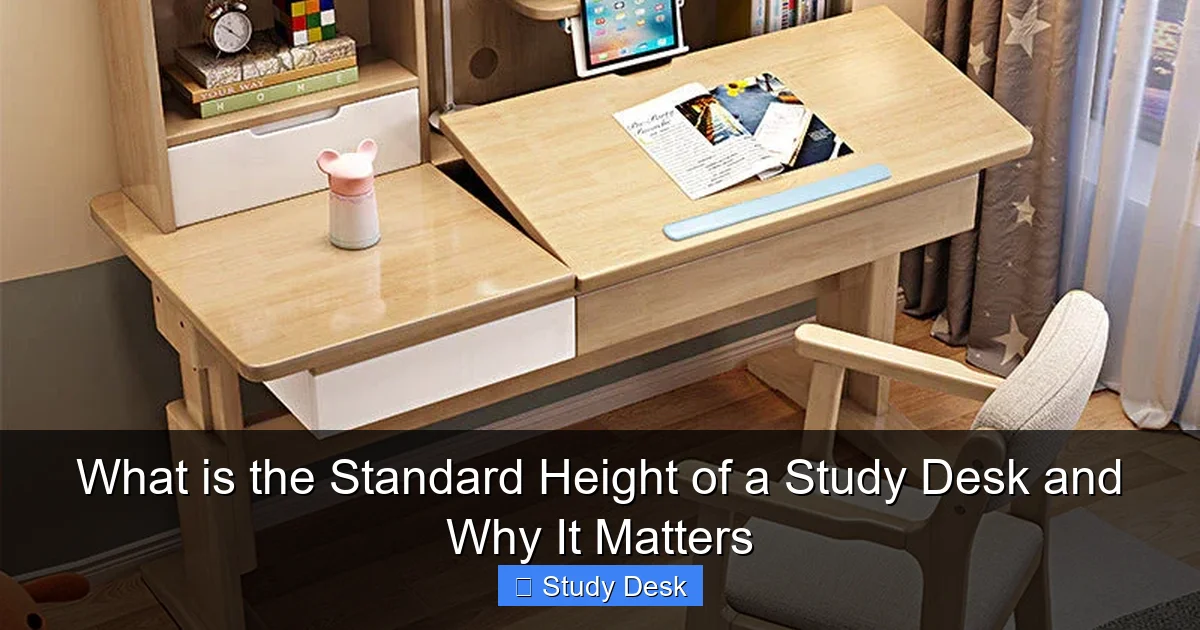
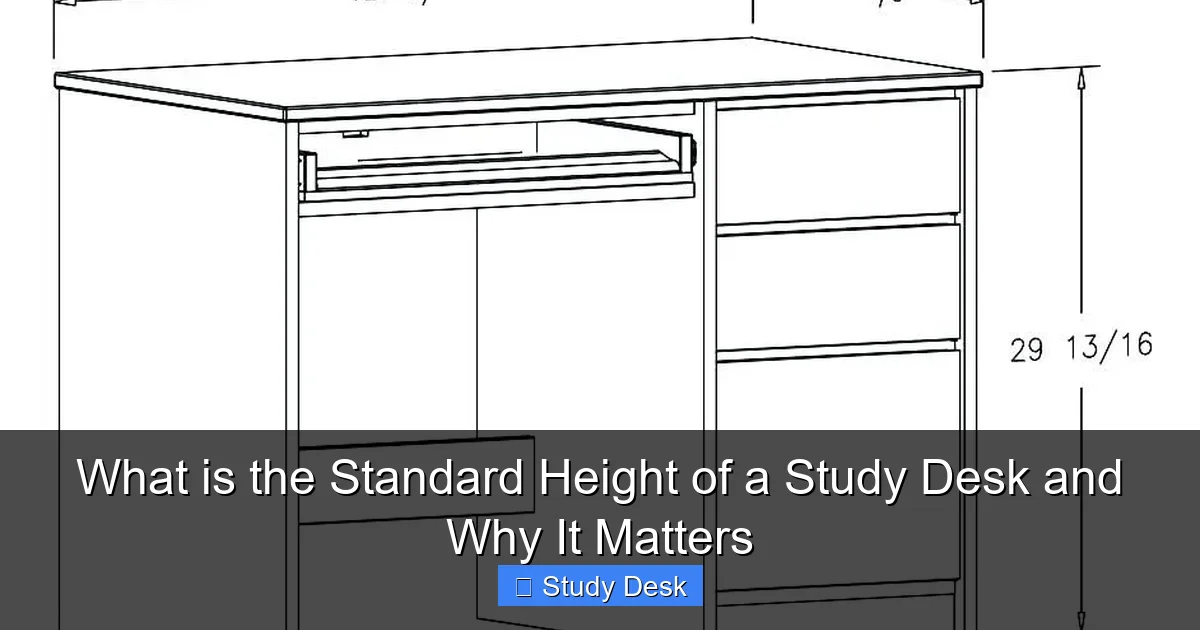
The magic number most people need is between 28 and 30 inches. That’s the standard height range for adult study desks. But here’s what makes this tricky: not everyone fits this range perfectly.
Visual guide about What is the Standard Height of a Study Desk and Why It Matters
Image source: ozstudydesks.com.au
The Magic Number: 28-30 inches Explained
Manufacturers build most off-the-shelf desks to serve the largest possible market. They aim for the middle. For adults, that middle lands at 29 inches. This height works for people roughly 5’6″ to 6′ tall. If you’re shorter or taller, you might need something different.
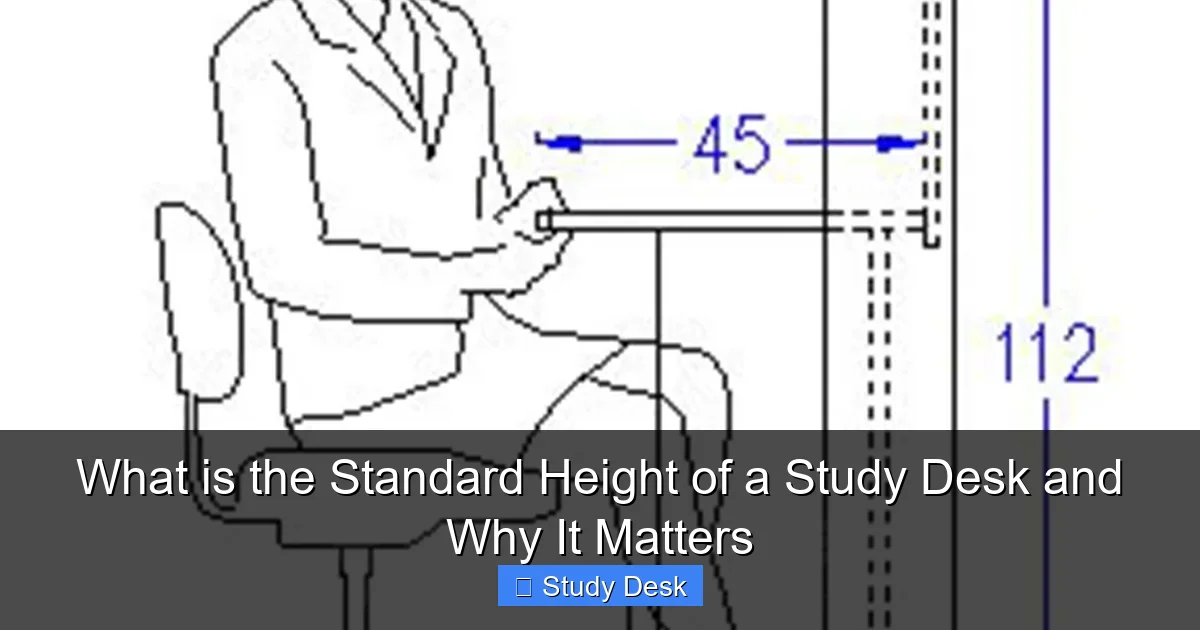
Standard desk height measurements come from decades of ergonomic research. Studies show that 29 inches allows most people to keep their feet flat on the floor while maintaining a 90-degree angle at their knees and elbows. This position reduces strain on your joints and muscles.
Why This Range Works for Most People
Think about how you sit. Your thighs need to slope slightly downward. Your feet need solid ground. Your arms need to rest parallel to the floor. The 28-30 inch range makes this possible for the average adult body.
Desks shorter than 28 inches force you to slouch. Desks taller than 30 inches make you reach upward. Both positions create muscle imbalances. Your body compensates in ways that cause pain later.
Standard height also matters for compatibility. When you buy a desk lamp, a monitor stand, or a keyboard tray, they’re designed to work with standard desk heights. Deviating too far means custom solutions or uncomfortable workarounds.
Why Desk Height Matters More Than You Think
You might think a little discomfort is normal during study sessions. It’s not. Your desk height affects everything from your breathing to your grades.
Visual guide about What is the Standard Height of a Study Desk and Why It Matters
Image source: ueeshop.ly200-cdn.com
The Posture Problem: Too High or Too Low
When your desk is too high, you shrug your shoulders. Your upper traps tighten. Your neck cranes forward. You develop what doctors call “upper crossed syndrome” – tight chest muscles, weak back muscles, and constant tension headaches.
When your desk is too low, you collapse your spine. Your shoulders roll inward. Your head juts forward to see your screen. This creates “lower crossed syndrome” – tight hip flexors, weak glutes, and chronic lower back pain.
Both scenarios compress your diaphragm. You take shallow breaths. Your brain gets less oxygen. You feel tired and foggy. Your concentration suffers.
Health Impacts of Incorrect Desk Height
Short-term effects include muscle fatigue, headaches, and numbness in your hands. You might notice these after just an hour of studying.
Long-term effects are more serious. Carpal tunnel syndrome often develops from improper wrist angles. Thoracic outlet syndrome can result from shoulder compression. Herniated discs may form from years of slouching.
Teenagers are especially vulnerable. Their bodies are growing rapidly. A desk that fits one year might not fit the next. Parents often miss this, leading to years of preventable pain.
One study found that students using properly adjusted desks reported 40% less back pain and 30% fewer headaches. They also completed their work 15% faster.
Productivity and Focus Connection
Comfort equals focus. When your body isn’t screaming for relief, your brain can concentrate on calculus or chemistry. Every micro-adjustment you make to get comfortable pulls attention away from your studies.
Students with correct desk height report better memory retention. They can read for longer periods. They retain more information. Their grades often improve within weeks of making the switch.
Teachers notice the difference too. In classrooms with adjustable desks, students participate more. They stay on task longer. Disciplinary issues drop significantly.
How to Measure Your Ideal Study Desk Height
Forget guessing. You can find your perfect desk height in five minutes with no special tools. Here’s exactly how.
Visual guide about What is the Standard Height of a Study Desk and Why It Matters
Image source: i.pinimg.com
Step 1: The Elbow Test
Sit in your chair with your feet flat on the floor. Slide your arms onto the desk. Your elbows should bend at 90 to 110 degrees. Your upper arms should hang relaxed at your sides.
If your elbows bend less than 90 degrees, the desk is too high. If they bend more than 110 degrees, the desk is too low. Mark the spot where your elbow crease lands when you’re relaxed. That’s your target height.
For most adults, this lands between 28 and 30 inches from the floor. But your body might be different. Trust your elbows, not the averages.
Step 2: The Wrist Alignment Check
Rest your hands on the keyboard or mouse. Your wrists should stay straight, not bent up or down. Your fingers should curve naturally over the keys.
Bent wrists create pressure on the median nerve. This leads to carpal tunnel syndrome. A desk at the right height keeps your wrists neutral.
If your wrists bend upward, the desk is too high. If they bend downward, the desk is too low. Adjust until your wrists feel relaxed and straight.
Step 3: The Leg Room Verification
Slide your chair under the desk. You need at least two inches between your thighs and the desk edge. This space prevents pressure on your legs and improves circulation.
Your feet should rest completely flat on the floor or a footrest. Your knees should bend at 90 degrees. Your thighs should slope slightly downward from hip to knee.
If your feet dangle, your chair is too high for your desk. If your knees hit the desk, the desk is too low or you need a different chair.
Step 4: The Monitor Height Factor
Your screen affects desk height too. The top of your monitor should sit at or slightly below eye level. This keeps your neck straight.
If you use a laptop, you need a separate keyboard and mouse. Laptop screens are too low when the keyboard is at the right height. This creates the “laptop hunch” that plagues millions of students.
Measure from the floor to your eyes while seated. Subtract four to six inches for the monitor stand. This gives you your ideal desk height for screen viewing.
Standard Study Desk Height by Age Group
One size does not fit all. Children need different heights than adults. Teenagers need something in between. Here’s the breakdown.
Kids and Pre-Teens (Ages 6-12)
Young children need much lower desks. The standard height for a first grader is around 20 inches. By sixth grade, it should be 24 inches.
Measure from the floor to your child’s elbow while they sit in a properly sized chair. That measurement is their desk height. Most kids this age need desks between 20 and 24 inches tall.
Look for adjustable children’s desks. These grow with your child. They save money and ensure proper fit every year. Fixed-height desks become too low within 12-18 months as kids grow.
Teens (Ages 13-17)
Teenagers are tricky. They grow at different rates. A tall ninth grader might need a 28-inch desk. A shorter twelfth grader might need 26 inches.
The average teen desk height is 26-28 inches. But don’t guess. Use the elbow test. Teens often slouch in low desks or strain in high ones because they won’t admit discomfort.
Many teens use adult-sized desks. This works if they’re tall enough. Otherwise, add a footrest and monitor stand to compensate. The key is keeping elbows at 90 degrees and eyes level with the screen.
Adults (Ages 18+)
Most adults fit the 28-30 inch range. Shorter adults (under 5’5″) might prefer 28 inches. Taller adults (over 6′) might need 30 inches or more.
Petite adults often struggle with standard desks. They need keyboard trays and monitor stands to make standard heights work. Tall adults might need custom desks or adjustable standing desks set higher.
Remember that your desk height depends on your chair too. A higher chair needs a higher desk. Always measure your specific setup rather than relying on averages.
When Standard Height Doesn’t Fit: Alternatives
What if you’re outside the standard range? What if you have a fixed-height desk that doesn’t work? You have options.
Adjustable Height Desks
Electric standing desks are the gold standard. They move from 24 to 50 inches. You can set them perfectly for your body. You can also alternate between sitting and standing.
Manual crank desks offer similar benefits at lower cost. They take more effort to adjust but work just as well. Look for desks with memory presets if you share with family members.
For students, adjustable desks are game-changers. They work for kids, teens, and adults. One desk can serve your child for a decade. They’re worth the investment.
DIY Solutions for Non-Standard Desks
Too high? Add a keyboard tray. These mount underneath your desk. They bring your typing surface down to elbow height. Most cost under $50.
Too low? Add furniture risers. These screw into the bottom of desk legs. They add 2-4 inches of height. Make sure they’re stable before use.
You can also replace desk legs with longer ones. Many desks have removable legs. Buy replacement legs that match your measurements. It’s easier than it sounds.
Using Ergonomic Accessories
A footrest fixes dangling feet. A monitor stand raises your screen. A document holder keeps papers at eye level. These accessories compensate for imperfect desk heights.
Ergonomic chairs help too. Look for chairs with adjustable seat height and depth. A good chair makes a slightly-off desk workable.
Remember: accessories are compromises. They fix problems but don’t replace proper desk height. Use them when you can’t change the desk itself.
Troubleshooting Common Desk Height Issues
Even with the right measurements, things go wrong. Here’s how to fix the most common problems.
Desk Too High? Here’s What to Do
First, raise your chair. This brings your elbows up to desk level. Then add a footrest so your feet don’t dangle. This simple fix solves most “too high” problems.
If raising your chair makes your screen too low, add a monitor stand. You need the top of the screen at eye level, even with a higher chair.
For severe cases, install a keyboard tray. This drops your typing surface without changing your screen height. Your shoulders relax. Your wrists straighten.
Desk Too Low? Quick Fixes
Lower your chair if possible. This brings your elbows down to the desk. Your feet should still touch the floor. If they don’t, use a footrest.
Add risers to the desk legs. This raises the entire work surface. Make sure the risers are rated for your desk’s weight. A collapsing desk is dangerous.
For laptops, use a separate keyboard and mouse. Place the laptop on books to raise the screen. This creates a custom height setup that works.
Dealing with Fixed-Height Furniture
Dorm rooms and rentals often come with fixed desks. You can’t replace them. You must adapt.
Measure the desk height. Compare it to your elbow height. Calculate the difference. Then choose accessories that bridge the gap.
Too high? Keyboard tray and footrest. Too low? Risers and monitor stand. Fixed desks become workable with the right add-ons.
Portable solutions matter too. A lap desk raises your keyboard when you’re away from home. A folding monitor stand travels with you. You can create proper ergonomics anywhere.
Choosing the Right Study Desk for Your Needs
Now that you know the standard height of a study desk, you need to pick one that fits your life. Here’s what to consider.
Desk Types and Their Standard Heights
Traditional writing desks are 29-30 inches high. They’re sturdy and classic. They work for most adults.
Computer desks are often 28-29 inches. They’re designed for keyboard and mouse use. They usually have built-in keyboard trays.
Standing desks are adjustable from 24-50 inches. They let you sit or stand. They’re ideal for shared spaces or growing students.
L-shaped desks follow the same height rules. Both sides should match your elbow height. Corner units sometimes have different heights – avoid these unless they’re adjustable.
Material and Stability Considerations
Solid wood desks are stable but heavy. Particle board desks are lighter but can sag in the middle. Metal desks are strong but noisy.
Check weight capacity. A sagging desk changes your effective height. It creates poor posture even if the desk starts at the right measurement.
For adjustable desks, test the mechanism. It should move smoothly without wobbling. A shaky desk at standing height is dangerous.
Style vs. Function Balance
You want a desk that looks good in your room. That’s fine. Just don’t sacrifice function for style.
A beautiful 31-inch-high antique desk might ruin your posture. A plain 29-inch adjustable desk will serve you for years. Choose function first.
Look for desks with clean lines and neutral colors. They fit most decor. Add personality with accessories, not with the desk itself.
Measure your space before buying. A desk that’s too wide or deep creates awkward reaching. This affects your effective desk height and posture.
Conclusion: Your Perfect Desk Height Awaits
The standard height of a study desk is your starting point, not your final answer. Use 28-30 inches as a guide, then measure your body. Trust your elbows, your wrists, and your comfort.
Good ergonomics isn’t a luxury. It’s essential for health and success. A proper desk height prevents pain, boosts focus, and makes studying sustainable.
Don’t suffer through another study session at the wrong desk. Measure today. Adjust tonight. Feel the difference tomorrow. Your body and your grades will thank you.