Choosing the right study desk width is crucial for comfort, focus, and long-term health. This guide breaks down the ideal dimensions, factors to consider, and practical tips to help you pick a desk that fits your space and study habits perfectly.
Key Takeaways
- Minimum width for comfort: A study desk should be at least 48 inches (122 cm) wide to comfortably fit a laptop, notebook, and other essentials without feeling cramped.
- Account for your tasks: If you use dual monitors, textbooks, or art supplies, aim for 60 inches (152 cm) or more to avoid clutter and strain.
- Consider your body size: Taller individuals or those with broader shoulders may need extra width to sit comfortably without leaning or twisting.
- Desk depth matters too: Pair width with a depth of 24–30 inches (61–76 cm) to ensure enough space for your arms and devices while maintaining good posture.
- Room layout impacts usability: Measure your room and leave at least 30–36 inches (76–91 cm) of clearance behind the desk for chair movement and airflow.
- Adjustability is a bonus: Sit-stand desks or modular designs offer flexibility, letting you adapt the workspace as your needs change.
- Test before you buy: Whenever possible, visit a store to sit at different desk widths or use online room planners to visualize fit.
How Wide Should a Study Desk Be for Maximum Comfort
Whether you’re a student grinding through late-night study sessions, a remote worker juggling emails and reports, or a creative mind sketching ideas, your study desk is more than just a piece of furniture—it’s your command center. But here’s the thing: not all desks are created equal. One of the most overlooked yet critical factors in choosing the right desk is its width. Too narrow, and you’re constantly shuffling papers and bumping elbows. Too wide, and you might waste space or strain to reach your materials. So, how wide should a study desk be for maximum comfort?
In this comprehensive guide, we’ll walk you through everything you need to know to pick the perfect desk width. You’ll learn how to measure your space, assess your study habits, understand ergonomic needs, and avoid common mistakes. By the end, you’ll have a clear, personalized answer to the question: “How wide should my study desk be?” Let’s dive in.
Why Desk Width Matters More Than You Think
At first glance, desk width might seem like a minor detail—just pick something that fits the room, right? Wrong. The width of your study desk directly impacts your comfort, productivity, and even physical health. A desk that’s too narrow forces you to hunch, stretch, or constantly rearrange items, leading to fatigue and distraction. On the other hand, a desk that’s too wide can make it hard to reach your keyboard, mouse, or books without leaning forward, which strains your neck and shoulders.

Visual guide about How Wide Should a Study Desk Be for Maximum Comfort
Image source: physiomelbourne.com.au
Think of your desk as the foundation of your workspace. If the foundation is unstable or poorly sized, everything built on top—your focus, posture, and efficiency—suffers. Studies show that ergonomic workspaces can improve concentration by up to 20% and reduce musculoskeletal discomfort. So, getting the width right isn’t just about aesthetics; it’s about creating an environment where you can thrive.
Step 1: Determine Your Minimum Width Based on Tasks
The first step in choosing the right desk width is understanding what you’ll be doing at your desk. Different activities require different amounts of space. Let’s break it down.
Visual guide about How Wide Should a Study Desk Be for Maximum Comfort
Image source: homenish.com
Laptop-Only Users
If you primarily use a laptop and occasionally jot notes, you can get away with a narrower desk. A width of 42 to 48 inches (107 to 122 cm) is usually sufficient. This gives you enough room for the laptop, a notebook, a cup of coffee, and maybe a small lamp. Just make sure there’s space to rest your arms comfortably on either side of the device.
Dual Monitor or Desktop Users
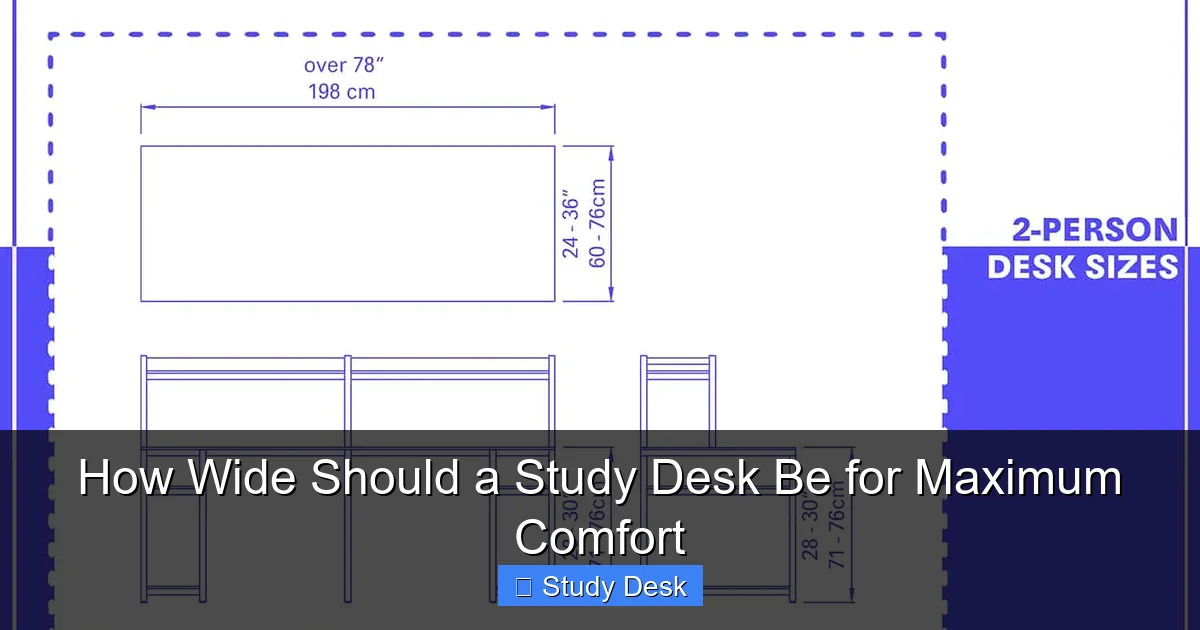
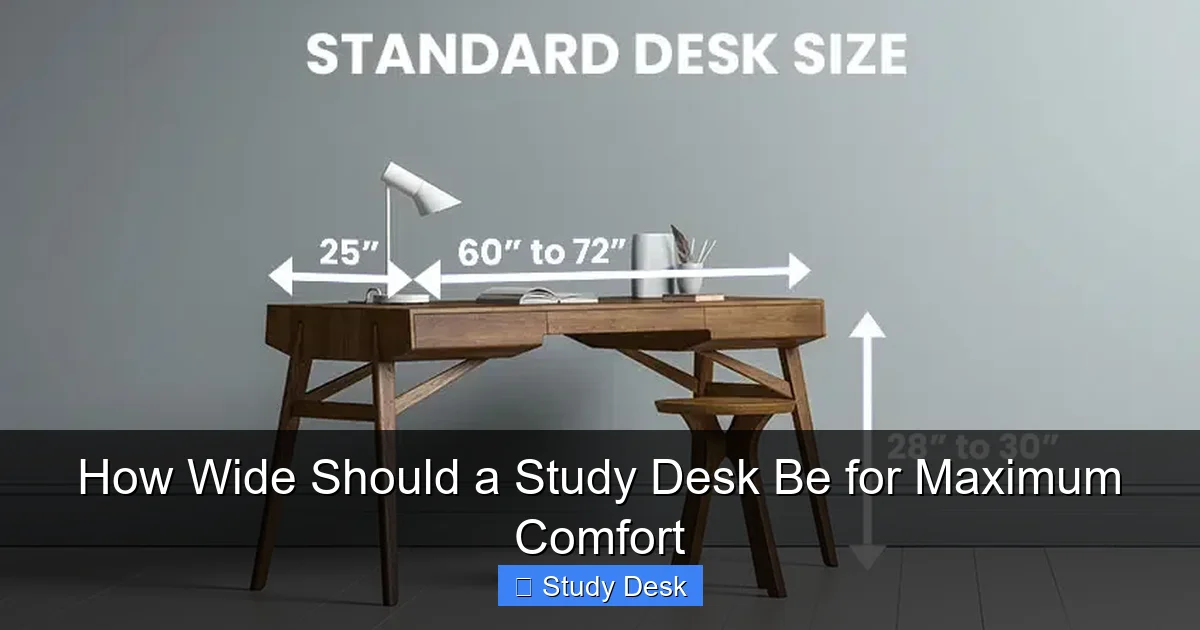
Using two monitors? You’ll need more real estate. Each monitor typically takes up 20–27 inches (51–69 cm) of width, and you’ll want at least 6–12 inches (15–30 cm) between them for a comfortable viewing angle. Add space for a keyboard, mouse, and notes, and you’re looking at a minimum of 60 inches (152 cm). Many dual-monitor setups perform best on desks that are 60–72 inches (152–183 cm) wide.
Students with Textbooks and Notebooks
Students often juggle textbooks, binders, notebooks, highlighters, and laptops. If you’re studying subjects like law, medicine, or engineering, you might need to spread out multiple books at once. In these cases, a desk width of 54 to 66 inches (137 to 168 cm) is ideal. This allows you to keep reference materials within arm’s reach without overcrowding your active work zone.
Creative Professionals (Artists, Designers, Writers)
If you’re sketching, painting, or writing longhand, you’ll appreciate a wider surface. Artists often need space for canvases, palettes, and tools. Writers may want room for notebooks, reference books, and a laptop. For these users, a desk width of 60 to 72 inches (152 to 183 cm) or more is recommended. Some even opt for custom or modular desks that can expand as needed.
Step 2: Factor in Your Body Size and Posture
Your physical dimensions play a big role in determining the ideal desk width. A desk that works for a petite person might feel cramped for someone taller or broader.
Visual guide about How Wide Should a Study Desk Be for Maximum Comfort
Image source: designingidea.com
Shoulder Width and Arm Span
Sit in your usual chair and extend your arms out to the sides. The distance between your shoulders is a good indicator of how much lateral space you need. Most adults have a shoulder width of 16–20 inches (40–51 cm). To sit comfortably without your elbows bumping the desk edges, add at least 6–8 inches (15–20 cm) on each side. This means a desk width of at least 48 inches (122 cm) for average-sized individuals.
Height and Reach
Taller people often have longer arms and may need more width to avoid leaning forward. If you’re over 6 feet (183 cm) tall, consider a desk that’s 60 inches (152 cm) or wider. This ensures your keyboard and mouse are within easy reach, and you’re not straining to grab a book from the edge.
Posture and Ergonomics
Good posture starts with proper desk dimensions. Your elbows should rest at a 90-degree angle when typing, and your forearms should be parallel to the floor. If the desk is too narrow, you’ll be forced to tuck your arms in, which can lead to shoulder tension. A wider desk allows for a natural, relaxed arm position.
Step 3: Measure Your Room and Plan the Layout
Even the perfect desk won’t work if it doesn’t fit your space. Before you buy, take precise measurements of your room and consider how the desk will function within it.
Measure the Available Space
Use a tape measure to determine the maximum width your room can accommodate. Don’t just measure the wall—account for doors, windows, radiators, and furniture like bookshelves or beds. Leave at least 30 to 36 inches (76 to 91 cm) of clearance behind the desk for chair movement and airflow. This ensures you can sit comfortably and stand up without bumping into walls.
Consider Traffic Flow
Think about how people move through the room. If the desk is in a hallway or shared space, avoid placing it where it blocks pathways. A desk that’s too wide can make a room feel cramped and disrupt the flow of movement.
Use Visualization Tools
Many furniture retailers offer online room planners or augmented reality apps that let you “place” a desk in your space using your phone camera. These tools help you see how different widths will look and feel in your room before you commit.
Step 4: Choose the Right Depth to Complement Width
While width gets most of the attention, desk depth is equally important. Depth refers to the distance from the front edge of the desk to the back. Most study desks range from 24 to 30 inches (61 to 76 cm) deep.
Why Depth Matters
A shallow desk (under 24 inches) may not provide enough space for your arms, especially if you use a large monitor or need room to write. A deep desk (over 30 inches) can force you to lean forward to reach your keyboard, straining your back and neck.
Ideal Depth for Most Users
For most people, a depth of 24 to 28 inches (61 to 71 cm) is ideal. This allows your arms to rest comfortably on the surface while keeping your screen at eye level. If you use a large monitor or need extra space for books, consider a depth of 30 inches (76 cm).
Pairing Width and Depth
Think of width and depth as a team. A wide but shallow desk might feel unstable. A deep but narrow desk can feel cramped. Aim for a balanced combination. For example:
- 48-inch wide × 24-inch deep: Great for laptop users in small spaces.
- 60-inch wide × 28-inch deep: Ideal for dual monitors and students.
- 72-inch wide × 30-inch deep: Best for creatives and heavy multitaskers.
Step 5: Consider Adjustable and Modular Options
If you’re unsure about committing to a fixed width, consider adjustable or modular desks. These offer flexibility and can adapt as your needs change.
Sit-Stand Desks
Sit-stand desks allow you to switch between sitting and standing positions. Many models come in widths from 48 to 72 inches (122 to 183 cm). Standing desks often benefit from extra width because you may need more space for movement and posture adjustments.
Modular or Expandable Desks
Some desks feature add-on sections or extension wings. These let you start with a smaller desk and expand it later. Great for growing students or evolving workspaces.
Custom-Built Desks
If you have unique needs or a specific room layout, consider a custom-built desk. A carpenter or furniture maker can design a desk that fits your exact dimensions and style preferences.
Common Mistakes to Avoid
Even with the best intentions, it’s easy to make mistakes when choosing a desk width. Here are some common pitfalls and how to avoid them.
Ignoring Future Needs
Buying a desk that’s just big enough for today might leave you cramped tomorrow. If you plan to upgrade to a larger monitor, take on more projects, or share the space with a partner, choose a wider desk from the start.
Overestimating Space
It’s tempting to buy the biggest desk that fits, but a massive desk in a small room can feel overwhelming and reduce usable floor space. Aim for balance—enough room to work comfortably without dominating the room.
Neglecting Cable Management
A wider desk means more surface area, but also more potential for cable clutter. Choose a desk with built-in cable trays, grommets, or routing holes to keep cords organized and out of the way.
Forgetting About Lighting
Lighting affects how you use your desk. A wide desk gives you space for a lamp, but make sure it’s positioned to reduce glare on screens and provide even illumination.
Troubleshooting Common Desk Width Issues
Already have a desk that’s not quite right? Here’s how to fix common problems.
Problem: Desk Feels Too Narrow
Solution: Add a monitor arm to free up space, use vertical storage like shelves or drawers, or switch to a compact keyboard and mouse. If possible, replace the desk with a wider model.
Problem: Can’t Reach Items on the Far Edge
Solution: Keep frequently used items within the “primary zone” (within 18 inches of your body). Use trays or organizers to group essentials. Avoid placing heavy books or monitors at the very edge.
Problem: Desk Overwhelms the Room
Solution: Use light-colored finishes to make the desk feel less bulky. Add mirrors or reflective surfaces to create the illusion of space. Consider a wall-mounted or floating desk to save floor area.
Final Tips for Choosing the Perfect Study Desk Width
Before you make your final decision, keep these expert tips in mind:
- Test it out: If possible, visit a furniture store and sit at different desk widths. Pay attention to how your arms, shoulders, and back feel.
- Read reviews: Look for feedback from users with similar needs. Did they find the desk too narrow? Too wide? Just right?
- Think long-term: Your study habits may evolve. Choose a desk that can grow with you.
- Prioritize comfort over style: A beautiful desk is great, but not if it hurts your posture. Function should always come first.
- Invest in quality: A well-made desk will last years and support your health and productivity.
Conclusion
So, how wide should a study desk be for maximum comfort? The answer isn’t one-size-fits-all. It depends on your tasks, body size, room layout, and personal preferences. As a general rule, aim for at least 48 inches (122 cm) for basic use, 60 inches (152 cm) for dual monitors or heavy studying, and 72 inches (183 cm) or more for creative or shared workspaces.
Remember, the goal isn’t just to fit everything on the desk—it’s to create a workspace that supports your body, boosts your focus, and makes studying or working a pleasure, not a pain. Take the time to measure, plan, and test. Your back, your grades, and your sanity will thank you.
Now that you know how to choose the right desk width, you’re one step closer to building the perfect study setup. Happy studying!